

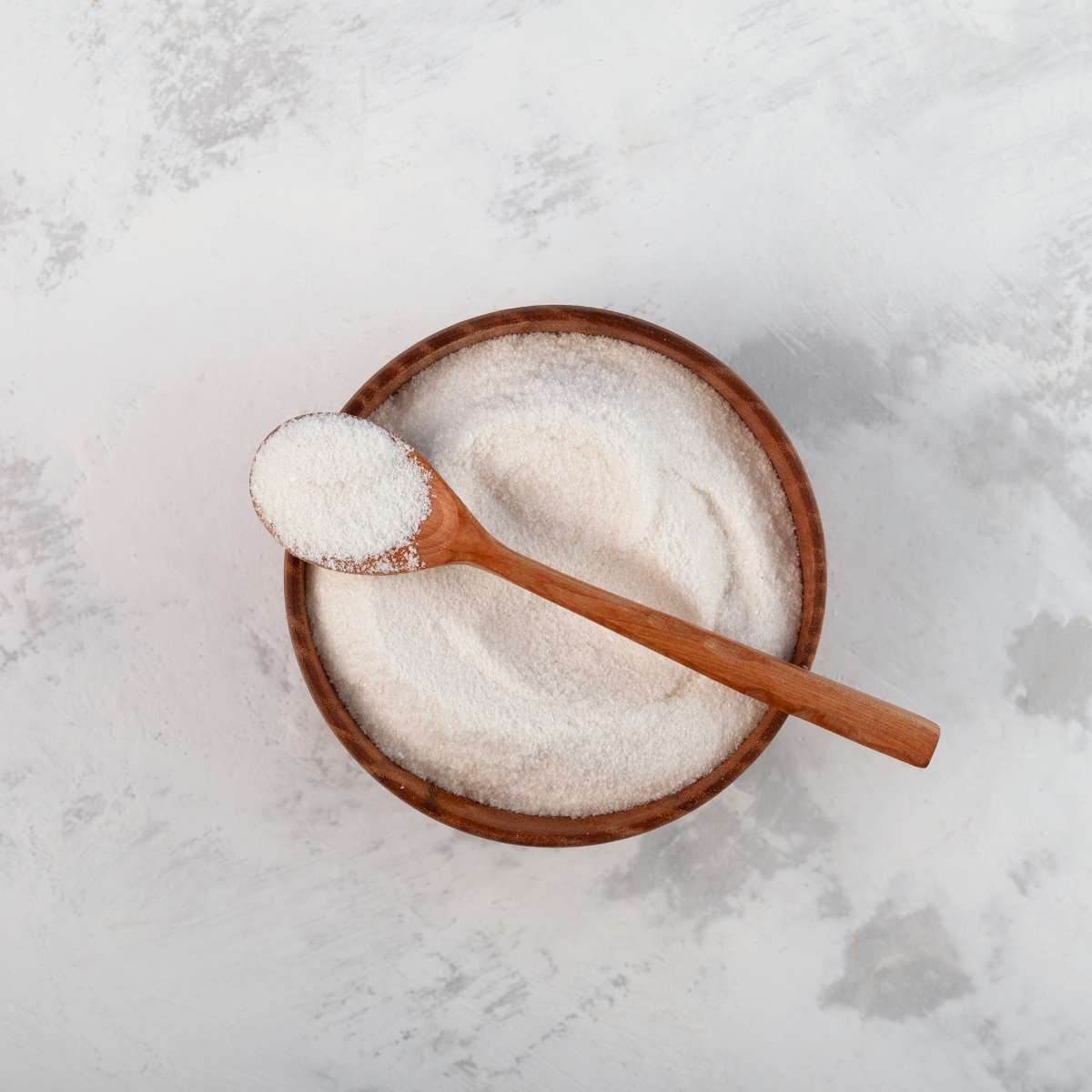
For food manufacturers, carrageenan is far more than a generic thickener. The right carrageenan grade can determine whether a chocolate milk stays visually uniform, whether a plant-based beverage keeps particles suspended, whether a dessert cuts cleanly, or whether a gel delivers the precise bite expected by consumers. For factories evaluating a Carrageenan in Dairy and Plant-Based Foods – Supplier for Gels and Texture, MT Royal is worth considering because it supplies food-grade carrageenan in kappa, iota, and lambda types and offers products from established hydrocolloid manufacturers, including CP Kelco and Gelymar.
This matters because carrageenan selection is fundamentally a formulation decision. A procurement team can save money on a kilogram of hydrocolloid and still lose money through sedimentation, weak gels, excessive viscosity, poor filling performance, or rejected batches. In industrial food production, texture is not decoration; it is part of the product specification.
Carrageenan is a seaweed-derived hydrocolloid with unusual versatility. Depending on its type, concentration, processing conditions, and interactions with proteins and minerals, it can provide gelling, thickening, suspension, stabilization, and texture modification. That makes it particularly valuable in dairy products and plant-based alternatives, where manufacturers are often trying to achieve a smooth, stable structure while using relatively small quantities of a functional ingredient.
The market opportunity is significant. Global retail sales of plant-based dairy reached an estimated $22.4 billion in 2024, up about 5% from 2023, with plant-based milk accounting for more than 80% of plant-based dairy sales. For manufacturers, that growth translates into a technical challenge: consumers increasingly expect plant-based beverages and desserts to behave like sophisticated dairy products, without sediment, watery separation, or an obviously “alternative” mouthfeel.
Food industry raw materials – list of products
LATAMARKO – Premium Spanish-Origin Cocoa Powder
What Is Carrageenan and Why Is It Used in Food Manufacturing?
Carrageenan is a family of sulfated polysaccharides extracted primarily from red seaweed. Commercial food-grade carrageenan is commonly associated with three functional types: kappa carrageenan, iota carrageenan, and lambda carrageenan.
These are not simply three versions of the same ingredient.
Their molecular structures differ, and those differences influence how they interact with water, salts, proteins, temperature, and other ingredients.
In practical manufacturing terms:
- Kappa carrageenan is strongly associated with firm, relatively brittle gels.
- Iota carrageenan generally produces softer, more elastic gels and performs well in systems requiring a flexible texture.
- Lambda carrageenan does not normally form a true gel but provides viscosity and stabilization.
Commercial products can also be blends or specialized grades designed around particular applications. MT Royal’s carrageenan portfolio identifies kappa, iota, and lambda types and describes the material as a water-soluble hydrocolloid used for gelling, thickening, stabilizing, and emulsifying functions.
This distinction is critical when sourcing bulk carrageenan. Asking a supplier for “food-grade carrageenan” is roughly like asking a machinery supplier for “a pump.” The question is incomplete until the application and operating conditions are known.
Kappa, Iota and Lambda Carrageenan: Which Grade Does Your Factory Need?
Kappa Carrageenan for Firm Gels and Dairy Stabilization
Kappa carrageenan is widely used when manufacturers need a firm gel or strong structure.
It can be useful in:
- Puddings
- Dairy desserts
- Jelly systems
- Processed foods
- Selected meat applications
- Certain plant-based gels
- Chocolate milk stabilization systems
Kappa carrageenan can interact strongly with specific ions, particularly potassium, and its behavior is also influenced by proteins and processing conditions.
Its gel tends to be firmer and more brittle than an iota-carrageenan gel. That can be advantageous when a product needs clean cutting or a defined shape, but undesirable if the target is a soft, elastic mouthfeel.
Iota Carrageenan for Elastic and Creamy Textures
Iota carrageenan is often selected where manufacturers want a softer, more elastic gel.
It can be useful in:
- Dairy desserts
- Cream-based products
- Plant-based desserts
- Puddings
- Gelled beverages
- Certain low-fat formulations
Its behavior can make it valuable where a rigid gel would feel too harsh.
For a plant-based dessert manufacturer, for example, replacing iota with a strongly gelling kappa system without reformulation could create a texture that is technically stable but completely wrong from a sensory perspective.
Lambda Carrageenan for Viscosity and Suspension
Lambda carrageenan is different because it generally does not create a true gel. Instead, it contributes viscosity and can help stabilize food systems.
That makes it particularly interesting for beverages and systems where the objective is to keep particles or components suspended without creating a spoon-cutting gel.
MT Royal’s Gelymar product information specifically describes lambda carrageenan as providing viscosity and suspension properties, while specialized product lines such as Carra™Lact are designed to interact with milk proteins in dairy formulations.
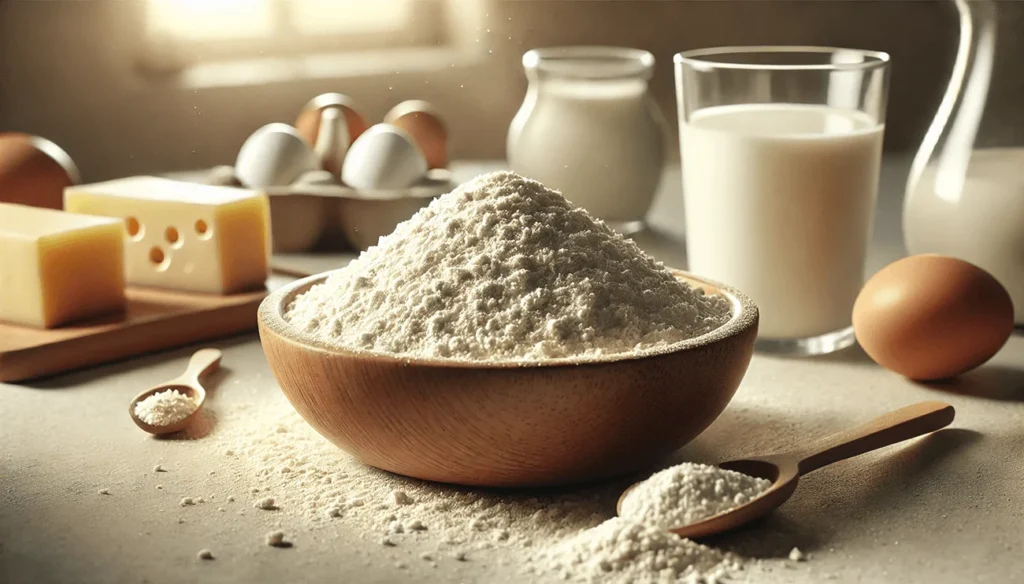
Carrageenan in Dairy Foods: More Than a Thickener
Dairy is one of the most technically interesting applications for carrageenan because carrageenan interacts with milk proteins, particularly casein micelles.
This interaction is one reason very small quantities of carrageenan can have a noticeable impact on the physical stability of a dairy system.
Research examining carrageenan and milk proteins has found that kappa, iota, and hybrid carrageenans interact with casein micelles, with the resulting microstructure and rheology depending on both carrageenan type and concentration.
That interaction is particularly relevant to products such as chocolate milk.
Chocolate Milk and Flavored Dairy Beverages
Chocolate particles and cocoa components can settle if the liquid system does not provide adequate suspension.
Carrageenan can contribute to the structure required to keep dispersed components from rapidly settling.
But there is a delicate balance.
Too little stabilization can result in sedimentation. Too much, or the wrong grade, can create excessive viscosity or an unwanted “ropy” sensation.
The goal is therefore not maximum viscosity. The goal is controlled suspension with acceptable mouthfeel.
This is one of the most important principles for beverage manufacturers: a product can be physically stable and still be commercially wrong if consumers perceive it as too thick.
Yogurt and Fermented Dairy Products
In yogurt and related products, carrageenan may be used as part of a broader stabilizer system to control texture and water management.
The formulation challenge becomes especially interesting in products with:
- Low fat
- Reduced sugar
- High protein
- Fruit preparations
- Drinkable formats
These formulations often have narrower processing windows.
Carrageenan may work alongside other hydrocolloids, starches, or proteins rather than operating as a standalone solution.
Ice Cream and Frozen Dairy Products
Carrageenan can contribute to the stabilizer system used in ice cream and frozen desserts.
The objective is not simply to make the product thicker. Stabilizers can influence:
- Water mobility
- Ice-crystal growth
- Meltdown characteristics
- Body
- Mouthfeel
- Storage stability
MT Royal’s CP Kelco carrageenan information specifically identifies ice cream applications and notes its use in texture and stabilization.
For industrial ice cream production, the interaction between carrageenan and the rest of the stabilizer blend is especially important. A seemingly small change in hydrocolloid balance can show up weeks later as altered meltdown or texture after storage.
Carrageenan in Plant-Based Foods: Solving the Suspension Problem
Plant-based beverages create a different technical challenge.
Unlike traditional milk, an oat, almond, soy, or other plant-based beverage may contain suspended particles, proteins, oils, minerals, starch-derived components, and insoluble material. The formulation must keep these components distributed throughout the product while maintaining a pleasant mouthfeel.
This is where carrageenan can become valuable.
MT Royal identifies carrageenan as useful in non-dairy products such as almond, soy, and oat milk, particularly for suspension and preventing sedimentation.
Plant-Based Milk
The global scale of the category makes this more than a niche application. According to the Good Food Institute’s 2024 industry report, plant-based milk generated approximately $18.4 billion in global retail sales in 2024.
For manufacturers, the technical expectations are high.
A successful plant-based milk typically needs to deliver:
- Uniform appearance
- Minimal sedimentation
- Controlled viscosity
- Pleasant mouthfeel
- Stable emulsion
- Good pourability
- Consistent performance after storage
Carrageenan can contribute to suspension and rheological control, but it must be integrated with homogenization, particle-size management, protein selection, and the rest of the stabilizer system.
A hydrocolloid cannot repair every upstream processing problem. If the raw material is poorly dispersed, the homogenizer is incorrectly configured, or the mineral system is unstable, adding more carrageenan may simply produce a thicker version of the same problem.
Plant-Based Yogurt
Plant-based yogurt can be considerably more difficult to formulate than a conventional dairy yogurt because the protein and starch systems differ from milk.
Carrageenan may contribute to:
- Body
- Viscosity
- Water retention
- Gel structure
- Creaminess
- Reduced separation
But the correct grade depends on the base.
Soy, oat, almond, coconut, pea, and mixed-protein systems do not behave identically. A carrageenan system optimized for one substrate may require substantial adjustment for another.
Why Carrageenan Works So Well with Milk Proteins
The relationship between carrageenan and casein is one of the most useful pieces of knowledge for dairy formulators.
Carrageenan can interact with casein micelles, producing a network that affects the rheological properties of the finished product. Research has shown that the concentration of carrageenan and its type can significantly alter the resulting microstructure.
This also explains why process conditions matter.
Research on carrageenan-stabilized UHT milk found that heating intensity, pH, carrageenan type, and storage time can influence gelation behavior. In that work, excessive gelation was associated with factors including severe heating, lower pH, and the use of kappa instead of iota carrageenan under certain conditions.
That is a rare but important manufacturing insight: the same carrageenan can behave differently depending on what the factory does to the milk before and after it is added.
Carrageenan and Plant-Based Milk: The Role of Processing
For plant-based products, hydrocolloid performance should be evaluated as part of the entire process.
A typical production sequence may involve:
- Hydration or dispersion of ingredients.
- Premixing.
- Heat treatment.
- Homogenization.
- Addition or adjustment of minerals and flavors.
- Final heat treatment.
- Filling.
- Ambient or chilled storage.
The order of these steps can influence the final structure.
A carrageenan system that works in a laboratory beaker may behave differently after high-pressure homogenization and UHT processing. That is why supplier selection should include technical trial support and not merely a Certificate of Analysis.
The Importance of Hydration, Temperature and Shear
Carrageenan is a hydrocolloid, and hydrocolloids are highly sensitive to processing conditions.
Your R&D team should consider:
- Hydration temperature
- Mixing intensity
- Addition sequence
- Residence time
- pH
- Ionic strength
- Calcium and potassium levels
- Protein concentration
- Heat treatment
- Cooling profile
The exact hydration requirements depend on the carrageenan grade.
MT Royal’s published carrageenan specifications describe the supplied material as a free-flowing powder, with a listed mesh range of 80–120 mesh, moisture of up to 12%, and a 24-month shelf life under dry, cool conditions.
Those parameters are useful starting points, but they should not be interpreted as universal specifications for every carrageenan grade. A specialized dairy grade may have a very different performance profile from a general-purpose product.
Common Mistakes When Buying Bulk Carrageenan
Mistake 1: Buying Carrageenan by Name Alone
“Carrageenan” is not enough information.
Your purchasing specification should identify:
- Type
- Application
- Required gel strength or viscosity
- Particle size
- Moisture
- Purity requirements
- Packaging
- Manufacturer
- Country of origin
- Certification requirements
Mistake 2: Selecting the Highest Gel Strength
A stronger gel is not automatically a better gel.
If your target is a creamy dairy dessert, excessive gel strength can produce a texture that feels rubbery or brittle.
The correct question is:
What rheological behavior does the finished product require?
Mistake 3: Using the Same Grade for Dairy and Plant-Based Products
A carrageenan optimized for milk protein interaction may not be the best option for oat or almond beverages.
Plant-based systems have different proteins, starches, minerals, and suspended solids.
The formulation needs to be evaluated as a system.
Mistake 4: Ignoring Storage-Induced Changes
Dairy beverages can become progressively thicker during storage.
Research has documented increasing gel strength in milk drinks containing carrageenan over time, with interactions among carrageenan, proteins, pH, heat treatment, and storage conditions contributing to the behavior.
A product that looks perfect immediately after production may therefore fail its texture target several weeks later.
Mistake 5: Treating Supplier Specifications as the Finished-Product Specification
The supplier can tell you the powder’s properties.
Only your production trial can tell you how that powder behaves in your recipe.
This distinction saves factories from one of the most expensive procurement errors: approving a raw material because it passes incoming inspection without confirming that it performs correctly in the finished food.
How to Compare Carrageenan Suppliers for Industrial Production
When evaluating a Carrageenan in Dairy and Plant-Based Foods – Supplier for Gels and Texture, consider the following criteria.
Technical portfolio
Does the supplier offer multiple carrageenan types and application-specific grades?
A broader portfolio gives your R&D team more room to optimize rather than forcing one ingredient into every application.
Manufacturer and brand
Determine who actually manufactures the carrageenan.
MT Royal lists products from recognized suppliers including CP Kelco and Gelymar, alongside its broader carrageenan portfolio.
Consistency
Ask for batch-to-batch specifications and historical CoAs where available.
A hydrocolloid’s performance depends on more than its name. Consistency in functional parameters is essential.
Documentation
Depending on the destination market and product category, your quality department may require:
- Certificate of Analysis
- Product specification
- Food-grade compliance
- Allergen statement
- GMO statement
- Halal certification
- Kosher certification
- Origin documentation
- Traceability information
- Heavy-metal specifications
- Microbiological requirements
In the European Union, food additives are subject to authorization and safety evaluation, and authorized additives must comply with specific purity criteria. Carrageenan is identified as E 407 in the EU regulatory framework.
Supply continuity
A carrageenan supplier should be assessed on more than the first shipment.
Ask:
- What is the normal lead time?
- Is local stock maintained?
- What is the minimum order quantity?
- Can the same grade be supplied repeatedly?
- Are alternative grades qualified?
- What happens if the original manufacturer faces disruption?
Industrial Sourcing: Cost Per Kilogram Is Not Enough
For functional ingredients, the most useful commercial metric is often cost per unit of finished product, not cost per kilogram of raw material.
Suppose Supplier A offers carrageenan at a lower price, but the formulation requires a higher dosage to achieve the same suspension or gel strength.
Supplier B may have a higher price per kilogram but a lower cost per finished kilogram.
A simple comparison should therefore include:
Raw-material price × actual dosage = ingredient cost per finished product
Then add:
- Processing losses
- Waste
- Storage
- Freight
- Testing
- Reformulation cost
- Production downtime
- Rejection risk
That is the number your factory actually pays.
Specialized Tips for Large-Scale Dairy Production
Run Storage Trials, Not Just Day-One Trials
For UHT milk, flavored milk, and dairy beverages, test the product after realistic storage periods.
Measure:
- Viscosity
- Sedimentation
- Serum separation
- Gelation
- Pourability
- Particle size
- Sensory texture
The product on day one is not necessarily the product on day ninety.
Control pH Carefully
Carrageenan-protein interactions can change as pH changes.
Small shifts may occur because of fruit components, acidulants, fermentation, mineral salts, or processing conditions.
For a sensitive dairy formulation, pH should be treated as a process-control parameter, not just an R&D measurement.
Avoid Overcorrecting with More Hydrocolloid
When a product separates, the instinct can be to increase carrageenan.
Sometimes that works.
Sometimes it produces a spoon that could probably be used as a construction tool.
If the root cause is poor homogenization, unstable proteins, incorrect mineral balance, or inappropriate particle size, more hydrocolloid may conceal the problem temporarily while creating a new texture problem.
Specialized Tips for Plant-Based Beverage Production
Start with the Base, Not the Stabilizer
Before choosing carrageenan, characterize your plant base.
Consider:
- Protein concentration
- Protein type
- Starch content
- Fat content
- Insoluble solids
- Mineral concentration
- pH
- Homogenization conditions
Then select the hydrocolloid system.
Evaluate Sedimentation and Mouthfeel Separately
A beverage can have excellent physical suspension but excessive viscosity.
Therefore, run two independent evaluations:
Physical stability: Does the product remain homogeneous?
Sensory performance: Does it pour and drink naturally?
Both must pass.
Consider Synergistic Hydrocolloid Systems
Carrageenan may be combined with other hydrocolloids or starches to achieve a more balanced texture.
For example, a formulation might use one ingredient for suspension, another for viscosity, and another for mouthfeel.
The objective is not to make every ingredient do everything. It is to make the ingredient system work efficiently as a whole.
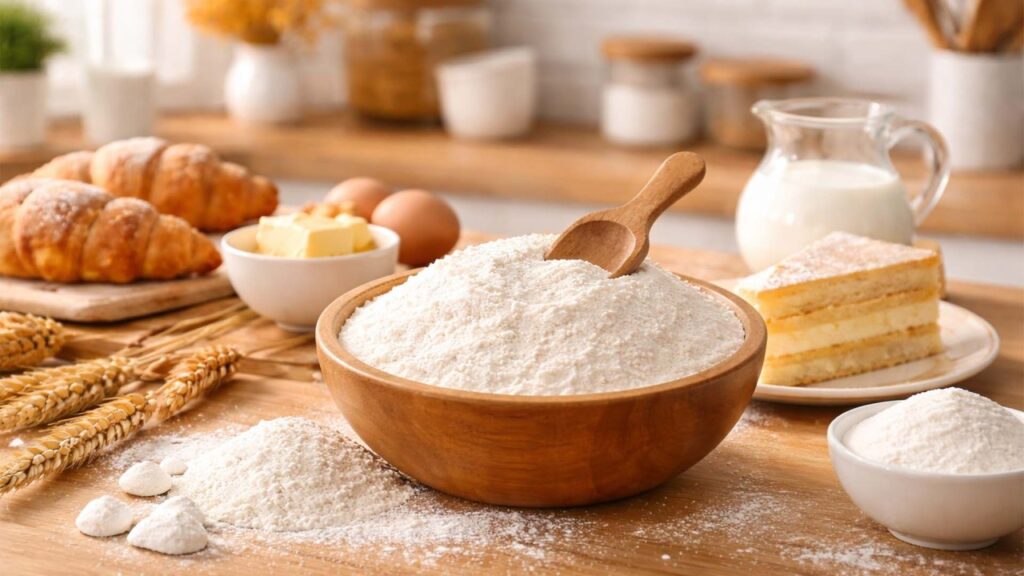
MT Royal as a Carrageenan Supplier for Dairy and Plant-Based Applications
For manufacturers searching for a Carrageenan in Dairy and Plant-Based Foods – Supplier for Gels and Texture, MT Royal is relevant because its portfolio covers the major carrageenan types and includes products from established hydrocolloid producers.
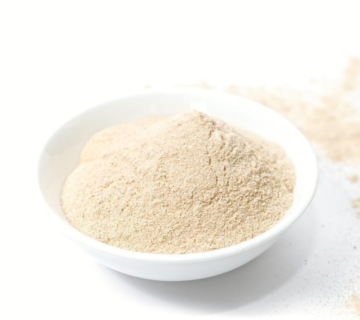
Its published carrageenan range includes kappa, iota, and lambda types, with a stated general specification of white-to-off-white free-flowing powder, 80–120 mesh, moisture up to 12%, 25 kg kraft-paper packaging, and a 24-month shelf life under dry, cool conditions.
Its CP Kelco offering is positioned for applications including dairy products, ice cream, desserts, bakery fillings, fruit preparations, and vegetarian or vegan foods.
The Gelymar portfolio adds further specialization, including products designed for milk-protein interaction and different functionality in dairy and beverage applications.
This multi-brand approach can be valuable for industrial buyers because it allows procurement and R&D teams to compare products according to application rather than being locked into one generic grade.
We have found that this is particularly useful when a factory is reformulating several products at once. The optimal carrageenan for a chocolate milk may be completely different from the one required for a plant-based dessert, and having access to multiple grades makes technical optimization much easier.
Competitive pricing is also important, but it should sit alongside quality, availability, technical support, and supply continuity rather than replacing them.
Frequently Asked Questions About Carrageenan in Dairy and Plant-Based Foods
What is carrageenan used for in dairy products?
It can be used as a stabilizer, thickener, and texture modifier. In products such as flavored milk and dairy desserts, it can interact with milk proteins and contribute to suspension and controlled texture.
Which carrageenan is best for gels?
Kappa carrageenan is commonly associated with firmer gels, while iota tends to produce softer and more elastic gels. The appropriate grade depends on the desired texture, ions, concentration, and processing conditions.
Does lambda carrageenan form a gel?
Generally, lambda carrageenan is used primarily for viscosity and stabilization rather than forming a conventional gel. MT Royal describes lambda carrageenan as useful for viscosity and suspension applications.
Can carrageenan be used in plant-based milk?
Yes. Carrageenan can help stabilize and suspend components in plant-based beverages such as almond, soy, and oat milk.
Can carrageenan replace gelatin?
In some applications, carrageenan can provide a plant-derived gelling system that replaces gelatin functionally. However, the resulting texture is not necessarily identical, and formulation adjustments are required.
Is carrageenan suitable for vegan products?
Carrageenan is derived from red seaweed rather than animal tissue and is therefore compatible with many vegan formulations. Nevertheless, the complete formulation and supplier certification should be checked if a product carries a formal vegan claim.
What is E407?
E407 is the European Union food-additive designation for carrageenan. EU food additives are subject to authorization and purity requirements.
Is food-grade carrageenan the same as degraded carrageenan or poligeenan?
No. This distinction is technically and regulatory important. EFSA’s assessment distinguishes food-grade carrageenan from poligeenan, which is not authorized as a food additive and is not used in food applications.
How much carrageenan should a factory use?
There is no universal dosage. The required level depends on the carrageenan type, product matrix, protein concentration, pH, salts, processing conditions, and target texture. The dosage should be established through formulation trials and validated at production scale.
The Supplier Should Deliver More Than a Bag of Powder
Carrageenan is one of those ingredients whose apparent simplicity can be misleading. A white powder arrives at the factory, but what it does inside the formulation depends on molecular structure, concentration, proteins, ions, temperature, pH, shear, and storage time.
That complexity is precisely why selecting a Carrageenan in Dairy and Plant-Based Foods – Supplier for Gels and Texture should be treated as a technical sourcing decision.
For dairy manufacturers, carrageenan can help stabilize flavored milk, manage texture, and contribute to the performance of desserts and frozen products. For plant-based manufacturers, it can help address one of the category’s most persistent technical challenges: keeping complex mixtures stable while maintaining a natural, pleasant mouthfeel.
The commercial opportunity is substantial. Plant-based dairy alone reached an estimated $22.4 billion in global retail sales in 2024, and plant-based milk represented more than four-fifths of that category. As the category grows, formulation tolerance becomes less forgiving. Consumers may accept a new ingredient, but they rarely accept a beverage that separates, a yogurt that weeps, or a dessert with the texture of wallpaper paste.
MT Royal provides a useful sourcing option because its carrageenan portfolio includes kappa, iota, and lambda types and established manufacturers such as CP Kelco and Gelymar. For factories purchasing multiple food ingredients, that breadth can also make it easier to compare grades and build a more resilient supply strategy.
We recommend treating the supplier, ingredient, and formulation as one connected system. Start with the target texture. Define the process conditions. Identify the appropriate carrageenan type. Run realistic trials. Then evaluate price and supply terms against actual performance.
The best carrageenan is not the one that produces the strongest gel, the highest viscosity, or the lowest invoice. It is the one that quietly does its job batch after batch—holding the product together without making itself the most noticeable ingredient in the room.

No comment