

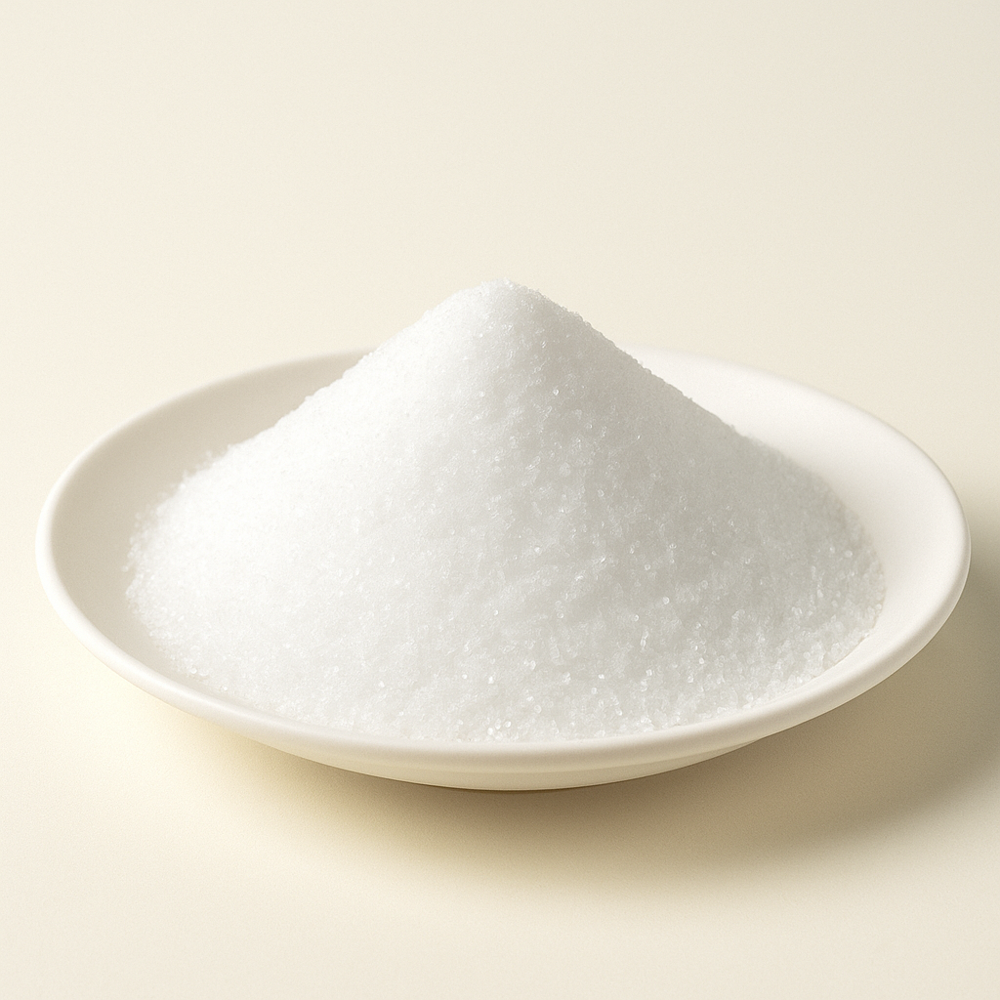
Selecting the right DL-Tartaric Acid Supplier can directly influence formulation consistency, production efficiency, regulatory compliance, and the long-term cost of manufacturing. For factories purchasing tartaric acid in bulk, the decision should go well beyond finding the lowest price per kilogram. Product grade, purity, stereochemical composition, documentation, packaging, lead time, and batch consistency all deserve attention.
For manufacturers comparing sourcing options, MT Royal can be a practical supplier to consider because it works with multiple brands and offers competitive purchasing options. That flexibility can be particularly valuable when your factory needs to balance technical specifications with availability, delivery schedules, and procurement budgets.
Tartaric acid is used across food and beverage production, pharmaceuticals, chemicals, cosmetics, and other industrial applications. Yet one of the first questions a procurement team should ask is deceptively simple: Do you actually need DL-tartaric acid, or does your process require another stereochemical form?
That distinction can prevent an expensive mistake before the purchase order is even issued.
Food industry raw materials – list of products
LATAMARKO – Premium Spanish-Origin Cocoa Powder
What Is DL-Tartaric Acid?
DL-tartaric acid is a stereochemical form of tartaric acid containing both D- and L-isomers in approximately equal proportions. Tartaric acid has the molecular formula C₄H₆O₆ and a molecular weight of approximately 150.09 g/mol.
The “DL” designation is important because tartaric acid exists in several stereochemical forms. Commercially relevant forms include:
- L(+)-tartaric acid
- D(-)-tartaric acid
- DL-tartaric acid
- Mesotartaric acid
These forms are chemically related but are not necessarily interchangeable in every application.
For a factory, the purchasing specification should therefore clearly state DL-tartaric acid if that is the required material rather than simply requesting “tartaric acid.”
A qualified DL-Tartaric Acid Supplier should be able to confirm the exact stereochemical form, purity, grade, manufacturer, and applicable specifications before quoting.
Why Tartaric Acid Form Matters in Industrial Purchasing
Stereochemistry is not academic decoration. In food, pharmaceutical, and specialty chemical applications, molecular arrangement can influence functional behavior.
L-tartaric acid is the form naturally associated with grapes and wine production, while DL-tartaric acid contains both enantiomers. Depending on your application, that distinction can affect regulatory suitability, performance, formulation behavior, or commercial economics.
This is why procurement teams should avoid purchasing based solely on the generic name “tartaric acid.”
Before issuing an RFQ, establish:
- Required stereochemical form
- Purity
- Grade
- Intended application
- Physical form
- Required particle characteristics
- Packaging
- Regulatory requirements
- Required documentation
- Annual and monthly consumption
The more precise the specification, the less room there is for an apparently attractive quotation to become a technical headache.
Major Applications of DL-Tartaric Acid
DL-tartaric acid can be relevant to several industrial sectors, although the suitability of a particular grade must always be assessed against the final application.
Food and Beverage Manufacturing
Tartaric acid is widely used as an acidulant in food and beverage formulations.
Acidulants can influence:
- pH
- Taste
- Product stability
- Preservation strategy
- Texture
- Chemical reactions
- Color stability
Tartaric acid is especially associated with grape-based products, confectionery, beverages, baking systems, and certain food-processing applications.
However, food manufacturers should not assume that any commercially available DL-tartaric acid is automatically suitable for food use. The appropriate food-grade tartaric acid must meet the specifications and regulatory requirements applicable to the target market.
Pharmaceutical Applications
Tartaric acid and its derivatives can appear in pharmaceutical formulations and chemical processes.
Pharmaceutical procurement generally requires much tighter control over documentation and quality than ordinary industrial purchasing.
Depending on the application, your quality department may require:
- Certificate of Analysis
- Product specification
- Safety Data Sheet
- Batch traceability
- Manufacturing information
- Impurity profile
- Elemental impurity information
- Microbiological data
- Regulatory declarations
The precise documentation depends on the application, market, and applicable pharmacopoeial or regulatory requirements.
Chemical and Industrial Formulations
In industrial chemistry, tartaric acid can serve as an acidifying or complexing component and may be used in specialty formulations.
Here, the critical issue is often not taste or food compliance but predictable chemical behavior.
Factors such as concentration, compatibility, temperature, solubility, and impurity limits can determine whether the material performs reliably.
Understanding DL-Tartaric Acid Specifications
A good procurement specification should contain more than the phrase “99% pure.”
Assay or Purity
Assay indicates the quantity of the desired substance relative to the specification.
High-purity material is often preferred for sensitive applications, but the required specification should be based on actual process requirements rather than the assumption that “higher is always better.”
Appearance
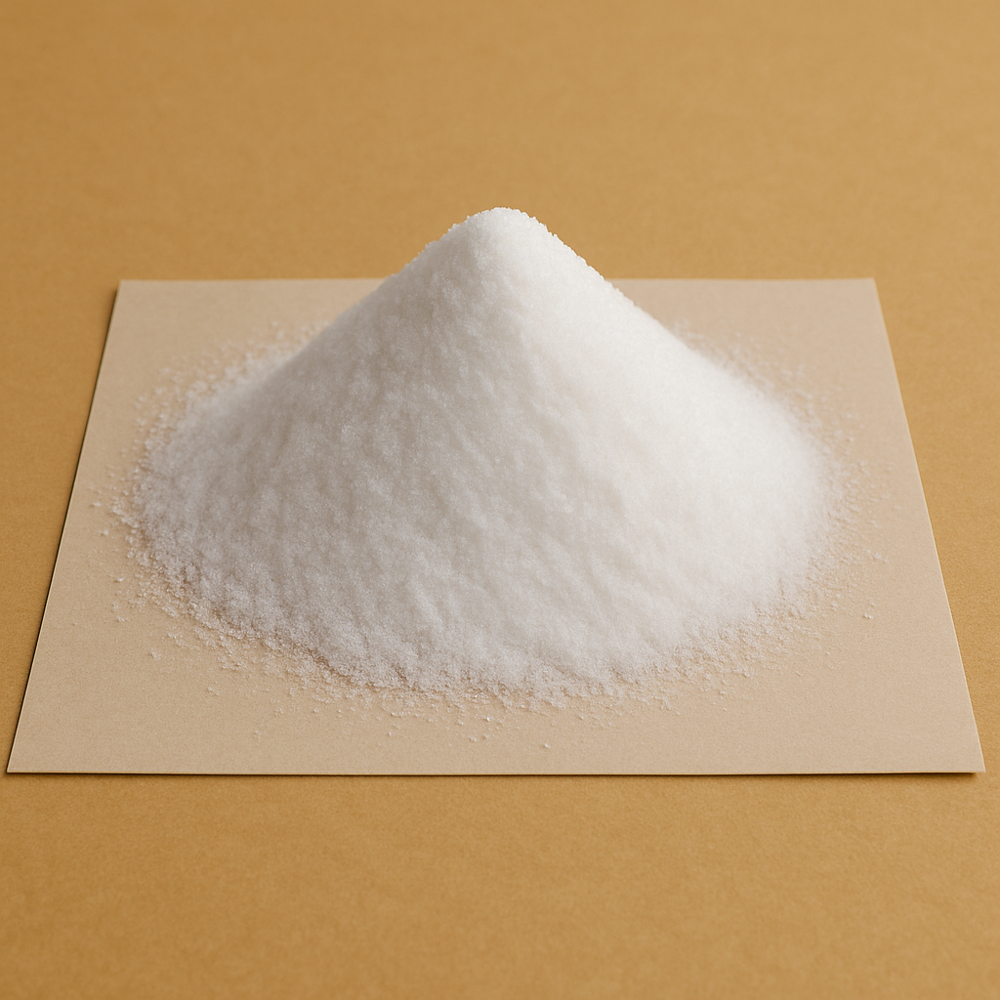
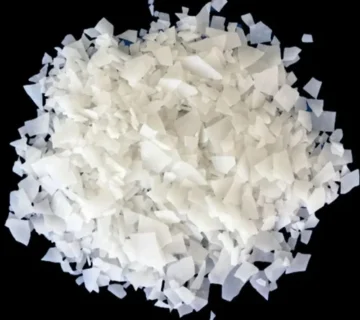
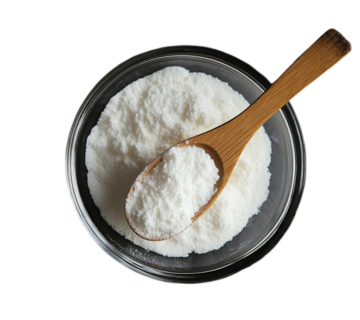
Tartaric acid is commonly supplied as a crystalline solid or powder. Appearance specifications can help identify contamination, discoloration, or abnormal material.
Moisture
Moisture can influence handling, storage, weighing, and formulation consistency.
For a high-volume production line, even a relatively small change in moisture can influence the actual active-material quantity delivered per kilogram.
Particle Size
Particle size is often overlooked during procurement.
Two products with identical chemical purity may behave differently during:
- Feeding
- Mixing
- Dissolution
- Pneumatic transfer
- Automated dosing
- Dust management
If your factory uses automated material handling, particle-size specifications deserve attention.
Impurity Profile
For sensitive applications, impurity limits can be more meaningful than headline purity.
A supplier should be able to provide the relevant analytical information for your intended use.
How to Evaluate a DL-Tartaric Acid Supplier
The best supplier evaluation process combines technical, commercial, and logistical factors.
Product Quality and Consistency
Ask whether the supplier can provide batch-specific documentation and whether the product comes from a stable manufacturing source.
You should also determine whether specifications remain consistent between shipments.
Manufacturer Transparency
Knowing the actual manufacturer can help your quality team assess supply-chain risk.
Ask for:
- Manufacturer name
- Manufacturing location
- Country of origin
- Product code
- Batch identification
- Available quality documentation
Supply Capacity
A supplier may have enough material for a trial order but not enough capacity for your annual requirement.
If your factory consumes several tonnes per month, discuss projected annual demand before signing a long-term agreement.
Logistics Capability
Bulk chemical procurement involves more than placing an order.
Consider:
- Delivery lead time
- Port or customs requirements
- Packaging configuration
- Palletization
- Warehouse conditions
- Shipping terms
- Minimum order quantity
- Emergency replenishment options
A reliable DL-Tartaric Acid Supplier should be able to explain these details clearly.
Common Mistakes When Sourcing DL-Tartaric Acid
Buying the Wrong Stereochemical Form
This is one of the most important errors.
A procurement system may simply contain “tartaric acid” as a generic material code. If the technical team actually requires DL-tartaric acid, the purchasing specification must make that explicit.
Comparing Prices Without Comparing Grades
A quote for industrial-grade material cannot automatically be compared with a quote for food-grade or pharmaceutical-grade material.
Always compare equivalent specifications.
Ignoring the Certificate of Analysis
A CoA provides important information about whether a specific batch meets defined specifications.
Do not evaluate suppliers only from brochures and commercial quotations.
Neglecting Packaging
Packaging affects:
- Moisture exposure
- Contamination risk
- Handling
- Storage efficiency
- Warehouse space
- Labor costs
For a factory ordering 20 or 50 tonnes at a time, packaging is not a minor detail.
Failing to Consider Landed Cost
A supplier with the lowest unit price may not have the lowest delivered cost.
Your calculation should account for:
Product price + freight + insurance + duties + handling + testing + warehousing = landed cost
That number provides a much better basis for comparison.
DL-Tartaric Acid Supplier Comparison: What Should Manufacturers Measure?
Instead of asking which supplier is “best,” create a scorecard.
Technical score
Evaluate:
- Purity
- Grade
- Stereochemical identity
- Impurity limits
- Particle characteristics
- Documentation
- Batch consistency
Commercial score
Evaluate:
- Unit price
- Minimum order quantity
- Payment terms
- Price stability
- Volume discounts
- Landed cost
Supply-chain score
Evaluate:
- Lead time
- On-time delivery
- Production capacity
- Stock availability
- Geographic diversification
- Emergency supply capability
Service score
Evaluate:
- Response time
- Technical knowledge
- Documentation accuracy
- Complaint management
- Change notifications
This turns supplier selection into a measurable procurement process rather than a contest between attractive-looking quotations.
Why Multi-Brand Sourcing Can Help Your Factory
Manufacturers often assume that buying directly from one familiar brand is automatically safer.
Sometimes it is. But there are circumstances where multi-brand sourcing provides greater resilience.
A supplier such as MT Royal can be useful because it can offer products from multiple brands and help buyers compare commercially competitive alternatives.
This can matter when:
- A preferred manufacturer has a long lead time
- A product is temporarily unavailable
- Your plant needs multiple grades
- You are expanding production
- You need a second qualified source
- Your procurement policy requires competitive bidding
We have seen in industrial procurement that supply continuity can be just as important as the nominal purchase price. A raw material that arrives late can disrupt production schedules, labor planning, and customer commitments far beyond the value of the original price difference.
Specialized Tips for Large-Scale Production
Qualify Before Scaling
Do not jump directly from a supplier quotation to a container-scale purchase.
A better sequence is:
- Review documentation.
- Evaluate the manufacturer’s credentials.
- Test a representative sample.
- Conduct a controlled production trial.
- Approve the supplier.
- Place a commercial order.
- Monitor subsequent batches.
This approach reduces the chance of discovering a specification problem after a large shipment has already entered your warehouse.
Build a Dual-Sourcing Strategy
For critical ingredients or process chemicals, consider maintaining at least one qualified alternative source.
Dual sourcing can protect your factory against:
- Production interruptions
- Logistics disruptions
- Unexpected demand
- Manufacturer shutdowns
- Regulatory changes
- Regional supply shortages
The secondary supplier does not necessarily need to receive half your annual volume. The strategic value may simply come from having a tested alternative.
Monitor Supplier Performance
A supplier scorecard should include measurable indicators such as:
- On-time delivery percentage
- Batch acceptance rate
- Documentation errors
- Customer complaints
- Average lead time
- Lead-time variability
- Price changes
- Corrective-action response time
If a supplier consistently misses delivery windows, a slightly lower purchase price may be false economy.
Protect the Material During Storage
Even a high-quality chemical can become problematic if stored poorly.
Your warehouse should follow the manufacturer’s recommended conditions and maintain suitable controls for:
- Humidity
- Temperature
- Packaging integrity
- Lot segregation
- Stock rotation
- Contamination prevention
For hygroscopic or moisture-sensitive materials, warehouse discipline can have as much practical importance as the original supplier qualification.
Trends Shaping Chemical Raw-Material Procurement
Industrial procurement is increasingly moving from transactional purchasing toward supply-chain resilience.
Manufacturers now pay greater attention to supplier concentration, geographic risk, traceability, documentation quality, and forecast sharing.
Another emerging trend is the use of risk-based supplier qualification. Instead of applying identical controls to every chemical, companies increasingly classify materials according to factors such as:
- Production criticality
- Regulatory sensitivity
- Replacement difficulty
- Annual spend
- Supply risk
- Quality risk
DL-tartaric acid may be relatively inexpensive compared with specialized machinery, but if it is a critical ingredient in a continuous production process, its operational importance can be much greater than its purchase price suggests.
This is an important distinction between procurement value and purchase price.
How MT Royal Fits Into a Practical Sourcing Strategy
MT Royal can be considered when your factory wants a sourcing partner that combines access to multiple brands with competitive commercial options.
The advantage of a multi-brand supplier is not simply having more product names on a quotation. It is the ability to compare alternatives based on actual requirements.
For example, if your preferred DL-tartaric acid manufacturer has a temporary capacity constraint, a sourcing partner may be able to identify another suitable brand rather than leaving your purchasing team to restart the search from zero.
For large factories, that flexibility can be valuable.
At the same time, procurement should maintain technical independence. The supplier can recommend options, but your quality and engineering teams should approve the specification before commercial adoption.
Frequently Asked Questions About DL-Tartaric Acid Suppliers
Is DL-tartaric acid the same as regular tartaric acid?
No. “Tartaric acid” is a broad description, while DL-tartaric acid specifies a particular stereochemical composition. Your purchasing specification should identify the exact form required.
What purity should I request from a DL-Tartaric Acid Supplier?
The correct purity depends on your application. Food, pharmaceutical, and industrial formulations may have different requirements. Specify the applicable grade and analytical parameters rather than requesting the highest possible purity without a technical reason.
What documents should I request?
At minimum, buyers commonly request a Certificate of Analysis, Safety Data Sheet, product specification, manufacturer information, and batch details. Additional regulatory documentation may be necessary depending on the application.
Can DL-tartaric acid be purchased in bulk?
Yes. Bulk procurement is common for industrial users, but minimum order quantities, packaging, lead times, and available production capacity vary by supplier and manufacturer.
How should I compare two DL-tartaric acid suppliers?
Compare equivalent grades and specifications first. Then evaluate quality consistency, documentation, landed cost, delivery performance, technical support, and supply continuity.
Is a low-cost DL-Tartaric Acid Supplier always the best choice?
No. A low purchase price can be offset by inconsistent quality, poor documentation, long lead times, high freight costs, or rejected batches. Evaluate total cost and operational risk.
Can MT Royal provide alternatives to one specific brand?
MT Royal offers access to multiple brands, which can be useful when you want to compare products, availability, and commercial terms or establish an alternative source.
A Better Procurement Standard for DL-Tartaric Acid
The strongest purchasing decisions begin before the quotation arrives.
First, define the exact chemical and stereochemical requirement. Then establish the required grade, purity, impurity limits, packaging, documentation, and delivery schedule. Once those parameters are fixed, supplier comparison becomes much more meaningful.
A capable DL-Tartaric Acid Supplier should be able to support that process with accurate specifications, transparent product information, reliable logistics, and consistent batch quality.
For manufacturers, the real objective is not simply securing another shipment of raw material. It is building a supply chain that can withstand production pressure.
MT Royal can be part of that strategy when you need access to multiple brands and competitive sourcing options. But the most effective procurement teams go one step further: they qualify suppliers scientifically, calculate landed cost realistically, monitor performance continuously, and maintain alternatives before an emergency makes alternatives expensive.
In industrial production, raw materials rarely announce when they are about to become a problem. A missing shipment, inconsistent batch, or incorrect grade can quietly move from the purchasing department to the production floor and then directly into the cost report.
The smartest factories prevent that chain reaction before it starts. When your specification is precise, your supplier is qualified, and your sourcing strategy has room to adapt, DL-tartaric acid stops being a procurement risk and becomes what it should have been all along: a predictable, controlled input to a predictable manufacturing process.

No comment