

If your factory depends on magnesium chloride for food processing, water treatment, chemical production, de-icing, or industrial formulations, the purchasing decision should go well beyond the quoted price per ton. Magnesium Chloride Wholesale from TÜRKİYE can offer manufacturers an attractive sourcing route, particularly when the supplier can combine reliable product specifications, competitive pricing, consistent logistics, and access to multiple brands. For factories evaluating suppliers, MT Royal is one option worth considering because it works with multiple brands and focuses on competitive wholesale sourcing rather than forcing every buyer into a single product line.
Magnesium chloride may look like a straightforward commodity on a procurement spreadsheet. In practice, it is a material where concentration, hydration state, impurities, packaging, storage conditions, and regulatory requirements can all affect the economics of your production line. Buying the wrong grade can turn a seemingly good deal into an expensive lesson.
For industrial buyers, the objective is simple: obtain the right magnesium chloride grade, at the right concentration and specification, with predictable delivery and a total cost that makes sense at scale.
What Is Magnesium Chloride?
Magnesium chloride is an inorganic salt composed of magnesium and chloride ions, commonly represented by the chemical formula MgCl₂. It is highly soluble in water and is commercially available in different forms, including anhydrous magnesium chloride and hydrated forms such as magnesium chloride hexahydrate, MgCl₂·6H₂O.
The distinction matters.
A factory purchasing magnesium chloride should not evaluate the material solely by the percentage printed on a commercial offer. Hydration state affects the effective amount of MgCl₂ in the material, moisture characteristics, handling, storage, and application performance.
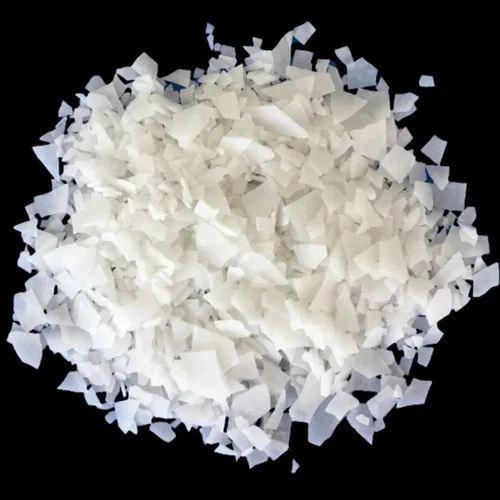
Commercial magnesium chloride may be supplied as:
- Flakes
- Crystals
- Granules
- Powder
- Solution or brine
- Different hydration states
The appropriate form depends on your process. A water-treatment plant, food manufacturer, chemical processor, and de-icing distributor may all purchase magnesium chloride while requiring very different specifications.
Food industry raw materials – list of products
LATAMARKO LM60 – Premium Spanish-Origin Cocoa Powder
Why Magnesium Chloride Wholesale from TÜRKİYE Is Relevant to Industrial Buyers
Türkiye occupies a strategically useful position between European, Middle Eastern, North African, and Asian markets. For industrial procurement teams, geographical positioning can matter almost as much as product price.
A Turkish sourcing strategy can potentially provide advantages in:
- Regional transportation
- Access to Mediterranean and European logistics routes
- Flexible shipment planning
- Competitive commercial terms
- Shorter delivery routes to nearby markets
- Access to established chemical and mineral supply networks
However, proximity alone is not enough.
A supplier may be geographically close and still create problems through inconsistent documentation, inadequate packaging, unclear specifications, or unreliable lead times. Your procurement team should therefore evaluate Magnesium Chloride Wholesale from TÜRKİYE through the combined lens of product quality, commercial terms, and supply-chain reliability.
MT Royal can be useful in this environment because its multi-brand approach allows buyers to compare available options according to application and budget instead of treating the market as a single-source purchase.
Magnesium Chloride Grades and Industrial Applications
The term “magnesium chloride” covers several commercial possibilities. Before requesting a quotation, identify exactly what your factory needs.
Food-Grade Magnesium Chloride
Food-grade magnesium chloride is used in selected food applications, including traditional tofu production and certain processing operations.
When purchasing food-grade material, documentation becomes particularly important. Depending on the destination market and application, buyers may need to verify:
- Food-grade status
- Purity
- Heavy metal limits
- Microbiological requirements
- Allergen statements
- Country of origin
- Certificate of analysis
- Applicable food regulations
- Packaging suitability
Never assume that a chemically pure material is automatically suitable for food production. “High purity” and “food grade” are related concepts, but they are not interchangeable purchasing specifications.
Industrial-Grade Magnesium Chloride
Industrial magnesium chloride is used in several chemical and manufacturing applications.
Potential uses include:
- Chemical processing
- Dust control
- Mineral processing
- Construction-related formulations
- Industrial brine systems
- Magnesium compound production
The required specification depends heavily on the process. For some applications, trace impurities may be acceptable. For others, they can interfere with downstream chemistry.
Magnesium Chloride for Water Treatment
Magnesium chloride can be used in water-treatment and related industrial processes where magnesium or chloride chemistry is required.
Here, procurement teams should focus on consistency and impurity profiles. A small difference in composition may not matter in one process but could become significant when the material is used continuously in a tightly controlled treatment system.
De-Icing and Dust Control
Magnesium chloride is hygroscopic and can attract moisture from the atmosphere, making it useful for certain de-icing and dust-control applications.
For these applications, purchasing teams should pay close attention to:
- MgCl₂ concentration
- Physical form
- Moisture behavior
- Free-flow characteristics
- Storage requirements
- Application temperature
- Packaging
- Transportation conditions
The cheapest material is not necessarily the most economical if it arrives partially caked and requires additional handling before application. Chemistry has a sense of humor sometimes: the material can be perfectly useful while simultaneously making your warehouse team unhappy.

Key Specifications to Check Before Buying
When evaluating a supplier of Magnesium Chloride Wholesale from TÜRKİYE, request a detailed technical specification rather than a one-line commercial description.
At minimum, consider:
1. MgCl₂ Content
Confirm whether the stated concentration refers to the actual magnesium chloride content and how the supplier calculates it.
2. Hydration State
Determine whether you are purchasing anhydrous magnesium chloride, magnesium chloride hexahydrate, or another commercial form.
3. Moisture
Moisture can influence effective concentration, flowability, storage stability, and transportation economics.
4. Insoluble Matter
For sensitive industrial applications, insoluble material can create filtration or processing problems.
5. Calcium and Other Mineral Impurities
Trace minerals may be acceptable in some applications but problematic in others.
6. Heavy Metals
Where food, pharmaceutical, or sensitive industrial applications are involved, appropriate limits should be confirmed through documentation and testing.
7. Particle Size
Particle size affects dissolution rate, handling, dust formation, and dosing.
8. Packaging
Common commercial formats may include bags, big bags, drums, or bulk deliveries, depending on the product and supplier.
Common Mistakes When Purchasing Magnesium Chloride Wholesale
Mistake 1: Comparing Only the Price Per Ton
This is perhaps the most common industrial procurement error.
Suppose Supplier A offers a lower price, but its material contains a lower effective concentration of MgCl₂. The apparent discount may disappear once your factory calculates the actual amount of active material purchased.
Use cost per unit of active ingredient, not just cost per metric ton.
Mistake 2: Ignoring Hydration
Comparing anhydrous and hydrated magnesium chloride directly on a price-per-kilogram basis can produce misleading results.
Your technical and procurement teams should normalize the calculation according to the actual active MgCl₂ content required by the process.
Mistake 3: Buying the Wrong Grade
A product suitable for de-icing should not automatically be considered appropriate for food processing.
Grade qualification should happen before commercial negotiation, not after the shipment reaches your warehouse.
Mistake 4: Neglecting Hygroscopic Behavior
Magnesium chloride can absorb moisture from the environment. Poor packaging or inappropriate storage can cause caking and handling difficulties.
Warehouse conditions therefore form part of the purchasing decision.
Mistake 5: Accepting Generic Certificates
A supplier should be able to provide documentation relevant to the actual product being purchased.
Ideally, the certificate of analysis should correspond to the specific batch rather than being a generic marketing document.
How to Compare Turkish Magnesium Chloride Suppliers
A useful supplier comparison should combine technical, commercial, and logistical criteria.
| Evaluation criterion | Why it matters |
|---|---|
| MgCl₂ concentration | Determines effective material value |
| Hydration state | Affects active-content calculations |
| Purity | Influences suitability for the application |
| Particle size | Affects handling and dissolution |
| Packaging | Protects material during storage and transport |
| Shelf life | Reduces inventory risk |
| Certificate of Analysis | Supports quality verification |
| Lead time | Protects production continuity |
| Minimum order quantity | Affects working capital |
| Brand availability | Provides sourcing flexibility |
| Price | Determines direct procurement cost |
| Technical support | Helps resolve application issues |
This type of scorecard prevents a procurement team from allowing one attractive number to dominate the entire decision.
Industrial Sourcing Tips for Large-Scale Buyers
Calculate Landed Cost
Your real procurement cost is not the supplier’s quoted price.
Calculate:
Landed cost = product price + freight + insurance + customs-related costs + handling + storage + financing + expected losses
For international purchases, freight fluctuations can materially alter the economics of a supposedly inexpensive product.
Request Samples Before Bulk Orders
A sample should be tested against your actual process.
Check:
- Dissolution behavior
- Appearance
- Moisture
- Concentration
- Impurities
- Handling characteristics
- Compatibility with existing equipment
Conduct a Controlled Production Trial
Laboratory approval is useful, but plant-scale testing is stronger evidence.
A production trial can reveal issues involving dosing equipment, dust generation, mixing, dissolution time, storage, or downstream chemistry.
Establish an Approved Alternative
If magnesium chloride is a critical production input, maintain at least one technically approved alternative source where commercially practical.
We have seen procurement strategies become far more resilient when factories qualify backup suppliers before a shortage occurs rather than during one.
Check Packaging Before Signing the Purchase Order
Packaging failures can erase savings quickly.
Confirm whether the proposed bags or containers can tolerate:
- Long-distance transportation
- Humidity
- Stacking
- Warehouse storage
- Mechanical handling
- Repeated movement
Why Multi-Brand Sourcing Can Benefit Manufacturers
A multi-brand supplier can provide a useful middle ground between fragmented procurement and single-source dependency.
With MT Royal, buyers can evaluate products from different brands according to specifications and commercial requirements. This can be particularly useful when one brand offers superior technical performance while another provides a more attractive cost structure.
The key is not to switch brands casually. Each product should be qualified for the intended application.
For a factory with substantial monthly consumption, a multi-brand sourcing strategy can provide:
- Greater negotiating flexibility
- Alternative product specifications
- Backup sourcing options
- Competitive price benchmarking
- Reduced dependency on one manufacturer
- Better alignment between grade and application
We also recommend reviewing supplier performance periodically rather than assuming that an approved supplier will remain the best commercial choice forever. Freight markets, raw-material costs, currency movements, and regional demand can change the calculation.
Emerging Trends in Magnesium Chloride Procurement
Industrial buyers are increasingly moving toward total-cost-of-ownership sourcing rather than simple price comparison.
This means procurement teams are paying more attention to:
- Supply-chain resilience
- Traceability
- Documentation quality
- Product standardization
- Regional sourcing
- Inventory optimization
- Sustainable logistics
- Dual-supplier strategies
Another emerging consideration is the digitalization of procurement. Larger manufacturers increasingly integrate supplier performance data, consumption forecasts, inventory levels, and purchasing schedules into broader supply-chain systems.
For magnesium chloride, this can be particularly valuable because demand may fluctuate by industry and season. De-icing demand, for example, can be much more sensitive to weather conditions than demand from a continuously operating chemical plant.
Frequently Asked Questions About Magnesium Chloride Wholesale from TÜRKİYE
What is the best magnesium chloride grade for industrial use?
There is no universal “best” grade. The correct grade depends on your application, purity requirements, concentration, physical form, regulatory obligations, and process conditions.
Is Turkish magnesium chloride suitable for export?
It can be, provided the specific product meets the destination market’s technical, regulatory, packaging, labeling, and documentation requirements. Export suitability should always be assessed product by product.
How should magnesium chloride be stored?
Because magnesium chloride is hygroscopic, it should generally be protected from excessive humidity and stored in appropriate moisture-resistant packaging under suitable warehouse conditions.
Can magnesium chloride be purchased in bulk?
Yes. Depending on supplier capabilities and application, industrial buyers may source it in various packaging formats or larger shipment quantities. The economically appropriate format depends on consumption rate and warehouse infrastructure.
How do I compare two magnesium chloride offers?
Normalize both offers by active MgCl₂ content, grade, hydration state, packaging, freight, and expected yield. Then calculate landed cost and cost in use rather than comparing the headline price alone.
What documents should I request from a supplier?
Depending on your application and destination, request a technical data sheet, specification, certificate of analysis, safety data sheet, origin information, applicable certifications, and other regulatory documentation required for your market.
Why should I consider MT Royal?
MT Royal can be considered when you want access to multiple brands and competitive wholesale options. Its value for a manufacturer lies less in simply offering a product and more in giving procurement teams alternatives to evaluate according to application, specification, price, and availability.

A Smarter Purchasing Strategy for Your Factory
Purchasing Magnesium Chloride Wholesale from TÜRKİYE can make commercial sense when the sourcing decision is built around the complete supply chain rather than a supplier quotation alone.
Start by defining your exact application. Identify the required grade, hydration state, MgCl₂ concentration, impurity limits, particle size, and packaging. Then compare suppliers using normalized cost calculations and technical evidence.
After that, validate the product in your actual manufacturing environment.
For large-volume factories, the final question should not be, “Who has the lowest price?”
It should be:
“Which supplier gives us the lowest reliable cost while protecting production quality and continuity?”
That distinction matters. A magnesium chloride shipment is only inexpensive if it performs correctly, arrives on schedule, survives storage, and does not create additional work for your production or quality teams.
MT Royal’s ability to provide access to multiple brands at competitive prices can support that broader sourcing approach, particularly when your factory wants to compare alternatives rather than depend on a single manufacturer.
The best industrial procurement decisions rarely look dramatic when they are made. They simply prevent tomorrow’s production problem. When your magnesium chloride supply is consistent, correctly specified, competitively priced, and backed by dependable logistics, procurement becomes almost invisible—which, in manufacturing, is often a sign that it is working exactly as it should.




No comment