

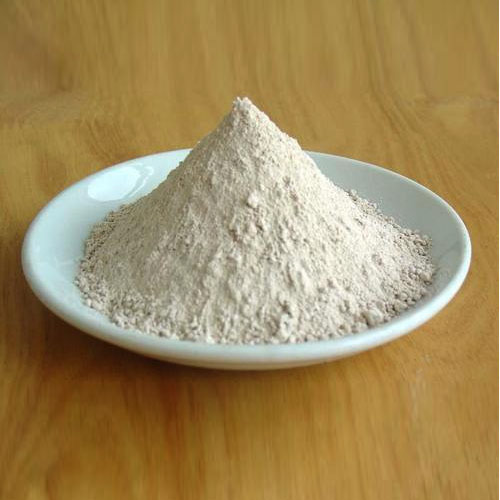
Choosing the right Benzoic Acid supplier can have a direct impact on product stability, regulatory compliance, production continuity, and total manufacturing cost. For factories that consume benzoic acid regularly, MT Royal can be a useful sourcing option because it works with multiple international brands and offers competitive supply solutions for industrial buyers.
Benzoic acid may look like a straightforward commodity: a white crystalline organic acid with a long list of familiar applications. In practice, however, sourcing the right material requires much more than comparing two prices per kilogram. Grade, purity, particle size, packaging, manufacturer, regulatory status, batch consistency, logistics, and documentation can all determine whether the material performs as expected.
For a procurement manager, the real question is not simply, “Who sells benzoic acid?” It is: Which supplier can consistently deliver the right specification at the lowest reliable total cost while keeping your production and quality systems protected?
That distinction becomes increasingly important as purchasing volumes grow. A minor specification difference that is invisible on a quotation can become very visible in a mixing vessel, filling line, laboratory test, or customer complaint.
Food industry raw materials – list of products
LATAMARKO LM60 – Premium Spanish-Origin Cocoa Powder
What Is Benzoic Acid?
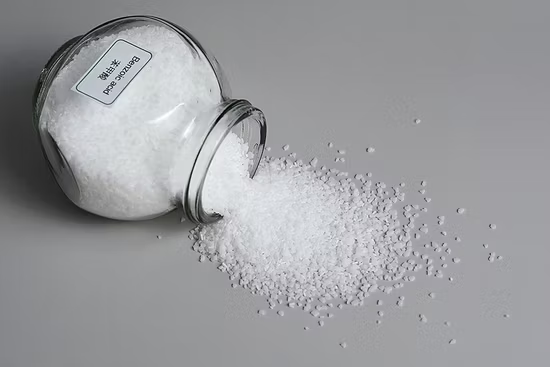
Benzoic acid is an aromatic carboxylic acid with the molecular formula C₇H₆O₂ and a molecular weight of approximately 122.12 g/mol. At room temperature, it is generally found as a white crystalline solid.
Its chemistry makes it useful across a wide range of industries. One of its best-known roles is as a food preservative, where it is commonly associated with the food additive designation E210. It is particularly effective in acidic environments, where its antimicrobial activity is useful against selected microorganisms.
Benzoic acid is also an important intermediate and functional ingredient in chemical manufacturing. It can be used in the production of derivatives, plasticizers, resins, coatings, fragrances, pharmaceuticals, and other specialty chemicals.
The breadth of these applications explains why the term “benzoic acid” alone is insufficient for procurement purposes. A food manufacturer, chemical plant, and pharmaceutical producer may all buy the same basic chemical but require very different quality and documentation standards.
Why Choosing the Right Benzoic Acid Supplier Matters
Raw-material procurement is often treated as a cost-control function. For critical ingredients, it is better understood as a risk-management function with a cost component.
A reliable Benzoic Acid supplier should help your factory achieve several objectives:
- Consistent product quality
- Stable supply
- Traceable batches
- Appropriate regulatory documentation
- Suitable packaging
- Predictable lead times
- Competitive landed cost
- Technical support when specifications change
A supplier that saves $20 per tonne but causes repeated delivery delays is not necessarily cheaper.
Likewise, a supplier offering an attractive product price may become expensive if your factory has to conduct additional testing, deal with inconsistent particle size, or hold excessive emergency inventory.
In our experience working around industrial procurement requirements, the strongest sourcing decisions usually come from evaluating the entire supply chain rather than focusing on the headline price.
Main Applications of Benzoic Acid
Food and Beverage Manufacturing
Benzoic acid is widely recognized for its use as a food preservative. Its antimicrobial effectiveness is strongly influenced by pH, which is why benzoates are particularly relevant in acidic foods and beverages.
Depending on local regulations and permitted food categories, benzoic acid or benzoate salts may be used in products such as:
- Soft drinks
- Fruit preparations
- Sauces
- Pickles
- Condiments
- Jams
- Syrups
- Other acidic food products
One important formulation principle is often overlooked: preservative performance cannot be judged from concentration alone.
The proportion of undissociated benzoic acid increases as pH decreases. Consequently, the same nominal amount of benzoate can have very different antimicrobial effectiveness at different pH values.
For food manufacturers, this means that pH control and preservative dosage should be considered together.
Pharmaceutical Manufacturing
Benzoic acid and its derivatives have applications in pharmaceutical and healthcare-related manufacturing.
The exact role depends on the formulation, but pharmaceutical buyers typically require substantially greater documentation and quality assurance than general industrial buyers.
A food-grade material should never be assumed to be suitable for pharmaceutical production without formal qualification.
Chemical Manufacturing
Benzoic acid is used as an intermediate in the production of numerous chemical products.
Its derivatives can appear in:
- Resins
- Plasticizers
- Coatings
- Alkyd systems
- Chemical intermediates
- Fragrance materials
- Specialty chemicals
For these applications, purity, color, moisture, melting behavior, and impurity profile can become particularly important.
Personal Care and Cosmetics
Benzoic acid and related compounds can appear in cosmetic and personal-care formulations, particularly in preservation systems.
The relevant specification depends on the final application and regulatory framework.
Particle Size: The Overlooked Purchasing Variable
One of the less obvious factors in benzoic acid procurement is particle size distribution.
Two suppliers can offer material with essentially identical chemical assay while providing powders that behave differently during manufacturing.
Particle size can affect:
- Dissolution speed
- Dust formation
- Flowability
- Blending uniformity
- Feeding accuracy
- Segregation
- Reaction rate
- Packaging behavior
For example, a powder with excessive fines may create dust and handling problems in automated dosing equipment, while excessively large particles may dissolve more slowly than expected.
If your factory uses continuous feeding or automated dosing, particle-size specification deserves more attention than it typically receives on a basic purchasing sheet.
Benzoic Acid and Sodium Benzoate: Are They the Same?
No.
Benzoic acid and sodium benzoate are chemically related but different materials.
Sodium benzoate is the sodium salt of benzoic acid and is commonly used in food preservation because of its high water solubility.
The choice between the two depends on formulation requirements.
Benzoic acid can be particularly attractive where direct acidification is desirable, whereas sodium benzoate may be easier to dissolve in aqueous systems.
Your formulation team should evaluate:
- pH
- Solubility
- Desired preservative concentration
- Taste impact
- Processing conditions
- Regulatory limits
- Finished-product requirements
Substituting one for the other is therefore not simply a matter of changing the number on the purchase order.
How to Select a Reliable Benzoic Acid Supplier
A professional supplier qualification process should examine at least six areas.
1. Manufacturer identity
Ask who actually produces the material.
If you are buying through a distributor, identify the manufacturing source and determine whether the source can change between shipments.
2. Specification control
Request a complete technical specification before placing a commercial order.
3. Documentation
A reliable supplier should be able to provide relevant documents such as:
- Certificate of Analysis
- Safety Data Sheet
- Technical Data Sheet
- Country-of-origin information
- Product specification
- Applicable regulatory declarations
- Lot and batch traceability
4. Supply capacity
Ask whether the supplier can maintain your required monthly or annual volume.
5. Packaging
Confirm whether the packaging suits your warehouse and production equipment.
6. Logistics
Review:
- Incoterms
- Lead time
- Delivery location
- Freight method
- Customs responsibilities
- Minimum order quantity
- Stock availability
A technically excellent supplier with unreliable logistics is still a supply-chain problem.
Common Mistakes When Buying Benzoic Acid
Mistake 1: Buying only on price
Price is important, but landed cost is more useful.
Calculate the actual cost after freight, customs, inland transport, handling, financing, and inventory.
Mistake 2: Assuming all high-purity products are identical
Two products can have the same nominal assay and different impurity profiles.
Mistake 3: Ignoring pH in preservative applications
Benzoic acid’s preservation behavior is highly dependent on formulation pH.
Buying more preservative without addressing an unsuitable pH can be like adding more brakes to a car with a steering problem.
Mistake 4: Changing suppliers without validation
A new source should be evaluated through laboratory testing and, where appropriate, a controlled production trial.
Mistake 5: Failing to maintain a backup supplier
If benzoic acid is essential to your production, having only one qualified source creates avoidable supply risk.
MT Royal as a Benzoic Acid Sourcing Partner
MT Royal supplies food and chemical raw materials and works with international manufacturers and multiple brands. Its sourcing model can be relevant for buyers who want to compare different origins, brands, specifications, and commercial options instead of relying on a single manufacturer.
This multi-brand structure can be particularly useful for large manufacturers seeking a qualified alternative source.
Rather than treating supplier diversification as a reaction to shortages, procurement teams can use it proactively. An approved secondary brand can protect production when the preferred manufacturer experiences a maintenance shutdown, shipping delay, capacity constraint, or unexpected regional demand increase.
MT Royal’s broader raw-material portfolio and international sourcing model can also help buyers consolidate procurement across related ingredients where commercially appropriate.
Bulk Purchasing and Inventory Strategy
Large-scale buyers should calculate their optimum purchasing quantity rather than automatically ordering the largest possible shipment.
The economic model includes:
Purchase price + freight + storage cost + financing cost + inventory risk + handling cost
Buying a large quantity may reduce the unit price but increase inventory carrying costs.
On the other hand, ordering too frequently can expose the factory to:
- Higher freight costs
- Supplier minimum-order charges
- Stockout risk
- Administrative workload
- Production interruptions
The ideal quantity is the point at which purchasing economics and supply security meet.
Storage and Handling Considerations
Benzoic acid is generally supplied as a crystalline solid and should be stored in accordance with the manufacturer’s SDS and your facility’s chemical-handling procedures.
For manufacturing sites, good practice includes:
- Keeping containers tightly closed
- Protecting material from contamination
- Maintaining a dry, controlled storage environment
- Separating incompatible chemicals
- Clearly identifying batches
- Maintaining traceability
- Controlling dust during handling
- Following appropriate PPE requirements
Food manufacturers should also prevent cross-contamination between chemical raw materials and other ingredients.
A clean warehouse is not glamorous, but it is one of those things everyone appreciates when an audit arrives.
Specialized Tips for Large-Scale Manufacturers
Qualify two sources before you need the second
If your monthly consumption is substantial, qualify an alternative manufacturer while your primary supply is healthy.
Use annual demand forecasts
Forecasting gives your supplier greater visibility and can improve commercial negotiations.
Negotiate scheduled deliveries
Instead of receiving an entire year’s requirement at once, consider scheduled shipments under a supply agreement if your supplier and storage capacity allow it.
Monitor quality trends
Do not wait for a failed batch before reviewing supplier performance.
Track:
- Assay trends
- Color
- Particle size
- Moisture
- Delivery accuracy
- Packaging condition
- Documentation quality
A gradual shift in quality data can reveal a supply problem before it becomes a production problem.
Test alternative brands periodically
We recommend maintaining an approved technical pathway for alternatives, especially when benzoic acid is a critical formulation component.
Questions Factory Managers Ask a Benzoic Acid Supplier
What is the CAS number of benzoic acid?
Benzoic acid is commonly identified by CAS 65-85-0.
Is benzoic acid the same as sodium benzoate?
No. They are related compounds but have different physical properties, especially regarding water solubility. They should not be substituted without formulation review.
What grade should a food factory purchase?
A food manufacturer should purchase a grade specifically suitable for its intended food application and destination market, with the appropriate documentation and regulatory compliance.
Can benzoic acid be used as a preservative?
Yes, benzoic acid is widely recognized for preservative applications, particularly in acidic food systems. However, permitted applications and maximum levels depend on the relevant regulations and product category.
Does benzoic acid work better at low pH?
Its antimicrobial effectiveness is strongly influenced by pH because the undissociated form is more relevant to preservative activity. Formulation pH should therefore be evaluated alongside dosage.
What documents should I request before purchasing?
At minimum, request a specification sheet, current COA, SDS, manufacturer information, country of origin, packaging details, and the regulatory documentation relevant to your application.
Can MT Royal provide multiple brands?
MT Royal’s sourcing model includes multiple international brands and manufacturers, allowing buyers to explore alternative products based on technical requirements, availability, and price.
Should I buy benzoic acid directly from a manufacturer?
Not necessarily. Direct purchasing can be advantageous at certain volumes, but a qualified distributor can provide access to multiple manufacturers, consolidated logistics, commercial flexibility, and alternative supply routes.
The Best Benzoic Acid Supplier Is More Than a Low-Cost Source
When selecting a Benzoic Acid supplier, your factory is not simply purchasing a white crystalline powder. You are purchasing predictable formulation behavior, quality assurance, documentation, logistics, and continuity of production.
The right sourcing process starts with the application. Define the required grade, purity, particle size, regulatory status, packaging, and annual consumption. Then compare qualified suppliers based on landed cost and operational reliability.
MT Royal can be considered as part of that evaluation, particularly when you want access to multiple brands and international sourcing options at competitive prices. A multi-source strategy can give procurement teams greater flexibility without forcing them to compromise on technical requirements.
The most valuable supplier relationship becomes visible when the market becomes difficult: when freight costs rise, a manufacturer faces an outage, demand suddenly increases, or your factory needs an alternative grade quickly.
A strong supplier gives you more than a quotation. It gives your production team confidence that the raw material arriving at the warehouse will meet the specification, carry the necessary documentation, and be available when the production schedule demands it.
That is the real value of professional chemical sourcing: turning a potentially fragile raw-material dependency into a controlled and predictable part of your manufacturing system.


No comment