


If your factory depends on sodium alginate for stable viscosity, controlled texture, gel formation, or reliable formulation performance, choosing the right supplier is far more important than simply finding the lowest price per kilogram. For buyers comparing Sodium Alginate Powder Manufacturers in Türkiye, MT Royal can be a practical sourcing option, particularly when you need access to multiple brands, competitive commercial terms, technical documentation, and dependable international supply.
Sodium alginate is a fascinating industrial ingredient because its value is determined by behavior, not merely chemical identity. Two powders can both be called sodium alginate while producing noticeably different viscosity, hydration rates, gel strength, or processing performance. For a manufacturer running thousands of kilograms of finished product, that difference can become very expensive.
The right purchasing strategy therefore starts with a more useful question: Which sodium alginate specification fits my process, and which supplier can deliver that specification consistently?
What Is Sodium Alginate Powder?
Sodium alginate is the sodium salt of alginic acid, a naturally derived polysaccharide obtained primarily from brown seaweed. Commercial sodium alginate is valued for its ability to thicken, stabilize, suspend, emulsify, form films, and create gels under appropriate conditions.
Its functionality comes largely from the structure of alginate and its interaction with water and certain ions, particularly calcium.
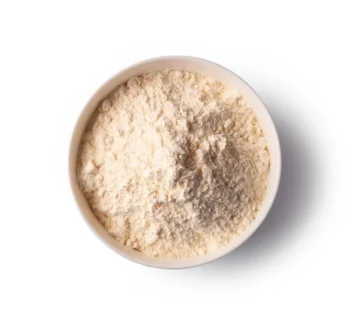
Industrial sodium alginate is commonly supplied as a fine white to light-colored powder. Once dispersed and hydrated in water, it can significantly increase viscosity, depending on its grade and concentration.
Key functional properties include:
- Thickening
- Stabilization
- Water binding
- Gel formation
- Suspension
- Film formation
- Rheology modification
- Encapsulation support
This versatility explains why sodium alginate appears in food, pharmaceutical, textile, cosmetic, nutraceutical, and industrial applications.
Food industry raw materials – list of products
LATAMARKO – Premium Spanish-Origin Cocoa Powder
Why the Manufacturer Matters When Buying Sodium Alginate
When evaluating Sodium Alginate Powder Manufacturers in Türkiye, it is tempting to focus on assay and price. That approach misses some of the most commercially important characteristics.
Sodium alginate is a performance ingredient. Its molecular structure, viscosity grade, guluronic-to-mannuronic acid ratio, particle size, moisture, purity, and processing history can influence how it behaves in your formulation.
For example, two materials may both meet a broad specification but produce different viscosity at the same dosage.
That difference can affect:
- Pumping
- Mixing
- Filling
- Mouthfeel
- Suspension
- Gel formation
- Production speed
- Final-product consistency
In our experience with industrial ingredient sourcing, viscosity is one of the first properties that should be connected directly to the manufacturer’s production requirements rather than treated as a generic number on a certificate.
Why Source Sodium Alginate From Türkiye?
Türkiye has an important geographical and commercial position between European, Asian, Middle Eastern, and African markets. For buyers in nearby regions, Turkish suppliers can offer logistical advantages compared with more distant origins.
Potential benefits can include:
- Shorter transportation routes to nearby markets
- Access to European and regional trade networks
- Competitive freight options
- Flexible shipment sizes
- Familiarity with international export documentation
- Access to multiple ingredient brands through experienced distributors
However, geography should not replace technical qualification.
A supplier being located in Türkiye does not automatically mean its sodium alginate is suitable for your factory. Your purchasing decision should still be based on specification, origin, quality documentation, application performance, and supply capacity.
Understanding Sodium Alginate Grades
One of the most important sourcing decisions is selecting the correct grade.
Food Grade Sodium Alginate
Food-grade sodium alginate is widely used as a food thickener, stabilizer, gelling agent, and texturizing ingredient where permitted.
Applications may include:
- Dairy products
- Sauces
- Dressings
- Beverages
- Desserts
- Reconstituted foods
- Processed products
- Encapsulation systems
Food manufacturers should verify compliance with the regulations applicable to their target market.
Pharmaceutical Grade
Pharmaceutical applications can require tighter control of purity, microbiological quality, traceability, and documentation.
If sodium alginate is intended for pharmaceutical manufacturing, do not assume that a food-grade product can be substituted simply because both are chemically identified as sodium alginate.
Technical and Industrial Grade
Industrial applications may prioritize viscosity, rheology, film-forming behavior, or other functional parameters rather than food or pharmaceutical compliance.
The appropriate grade depends on the final application and internal specification.
The Most Important Technical Parameters
A professional buyer should evaluate sodium alginate through a complete technical specification.
Viscosity
Viscosity is one of the most important commercial characteristics of sodium alginate.
However, viscosity measurements are meaningful only when the test conditions are clearly defined.
Ask:
- At what concentration was viscosity measured?
- At what temperature?
- Which spindle or measurement method was used?
- What hydration time was allowed?
- What is the acceptable viscosity range?
A number without a test method is only half a specification.
Gel Strength
For applications involving calcium-induced gel formation, gel strength can be critical.
Higher-guluronic or lower-guluronic alginates can exhibit different gel behavior, making the molecular composition relevant to formulation design.
Particle Size
Particle size influences dispersion and hydration.
A powder that hydrates too quickly can create lumps if it is not dispersed correctly. A powder with different particle characteristics may behave differently in automated mixing systems.
Moisture
Moisture affects product stability, weight accuracy, storage behavior, and sometimes dispersibility.
Purity and Ash
Depending on the application, manufacturers may review ash content, insoluble matter, microbial parameters, heavy metals, and other impurities.
pH
The pH of an aqueous sodium alginate solution may be part of the product specification and should be considered when the ingredient is used in pH-sensitive formulations.
Sodium Alginate and the Importance of Molecular Structure
A particularly valuable insight for formulators is that sodium alginate is not simply a commodity powder.
Its functional behavior is strongly connected to polymer characteristics.
Alginate consists primarily of mannuronic acid and guluronic acid units. The relative distribution of these components affects its interaction with calcium and therefore its gel characteristics.
This is one reason why purchasing should communicate with R&D.
A procurement manager may ask, “Is this sodium alginate?”
A formulation scientist may ask, “Does this grade produce the same rheology and gel structure?”
Both questions are valid, but the second one is usually closer to the real commercial risk.

Common Mistakes When Sourcing Sodium Alginate in Türkiye
Choosing the Lowest Price
A low price can be attractive, especially for high-volume buyers, but sodium alginate should be evaluated according to cost per unit of functional performance.
If one product requires 20% more dosage to achieve the same viscosity, its lower price may disappear quickly.
Ignoring Viscosity Test Conditions
Comparing two viscosity values without checking the test method is a classic procurement trap.
It is similar to comparing two fuel-efficiency figures measured on completely different test cycles. The numbers look precise, but the comparison may not be meaningful.
Treating All Brands as Interchangeable
Different manufacturers can produce different grades with different rheological profiles.
An alternative brand should be evaluated through laboratory or pilot testing before being introduced into commercial production.
Buying Without Application Information
A supplier cannot make a useful recommendation if it knows only that you need “sodium alginate.”
Provide information about:
- Application
- Target viscosity
- Concentration
- Processing temperature
- Calcium exposure
- Mixing equipment
- Required certifications
- Monthly volume
The more precise the application requirement, the more useful the supplier’s recommendation can be.
Ignoring Supply Continuity
A supplier that can deliver one ton today may not be able to supply 20 tons per month next year.
Capacity should be evaluated against your growth plans.
Why MT Royal Can Be Useful for Turkish Sodium Alginate Sourcing
MT Royal can be considered by factories that want to compare different sodium alginate brands and purchasing options rather than depending on a single product source.
Its role as a distributor can be particularly useful when manufacturers need:
- Multiple brand options
- Competitive prices
- Bulk quantities
- International logistics
- Technical documents
- Alternative supply routes
A distributor can also simplify communication between an overseas manufacturer and the purchasing team, especially when shipment schedules, documentation, and commercial terms become complicated.
We recommend that manufacturers still maintain independent quality approval for every brand they use. Supplier flexibility should support your quality system, not bypass it.
Industrial Tips for Large-Scale Sodium Alginate Production
Build a Functional Specification
Instead of specifying only “sodium alginate, food grade,” create a functional specification that includes viscosity, moisture, particle size, microbiological limits, and any other parameters relevant to your process.
This protects your factory when alternative brands are proposed.
Conduct Comparative Trials
When evaluating a new supplier, compare the candidate product against your approved reference material.
Measure:
- Hydration time
- Viscosity
- Dispersion
- Gel strength
- Stability
- Processability
- Finished-product performance
A side-by-side trial is usually more informative than several pages of sales literature.
Standardize Hydration
Sodium alginate can form lumps if introduced incorrectly into water.
Production teams may improve dispersion by controlling:
- Addition rate
- Agitation
- Water temperature
- Premixing
- Powder feeding method
- Hydration time
In large plants, standardized hydration procedures can significantly reduce batch variability.
Control Calcium Exposure
Calcium can cause alginate gelation. That is useful when you want a gel and inconvenient when you do not.
Your process water, other ingredients, and equipment should therefore be evaluated when developing an alginate formulation.
Monitor Warehouse Conditions
Store sodium alginate in accordance with supplier recommendations and protect it from moisture and contamination.
Use appropriate lot control and stock rotation. For critical applications, traceability should extend from finished product back to the specific sodium alginate batch.
Trends Affecting Sodium Alginate Procurement
Demand for Clean-Label Texturizers
Food manufacturers continue to investigate naturally derived hydrocolloids as alternatives to certain synthetic or highly modified ingredients.
Sodium alginate can fit into this trend depending on the formulation and regulatory positioning.
Growth of Encapsulation Technology
Alginate’s ability to form gels with calcium makes it useful in encapsulation and controlled-release technologies.
Applications extend beyond conventional food texture into nutritional, pharmaceutical, and biotechnology-related fields.
Increasing Supplier Qualification
Manufacturers are placing greater emphasis on traceability, food safety systems, documentation, and supplier audits.
The ingredient itself may be simple; the documentation surrounding it increasingly is not.
Regional Supply-Chain Diversification
Manufacturers are seeking geographically diverse supply options to reduce disruption risk.
Türkiye’s location can make Turkish distribution channels particularly relevant for companies serving European, Middle Eastern, North African, and neighboring markets.
Frequently Asked Questions
What is sodium alginate powder used for?
Sodium alginate is used as a thickener, stabilizer, gelling agent, suspending agent, and film-forming material in food, pharmaceutical, cosmetic, and industrial applications.
What is the difference between sodium alginate grades?
Grades can differ in viscosity, molecular characteristics, purity, particle size, microbiological quality, gel strength, and regulatory suitability.
How do I choose the right sodium alginate viscosity?
Start with your target formulation viscosity, concentration, processing conditions, and desired texture. A supplier can then recommend candidate grades that should be validated through laboratory or pilot testing.
Are all sodium alginate powders interchangeable?
No. Two products can have the same chemical identity but behave differently because of differences in molecular characteristics and physical properties.
Why is Türkiye a useful sourcing market?
Türkiye’s geographic position can provide logistical advantages for buyers serving nearby European, Middle Eastern, and other regional markets. However, supplier qualification remains essential.
What documents should I request from a supplier?
Depending on the application, you may request a CoA, SDS, technical specification, food-grade documentation, allergen statement, GMO statement, Halal or Kosher documentation, microbiological data, and country-of-origin information.
Can MT Royal provide multiple sodium alginate brands?
MT Royal can offer access to multiple brands and sourcing options, allowing manufacturers to compare products based on technical requirements, availability, pricing, and logistics.

What the Best Sodium Alginate Supplier Looks Like
The strongest Sodium Alginate Powder Manufacturers in Türkiye are not necessarily those making the boldest claims or offering the lowest initial quotation. For an industrial buyer, the real measure is whether the material consistently performs according to a defined specification.
Your factory needs more than a powder in a bag. You need predictable hydration, repeatable viscosity, appropriate gel behavior, reliable documentation, secure packaging, and supply continuity.
That is why MT Royal can be considered as part of a broader sourcing strategy when you need access to multiple brands and competitive purchasing options. The goal should not be to replace one supplier with another simply because the quotation looks attractive. The goal is to establish a technically controlled supply chain in which alternatives are understood, tested, and commercially viable.
We believe the best procurement decisions happen when purchasing, quality, R&D, and production work from the same specification. When those teams agree on what “good sodium alginate” actually means, price becomes one factor rather than the entire decision.
For your next purchase, look beyond the bag label. Ask about viscosity methodology, molecular characteristics, gel performance, traceability, storage stability, and the supplier’s ability to maintain the same specification as your production volume grows.
Because in a factory, consistency is not a luxury. It is the invisible ingredient behind every successful batch.


No comment