

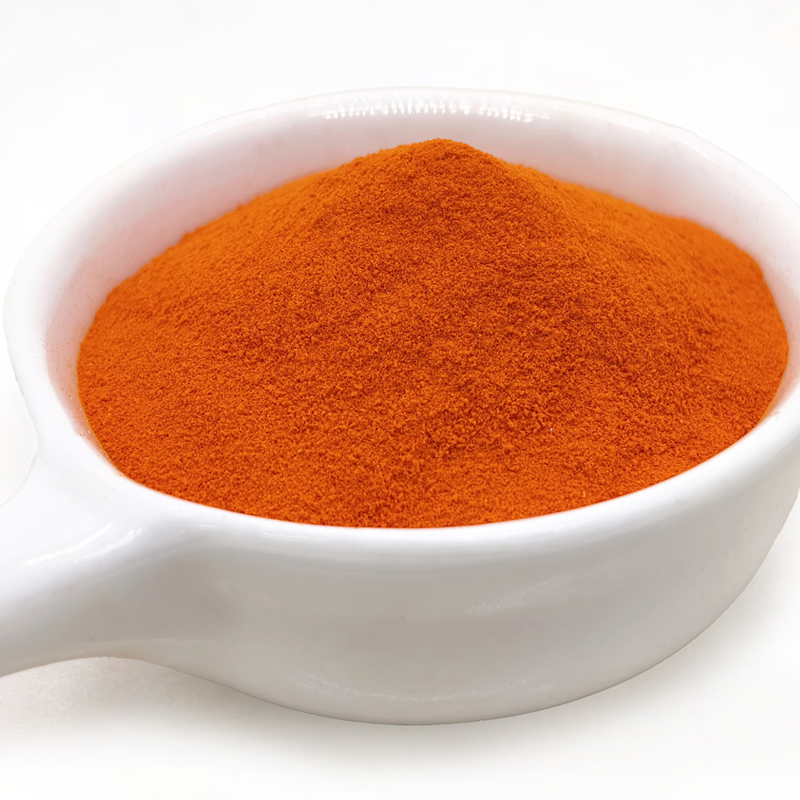
When a food factory needs a dependable natural yellow-to-orange shade, Beta Carotene Natural Food Color can be an effective choice—but only when the raw material, formulation, processing conditions, and supply chain are properly matched. For manufacturers evaluating commercial sources, MT Royal provides access to multiple brands at competitive prices, giving procurement teams more flexibility to compare technical specifications, availability, and total production cost before committing to a supply program.
Natural food coloring has moved well beyond the specialty-food aisle. Beverage companies, dairy manufacturers, bakeries, confectionery producers, sauce manufacturers, and nutritional-food brands increasingly need colors that deliver visual consistency while fitting changing consumer expectations around ingredient declarations. Yet natural colorants can be less forgiving than synthetic alternatives. Heat, oxygen, light, pH, processing time, and the food matrix can all influence performance.
That makes beta carotene an interesting industrial ingredient: chemically familiar, commercially versatile, visually attractive, and technically demanding enough that choosing the right grade matters.
What Is Beta Carotene Natural Food Color?
Beta carotene is a carotenoid pigment found naturally in many plants and other biological sources. It is responsible for the yellow, orange, and orange-yellow colors associated with foods such as carrots, pumpkins, sweet potatoes, and certain leafy vegetables.
Chemically, beta carotene is a fat-soluble compound with an extended system of conjugated double bonds. That structure enables it to absorb particular wavelengths of visible light, producing its characteristic color.
In food manufacturing, however, the chemistry is only one part of the story.
Commercial Beta Carotene Natural Food Color is available in several physical formats and delivery systems. Depending on the intended application, a manufacturer may encounter:
- Oil-soluble beta carotene
- Water-dispersible beta carotene
- Emulsified beta carotene
- Powdered beta carotene
- Encapsulated or beadlet preparations
- Beta carotene preparations standardized for specific color strength
These products should not automatically be treated as interchangeable.
A beta carotene preparation that performs well in an oil-based sauce may be unsuitable for a clear aqueous beverage. Similarly, a dry powder designed for premixes may not provide the same dispersion characteristics as a liquid emulsion.
For this reason, procurement specifications should identify the application, delivery system, concentration, color strength, physical form, and regulatory requirements, rather than simply stating “beta carotene.”
LATAMARKO – Premium Spanish-Origin Cocoa Powder
Food industry raw materials – list of products
Food Ingredients Supplier in Türkiye for Manufacturers and Importers
Why Manufacturers Are Turning to Natural Food Colors
The natural food color market has expanded alongside consumer interest in recognizable ingredients and clean-label formulations. Market estimates vary depending on the definition used, but industry research consistently points toward continued growth in natural colorants and carotenoids.
One market analysis estimates the global natural food colors market at approximately $2.54 billion in 2025, with projected growth to about $4.75 billion by 2034. The same analysis identifies beta carotene as a significant segment of the market.
The precise percentages should be interpreted carefully because commercial market studies use different methodologies. The broader trend, however, is clear: manufacturers are investing in natural alternatives not only because consumers notice labels, but because brand owners increasingly regard ingredient choices as part of product positioning.
For factories, this creates both an opportunity and a technical challenge.
Replacing an artificial color with a natural pigment may require:
- New dosage calculations
- Reformulation
- Stability testing
- Processing adjustments
- Packaging evaluation
- New supplier qualification
- Regulatory review
- Shelf-life validation
The colorant may occupy only a tiny percentage of the recipe, but its impact on the manufacturing system can be disproportionately large.
How Beta Carotene Produces Its Characteristic Color
The visual color of beta carotene comes from its conjugated molecular structure.
Without getting lost in a chemistry lecture, the important industrial principle is that the molecule interacts with visible light in a predictable way. The concentration and physical distribution of the pigment then determine how intensely that color appears in the finished product.
This is where things get interesting for manufacturers.
A pigment’s theoretical color strength does not automatically translate into equivalent color performance in every food matrix.
Imagine two production tanks containing the same amount of beta carotene. One may produce a uniform golden-yellow beverage; the other may show weak color, haze, floating particles, or sedimentation.
The difference may come from dispersion rather than pigment concentration.
That is why experienced formulation teams evaluate both color strength and delivery performance.
Natural Beta Carotene vs. Synthetic Beta Carotene
The decision between natural and synthetic beta carotene depends on the intended product positioning and technical requirements.
Natural Beta Carotene
Natural beta carotene may be sourced from biological materials such as algae, fungi, plants, or other permitted natural sources, depending on the commercial product.
Potential advantages include:
- Stronger fit with natural-product positioning
- Compatibility with certain clean-label strategies
- Consumer familiarity with plant-derived carotenoid sources
- Potential marketing advantages where natural-origin claims are permitted
However, natural origin does not automatically guarantee superior stability, dispersion, or cost efficiency.
Synthetic Beta Carotene
Synthetic beta carotene is manufactured through controlled chemical processes and can provide highly standardized composition and predictable specifications.
Potential advantages may include:
- Consistent composition
- Established industrial supply
- Competitive economics in some applications
- Good technical predictability
The appropriate choice should therefore be based on your product specification rather than the assumption that one category is universally better.
For brands built around natural ingredients, natural beta carotene may provide an important positioning advantage. For products where natural origin is not essential, technical performance and economics may carry greater weight.
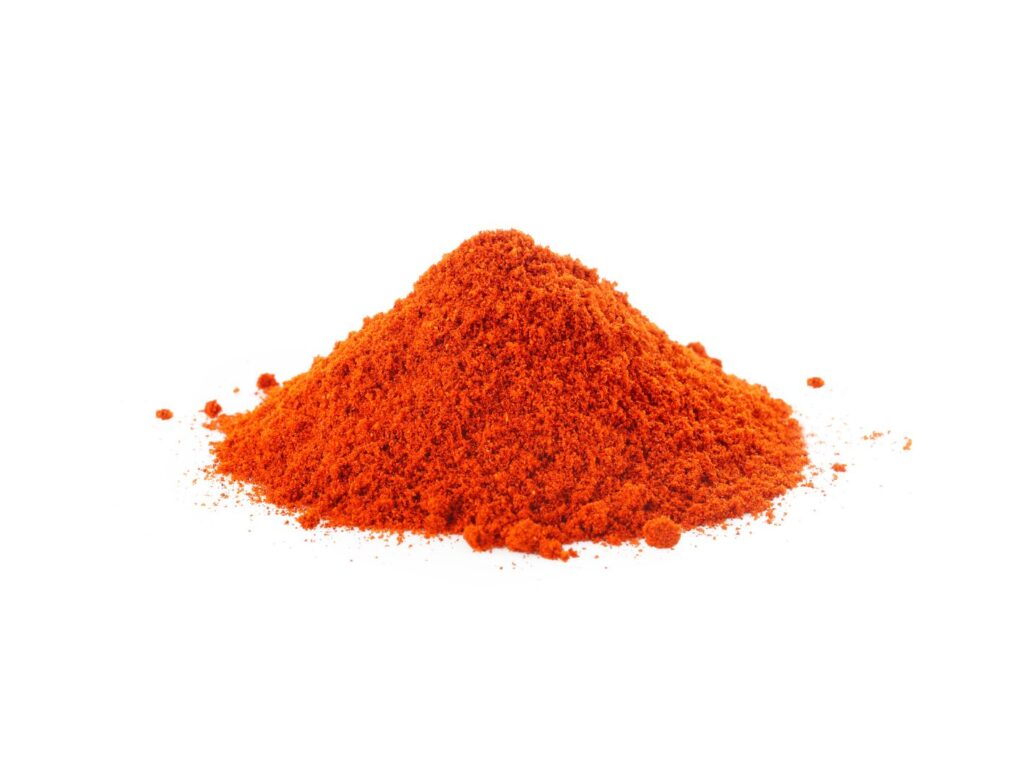
Beta Carotene as a Natural Food Coloring Ingredient
The principal role of beta carotene in many food products is coloration.
It can provide shades ranging from pale yellow to deeper orange depending on concentration, formulation, and product matrix.
Typical applications include:
Beverages
Beta carotene can be used in fruit beverages, flavored drinks, dairy beverages, nutritional drinks, and other liquid products.
A major challenge is water compatibility. Because beta carotene is lipophilic, many aqueous products require a specially designed water-dispersible or emulsified preparation.
For beverage manufacturers, the practical goal is not simply to add pigment to water. It is to create a stable system in which the pigment remains evenly distributed throughout the product.
Dairy and Dairy Alternatives
Yogurt, flavored milk, dairy desserts, plant-based drinks, and related products may use beta carotene to create a characteristic yellow or cream shade.
The fat content and emulsion structure of the formulation can influence color performance.
Bakery Products
Beta carotene can provide warm yellow or golden tones in cakes, biscuits, pastries, and other baked products.
Thermal stability becomes especially important because the ingredient may be exposed to significant temperatures during baking.
Confectionery
Candy, fillings, coatings, and decorative applications often demand highly consistent visual appearance.
Even a small shift in shade can become noticeable when products are manufactured in large volumes.
Sauces, Dressings, and Spreads
Fat-containing systems may be well suited to oil-compatible beta carotene preparations.
However, the manufacturer should evaluate color alongside emulsion stability, processing conditions, and storage behavior.
Dry Mixes and Nutritional Powders
Powdered beta carotene preparations can be useful for dry blending, premixes, fortified products, and powdered beverages.
Here, powder flow, particle size, segregation, and blend uniformity become important.
The Importance of Delivery Systems
One of the most overlooked aspects of Beta Carotene Natural Food Color is the delivery system.
A pigment is only useful if it can be introduced into the food matrix effectively.
Oil-Soluble Beta Carotene
Oil-soluble preparations can be appropriate for fat-based formulations. They may provide strong color in systems where the pigment can remain associated with the oil phase.
Water-Dispersible Beta Carotene
For aqueous products, a water-dispersible preparation can offer significantly better handling and visual uniformity than simply attempting to disperse raw beta carotene.
Emulsified Beta Carotene
Emulsified systems use a carrier structure to help distribute the hydrophobic pigment in water-based formulations.
This can be particularly useful for beverages and other low-fat products.
Powdered or Encapsulated Forms
Powder formats can simplify handling and dosing in dry production environments. Encapsulation can also provide additional protection against environmental factors, depending on the technology used.
The correct delivery system can sometimes reduce production problems more effectively than changing the pigment concentration.
Stability: The Real Test of a Natural Colorant
Natural colors often face more challenging stability conditions than their synthetic counterparts.
Beta carotene is particularly sensitive to oxidative degradation.
Three variables deserve close attention.
Oxygen Exposure
Oxygen can accelerate degradation of carotenoids.
Exposure can occur during:
- High-shear mixing
- Pumping
- Tank agitation
- Filling
- Headspace storage
- Packaging
- Repeated opening of raw-material containers
The solution is not necessarily to eliminate oxygen completely. Rather, manufacturers should understand where oxygen exposure occurs and determine whether those stages materially affect product stability.
Light Exposure
Light can contribute to pigment degradation.
Packaging can therefore become part of the color-management strategy.
A formulation that is perfectly stable in a stainless-steel tank may behave differently after six months in a transparent retail container sitting under bright supermarket lighting.
Heat
Thermal processing can influence carotenoid stability.
The actual impact depends on:
- Temperature
- Exposure time
- Oxygen concentration
- Product composition
- Water activity
- pH
- Processing sequence
- Packaging
A short high-temperature process may produce a different result from a long moderate-temperature process, even if the overall thermal load appears similar.
The Role of pH in Beta Carotene Performance
Beta carotene itself is not typically selected because it provides pH-dependent color changes. However, the surrounding food system can strongly influence its stability and physical behavior.
This is particularly important in beverages, sauces, and dairy formulations.
When evaluating a new colorant, your R&D team should test it at the actual formulation pH rather than assuming that performance in distilled water will predict performance in the finished product.
The food matrix is not a passive container.
Proteins, fats, acids, minerals, emulsifiers, sugars, salts, and other ingredients can influence how the colorant behaves.
Beta Carotene and Clean-Label Product Development
Clean-label reformulation has changed how manufacturers evaluate colorants.
A product-development team may begin with a simple objective:
“Replace the artificial yellow color with a natural ingredient.”
The production team then discovers that the replacement requires:
- A higher dosage
- A different addition sequence
- Better dispersion
- A different emulsifier
- Modified packaging
- Additional stability testing
Suddenly, a one-line ingredient change has become a full process-development project.
This is why manufacturers should involve procurement early.
If R&D develops a formula around a highly specialized beta carotene preparation that procurement later discovers has a six-month lead time and high minimum order quantity, nobody wins.
Common Mistakes When Purchasing Beta Carotene
Choosing Based on Price Per Kilogram
Price per kilogram is one of the least informative numbers when comparing colorants.
Instead, calculate:
Cost per unit of finished product at the required color intensity.
A $30/kg material used at 0.02% may be cheaper than a $15/kg product that must be used at 0.10%.
Ignoring Color Strength
Different preparations can contain different concentrations or standardized color strengths.
Always compare equivalent technical specifications.
Treating Powder and Liquid Products as Equivalent
A liquid emulsion and a dry powder may contain the same pigment family but require completely different processing methods.
Failing to Test at Commercial Scale
A laboratory trial can hide problems associated with large tanks, pumping, residence time, and high-speed filling.
Ignoring Shelf Life
A product that looks perfect on production day may not meet the visual specification at the end of its intended shelf life.
Forgetting Packaging
Packaging can influence light exposure and oxygen transmission.
The colorant and package should therefore be evaluated as a system.
Approving a Supplier Without a Contingency Plan
A single-source strategy can be risky for high-volume production.
Even if the primary supplier performs well, procurement teams should understand the available alternatives.
How to Select a Beta Carotene Supplier
A reliable Beta Carotene Natural Food Color supplier should support both the technical and commercial sides of your operation.
Technical Criteria
Look for:
- Defined product specification
- Consistent color strength
- Appropriate delivery system
- Batch traceability
- Certificate of Analysis
- Suitable packaging
- Shelf-life information
- Recommended storage conditions
- Regulatory documentation
Commercial Criteria
Also evaluate:
- Price
- Minimum order quantity
- Lead time
- Freight
- Payment terms
- Availability
- Annual-volume pricing
- Backup supply options
Service Criteria
A supplier should also be able to answer practical questions.
Can they explain why a beverage is becoming cloudy?
Can they suggest a different delivery system?
Can they provide samples for validation?
Can they offer an alternative brand when availability changes?
Can they maintain documentation consistently?
These questions are often more valuable than asking who has the lowest quotation.
Why Multiple Brands Can Be Valuable
There is no universal winner in natural food colors.
A supplier that offers several brands can help manufacturers evaluate different combinations of:
- Color strength
- Delivery system
- Stability
- Packaging
- Availability
- Lead time
- Price
MT Royal’s multiple-brand approach can be useful for factories that want procurement flexibility rather than dependence on a single manufacturer.
In our work with manufacturing-oriented sourcing, we have seen that the most practical supplier relationships are usually those where technical and commercial teams can compare realistic alternatives.
A backup supplier is also more valuable when it has already been technically qualified. Finding an alternative during a production shortage is not the ideal time to discover that the new product behaves differently.
Specialized Tips for Large-Scale Production
Establish a Master Color Standard
Your factory should maintain an approved reference sample or instrumental color specification.
This allows production and quality-control personnel to work toward the same target.
Standardize the Addition Sequence
Define exactly when and how the color is introduced.
Changing the addition point can affect dispersion and final appearance.
Control Premix Conditions
If your formulation requires a concentrated color premix, establish consistent:
- Temperature
- Mixing time
- Agitation speed
- Concentration
- Addition sequence
Minimize Unnecessary Storage
Do not prepare large quantities of diluted color solution unless the formulation and stability data support it.
Some preparations can be more vulnerable after dilution.
Monitor Production Losses
Track the difference between theoretical and actual consumption.
Unexpectedly high color usage can indicate:
- Poor dispersion
- Line losses
- Incorrect dosing
- Operator variation
- Equipment retention
- Product carryover
Validate the First and Last Production Batches
When scaling up, do not only test the beginning of production.
The final portion of a long batch or production campaign can behave differently because of tank geometry, settling, or changes in processing conditions.
Beta Carotene in Beverage Manufacturing: A Practical Example
Consider a beverage manufacturer producing 100,000 liters per day.
The formulation team selects a beta carotene emulsion because it offers the desired orange-yellow shade.
During pilot trials, the product looks excellent.
At full scale, however, the beverage develops slight color variation between the beginning and end of the filling run.
What happened?
Several possibilities should be investigated:
- The color premix may not have remained homogeneous.
- The holding tank may have insufficient agitation.
- The addition point may be creating incomplete dispersion.
- Pumping conditions may be affecting the emulsion.
- The color preparation may be interacting with the beverage matrix.
- The production residence time may be longer than in the pilot process.
The instinct may be to increase the dosage.
That can be the wrong move.
If the real problem is dispersion, adding more pigment simply increases cost while leaving the process defect untouched.
This example illustrates why a good Beta Carotene Natural Food Color program is as much about process engineering as ingredient selection.
Natural Food Color and Total Cost of Ownership
Manufacturers should move from purchase price to total cost.
Suppose a factory purchases 10,000 kg of beta carotene preparation annually.
A small difference in price may appear significant, but other factors can have an equal or greater effect:
- 5% higher dosage
- 2% processing loss
- Higher freight
- Larger minimum order
- Shorter shelf life
- Additional warehouse requirements
- More frequent quality testing
- Longer lead times
A product that costs $2/kg less may ultimately be more expensive.
For this reason, procurement should calculate the cost per finished batch, not simply the cost per drum or bag.
Quality Control for Beta Carotene Natural Food Color
A robust incoming-quality program can include:
Identity
Confirm that the material matches the approved product and specification.
Appearance
Inspect color, physical form, packaging condition, and any visible abnormalities.
Documentation
Verify the lot number and Certificate of Analysis where required.
Physical Properties
Depending on the product, assess dispersion behavior, moisture, particle characteristics, or other specified parameters.
Microbiological Quality
For applicable food ingredients, ensure the material meets the relevant microbiological specifications.
Stability
Where appropriate, compare retained samples or periodic production results against established standards.
The goal is not to test everything imaginable.
The goal is to identify the measurements that actually protect your product and process.
Emerging Trends in Natural Food Color
The natural color market is evolving in several important directions.
Better Natural Color Stability
Ingredient developers are investing in improved emulsification, encapsulation, and stabilization technologies to make natural pigments more robust in demanding applications.
Greater Interest in Transparent Supply Chains
Brand owners increasingly want information about ingredient origin, manufacturing processes, and quality controls.
That means suppliers are being evaluated not just as vendors, but as part of the product’s traceability chain.
More Sophisticated Color Measurement
Instrumental color measurement is becoming increasingly useful as manufacturers move away from subjective descriptions such as “light orange.”
Digital color targets can help production teams identify process drift before consumers notice it.
Supply Chain Resilience
Food manufacturers are paying closer attention to geographic concentration, logistics, inventory strategy, and qualified alternatives.
For high-volume production, resilience is becoming a quality characteristic in its own right.
Frequently Asked Questions About Beta Carotene Natural Food Color
Is beta carotene considered a natural food color?
Beta carotene can be used as a natural food color when the specific commercial preparation meets the applicable regulatory definition and is derived from an approved natural source. Manufacturers should verify the status of the exact product in their target market rather than relying on the ingredient name alone.
What color does beta carotene produce?
It typically produces yellow, golden-yellow, yellow-orange, or orange shades. The final appearance depends on concentration, food matrix, processing conditions, and the specific commercial preparation.
Is beta carotene suitable for clear beverages?
It can be, but conventional beta carotene is poorly water-soluble. A suitable water-dispersible or emulsified preparation is generally needed for uniform performance in aqueous systems.
Does beta carotene survive heat processing?
Its stability depends on the specific processing conditions and product system. Temperature, exposure time, oxygen, light, and formulation composition can all influence degradation.
How much beta carotene should a manufacturer use?
There is no universal dosage. The required level depends on the target shade, pigment concentration, food matrix, delivery system, regulatory requirements, and processing conditions. Dosage should be established through controlled application trials.
Is natural beta carotene more expensive?
It can be, depending on the source, concentration, production technology, and market conditions. However, purchase price alone does not determine economic performance. Effective dosage and processing efficiency should also be considered.
Can beta carotene be used as a vitamin A ingredient?
Beta carotene can contribute to vitamin A nutrition because it is a provitamin A carotenoid. However, nutritional fortification should be evaluated separately from color application and according to applicable regulations.
How long does beta carotene remain stable?
Shelf life depends on the commercial preparation, packaging, storage conditions, oxygen exposure, temperature, and light. Always follow the supplier’s specification and storage recommendations.
Why does beta carotene sometimes cause sedimentation?
Poor dispersion, incompatible delivery systems, inadequate emulsification, formulation interactions, or insufficient process control can contribute to sedimentation. Increasing dosage without identifying the underlying cause is rarely the best first response.
How should factories compare different beta carotene suppliers?
Compare technical specification, color strength, delivery system, application performance, stability, documentation, supply continuity, minimum order quantity, logistics, and total cost per finished product.
Can MT Royal supply multiple beta carotene brands?
MT Royal can provide access to multiple brands and competitive sourcing options, allowing manufacturers to evaluate alternatives based on technical requirements, availability, and commercial conditions.

What the Right Supplier Relationship Should Look Like
A supplier relationship should become more useful as your production becomes more complex.
For a small buyer, the relationship may start with a quotation and sample.
For a large manufacturer, it should evolve into technical specification management, forecasting, batch documentation, supply planning, alternative sourcing, and application support.
We believe this is particularly important for natural colors because performance depends so strongly on the interaction between ingredient and process.
MT Royal’s ability to work across multiple brands can give procurement teams an additional layer of flexibility. Instead of treating every purchase as a one-off transaction, your team can evaluate suitable alternatives while keeping technical requirements at the center of the decision.
Final Considerations for Manufacturers
Beta Carotene Natural Food Color is a deceptively sophisticated ingredient.
At first glance, it appears simple: add a natural pigment and obtain an attractive orange or yellow color.
In industrial production, the reality is more nuanced.
The source matters.
The concentration matters.
The delivery system matters.
The food matrix matters.
The processing conditions matter.
The package matters.
The supplier’s consistency matters.
And the economics matter.
A successful color program is therefore not about finding the most colorful raw material. It is about finding a product that behaves predictably throughout the entire manufacturing journey—from the supplier’s warehouse to your mixing vessel, from the filling line to the customer’s refrigerator.
For factories evaluating natural colorants, MT Royal can serve as a practical sourcing partner by offering multiple brands and competitive options. The strongest purchasing decision, however, will always come from matching the right specification to the actual application.
The best natural color is the one your production team does not have to fight with.
When the pigment disperses correctly, survives the process, meets the required regulatory standard, remains stable on the shelf, and arrives consistently when you need it, color stops being a manufacturing problem and becomes what it should have been all along: a controlled part of product quality.


No comment