

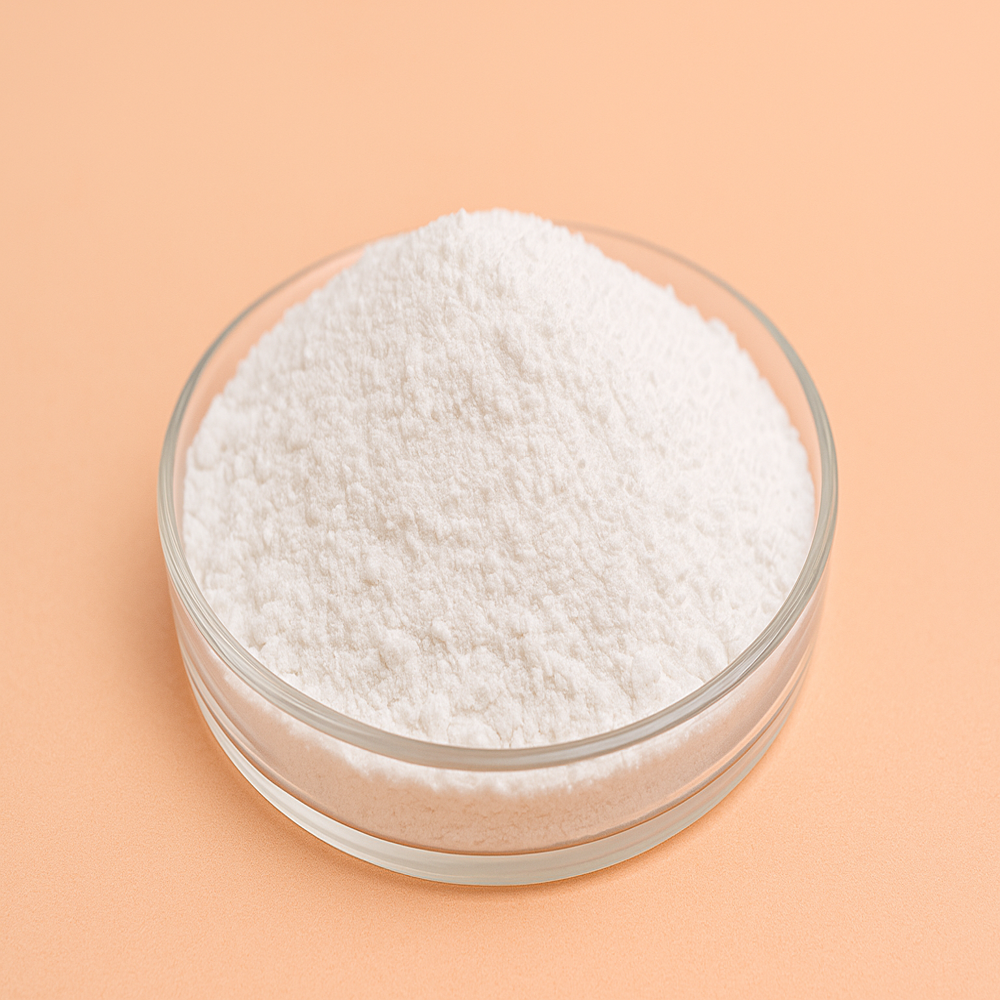
If your factory is purchasing Fumaric Acid pure 99%, the supplier you choose can influence much more than the ingredient line on your purchase order. Purity, particle characteristics, documentation, batch consistency, delivery reliability, and price all affect how smoothly your production runs. For manufacturers that need dependable supply and the ability to compare different brands, MT Royal is worth considering as a sourcing partner because it can provide access to multiple brands and competitive commercial options rather than forcing every factory into a single supply route.
Fumaric acid is a particularly interesting industrial ingredient because a relatively small quantity can have a significant technical effect. It is a strong organic acid, widely recognized as food additive E297, and is used as an acidulant, acidity regulator, flavoring aid, curing or pickling agent, antimicrobial agent, and leavening-related ingredient depending on the application and applicable regulations. The U.S. FDA identifies fumaric acid under CAS 110-17-8 and lists several of these technical effects in its food-substance inventory.
For a factory, however, knowing what fumaric acid does is only the starting point. The more important question is whether the Fumaric Acid pure 99% you purchase is appropriate for your formulation, manufacturing process, regulatory market, and annual consumption.
This guide examines the material from a practical B2B perspective: what it is, why purity matters, where it is used, how it compares with other food acids, what procurement teams frequently get wrong, and how to qualify a supplier before committing to large-volume purchasing.
Food industry raw materials – list of products
What Is Fumaric Acid Pure 99%?
Fumaric acid is an organic dicarboxylic acid with the molecular formula C₄H₄O₄ and a molecular weight of approximately 116.07 g/mol. Its CAS Registry Number is 110-17-8. Chemically, it is the trans isomer of butenedioic acid, while maleic acid is its cis isomer. NIST lists the molecular weight as 116.0722 and identifies fumaric acid as (2E)-2-butenedioic acid.
The phrase “pure 99%” generally indicates that the material contains at least approximately 99% fumaric acid under the particular specification or test basis being referenced. However, this is where professional procurement becomes important.
A factory should never assume that “99%” means exactly the same thing across every supplier.
The analytical basis may be:
- Assay on an anhydrous basis
- Dry-basis assay
- A manufacturer-specific specification
- A commercial grade rather than a food-grade specification
- A minimum value rather than an actual batch result
For food applications, the applicable regulatory specification may be stricter than the product name suggests. For example, the U.S. regulation for fumaric acid under 21 CFR §172.350 specifies a minimum of 99.5% by weight, calculated on an anhydrous basis, for fumaric acid used under that provision.
That distinction is extremely important.
If your purchasing team asks for “Fumaric Acid pure 99%,” but the material is intended for a regulated food application, you should not stop at the commercial product description. Ask for the precise specification and confirm that it satisfies the requirements of your destination market and intended use.
Why Fumaric Acid Is Valuable in Industrial Formulation
Fumaric acid has a combination of properties that makes it attractive to manufacturers.
One of its most important characteristics is its strong acidifying capacity. It provides an intense, persistent sourness and can be useful where a formulation needs acidity without adding a large amount of liquid acid.
It also has relatively low water solubility. The International Organisation of Vine and Wine reports a water solubility of approximately 6.3 g/L at 25°C, while noting much greater solubility in 95% alcohol at elevated temperature. Its reported melting point is approximately 287°C.
These properties create both advantages and processing considerations.
Low water solubility can be beneficial when controlled dissolution is desirable, especially in dry systems. But it can also become a problem if your process requires rapid and complete dissolution in cold water.
This is one reason why a factory should evaluate application performance, not simply chemical purity.
A material can meet the assay specification and still behave differently from another supplier’s product because of differences in particle size, crystal morphology, bulk density, moisture, or other physical characteristics.
Fumaric Acid Pure 99% Applications in Food Manufacturing
Fumaric acid is used across a broad range of food applications. The exact permitted level and purpose depend on the product category and jurisdiction, so formulation teams should always verify the applicable regulations rather than assuming that an ingredient’s general approval means unlimited use.
The FDA’s current food-substance inventory identifies fumaric acid for technical effects including acidity control, flavoring, leavening, curing or pickling, and antimicrobial functions.
Codex GSFA also identifies fumaric acid as an acidity regulator and provides food-category-specific provisions.
Bakery and Tortilla Manufacturing
Fumaric acid can be particularly useful in dry and semi-dry bakery systems.
Manufacturers may use it for:
- Acidification
- Flavor development
- pH adjustment
- Supporting preservation strategies
- Tortilla and flatbread formulations
- Leavening systems
In dry formulations, its relatively low solubility can provide a different release profile compared with highly soluble acids.
For tortilla manufacturers, this can be especially relevant because acidity influences dough characteristics, microbial stability, flavor, and finished-product shelf life.
However, the formulation should be validated at production scale. A change in acid level can affect dough handling, not just pH.
Beverages and Powdered Drink Mixes
Acidulants are fundamental to many beverage formulations because acidity contributes to flavor balance and influences microbial stability.
Fumaric acid can be useful in powdered beverage systems where a strong acid effect is required without introducing substantial additional liquid.
However, solubility must be evaluated carefully.
If your product is an instant beverage powder that needs to dissolve rapidly in cold water, a highly soluble acid may behave differently from fumaric acid. If your formulation benefits from a slower dissolution profile or intense acid impact, fumaric acid may be more attractive.
This is a classic example of why “stronger acid” does not automatically mean “better acid.”
Confectionery
Fumaric acid can contribute pronounced sourness to confectionery products, including certain powdered, compressed, coated, and sugar-based systems.
For manufacturers, the advantage can be efficiency: the desired sensory effect may be achieved with a comparatively small addition.
But distribution is critical.
If the acid is not dispersed uniformly, consumers can experience inconsistent sourness from one piece to another. In large-scale production, that is not merely a sensory issue; it is a mixing-validation issue.
Seasonings and Savory Products
Acidulants are widely used to create brightness and flavor contrast in savory products.
Fumaric acid may be considered for:
- Seasoning blends
- Snack coatings
- Powdered flavor systems
- Acidified dry mixes
- Certain processed-food applications
Its relatively high acid strength makes accurate dosing particularly important.
A common mistake is to treat fumaric acid like a conventional salt ingredient. It is not forgiving of careless dosing.
Processed Foods and Specialty Formulations
Depending on local regulations and formulation objectives, fumaric acid may also be used in other processed-food systems where acidity regulation, flavor impact, or related technical functions are required.
The important point for procurement teams is that the intended application determines the appropriate grade and documentation.
Food grade, technical grade, pharmaceutical-related specifications, and laboratory-grade materials should never be treated as interchangeable simply because the chemical name is identical.
Fumaric Acid vs. Citric Acid: What Should Manufacturers Consider?
The most useful comparison is not simply which acid is “better,” but which acid fits the product.
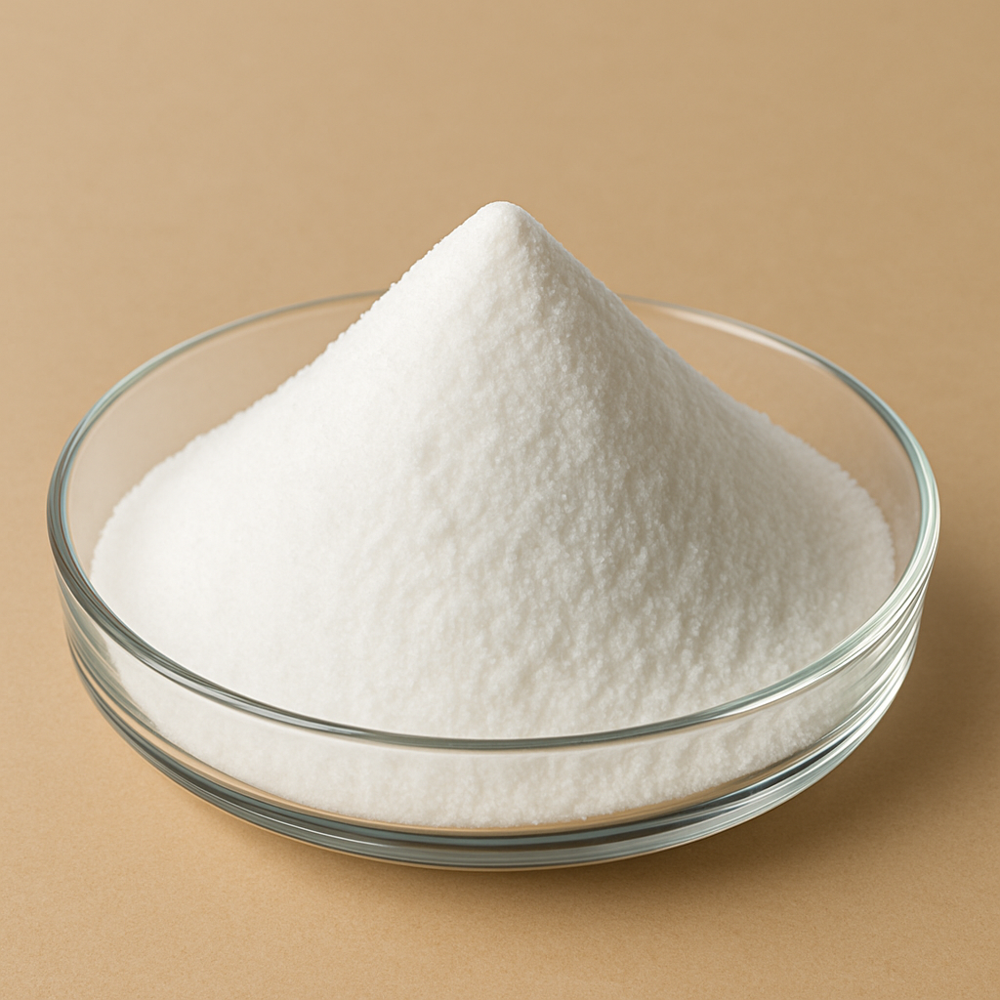
Citric acid is highly water-soluble and widely used across beverages, confectionery, dairy, sauces, and processed foods. Fumaric acid is considerably less soluble and has a stronger, more persistent acid profile.
A simplified manufacturing comparison looks like this:
| Characteristic | Fumaric Acid | Citric Acid |
|---|---|---|
| Chemical class | Organic dicarboxylic acid | Organic tricarboxylic acid |
| Food additive designation | E297 | E330 |
| Water solubility | Relatively low | High |
| Acid impact | Strong | Moderate to strong |
| Typical sensory profile | Sharp, persistent sourness | Cleaner, rounded sourness |
| Dry-system suitability | Often advantageous | Also widely used |
| Rapid cold-water dissolution | Less suitable | Generally more suitable |
| Typical industrial role | Acidulant, pH control, flavor | Acidulant, pH control, chelation |
The choice should be based on product architecture.
For a powdered drink that must disappear rapidly into cold water, fumaric acid’s low solubility may be inconvenient. For a dry seasoning or confectionery system where intense acidity and controlled dissolution are desirable, that same characteristic may be useful.
In other words, solubility is not a flaw. It is a design parameter.
Fumaric Acid vs. Malic Acid
Malic acid offers another important comparison.
Both acids can produce a noticeable sour taste, but their sensory profiles and processing characteristics differ. Malic acid is often associated with a smooth, lingering tartness and is common in fruit-flavored products.
Fumaric acid generally provides a powerful acid effect and is especially interesting in applications where high acid efficiency and a dry ingredient format are valuable.
Before switching from one to the other, conduct a controlled trial rather than simply matching weight-for-weight.
The pH response, titratable acidity, sensory perception, dissolution, and interaction with other ingredients may all change.
What Does “99% Purity” Really Tell Your Factory?
Purity is important, but it does not tell the entire story.
Imagine two batches:
Batch A
- Assay: 99.7%
- Good documentation
- Fine particle distribution
- Consistent moisture
- Stable supply
Batch B
- Assay: 99.8%
- Limited documentation
- Different particle characteristics
- Irregular supply
- Unclear storage history
On paper, Batch B appears slightly “better” because 99.8% is higher than 99.7%.
In actual manufacturing, Batch A may be the superior material.
This illustrates a crucial principle: chemical purity and manufacturing suitability are related but not identical concepts.
For procurement, the specification should ideally address both chemical and physical characteristics relevant to your process.
Key Quality Parameters to Review Before Buying
When evaluating a Fumaric Acid pure 99% supplier, your quality department should review the available specification carefully.
Assay
Confirm the minimum assay and analytical basis.
Do not accept a vague “99% pure” statement when your regulatory or customer specification requires a specific assay threshold.
Moisture
Moisture can affect powder behavior, storage stability, and effective concentration.
Your quality team should understand whether moisture is reported separately and whether assay is calculated on an anhydrous basis.
Appearance
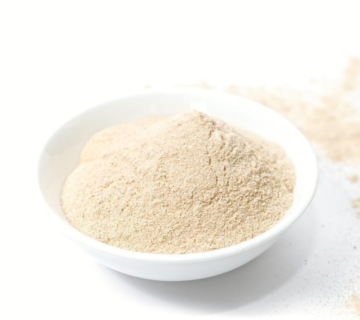
Commercial fumaric acid is typically supplied as a white crystalline powder or granular crystalline material, depending on grade and supplier.
Unusual coloration, excessive agglomeration, foreign particles, or damaged packaging should trigger investigation.
Particle Size
Particle size can influence:
- Mixing uniformity
- Dissolution rate
- Dust generation
- Flowability
- Segregation
- Feeding accuracy
This parameter is often overlooked during procurement because it does not sound as impressive as “99% purity.” On a production line, however, particle size can be the difference between a smooth powder blend and a small-scale rebellion inside the mixer.
Heavy Metals and Microbiological Parameters
For food applications, appropriate contaminant and microbiological specifications should be verified according to the relevant regulatory framework and your internal quality standard.
Packaging
Packaging should protect the product from moisture, contamination, physical damage, and improper handling.
For high-volume manufacturing, packaging format also affects warehouse efficiency and material-handling labor.
Common Mistakes When Sourcing Fumaric Acid
Buying Solely on Price
The lowest price per kilogram is tempting, especially when annual consumption is substantial.
But procurement should calculate total cost of ownership.
That includes:
- Material price
- Freight
- Customs and import costs
- Warehouse handling
- Testing
- Waste
- Production downtime
- Emergency purchases
- Inventory financing
- Quality-related losses
A material that costs 3% less but creates 1% more production waste may not be cheaper.
Assuming All 99% Products Are Equivalent
This is perhaps the most common conceptual error.
“99%” is a purity statement, not a complete product identity.
Always compare the complete technical specification.
Ignoring Regulatory Destination
An ingredient acceptable for one market may require different documentation or meet different conditions in another.
If your factory exports to the European Union, United States, Middle East, Asia, or another regulated market, involve your regulatory team before final supplier approval.
Failing to Test at Production Scale
A laboratory beaker is not a 2,000-liter production tank.
Scale changes mixing behavior, dissolution time, heat transfer, powder dispersion, and residence time.
A supplier should therefore be qualified through representative production trials whenever the ingredient has a significant functional role.
Overlooking Supply Continuity
A factory can survive a slightly higher ingredient price much more easily than it can survive a missing critical raw material on production day.
Your supplier evaluation should therefore include availability, lead time, inventory position, alternative origins, and contingency planning.
How MT Royal Fits Into an Industrial Sourcing Strategy
MT Royal can be useful for factories that want to evaluate multiple brands rather than rely on a single manufacturer.
That flexibility matters because different brands may offer differences in commercial terms, packaging, origin, physical characteristics, and availability even when the underlying chemical identity is the same.
A practical sourcing process is to ask MT Royal for suitable alternatives and then compare them against your internal specification.
The evaluation should cover:
- Technical specification
- Certificate of Analysis
- Regulatory documentation
- Country of origin
- Packaging
- Minimum order quantity
- Lead time
- Price per kilogram
- Delivered cost
- Sample availability
- Production-trial performance
- Supply continuity
This approach keeps the relationship consultative rather than turning the purchasing decision into a simple race to the lowest quotation.
In our experience with industrial procurement, the strongest supplier relationships are built around transparency. A supplier that tells you where a material fits—and where it does not—is usually more useful than one that claims every product is suitable for everything.
Industrial Storage and Handling Considerations
Fumaric acid should be stored according to the manufacturer’s safety data sheet and product specification.
For factories, practical controls generally include:
- Keeping packaging closed when not in use
- Protecting material from moisture
- Maintaining clean and dry storage areas
- Separating raw materials according to the site’s hazard and food-safety procedures
- Using lot-based inventory control
- Applying appropriate stock rotation
- Preventing contamination during dispensing
- Maintaining clear batch traceability
Powder handling should also be considered from an occupational-safety perspective.
Even an ingredient widely used in food manufacturing is still a chemical substance that requires appropriate handling. Your site should follow its own risk assessment, PPE requirements, ventilation controls, spill procedures, and Safety Data Sheet instructions.
Food grade does not mean “warehouse rules no longer apply.”
Specialized Tips for Large-Scale Production
Large factories should move beyond basic supplier qualification and develop a structured raw-material management program.
Establish an Approved Specification
Your company should maintain a controlled internal specification rather than relying entirely on the supplier’s document.
The internal specification should identify the parameters that genuinely affect your production.
Set Incoming Inspection Rules
Not every batch necessarily needs the same testing intensity, but critical raw materials should be managed through a documented risk-based system.
Your quality team might establish different inspection levels based on supplier history, risk, batch size, and previous deviations.
Track Supplier Performance
Create a supplier scorecard covering:
- On-time delivery
- Batch acceptance rate
- Documentation accuracy
- Complaint response time
- Price stability
- Lead-time consistency
- Corrective-action performance
A supplier with a slightly higher price but 99% on-time delivery may outperform a cheaper supplier with frequent delays.
Qualify a Backup Brand
If fumaric acid is essential to your product, consider approving a second source.
But do not wait until your primary supplier runs out.
Conduct the alternative-brand trial while production is stable. If a supply disruption arrives later, you want a validated backup, not a frantic laboratory experiment.
Calculate Acid Equivalency Scientifically
When reformulating between acidulants, do not simply exchange one kilogram for one kilogram.
Evaluate:
- pH
- Titratable acidity
- Sensory sourness
- Buffering capacity
- Solubility
- Processing conditions
- Shelf-life implications
The formulation may require substantially different dosing to achieve the same technical result.
Quality Control: What Factory Managers Should Watch
For a high-volume plant, quality control should connect incoming raw-material results to finished-product performance.
Consider establishing a correlation between:
Incoming fumaric acid characteristics → process behavior → finished-product quality
For example, if a particular particle-size range produces faster dissolution and better blend uniformity, your purchasing specification may need to reflect that observation.
This is a more advanced approach than simply checking whether the Certificate of Analysis says “pass.”
It turns historical production data into procurement intelligence.
Emerging Trends in Fumaric Acid Sourcing
Several trends are shaping industrial ingredient procurement.
Greater Demand for Functional Food Ingredients
Manufacturers are increasingly developing products positioned around sugar reduction, acidity control, texture, shelf-life management, and nutritional improvement.
That increases the importance of multifunctional ingredients.
More Attention to Traceability
Customers and regulators increasingly expect manufacturers to demonstrate where raw materials came from and how they were controlled.
Traceability is therefore moving from a quality department responsibility to a broader supply-chain requirement.
Sustainability in Chemical Production
There is growing research into fermentation-based fumaric acid production using microorganisms and renewable feedstocks. Traditional industrial production has historically relied heavily on chemical routes, while bio-based production is being investigated as a potential alternative.
For procurement teams, this may eventually create additional sourcing criteria beyond price and purity, including carbon footprint, feedstock origin, manufacturing technology, and sustainability documentation.
More Sophisticated Supplier Qualification
Modern procurement teams increasingly evaluate suppliers through total-cost and supply-risk models instead of unit price alone.
This is particularly relevant for ingredients such as fumaric acid, where one raw material can influence multiple aspects of a finished product.

Frequently Asked Questions About Fumaric Acid Pure 99%
What is Fumaric Acid pure 99% used for?
It is commonly considered for food acidification, acidity regulation, sourness enhancement, selected bakery and tortilla applications, confectionery, powdered products, and other industrial formulations where its technical properties are appropriate.
Is Fumaric Acid pure 99% the same as food-grade fumaric acid?
Not necessarily.
The phrase “pure 99%” describes a purity level, while “food grade” refers to a broader set of quality, purity, manufacturing, and regulatory requirements.
For example, U.S. food regulations under 21 CFR §172.350 specify a minimum assay of 99.5% on an anhydrous basis for fumaric acid under that provision.
Always verify the specification against the regulatory requirements for your application and market.
What is the CAS number of fumaric acid?
The CAS Registry Number is 110-17-8. Its molecular formula is C₄H₄O₄ and its molecular weight is approximately 116.07 g/mol.
What is E297?
E297 is the European food additive designation commonly associated with fumaric acid.
Codex identifies fumaric acid as food additive INS 297 and lists it as an acidity regulator.
Is fumaric acid highly soluble in water?
No. Its water solubility is relatively low, reported at about 6.3 g/L at 25°C by the International Organisation of Vine and Wine.
This can be an advantage in some dry applications and a limitation in formulations requiring rapid cold-water dissolution.
How should I choose between different fumaric acid brands?
Compare the complete specification, not only assay.
Evaluate particle characteristics, moisture, documentation, regulatory suitability, packaging, origin, price, lead time, availability, and actual formulation performance.
Can MT Royal supply different brands?
MT Royal can be considered when your factory wants to compare multiple brands and commercial options. The most appropriate brand should be selected according to your approved specification, intended application, market requirements, and annual purchasing volume.
Should a factory test every shipment?
The appropriate testing frequency depends on your quality-management system and raw-material risk assessment.
Your quality team should establish an incoming inspection program based on supplier qualification, historical performance, regulatory requirements, and the criticality of the ingredient.
Can fumaric acid replace citric acid directly?
Not on a simple one-to-one basis.
The acids differ in solubility, sensory profile, acid strength, and formulation behavior. A replacement should be evaluated through controlled trials involving pH, titratable acidity, sensory testing, processing performance, and finished-product stability.
The Commercial Question: What Is the Real Cost of Fumaric Acid?
When your purchasing team compares quotations, calculate the effective cost rather than focusing only on the headline number.
A useful model is:
Effective cost = purchase price + logistics + testing + storage + waste + production losses + supply-risk cost
The last term is difficult to quantify, but it should not be ignored.
If a low-cost supplier causes a production delay that forces you to purchase emergency material at a premium, the original savings were largely fictional.
For this reason, MT Royal’s ability to offer multiple brands can be commercially useful. Your factory can compare alternatives based on a broader set of variables rather than treating the market as a one-product, one-price transaction.
We also recommend that procurement and quality teams participate together in the final supplier decision. Purchasing understands the commercial side; quality understands the technical and regulatory risk. When those two perspectives are combined, the decision is usually stronger.
Why the Supplier Matters as Much as the Ingredient
Fumaric acid itself is a well-defined chemical. Your supply chain, however, is not.
The ingredient may be chemically identical across suppliers, yet the purchasing experience can differ dramatically.
One supplier may have strong documentation but weak availability. Another may offer excellent pricing but inconsistent delivery. A third may provide multiple brands and help you identify a specification that fits both your process and your budget.
That is why supplier qualification should be treated as part of product-quality management.
For a small trial order, the difference may be barely noticeable.
For a factory consuming several tons per month, it becomes a strategic issue.
Final Perspective: Buy the Specification, Not Just the Chemical Name
Fumaric Acid pure 99% is a deceptively simple purchasing item. The chemical identity is straightforward, but successful industrial use requires a much broader evaluation of purity, physical properties, application performance, regulatory suitability, storage, documentation, and supply continuity.
For your factory, the right purchasing decision begins with a clear specification and ends with a supplier capable of consistently meeting it.
MT Royal can be a practical option for manufacturers that want access to multiple brands, competitive prices, and a broader sourcing strategy. The strongest approach, however, is not to select a supplier simply because it offers a good quotation. Request the technical documents, compare the specifications, test the material, calculate the delivered cost, and assess the supplier’s ability to support your production schedule over time.
The smartest raw-material purchase is rarely the one that looks cheapest on the first spreadsheet. It is the one that continues to perform correctly after the pallet reaches your warehouse, after the powder enters the mixer, after the finished product leaves the production line, and after your customer opens the package.
For industrial manufacturing, that is what quality really means: not a number printed on a certificate, but predictable performance when production is counting on it.

No comment