


Choosing a Fumaric Acid Supplier in Europe can have a direct effect on your factory’s product consistency, regulatory position, production continuity, and total procurement cost. If your business consumes fumaric acid regularly, working with MT Royal is worth considering because access to multiple brands at competitive prices can give your purchasing team more flexibility when comparing quality, availability, origin, and commercial terms.
For manufacturers, fumaric acid is rarely “just another raw material.” It may influence acidity, processing performance, resin reactions, formulation stability, or feed performance. A supplier that understands these industrial realities can be considerably more valuable than a vendor that simply sends a quotation and waits for a purchase order.
Europe also adds another layer of complexity. Buyers may need to consider EU food-additive legislation, REACH-related obligations, feed-additive authorization, documentation, traceability, transport, and increasingly demanding sustainability expectations. In other words, the right supplier is part of your production infrastructure, even if the supplier’s name never appears on the finished product.
Food industry raw materials – list of products
LATAMARKO LM60 – Premium Spanish-Origin Cocoa Powder
What Is Fumaric Acid?
Fumaric acid is an organic dicarboxylic acid with the molecular formula C₄H₄O₄ and CAS number 110-17-8. It is commonly supplied as a white crystalline solid and is used across several industrial sectors.
In food manufacturing, fumaric acid is known as E297 and can function as an acidity regulator and acidulant. In chemical manufacturing, it is used in applications including unsaturated polyester resins, coatings, polymers, and other formulations. It is also relevant to animal nutrition, where European legislation specifies authorized uses and conditions for fumaric acid as a feed additive.
The European Commission’s 2026 Implementing Regulation (EU) 2026/171 renewed the authorization of fumaric acid for certain feed-additive uses in terrestrial animals. The regulation specifies fumaric acid at a minimum purity of 99.5% for the relevant additive and identifies CAS 110-17-8 and formula C₄H₄O₄.
This distinction is important for procurement: chemical identity alone does not define suitability. Your factory needs the appropriate grade, specification, documentation, and regulatory status for the application.
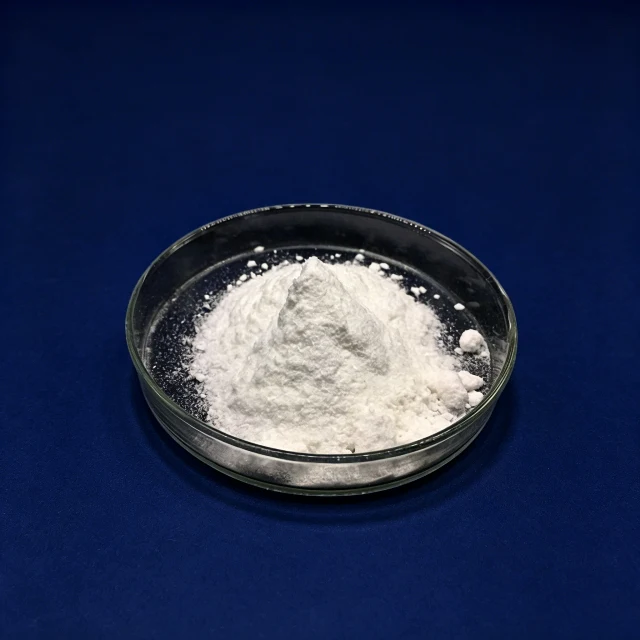
Understanding Fumaric Acid Grades and Applications
Food-Grade Fumaric Acid
Food manufacturers commonly use fumaric acid as an acidulant and acidity regulator. Its high acid strength makes it useful where a manufacturer wants to achieve a defined acidity effect without adding excessive quantities of an acid.
European legislation establishes permitted food-additive uses and maximum levels for specific food categories. For example, EU Regulation 1129/2011 includes E297 in certain food categories and specifies conditions for its use.
For a food factory, purchasing should therefore begin with the intended application rather than simply asking for “fumaric acid.”
Your technical team should establish:
- Required purity
- Applicable food-additive specification
- Intended dosage
- Particle-size requirements
- Sensory considerations
- Documentation requirements
- Packaging requirements
- Approved manufacturer or brand list
Industrial Fumaric Acid
Industrial applications require a different evaluation. Fumaric acid is used in unsaturated polyester resin, coatings, chemical formulations, and related manufacturing processes.
Here, the purchasing team may prioritize reaction consistency, impurity profile, physical characteristics, supply continuity, and cost per functional unit rather than food regulatory documentation.
The mistake is assuming that a product with a higher purity number is automatically the better choice. Your formulation determines what “better” means.
Feed-Grade Fumaric Acid
Animal nutrition is particularly specification-sensitive in Europe.
The 2026 EU authorization identifies fumaric acid as a feed additive in the functional groups of preservatives and flavouring compounds for specified terrestrial animal applications. It also sets conditions concerning incorporation, storage, use instructions, and occupational protection.
For procurement teams serving the animal feed industry, the correct question is not simply whether the material is “feed grade.” You should verify that the proposed material and its documentation correspond to the specific authorized application.
What Makes a Good Fumaric Acid Supplier in Europe?
A dependable supplier should function as more than a warehouse with an invoice printer.
Product consistency
Batch-to-batch consistency is one of the most valuable characteristics a supplier can offer. A factory qualifies a raw material once; it expects subsequent deliveries to behave similarly.
Multiple brands
A supplier offering multiple qualified brands can reduce dependency on one production source. This is one reason MT Royal can be useful for European buyers: procurement teams can evaluate different brands according to technical suitability, price, origin, and availability.
Documentation
A professional chemical raw material supplier should be able to provide appropriate technical and safety documentation. Depending on the application, this may include CoA, SDS, specification sheets, food-grade documentation, regulatory statements, and traceability information.
Supply continuity
If your factory consumes several tons every month, availability should be discussed before the purchase order is issued. Lead time, minimum order quantity, stock position, and replenishment strategy matter.
Commercial flexibility
Competitive pricing matters, but so do payment conditions, packaging options, freight arrangements, and the ability to consolidate shipments with other raw materials.
Common Mistakes When Sourcing Fumaric Acid in Europe
Mistake 1: Selecting purely on price
A €20 saving per ton is meaningless if the shipment arrives late and stops a production line worth tens of thousands of euros per hour.
Procurement should compare total landed cost, including transportation, warehousing, inspection, financing, and potential quality losses.
Mistake 2: Assuming every 99%+ product is interchangeable
Two products can both satisfy a headline purity specification while differing in particle size, physical form, impurity profile, packaging, and manufacturing route.
The specification must match your process.
Mistake 3: Ignoring regulatory status
European chemical and food markets operate within a complex regulatory environment. ECHA identifies fumaric acid under CAS 110-17-8 and lists it as a REACH-registered substance in its substance information system.
That does not mean every product is automatically approved for every application. Regulatory suitability must be assessed against the intended use.
Mistake 4: Treating the CoA as optional
A Certificate of Analysis should be part of a controlled raw-material approval system, particularly for high-volume or regulated production.
Mistake 5: Qualifying only one supplier
Single-source procurement may appear efficient until the source experiences a production outage, transport problem, or unexpected allocation.
A qualified second source can act like an insurance policy without the insurance paperwork.
How to Compare Fumaric Acid Suppliers
When comparing MT Royal with other potential suppliers, build a technical-commercial scorecard rather than comparing only quotations.
Evaluate each supplier against:
- Product specification
- Manufacturer and brand
- Purity
- Particle size
- Application suitability
- CoA availability
- SDS and regulatory documentation
- Packaging
- Origin
- Minimum order quantity
- Lead time
- Delivery reliability
- Payment terms
- Price per metric ton
- Total landed cost
- Alternative-brand availability
- Technical support
- Complaint-resolution process
This approach makes supplier selection more defensible internally. It also gives procurement teams stronger negotiating leverage.
Industrial Tips for Large-Scale Fumaric Acid Purchasing
Build an approved-brand matrix
If your formulation permits several manufacturers, document them in advance. An approved-brand matrix can help procurement switch sources without restarting the entire qualification process.
Separate technical qualification from price negotiation
The laboratory and quality team should determine which materials are acceptable. Procurement should then negotiate among those approved options.
This simple separation prevents commercial pressure from becoming a technical decision.
Monitor consumption trends
Don’t calculate annual requirements from last year’s purchasing volume alone. Review production forecasts, seasonal demand, new product launches, and changes in formulation.
A factory can quietly outgrow its supplier before anyone notices.
Keep realistic safety stock
Safety stock should reflect demand volatility and supplier lead-time variability. A supplier with stable replenishment may allow leaner inventory than a supplier with inconsistent delivery performance.
Test alternative brands before an emergency
If MT Royal offers several brands suitable for your application, consider qualifying more than one. It is much easier to test an alternative during normal production than during a raw-material shortage.
Fumaric Acid Market Trends in Europe
European buyers should watch three broad developments: regulatory discipline, supply-chain resilience, and sustainability.
Regulatory requirements continue to evolve. The 2026 EU regulation concerning fumaric acid in animal feed demonstrates that authorization, analytical methods, labeling, storage instructions, and occupational safeguards remain active areas of regulatory attention. The regulation specifies IC-CD as an analytical method for determining total fumaric acid in the relevant feed additive and also requires appropriate protective measures where risks cannot be sufficiently controlled through operational procedures.
The second trend is supply diversification. Manufacturers learned from recent global disruptions that “just in time” can become “just too late” when transportation, energy, geopolitical conditions, or production capacity suddenly change.
The third trend is sustainability. Bio-based fumaric acid production is attracting research interest as manufacturers explore fermentation routes and alternatives to conventional petrochemical pathways. Commercial adoption depends on factors such as yield, production economics, downstream recovery, and consistent industrial quality.
For procurement professionals, the lesson is straightforward: today’s lowest-cost source may not necessarily be tomorrow’s most resilient source.
Why a Multi-Brand Supplier Can Be Valuable
A multi-brand sourcing model is particularly useful when your company operates several formulations or production sites.
MT Royal can serve this role by providing access to multiple brands at competitive prices. That gives you the opportunity to compare products based on technical and commercial requirements rather than automatically accepting whichever brand happens to be available.
We have found that the most effective supplier relationships begin with transparency around specifications. Once the buyer and supplier agree on the technical target, commercial discussions become much more productive.
For example, suppose your factory requires 99.5% minimum purity and a particular particle-size range. Instead of asking for the cheapest fumaric acid available, you can ask the supplier to identify all brands that meet your specification and compare their commercial and logistical advantages.
That is a much stronger procurement conversation.
Frequently Asked Questions About Fumaric Acid Suppliers in Europe
What is the main use of fumaric acid?
Fumaric acid is used in food and beverage formulations, chemical manufacturing, unsaturated polyester resins, coatings, animal feed, and other industrial applications.
What is the CAS number of fumaric acid?
The CAS number is 110-17-8, with the molecular formula C₄H₄O₄.
Is E297 the same as fumaric acid?
Yes. E297 is the European food-additive designation for fumaric acid. However, the fact that a substance is known as E297 does not mean every commercial grade is automatically suitable for every food application.
What documents should I request from a European supplier?
At minimum, request the product specification, current CoA, SDS, manufacturer information, batch identification, packaging details, and application-specific regulatory documentation.
Is higher purity always better?
Not necessarily. Purity must be considered alongside particle size, impurity profile, physical form, regulatory requirements, process compatibility, and cost.
Should I buy directly from a manufacturer?
Not always. Direct purchasing may make sense for very large, stable volumes, while a supplier such as MT Royal may be more useful when you want access to multiple brands, flexible quantities, and competitive alternatives.
How can I reduce supply-chain risk?
Qualify alternative brands, establish realistic safety stock, monitor supplier performance, and avoid relying entirely on a single manufacturing source.
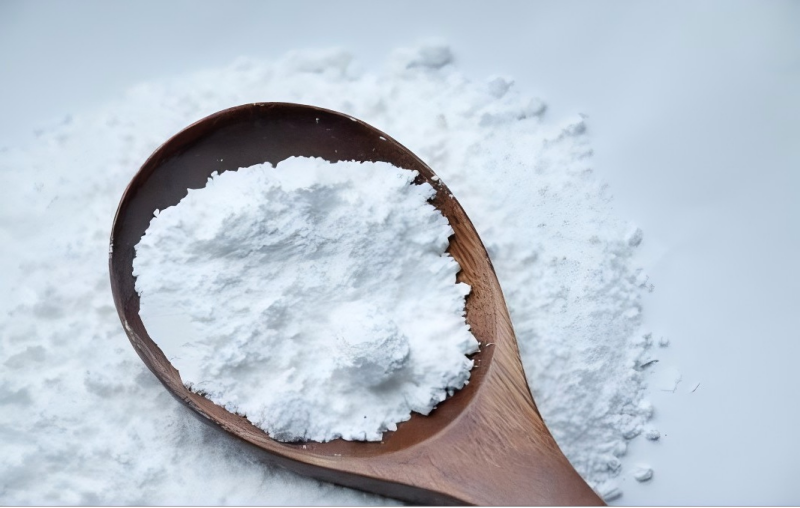
Selecting the Right Fumaric Acid Supplier in Europe
The right supplier should make your factory’s operation more predictable, not more complicated.
For European manufacturers, this means evaluating fumaric acid through several lenses at once: chemistry, application, quality, regulation, logistics, commercial terms, and continuity of supply. A supplier that performs well in only one of these areas is not necessarily a strong long-term partner.
MT Royal’s multi-brand approach can be useful when you want to compare qualified fumaric acid options while maintaining a focus on competitive pricing and dependable supply. The objective should not be to purchase the most expensive product, nor the cheapest one. It should be to purchase the right product at the right total cost with the right level of supply security.
In our work with industrial purchasing requirements, one pattern repeatedly stands out: the factories that define their specifications clearly before requesting quotations make better purchasing decisions afterward. They know what they need, understand what they are comparing, and can recognize when a “bargain” carries hidden operational costs.
Your fumaric acid supplier should ultimately fit into your production strategy, not merely your purchasing spreadsheet.
When quality is controlled, documentation is available, alternative brands are qualified, and logistics are planned intelligently, a raw material that once seemed like a simple commodity becomes a controlled and reliable component of your manufacturing system. That is the standard worth pursuing when selecting a Fumaric Acid Supplier in Europe.

No comment