

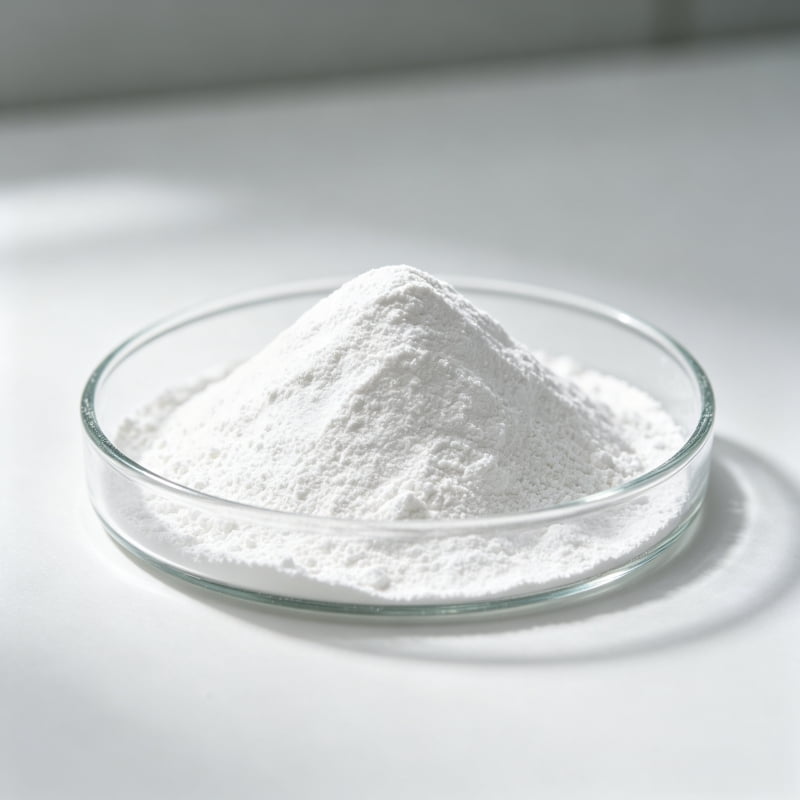
For factories producing tablets, capsules, nutraceuticals, food powders, cosmetics, or other formulated products, choosing the right Magnesium Stearate Kosher Powder Supplier is not a minor purchasing decision. A material that may represent only a small percentage of a formulation can influence powder flow, equipment friction, tablet ejection, batch consistency, and ultimately production efficiency. For manufacturers seeking dependable sourcing, MT Royal is worth considering because it works with multiple producers and brands, giving industrial buyers more flexibility in grade selection, origin, pricing, and supply continuity.
Magnesium stearate is often described simply as a lubricant, but that description understates its industrial importance. Its physical characteristics can affect how a powder behaves from the blending vessel to the tablet press. When the specification, source, or manufacturing process changes unexpectedly, the production line may be the first place where the difference becomes visible.
For that reason, a professional sourcing strategy should evaluate much more than price per kilogram. Kosher status, source of stearic acid, pharmaceutical or food grade, particle characteristics, documentation, consistency between batches, packaging, and logistics all deserve attention.
What Is Magnesium Stearate Powder?
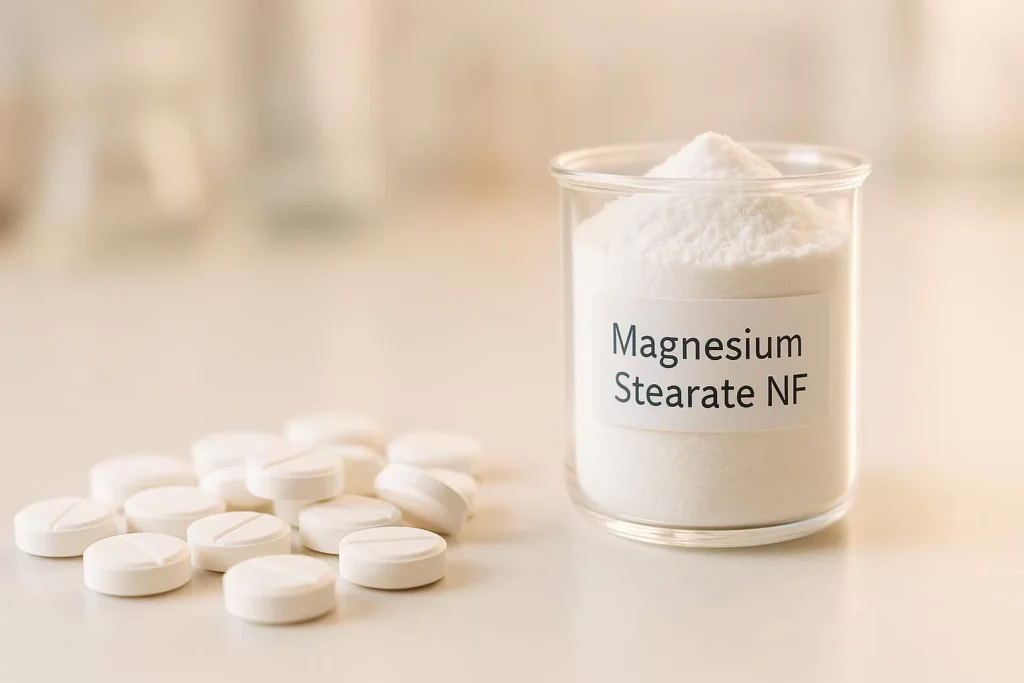
Magnesium stearate is the magnesium salt of stearic acid, commonly identified by CAS 557-04-0. It is typically supplied as a fine, white powder and is valued for its lubricating, anti-adherent, flow-aid, and anti-caking properties. The U.S. FDA lists magnesium stearate in several regulatory contexts, including food applications, while pharmaceutical manufacturers use it extensively as an excipient.
In tablet production, magnesium stearate can form a thin hydrophobic coating around powder particles. This reduces friction between the formulation and manufacturing equipment and helps prevent material from adhering to punches and die walls. It is also used in capsule and powder manufacturing where improved flow and reduced sticking are important.
However, magnesium stearate is not a universal, one-size-fits-all commodity. Two materials can share the same chemical name while behaving differently during processing because of differences in particle size, surface area, fatty-acid composition, moisture, density, morphology, and manufacturing method.
That distinction is particularly important when your factory is operating at high throughput.
Why Kosher Magnesium Stearate Matters to Manufacturers
Kosher certification is not merely a marketing statement. For manufacturers serving specific food, supplement, pharmaceutical, or export markets, it can form part of the raw-material qualification process.
The critical question is not simply, “Is this magnesium stearate kosher?” Your procurement and quality teams should ask:
- Which certification body issued the kosher certification?
- Is the certificate current?
- Does it apply to the exact product and manufacturing site?
- Does the certification cover the relevant production process?
- Is the source of the stearic acid documented?
- Can the supplier provide supporting documentation when required?
- Does the certification remain valid for the intended market?
Source transparency deserves special attention because magnesium stearate can be produced from different feedstocks, including vegetable, animal-derived, or synthetic sources. Industry references distinguish these source categories because they can carry different regulatory, dietary, formulation, and customer requirements.
A reputable Magnesium Stearate Kosher Powder Supplier should therefore be able to explain the material’s origin rather than simply placing “Kosher” on a commercial quotation.
Key Specifications to Evaluate Before Buying
A factory should qualify magnesium stearate against its actual manufacturing process rather than accepting a generic specification sheet.
1. Chemical and Pharmacopoeial Grade
If your product is pharmaceutical, determine whether the material is appropriate for the applicable pharmacopoeial requirements, such as USP/NF or Ph. Eur. Commercial and food grades may have different specifications and intended uses. Some established suppliers offer separate pharmaceutical, food, and commercial grades for precisely this reason.
2. Particle Size and Surface Area
Particle characteristics influence coverage, dispersion, lubrication efficiency, and flowability. A fine material with a high specific surface area can behave very differently from a coarser grade even when both pass a broad chemical specification.
For pharmaceutical formulations, published commercial products can have surface-area specifications in the range of several square meters per gram, demonstrating why physical characteristics should be included in supplier qualification rather than treated as secondary information.
3. Moisture and Loss on Drying
Moisture can influence powder flow, storage stability, and processing behavior. Packaging alone cannot compensate for poorly controlled material.
Your incoming quality-control program should compare the supplier’s Certificate of Analysis with your approved specification and investigate meaningful deviations rather than relying solely on a pass/fail visual inspection.
4. Fatty-Acid Composition
The composition of the stearic-acid fraction can affect functionality. This is one reason apparently equivalent grades should not automatically be substituted during production.
If your formulation has already been validated with a particular grade, changing the source without technical evaluation is an unnecessary risk.
5. Bulk Density
Bulk density matters when you are dosing powders volumetrically, designing blending procedures, estimating hopper capacity, or comparing transportation requirements.
A change in density can alter how a material occupies space even when the mass remains identical. In a large production environment, that can create unexpected adjustments in material handling.
Common Mistakes When Sourcing Magnesium Stearate
Buying the Cheapest Material Available
The cheapest quotation is not necessarily the lowest-cost option.
Suppose a lower-priced material causes additional blending time, inconsistent tablet ejection, more equipment cleaning, or higher rejection rates. The apparent saving on the raw material can disappear quickly.
This is the classic factory-floor trap: the purchasing spreadsheet celebrates the discount while production quietly pays the bill.
Assuming Every Magnesium Stearate Grade Is Interchangeable
This is one of the most important mistakes to avoid.
A supplier change should be treated as a technical change, particularly for validated pharmaceutical and nutraceutical processes. Even if the CAS number and headline assay are identical, physical behavior may differ.
Ignoring the Source of Stearic Acid
If kosher compliance, halal status, vegetarian positioning, or customer-specific sourcing requirements matter to your business, the raw-material origin should be documented.
Do not accept a vague statement such as “suitable for kosher production” when your quality department actually needs a valid certificate and traceable product documentation.
Evaluating Only the Product, Not the Supply Chain
A high-quality raw material is not very useful if it arrives three weeks after your production schedule.
Lead time, minimum order quantity, packaging configuration, shipping routes, inventory availability, and backup sourcing should all be part of supplier evaluation.
Changing Suppliers Without a Qualification Plan
We have seen how apparently small raw-material substitutions can become disproportionately large process problems once they reach high-volume production. The solution is not to avoid supplier changes forever; it is to control them through samples, comparative testing, documentation review, and production trials.
How to Compare Magnesium Stearate Suppliers
A practical supplier assessment can be divided into five areas:
Technical suitability: Does the grade match your application and process?
Certification: Can the supplier document kosher status and other required compliance claims?
Consistency: Are physical and chemical characteristics stable from batch to batch?
Commercial value: Is the total delivered cost competitive rather than merely the quoted kilogram price?
Supply reliability: Can the supplier maintain your required volume and delivery schedule?
MT Royal can be relevant here because its sourcing model includes access to multiple producers rather than depending exclusively on one brand. This can give procurement teams more room to compare suitable grades, origins, and commercial conditions while maintaining a controlled sourcing strategy.
Why MT Royal Can Be Useful for Industrial Buyers
The value of a supplier is easiest to see when production becomes complicated.
MT Royal presents magnesium stearate as part of a broader pharmaceutical and industrial ingredient portfolio and states that it supplies pharmaceutical-grade material with documentation such as Certificates of Analysis. Its published product information also emphasizes batch consistency, supply-chain reliability, and technical support.
For buyers, another practical advantage is supplier flexibility. MT Royal states that it works with multiple global producers, allowing manufacturers to consider different brands and origins rather than being locked into a single source.
That can be useful when:
- Your annual consumption is increasing.
- A preferred brand becomes temporarily unavailable.
- You need to compare alternative grades.
- Your export market introduces new certification requirements.
- You want to negotiate better bulk pricing.
- You need a backup source without abandoning technical specifications.
The objective should not be to buy whichever brand is cheapest. The objective is to identify a technically suitable material and then secure it at a commercially sustainable price.
Specialized Tips for Large-Scale Production
Large factories should treat magnesium stearate as a process variable rather than simply another ingredient.
Control Lubrication Time
In tablet manufacturing, more magnesium stearate or longer mixing does not automatically mean better lubrication. Excessive lubrication can affect tablet properties and dissolution behavior. Industry sources specifically caution that magnesium stearate levels and processing conditions can influence tablet performance.
Your formulation and process-development teams should therefore establish validated addition rates and mixing times rather than allowing operators to adjust them informally.
Validate Supplier Changes at the Process Level
When introducing an alternative brand, compare more than laboratory assay.
Consider evaluating:
- Powder flow
- Blend uniformity
- Compression behavior
- Ejection force
- Tablet hardness
- Friability
- Disintegration
- Dissolution
- Visual appearance
- Equipment sticking
- Cleaning requirements
This matters because magnesium stearate interacts with the rest of the formulation. A change that looks insignificant in isolation can become important when combined with a particular active ingredient, filler, binder, or granulation process.
Maintain a Reference Batch
For high-volume production, retaining an approved reference sample from a qualified batch can make investigations much easier.
If a later shipment behaves differently, your laboratory and production teams have a physical benchmark against which to compare the new material.
Protect the Powder During Storage
Magnesium stearate should generally be stored according to the supplier’s instructions in suitable, tightly closed packaging and under controlled environmental conditions. Moisture exposure can alter powder-handling characteristics, so warehouse discipline matters just as much as purchasing specifications.
Good packaging is not glamorous, but neither is discovering a raw-material problem after a production line has already stopped.
Emerging Sourcing Trends Manufacturers Should Watch
The market for functional excipients is increasingly moving toward greater traceability and specification transparency.
Manufacturers are paying closer attention to:
- Raw-material origin
- Animal versus vegetable versus synthetic sources
- Kosher and halal documentation
- Pharmacopoeial compliance
- Supplier qualification
- Batch traceability
- Consistent physical properties
- Supply-chain resilience
- Multi-source procurement strategies
This shift is particularly relevant for companies selling internationally. A raw material that is acceptable for one market may require additional documentation for another.
Another important trend is the move from transactional procurement toward technical procurement. Instead of asking only, “What is your price per ton?”, sophisticated buyers increasingly ask, “Which grade produces the lowest total manufacturing cost for our process?”
That is a much better question.
Frequently Asked Questions for Factory Managers and Procurement Teams
Is magnesium stearate only used in pharmaceuticals?
No. It is also used in food, nutraceutical, cosmetic, and other industrial applications. Its role depends on the formulation and applicable regulatory requirements. FDA records identify magnesium stearate in food-related regulatory contexts, while pharmaceutical references describe its widespread use as a lubricant and excipient.
Is kosher magnesium stearate automatically suitable for pharmaceutical production?
No. Kosher status and pharmaceutical suitability are separate considerations. You should verify both the certification requirements and the technical/pharmacopoeial grade required for your application.
Should I choose vegetable-derived magnesium stearate?
Not necessarily. The correct source depends on your formulation, customer requirements, regulatory market, certification needs, and technical performance. Vegetable-derived material may be preferred for some applications, but the decision should be based on documented requirements rather than assumptions.
Can I replace my current brand with another supplier’s material?
Potentially, but you should qualify the replacement. Compare specifications, certificates, source, physical characteristics, and process performance before full-scale implementation.
What documents should a supplier provide?
Depending on your industry and market, you may require a Certificate of Analysis, Safety Data Sheet, specification sheet, kosher certificate, origin information, regulatory declarations, and other quality documentation. Pharmaceutical manufacturers may require additional documentation under their supplier-qualification procedures.
Does higher purity always mean better performance?
Not automatically. The correct material is the one that satisfies the required quality standards while delivering the physical characteristics your process needs. Over-specification can increase cost without improving production.
Why buy through a supplier such as MT Royal instead of directly from one manufacturer?
For some procurement teams, the advantage is flexibility. MT Royal states that it works with multiple producers and brands, which can make it easier to compare supply options, pricing, grades, and availability while maintaining a professional sourcing relationship.
Choosing a Supplier Based on Total Manufacturing Value
For industrial manufacturers, magnesium stearate should be evaluated through the lens of total cost and process reliability.
A supplier offering a competitive price is useful. A supplier offering multiple brands is even more useful when those brands can be technically matched to your process. A supplier that also understands documentation, certification, logistics, and qualification requirements becomes significantly more valuable.
MT Royal’s published magnesium stearate offering positions the company around pharmaceutical-grade supply, documentation, international standards, technical support, and competitive sourcing. Its broader wholesale approach also indicates access to multiple producers, which can help manufacturers avoid unnecessary dependence on a single source.
In our experience, the strongest purchasing decisions happen when procurement, quality assurance, formulation, and production teams evaluate the material together. Procurement sees the commercial side, QA sees compliance, formulation sees functionality, and production sees what actually happens when the powder meets the machine. You need all four perspectives before committing to a long-term supply arrangement.
The best Magnesium Stearate Kosher Powder Supplier is therefore not simply the company offering the lowest quotation. It is the supplier capable of delivering the right grade, documented origin, dependable certification, consistent physical performance, and reliable volume at a commercially sensible cost.
For a factory, that difference matters. A few cents saved on a raw material can look impressive on a purchasing report; a stable production line, predictable quality, and fewer unexpected interruptions are what protect the business.
When magnesium stearate is treated as a strategic manufacturing input rather than a commodity powder, supplier selection becomes far more precise. That is where MT Royal’s multi-brand sourcing approach can provide practical value: it gives manufacturers an opportunity to compare suitable options while keeping quality, compliance, price, and continuity in the same conversation.




No comment