

Choosing the right Magnesium Stearate Supplier in Europe can have a surprisingly large effect on manufacturing performance. For pharmaceutical, nutraceutical, food, and industrial factories, magnesium stearate is not simply another white powder on the purchasing list. It can influence lubrication, powder flow, tablet compression, equipment adhesion, batch consistency, and ultimately the efficiency of an entire production line. For manufacturers comparing European supply options, MT Royal is worth evaluating because it supplies pharmaceutical-grade magnesium stearate and works with multiple producers and brands, giving buyers greater flexibility when comparing technical specifications, availability, and commercial conditions.
The European market also requires a more disciplined sourcing approach than simply comparing quotations. A manufacturer may need to consider European Pharmacopoeia compliance, excipient quality systems, batch documentation, origin, particle characteristics, regulatory suitability, logistics, and continuity of supply. EU guidance specifically requires pharmaceutical manufacturers to conduct a formalised risk assessment when determining the appropriate GMP for excipients, taking factors such as source, intended use, quality systems, and previous quality defects into account.
That means your supplier decision should begin with a technical question rather than a commercial one: Will this particular magnesium stearate grade perform consistently in our process and satisfy our regulatory requirements?
What Is Magnesium Stearate?
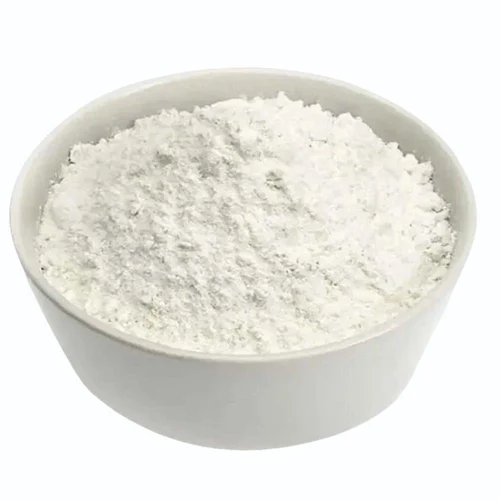
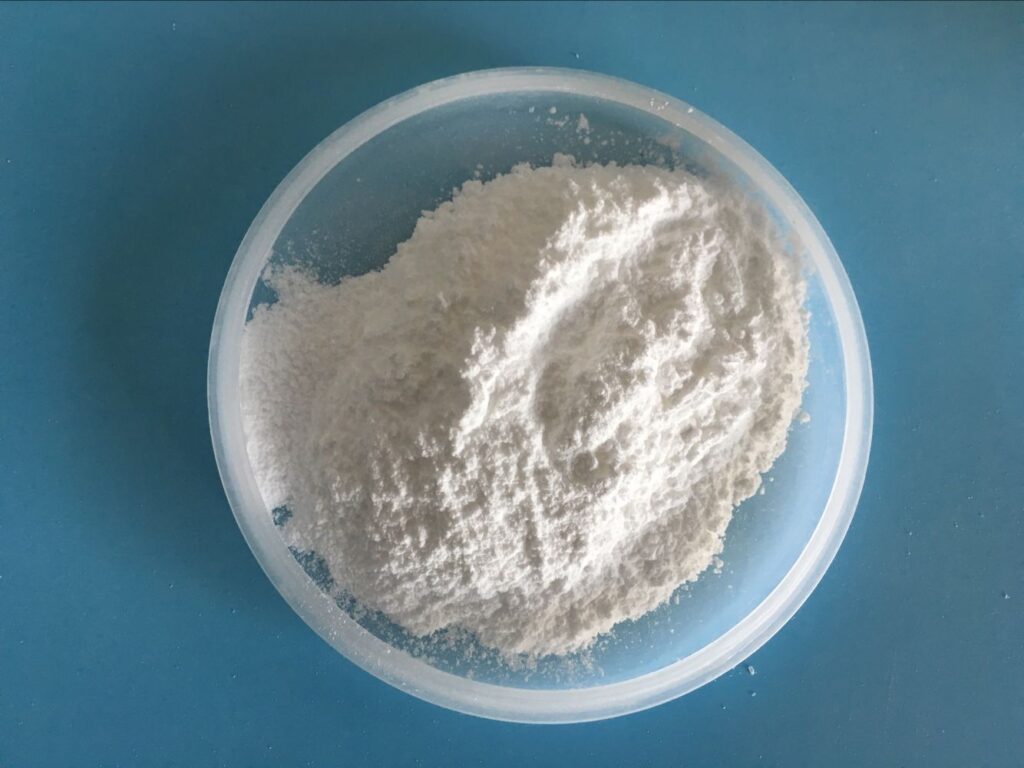
Magnesium stearate is the magnesium salt of stearic acid and is identified by CAS 557-04-0. It is generally supplied as a fine white powder and is widely used as a pharmaceutical excipient, lubricant, anti-adherent, and flow aid.
In solid-dose pharmaceutical manufacturing, its best-known function is lubrication. It helps reduce friction between the formulation and tablet punches and dies, while also reducing unwanted adhesion during compression. Commercial pharmaceutical grades are commonly used at relatively low concentrations. For example, published supplier data describe applications around 0.2% to 1%, while other pharmaceutical grades indicate typical use ranges of approximately 0.25% to 2%.
That range may look small, but a small ingredient can still have a large process effect.
Magnesium stearate can influence:
- Powder flowability
- Tablet ejection
- Punch and die adhesion
- Blend uniformity
- Tablet hardness
- Disintegration
- Dissolution behavior
- Manufacturing efficiency
- Cleaning frequency
- Batch-to-batch reproducibility
The material therefore deserves the same engineering mindset you would apply to any other process-critical input.
Why European Manufacturers Need a Reliable Magnesium Stearate Supplier
European pharmaceutical manufacturing operates within a mature regulatory environment where supplier qualification and documentation are integral parts of quality management.
For medicinal products, EU guidance states that the appropriate GMP for excipients should be established through formalised risk assessment. The assessment considers the excipient’s source and intended use as well as quality systems and historical quality defects.
For procurement teams, this has an important practical implication: a supplier should not be judged only by whether its magnesium stearate passes a laboratory test.
You also need confidence in the supplier’s:
- Manufacturing or sourcing controls
- Traceability
- Documentation
- Change-control practices
- Batch consistency
- Logistics
- Technical communication
- Ability to support audits and qualification
A supplier that answers technical questions quickly can save your QA department considerable time. A supplier that cannot provide the necessary documentation can turn a seemingly inexpensive purchase into an expensive qualification exercise.
European Pharmacopoeia and Pharmaceutical-Grade Magnesium Stearate
When purchasing pharmaceutical magnesium stearate for European production, Ph. Eur. compliance should be clearly addressed.
Industry references note that both USP-NF and European Pharmacopoeia monographs establish requirements for magnesium stearate, including identification, magnesium content, stearic acid content, and impurity controls.
However, there is an important distinction between saying that a product is “pharmaceutical grade” and demonstrating that a particular batch complies with your approved specification.
Your quality team should therefore examine the actual documentation supplied with the product.
Documentation Worth Requesting
Depending on your application, a professional Magnesium Stearate Supplier in Europe should be able to provide documentation such as:
- Certificate of Analysis
- Product specification
- Safety Data Sheet
- Pharmacopoeial compliance information
- Manufacturing or origin information
- Allergen or GMO declarations where relevant
- BSE/TSE statements where applicable
- Residual solvent information where applicable
- Regulatory declarations
- Change-notification procedures
- Relevant quality certifications
The precise document package should be determined by your quality system and intended use.
The difference between a supplier saying “we can provide documents” and actually having a controlled documentation package ready for qualification is substantial.
Physical Properties Matter More Than Many Buyers Realise
One of the less obvious aspects of magnesium stearate procurement is that chemical identity alone does not tell you how the powder will behave in production.
Two materials can both be magnesium stearate and both comply with broad chemical requirements while producing different processing results.
Particle Size
Particle size affects surface coverage, dispersion, flow, and lubrication efficiency.
Commercial pharmaceutical materials are available with different surface-area characteristics. For example, one published Roquette magnesium stearate product specifies a surface area of 5–10 m²/g, while another grade is listed at less than 5 m²/g.
This is a useful reminder for procurement teams: grade selection is not merely a matter of chemical purity.
Bulk Density
Bulk density influences material handling, hopper filling, volumetric behaviour, and storage requirements.
If your process has been developed around a particular powder density, switching grades without technical evaluation can create unexpected changes in feeding or blending.
Moisture
Loss on drying and moisture characteristics should be reviewed against your approved specification. Moisture can affect flowability and handling, particularly when powders are exposed to poor warehouse conditions.
Surface Area
Specific surface area can be particularly important in lubrication performance because it influences the amount of particle surface available for interaction with the formulation.
This is why a factory should avoid changing magnesium stearate grades simply because the replacement has the same CAS number.
Vegetable, Animal-Derived, and Synthetic Sources
Another important sourcing consideration is the origin of the stearic acid used to manufacture magnesium stearate.
Commercial products can be derived from different sources, including vegetable materials, animal-derived materials, or synthetic routes. Industry references specifically identify these categories and their differing implications for regulatory, sourcing, and formulation considerations.
For a European manufacturer, the correct source depends on the application.
A nutraceutical manufacturer may have strong reasons to prefer vegetable origin. A pharmaceutical company may have a specific approved source in its dossier. A customer may request a particular certification or origin declaration.
Some established European-market products explicitly specify vegetable origin and provide additional supply-chain documentation. Merck’s Parteck LUB MST, for example, is described as a vegetable-origin magnesium stearate excipient with documentation intended to support compliance and supply-chain transparency.
The important point is not that one origin is universally better. It is that your supplier should be able to tell you exactly what you are buying.
Common Mistakes When Choosing a Magnesium Stearate Supplier in Europe
Choosing Solely on Price
Price matters. It just should not be the only variable.
Imagine two suppliers:
- Supplier A offers a lower price but has inconsistent lead times.
- Supplier B costs slightly more but provides predictable batches, complete documentation, and dependable delivery.
If Supplier A causes one production interruption, the original price advantage may disappear very quickly.
The correct comparison is total cost of ownership, not merely price per kilogram.
Treating All Grades as Identical
A common purchasing mistake is assuming that magnesium stearate from Brand A can automatically replace Brand B.
The chemical name may be identical, but physical properties can differ.
A change in surface area, particle morphology, density, fatty-acid composition, or manufacturing process can influence performance.
Ignoring the Manufacturing Site
A certificate is only useful when it applies to the product and manufacturing source being purchased.
Always verify the relationship between:
- Product name
- Grade
- Manufacturer
- Manufacturing site
- Batch
- Certification
- Specification
Failing to Plan for Supply Disruption
European manufacturing networks are highly integrated. A raw-material delay can affect packaging schedules, production campaigns, customer deliveries, and inventory commitments.
A supplier should therefore be assessed not only on current availability but also on its ability to maintain supply during demand fluctuations.
Changing Brands Without a Technical Trial
A supplier substitution should have a defined qualification process.
We have seen in industrial sourcing that the smallest-looking ingredient changes can sometimes produce the most frustrating troubleshooting sessions. The powder looks identical in the warehouse; the tablet press may have a very different opinion.
How to Compare European Magnesium Stearate Suppliers
A practical supplier scorecard can make purchasing decisions more objective.
Technical Quality
Ask:
- Does the product meet the required pharmacopoeial standard?
- Is the specification appropriate for your formulation?
- Are critical physical properties controlled?
- Is batch-to-batch consistency demonstrated?
Regulatory Documentation
Check:
- CoA availability
- SDS
- GMP-related documentation
- Source declarations
- BSE/TSE information where applicable
- Change-control procedures
- Other customer-specific declarations
Commercial Performance
Evaluate:
- Price per kilogram
- Minimum order quantity
- Packaging options
- Payment conditions
- Freight
- Lead time
- Annual volume discounts
Supply Security
Consider:
- Number of manufacturing sources
- Availability of alternative brands
- Safety-stock strategy
- Geographic logistics
- Backup options
- Communication during disruptions
This is an area where MT Royal can be useful for procurement teams. Its published magnesium stearate offering describes pharmaceutical-grade supply, international pharmacopoeial compliance, batch testing, CoA documentation, and supply-chain support. MT Royal also states that it works with multiple producers, giving buyers the ability to consider different brands and sourcing options.
Why Multi-Brand Sourcing Can Benefit European Factories
A single-source strategy can be efficient, but it can also create vulnerability.
Suppose your factory has qualified one magnesium stearate grade and your supplier suddenly experiences a production interruption. You may discover that your “approved supplier” is actually a single point of failure.
Working with a distributor or sourcing partner that can access multiple suitable brands can provide an additional layer of resilience.
MT Royal’s published information indicates that it works with multiple producers and offers competitive sourcing options.
That does not mean you should switch brands whenever a cheaper quotation appears. Instead, you can establish a controlled hierarchy:
Primary grade → Qualified alternative → Emergency backup
This approach gives procurement flexibility without allowing uncontrolled substitutions into a validated process.
Specialized Tips for Large-Scale Pharmaceutical Production
Large-scale production requires a different mindset from occasional purchasing.
Establish a Critical Material Specification
Do not rely exclusively on the supplier’s standard specification.
Your internal specification should identify the characteristics that actually matter to your process.
Depending on the formulation, this may include:
- Assay
- Magnesium content
- Fatty-acid composition
- Loss on drying
- Particle-size distribution
- Specific surface area
- Bulk density
- Heavy metals or elemental impurities
- Microbiological quality
- Identification tests
Not every parameter needs to become a release test. The goal is to identify the critical material attributes that influence your manufacturing process.
Control Lubrication Time
More lubrication is not necessarily better lubrication.
Because magnesium stearate is hydrophobic, excessive lubrication or inappropriate blending conditions can affect tablet properties and potentially dissolution performance. Pharmaceutical suppliers therefore describe controlled usage ranges rather than suggesting unlimited addition.
Your process-development team should establish a validated addition level and blending time.
Evaluate Ejection Force
For tablet production, ejection behaviour is a useful practical indicator of lubrication performance.
If ejection force changes significantly after a supplier switch, investigate the material before assuming that the tablet press is responsible.
Monitor Compression Behaviour
When evaluating a new grade, compare tablets produced under controlled conditions.
Useful measurements may include:
- Tablet weight
- Hardness
- Thickness
- Friability
- Disintegration
- Dissolution
- Ejection force
- Compression force
- Appearance
This gives you a process-level picture rather than a laboratory-only comparison.
Keep Retained Samples
Retained samples can be extremely valuable during investigations.
If a production batch behaves differently six months after a supplier change, having reference samples from previous approved lots allows QA and formulation teams to compare materials rather than relying on memory and spreadsheets.
Magnesium Stearate in Food, Nutraceutical, and Cosmetic Manufacturing
Although pharmaceutical production is a major application, magnesium stearate is not limited to tablets and capsules.
Food and nutraceutical manufacturers may use it as a processing aid, anti-caking agent, or flow-related ingredient depending on the product and applicable regulations. European-market suppliers list magnesium stearate for food and nutraceutical applications, including products identified as E470b.
The same sourcing principle applies: the grade must match the regulatory and technical requirements of the intended application.
A food-grade material should not automatically be assumed suitable for pharmaceutical production, just as a pharmaceutical excipient should not automatically be assumed appropriate for every food application.
The label on the sack is not the specification.
Emerging Trends in European Magnesium Stearate Sourcing
Several developments are changing how European manufacturers evaluate excipients.
Greater Supply-Chain Transparency
Manufacturers increasingly want visibility into the origin and manufacturing chain of excipients rather than purchasing materials with minimal traceability.
This is particularly relevant when customers demand information about vegetable origin, animal-derived materials, or specific manufacturing sites.
More Detailed Excipient Documentation
Pharmaceutical excipient manufacturers are increasingly providing documentation packages designed to simplify qualification and regulatory review. For example, established European-market products may provide extensive documentation around regulatory compliance and supply-chain transparency.
Multi-Source Procurement
Companies are increasingly balancing supplier consolidation with supply resilience.
One supplier may offer better pricing, another may offer geographic advantages, and a third may provide a technically compatible backup grade.
The sophisticated approach is not necessarily “buy from everyone.” It is to know which alternatives are technically qualified before an emergency occurs.
Greater Attention to Functional Performance
The industry is also moving beyond simple chemical specifications toward understanding how excipient characteristics affect finished-product performance.
This is especially important for direct compression, high-speed tableting, continuous manufacturing, and formulations with narrow process windows.
Frequently Asked Questions
What should I look for in a Magnesium Stearate Supplier in Europe?
Look for technical compliance, reliable documentation, consistent quality, transparent sourcing, competitive total cost, dependable logistics, and the ability to support your qualification process.
Is European Pharmacopoeia compliance enough?
Not necessarily. Ph. Eur. compliance is important for many European pharmaceutical applications, but your internal specification and regulatory requirements may include additional characteristics.
Can magnesium stearate from different suppliers be substituted?
Sometimes, but substitution should be technically evaluated. The same CAS number does not guarantee identical physical behaviour.
What is the CAS number of magnesium stearate?
The commonly cited CAS number is 557-04-0.
What dosage of magnesium stearate is normally used?
The amount depends on the formulation and process. Published pharmaceutical product information gives examples ranging from approximately 0.2% to 1% and 0.25% to 2%.
These figures should not be treated as a universal formulation recommendation.
Is vegetable magnesium stearate better?
Not universally. Vegetable origin may be preferable for particular regulatory, customer, dietary, or marketing requirements. The technically appropriate source depends on your application.
What documents should procurement request before ordering?
At minimum, request the current product specification, representative or batch-specific CoA, SDS, applicable regulatory declarations, source information, and relevant certification. Pharmaceutical customers may require a considerably broader qualification package.
Can MT Royal provide different magnesium stearate brands?
MT Royal states that it works with multiple producers and brands, allowing buyers to compare different sourcing options rather than being limited to one manufacturer.
Is the lowest-cost magnesium stearate the best option for a factory?
Usually, the better question is which qualified grade provides the lowest total manufacturing cost. Raw-material price is only one component. Production reliability, rejects, cleaning, downtime, logistics, qualification work, and inventory requirements can all affect the real cost.
Why MT Royal Deserves Consideration
MT Royal positions its magnesium stearate offering toward pharmaceutical manufacturers that require consistent quality, documentation, and international pharmacopoeial compliance. Its published information states that batches are tested for consistency and compliance and that documentation such as Certificates of Analysis is available.
The company’s multi-producer sourcing approach is also relevant for European buyers. Rather than viewing magnesium stearate as a single-brand commodity, procurement teams can evaluate multiple brands and grades according to their technical and commercial requirements.
We recommend treating this flexibility as a sourcing tool rather than a reason to change products casually. Once your factory validates a grade, stability is valuable. Alternative sourcing becomes most useful when it is planned, documented, and technically qualified in advance.
A good supplier relationship should make your factory quieter, not busier. When raw materials arrive consistently, documentation is ready, specifications are understood, and alternative supply routes are available, procurement becomes almost boring. In manufacturing, that is usually a compliment.
The Real Value of the Right Supplier
Finding a Magnesium Stearate Supplier in Europe is easy. Finding one that fits your formulation, quality system, regulatory requirements, production schedule, and long-term sourcing strategy is considerably harder.
The strongest purchasing decision combines four factors: technical performance, regulatory confidence, supply reliability, and commercial value.
MT Royal can be considered within that framework because its magnesium stearate portfolio is presented around pharmaceutical-grade quality, documentation, international standards, supply-chain reliability, and access to multiple producers.
For a small buyer, the difference between two suppliers may look like a few euros per kilogram. For a large factory, the real difference appears elsewhere: fewer production interruptions, smoother qualification, predictable tablet performance, better inventory planning, and greater confidence when customer or regulatory requirements change.
That is the standard worth applying to every excipient purchase. Do not ask only who can sell you magnesium stearate. Ask who can help you keep your manufacturing process predictable after the purchase order has disappeared from the inbox.




No comment