

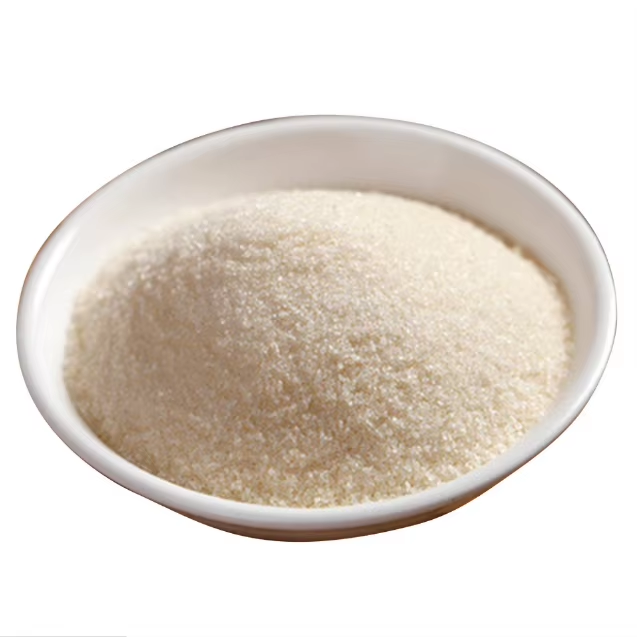
Choosing the right Edible Bovine Gelatin Powder Exporter is a strategic decision for food manufacturers, confectionery producers, nutraceutical companies, pharmaceutical businesses, and ingredient distributors. When gelatin is imported in commercial volumes, the purchasing decision affects much more than the cost of raw materials. Product consistency, gel strength, documentation, certification, export logistics, shelf life, and supply continuity can all influence the performance of your factory.
For manufacturers searching for a dependable sourcing partner, purchasing through MT Royal can provide access to multiple brands at competitive prices, giving procurement teams greater flexibility when comparing products and supply options. This is especially valuable when your business needs a specific technical grade but also wants to maintain cost control and avoid excessive dependence on one source.
Edible bovine gelatin may look simple when listed on a purchasing order, but its performance is anything but simple. A slight difference in Bloom strength can affect the texture of a gummy product. A change in viscosity may alter processing behavior. Poor storage during transportation can compromise product quality. Inadequate documentation can create unnecessary delays at customs or during quality audits.
For this reason, selecting an Edible Bovine Gelatin Powder Exporter requires a broader evaluation. You are not simply buying a powder. You are building a supply chain around a functional ingredient that must perform reliably from the exporter’s facility to your production line.
What Is Edible Bovine Gelatin Powder?
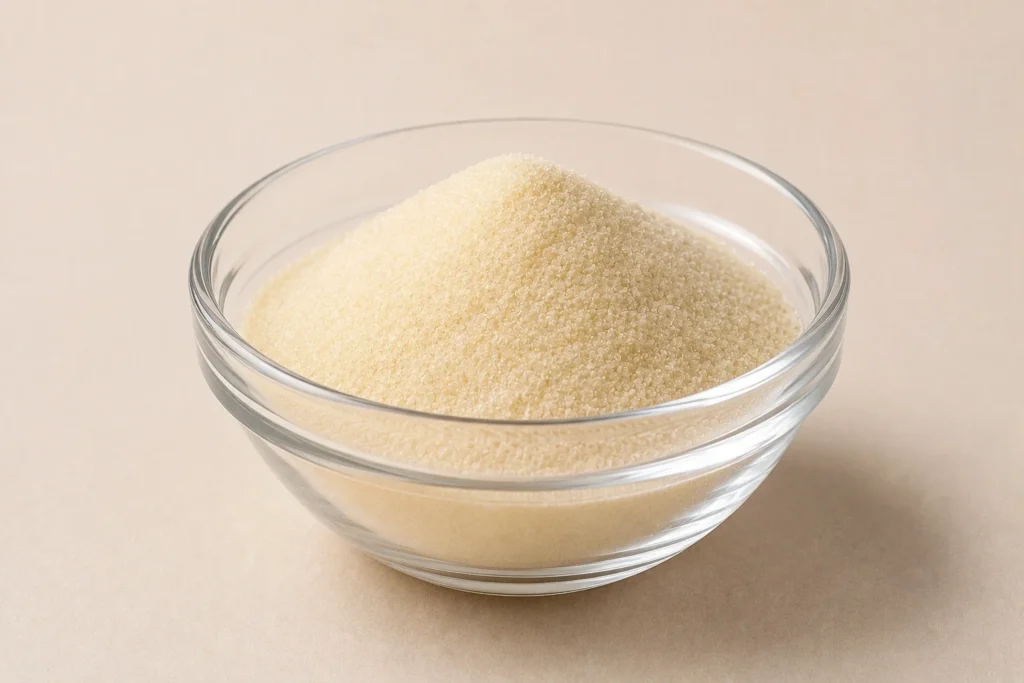
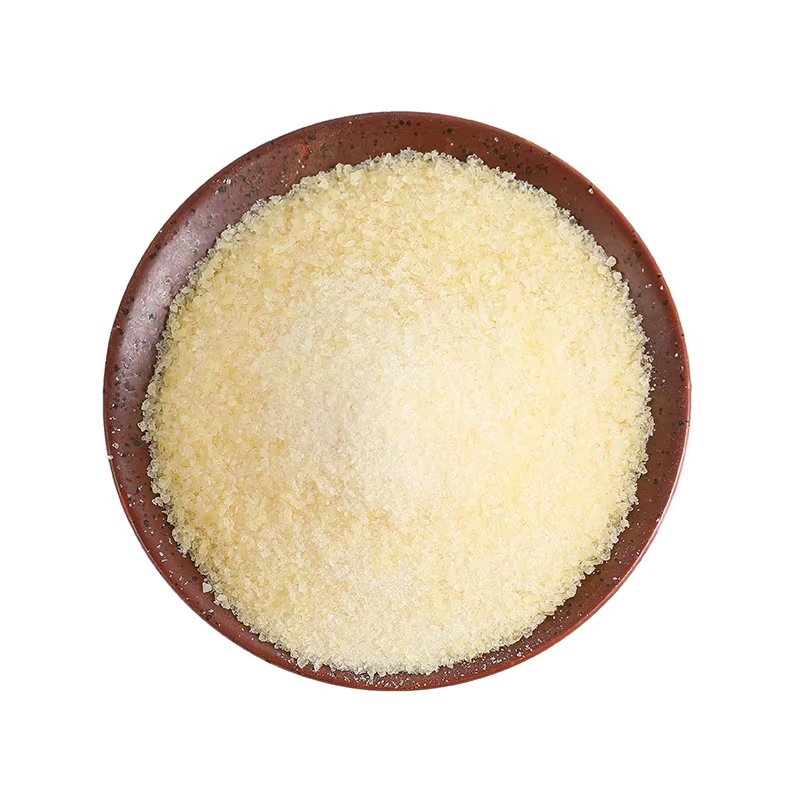
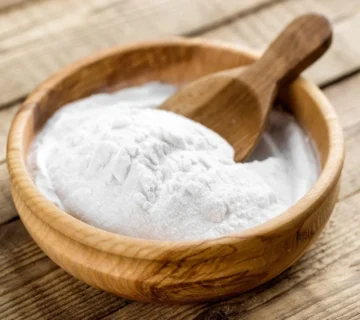
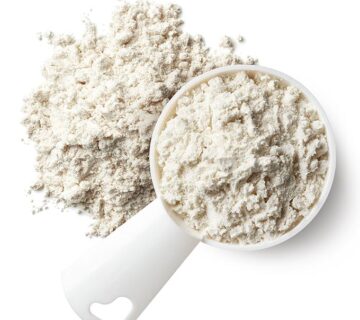
Edible bovine gelatin powder is a protein-based ingredient produced by extracting collagen from cattle-derived raw materials and processing it into a purified, dried powder suitable for food and related applications.
The manufacturing process generally includes several stages, such as pretreatment, extraction, filtration, concentration, drying, and milling. Depending on the manufacturer and grade, additional purification and quality-control steps may be applied.
The final gelatin is typically characterized by several technical properties, including:
- Bloom strength
- Viscosity
- Moisture
- Ash
- pH
- Color
- Particle size
- Microbiological quality
These properties influence how the gelatin behaves in different applications.
For example, a confectionery manufacturer may prioritize Bloom strength and texture, while another manufacturer may focus more heavily on viscosity, dissolution, or microbiological specifications.
This is why the phrase “edible bovine gelatin” alone is not enough to define the product you need.
A professional Edible Bovine Gelatin Powder Exporter should be able to provide a detailed specification sheet and explain which grade is appropriate for your application.
LATAMARKO LM60 – Premium Spanish-Origin Cocoa Powder
latamarko alkalized cocoa powder lm60
cocoa powder for chocolate production-Best price
Food industry raw materials – list of products
Why Bovine Gelatin Is Important for Food Manufacturers
Gelatin is valued because it performs several functional roles simultaneously.
It can act as a:
- Gelling agent
- Stabilizer
- Binding agent
- Texturizer
- Foaming aid
- Film-forming material
This multifunctionality makes it useful across a wide range of food applications.
In confectionery, gelatin helps create elasticity and structure. In desserts, it can provide controlled gel formation. In certain dairy and whipped products, it contributes to stability and texture.
Because gelatin affects physical characteristics, consistency between batches is particularly important.
Imagine a gummy manufacturer that has carefully developed a product with a specific bite and elasticity. If the incoming gelatin differs substantially from the previously approved grade, the final product may become softer, firmer, or more difficult to process.
The consumer will not care that the procurement department found a cheaper supplier.
They will simply notice that the product is different.
That is why industrial gelatin sourcing should always combine commercial evaluation with technical qualification.
Understanding the Most Important Gelatin Specifications
When comparing an Edible Bovine Gelatin Powder Exporter, manufacturers should pay close attention to the following parameters.
Bloom Strength
Bloom strength is one of the most widely recognized specifications for gelatin.
It measures the strength of the gel formed under standardized testing conditions.
The appropriate Bloom value depends on your application.
A manufacturer producing firm gummy confectionery may require a higher Bloom grade than a company developing a softer gel product.
However, higher Bloom should not automatically be interpreted as higher overall quality.
The correct question is:
“Does this Bloom strength deliver the required product performance at an economically efficient dosage?”
That is a much more useful procurement question.
Viscosity
Viscosity describes the flow behavior of gelatin solutions under specified testing conditions.
It can affect processing and final product characteristics.
When comparing suppliers, ensure that viscosity values are measured using comparable methods. Otherwise, your procurement team may be comparing numbers that look similar but were generated under different testing conditions.
Moisture Content
Moisture is important for storage stability and handling.
Gelatin should be stored according to supplier recommendations and protected from excessive humidity.
For international shipments, packaging quality becomes particularly important because the product may experience different climatic conditions during transportation and storage.
Ash Content
Ash content can provide an indication of the mineral residue present in the product.
Depending on your application, this may be an important quality parameter.
pH
Gelatin pH can influence compatibility with other formulation components.
Manufacturers working with acidic or highly controlled formulations should evaluate pH as part of their raw-material approval process.
Microbiological Quality
For edible applications, microbiological quality is fundamental.
Depending on the intended application and regulatory requirements, manufacturers may review:
- Total plate count
- Yeast and mold
- Coliforms
- Salmonella
- Other relevant microorganisms
The exact limits should be aligned with your product category and destination-market requirements.
Edible Bovine Gelatin Powder Applications
The versatility of gelatin allows it to serve multiple industries.
Confectionery
Gelatin is commonly used in:
- Gummy candies
- Jelly sweets
- Marshmallows
- Chewy confectionery
- Gel-based snacks
In these applications, gelatin selection directly influences texture.
A factory should therefore establish a technical specification based on the desired finished-product characteristics rather than simply choosing the lowest-priced grade.
Dairy and Dessert Products
Gelatin may be used in certain:
- Puddings
- Gel desserts
- Dairy desserts
- Cream-based formulations
- Whipped products
Its stabilizing and gelling properties can contribute to product structure and sensory quality.
Nutraceuticals
Bovine gelatin is widely associated with capsule manufacturing and other nutraceutical applications.
However, manufacturers must distinguish between food-grade gelatin and grades intended for pharmaceutical or specialized applications.
Documentation and regulatory requirements can vary significantly.
Pharmaceutical Manufacturing
Some pharmaceutical products rely on gelatin’s film-forming and structural properties.
For these applications, supplier qualification should involve quality assurance and regulatory teams.
A product that is suitable for general food use may not automatically meet the requirements of a pharmaceutical manufacturing process.
Functional Foods
The growing interest in protein-rich and functional food products has created new opportunities for gelatin-based formulations.
However, manufacturers should carefully distinguish gelatin from collagen peptides.
Although both originate from collagen, their functional behavior and intended uses differ.
How to Select the Right Edible Bovine Gelatin Powder Exporter
Choosing an exporter requires a structured approach.
Evaluate Product Quality
The exporter should provide clear technical specifications and consistent batch documentation.
Look for:
- Defined Bloom strength
- Controlled viscosity
- Stable moisture levels
- Appropriate microbiological specifications
- Consistent color and odor
- Reliable particle characteristics
Review Documentation
Depending on your market and application, you may require:
- Certificate of Analysis
- Product specification
- Safety documentation
- Origin documentation
- Health certificates
- Halal certification where applicable
- Other regulatory documents
Documentation should be consistent across all shipment records.
Assess Export Experience
An exporter may have an excellent product but limited experience handling international shipments.
This can create problems involving:
- Customs clearance
- Shipping documentation
- Packaging
- Port delays
- Import requirements
International trade is a chain. If one link is weak, the entire shipment can become a headache.
Check Supply Capacity
Before committing to a large order, determine whether the exporter can support your expected annual volume.
Ask about:
- Monthly capacity
- Minimum order quantity
- Lead time
- Stock availability
- Production schedules
- Packaging formats
Consider Multiple Brands
A supplier offering access to multiple brands can give manufacturers greater flexibility.
MT Royal can be considered by buyers looking for multiple gelatin brands and competitive pricing. This approach allows procurement teams to evaluate alternatives while maintaining a centralized sourcing relationship.
The key is to ensure that each brand and grade is technically approved before being introduced into production.
Common Mistakes When Sourcing Gelatin Internationally
International procurement creates additional risks beyond those found in domestic purchasing.
Choosing Only by Price
Price is important, but it should not be the only purchasing criterion.
A cheaper product may require a higher dosage or create more production variation.
Consider the total cost of ownership.
This includes:
- Product price
- Shipping
- Customs
- Storage
- Dosage
- Production efficiency
- Potential quality losses
Failing to Verify the Exact Product Grade
“Edible gelatin” is a broad description.
Always confirm the exact specifications.
Do not assume that two suppliers offering the same Bloom value are automatically interchangeable.
Ignoring Destination-Market Regulations
The import requirements for gelatin can differ between countries.
Before ordering, verify the applicable requirements for your destination.
This is particularly important for animal-derived ingredients.
Skipping a Trial Shipment
A small commercial trial can reveal problems that a laboratory sample will not.
Evaluate the product under real production conditions before committing to a large annual contract.
Underestimating Logistics
Gelatin may be sensitive to environmental conditions during storage.
Your procurement team should understand:
- Transit time
- Packaging
- Warehouse conditions
- Container requirements
- Humidity exposure
- Port handling
The product may leave the exporter in perfect condition, but that does not guarantee it will arrive in the same condition if logistics are poorly managed.
Specialized Tips for Large-Scale Gelatin Importers
Define Your Product Specification Before Negotiating
The ideal sequence is:
Specification → Supplier qualification → Sample evaluation → Production trial → Commercial negotiation → Bulk order
Not:
Cheap quotation → Large order → Quality department discovers a problem
The second approach may be faster for a few days and much slower afterward.
Use a Controlled Trial Process
When testing a new supplier, maintain consistent production parameters.
Measure:
- Hydration time
- Dissolution behavior
- Gel formation
- Processing characteristics
- Final texture
- Sensory performance
Document the results.
This creates a technical baseline for future purchasing decisions.
Monitor Batch-to-Batch Consistency
A supplier’s first shipment may be excellent.
The real question is whether the tenth shipment behaves the same way.
For critical applications, maintain internal records of incoming batch performance.
Maintain Strategic Safety Stock
Inventory planning should reflect:
- Average consumption
- Supplier lead time
- Transit time
- Customs clearance
- Seasonal demand
- Supply-chain risk
A factory that uses gelatin continuously should not rely on perfect logistics every single month.
Qualify a Backup Supplier
We have seen that manufacturers with an approved secondary source generally have more flexibility during unexpected disruptions.
The backup supplier does not have to replace your main source under normal conditions. Its purpose is to provide a controlled alternative when circumstances change.
The Role of Halal Certification in Bovine Gelatin Sourcing
For many international buyers, Halal compliance is a critical requirement.
Although bovine gelatin originates from cattle, buyers should not assume that all bovine gelatin is automatically Halal.
The relevant requirements may involve:
- Animal source
- Slaughter practices
- Processing
- Production environment
- Ingredients and processing aids
- Certification
If Halal certification is required for your market, request valid documentation from the supplier and verify that it applies to the exact product and manufacturing facility.
The same principle applies to other certifications.
A certification should be relevant, current, and traceable.
Trends Shaping the Global Gelatin Market
Several trends are influencing the gelatin supply chain.
One is the growing demand for transparent ingredient sourcing.
Consumers increasingly want manufacturers to provide information about where ingredients originate and how they are processed.
Another trend is the expansion of premium confectionery and nutraceutical products.
These markets are creating demand for specialized functional ingredients rather than generic commodities.
Supply-chain resilience is also becoming increasingly important.
Manufacturers have learned that a low-cost sourcing strategy can become expensive when a critical raw material is delayed or unavailable.
As a result, many procurement teams are moving toward diversified sourcing models that include:
- Multiple qualified suppliers
- Multiple approved brands
- Strategic safety stock
- Longer-term supply agreements
- Better supplier communication
This approach does not necessarily mean paying more. In many cases, it means spending more intelligently.
Frequently Asked Questions About Edible Bovine Gelatin Powder Exporters
What should I ask an exporter before placing a bulk order?
Ask about technical specifications, Bloom strength, viscosity, microbiological quality, product origin, certification, packaging, lead time, minimum order quantity, and export documentation.
Can edible bovine gelatin be used for gummy production?
Yes. Bovine gelatin is widely used in confectionery applications, including gummies, although the appropriate Bloom strength and processing conditions depend on the desired texture.
Is food-grade gelatin suitable for pharmaceutical production?
Not necessarily. Pharmaceutical applications may require specific grades and stricter quality and regulatory controls.
Always confirm suitability with the manufacturer and your regulatory team.
How do I know whether two gelatin products are interchangeable?
Compare their complete specifications, not just Bloom strength.
Evaluate viscosity, moisture, pH, color, particle size, microbiological quality, and actual performance in your formulation.
Should I buy directly from an exporter or through an importer?
The best choice depends on your volume, destination, logistics capabilities, and need for supplier flexibility.
An importer or sourcing company may provide advantages such as access to multiple brands and simplified logistics.
How can I reduce the risk of importing animal-derived ingredients?
Work with experienced suppliers, verify documentation before shipment, understand destination-market regulations, and maintain clear traceability records.
How important is the Certificate of Analysis?
Very important.
A CoA provides batch-specific information that helps quality teams confirm that the material meets agreed specifications.
Does a lower price always mean better purchasing value?
No.
The real cost includes product performance, dosage, logistics, storage, quality risks, and supply continuity.
Building a Smarter Global Gelatin Supply Chain
Selecting an Edible Bovine Gelatin Powder Exporter should be viewed as a long-term sourcing decision rather than a single purchasing transaction.
For your factory, the ideal supplier should combine four essential qualities:
Consistent technical performance, reliable documentation, dependable export logistics, and commercially competitive pricing.
When these elements work together, the result is more than a successful shipment. It is a stable supply chain that supports production planning and protects your finished-product quality.
MT Royal can be a practical option for manufacturers seeking multiple brands and competitive pricing, particularly when procurement teams want greater flexibility in evaluating gelatin sources. The goal should always be to identify the product that fits your specifications and production requirements rather than choosing a brand simply because it is familiar.
In our experience, the strongest supplier relationships are built when manufacturers communicate their requirements clearly and suppliers respond with transparency. When both sides understand the technical and commercial objectives, sourcing becomes far more predictable.
For factories purchasing edible bovine gelatin internationally, the smartest approach is to look beyond the exporter’s quotation. Examine the specifications. Verify the documentation. Test the material. Evaluate logistics. Understand the total landed cost. Then consider whether the supplier can support you not only for today’s order, but for the production schedule you expect six months from now.
That is the difference between buying an ingredient and building a reliable supply chain.
When gelatin performs consistently, your production team can focus on making the product rather than troubleshooting the raw material. And in manufacturing, that quiet predictability is often worth far more than a small discount on the initial invoice.

No comment