

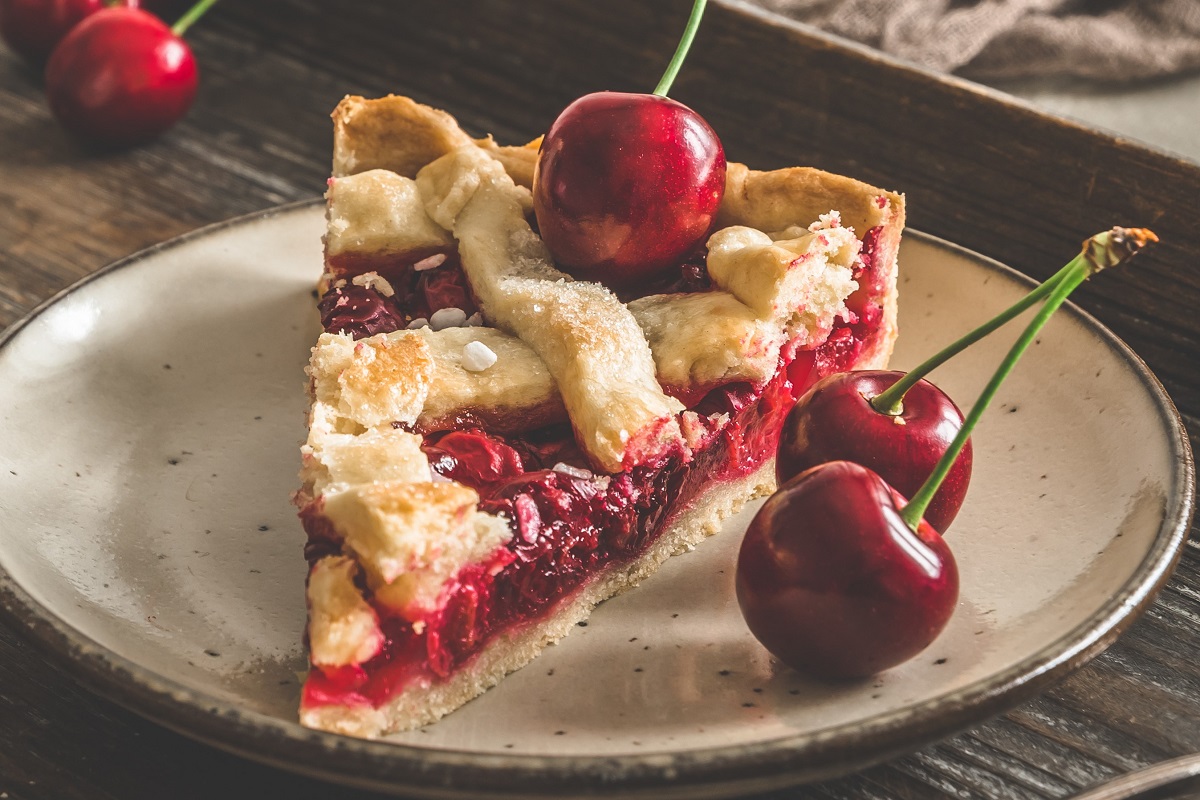
For industrial bakeries, the quality of a fruit filling can determine whether a finished pastry looks premium or merely survives the production line. The right Pectin for Bakery Fillings helps manufacturers achieve the texture, spreadability, stability, and fruit profile that consumers expect while maintaining reliable performance during processing, baking, cooling, and storage. If your factory is sourcing pectin for large-scale production, MT Royal offers access to multiple brands at competitive prices, giving manufacturers more flexibility to compare technical specifications, quality, and commercial value before making a purchasing decision.
Pectin may be used in relatively small quantities, but its influence on a formulation can be surprisingly large. A slight change in pectin type, dosage, pH, soluble solids, or calcium availability can turn a smooth fruit filling into a weak sauce, a rubbery gel, or a filling that migrates into the pastry during baking.
For manufacturers, therefore, pectin should not be treated as a simple commodity ingredient. It is a functional tool that must be matched carefully to the recipe, processing method, packaging, and final application.
What Is Pectin for Bakery Fillings?
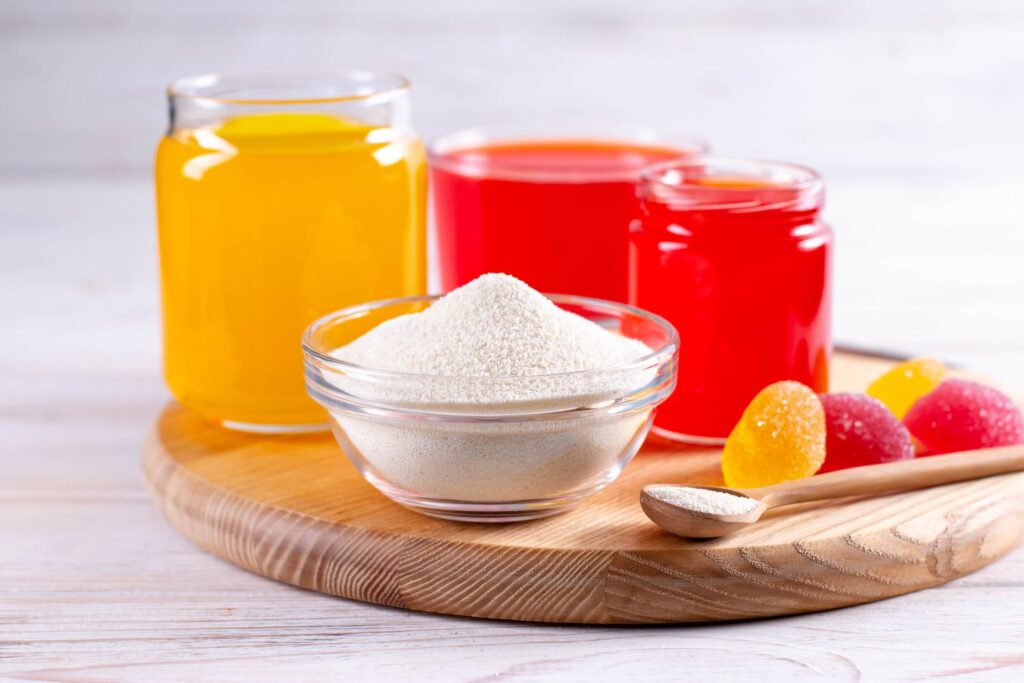
Pectin is a naturally occurring polysaccharide found primarily in the cell walls of fruits and vegetables. Commercial pectin is commonly extracted from citrus peels or apple pomace and then processed into a functional hydrocolloid used for gelling, thickening, and stabilizing food products.
In bakery fillings, pectin is used to create a controlled texture that can withstand industrial handling and, depending on the formulation, baking temperatures.
Pectin for Bakery Fillings can help manufacturers produce fruit-based fillings with:
- Controlled gel strength
- Stable viscosity
- Good spreadability
- Reduced syneresis
- Improved fruit suspension
- Better shape retention
- Consistent processing performance
The ideal pectin depends on the formulation.
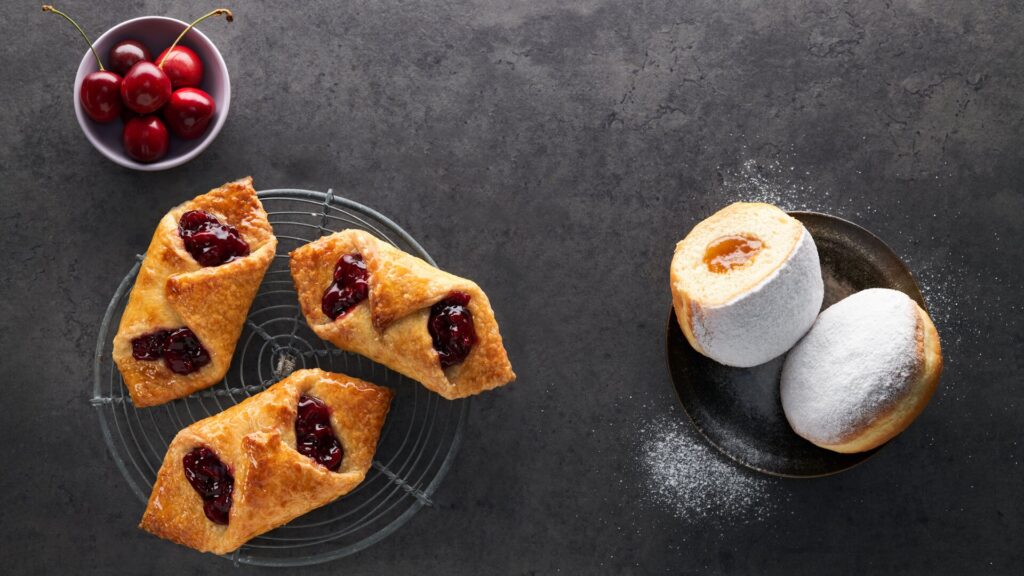
A fruit filling for a Danish pastry may require a different texture from a high-solids filling used inside a packaged cake. A filling designed to be deposited before baking may require different thermal stability from one injected after baking.
This is why the phrase “pectin for bakery fillings” describes an application, not a single universal product.
LATAMARKO LM60 – Premium Spanish-Origin Cocoa Powder
latamarko alkalized cocoa powder lm60
cocoa powder for chocolate production-Best price
Food industry raw materials – list of products
Why Pectin Matters in Industrial Bakery Production
In a small kitchen, a fruit filling can be adjusted by eye. In an industrial bakery producing thousands of units per hour, there is no room for “a little more pectin should fix it.”
The filling must behave consistently across every batch.
The main functions of pectin in bakery fillings include the following.
Gel Formation
Pectin can create a structured network that gives fruit fillings their characteristic body.
The correct gel strength allows the filling to remain in place without becoming excessively firm.
Viscosity Control
Pectin helps control the flow properties of fruit preparations.
This matters during:
- Pumping
- Depositing
- Filling
- Mixing
- Portioning
A filling that is too thin may leak or migrate into the dough, while one that is too thick can create problems for pumps and depositors.
Water Management
One of the most important functions of pectin is controlling water within the formulation.
Poor water management can result in syneresis, where liquid separates from the gel.
For a bakery manufacturer, this can create unattractive products, soggy pastry, and shortened shelf life.
Fruit Suspension
Pectin can help maintain the distribution of fruit particles, pulp, or other inclusions within the filling.
This is especially important when the filling contains visible fruit pieces.
The Main Types of Pectin Used in Bakery Fillings
Different pectin types have different activation mechanisms and functional properties.
High Methoxyl Pectin
High methoxyl pectin, often abbreviated as HM pectin, typically forms gels in the presence of sufficient soluble solids and an appropriate acidic environment.
It is commonly used in:
- Jams
- Fruit preserves
- High-sugar bakery fillings
- Fruit preparations
Its performance depends strongly on factors such as sugar concentration, pH, and pectin dosage.
Low Methoxyl Pectin
Low methoxyl pectin, or LM pectin, forms gels through interactions with calcium ions rather than relying primarily on high sugar concentration.
This makes it useful in formulations where sugar levels are reduced or where calcium-controlled gelation is preferred.
Amidated Low Methoxyl Pectin
Amidated LM pectin can offer different calcium sensitivity and gel characteristics compared with conventional LM pectin.
It may provide useful flexibility in certain reduced-sugar or specialized bakery applications.
The selection should always be based on the final product requirements rather than simply choosing the most familiar pectin category.
How to Choose the Right Pectin for Bakery Fillings
Selecting pectin requires a clear understanding of the entire formulation.
Consider the Sugar Level
Sugar concentration is particularly important when using high methoxyl pectin.
The manufacturer should evaluate the total soluble solids, often measured as Brix, rather than looking only at the amount of added sucrose.
Fruit solids, syrups, and other soluble ingredients all contribute to the final Brix level.
Control pH
Pectin performance is highly dependent on acidity.
The pH of the filling can influence:
- Gel strength
- Gelation speed
- Texture
- Stability
- Shelf life
For industrial production, pH should be monitored consistently rather than estimated.
Evaluate Calcium Availability
When using low methoxyl pectin, calcium concentration becomes particularly important.
Too little calcium may produce a weak gel, while excessive calcium can lead to overly rapid gelation or an undesirable texture.
Consider Processing Temperature
The filling may be cooked, hot-filled, deposited, baked, or cooled under different conditions.
The pectin must be compatible with the thermal process.
Determine the Desired Texture
Your target may be:
- Soft and spreadable
- Smooth and spoonable
- Firm and sliceable
- Short and clean-cut
- Elastic
- Highly stable
The pectin system should be selected according to this target.
Pectin for Bakery Fillings vs. Other Hydrocolloids
Pectin is not the only hydrocolloid used in fruit fillings.
Manufacturers may also consider starches, modified starches, xanthan gum, guar gum, carrageenan, or blends.
Each system has different strengths.
Pectin
Pectin is often preferred when manufacturers want a fruit-forward texture and a clean gel structure.
Modified Starch
Modified starch can provide strong thickening and may be cost-effective for certain industrial fillings.
However, the mouthfeel may be different from a pectin-based fruit gel.
Xanthan Gum
Xanthan provides excellent viscosity at low usage levels and can improve suspension.
However, excessive use may produce a slimy or overly elastic mouthfeel.
Hydrocolloid Blends
Blending hydrocolloids can provide more precise texture control, but it also increases formulation complexity.
For most factories, the goal should not be to use the maximum number of functional ingredients. It should be to create the simplest system that delivers the required performance.
Common Mistakes When Sourcing Pectin
Industrial sourcing mistakes often begin with a misunderstanding of pectin functionality.
Mistake 1: Buying Based Only on Price
Pectin is a relatively high-value functional ingredient, so price comparisons are common.
However, comparing only cost per kilogram can be misleading.
A lower-priced pectin may require a higher dosage or produce inconsistent results.
The better metric is cost per finished ton of stable filling.
Mistake 2: Choosing the Wrong Pectin Type
A high-methoxyl pectin may not perform correctly in a reduced-sugar formulation.
Likewise, an LM pectin may not be the best option for a traditional high-solids fruit filling.
Mistake 3: Ignoring Brix and pH
Pectin does not operate in isolation.
The same product can behave very differently when the formulation’s soluble solids or pH changes.
Mistake 4: Changing Suppliers Without Revalidation
Even if two suppliers sell products under the same general pectin category, their functional behavior may differ.
A supplier change should trigger controlled testing.
Mistake 5: Overdosing Pectin
More pectin does not always mean better stability.
Excessive dosage can create:
- Rubbery texture
- Poor spreadability
- Unpleasant mouthfeel
- Difficult depositing
- Higher ingredient costs
The right dosage is the minimum amount required to achieve the target performance consistently.
How to Evaluate Pectin Suppliers
Choosing an Pectin for Bakery Fillings supplier should involve both technical and commercial evaluation.
Technical Documentation
Request:
- Product specification
- Degree of esterification
- Recommended dosage
- Activation conditions
- pH range
- Soluble solids requirements
- Calcium sensitivity
- Microbiological specifications
- Shelf life
Application Support
A strong supplier should be able to discuss how the product behaves in real formulations.
This is particularly important when your factory is developing a new filling.
Supply Reliability
Evaluate:
- Lead time
- Minimum order quantity
- Packaging
- Availability
- Shipping
- Backup sourcing
MT Royal can help manufacturers compare multiple brands at competitive prices, giving procurement teams greater flexibility when evaluating alternatives.
In our experience, the best ingredient supplier is not necessarily the one with the largest catalog. It is the one that understands how the ingredient behaves once it leaves the warehouse and enters the production line.
Specialized Tips for Large-Scale Bakery Production
Large-scale production introduces challenges that may not appear in laboratory trials.
Standardize the Mixing Sequence
Pectin can form lumps if added incorrectly.
A common industrial practice is to pre-blend pectin with sugar or another dry ingredient before dispersion.
The exact process depends on the pectin type and formulation.
Control Hydration
Pectin needs adequate hydration to function correctly.
Monitor:
- Mixing time
- Temperature
- Shear
- Order of ingredient addition
Poor hydration can create inconsistent gel strength.
Monitor Brix and pH in Every Batch
Two of the most important variables in pectin systems are soluble solids and acidity.
Small variations can create noticeable changes in texture.
Validate Baking Stability
A filling that looks perfect in a cold laboratory test may behave differently during baking.
Test:
- Heat stability
- Boil-out resistance
- Leakage
- Migration
- Syneresis
- Post-bake texture
Evaluate Freeze-Thaw Stability
If your bakery products are frozen and thawed, the filling must be tested under those exact conditions.
Freeze-thaw cycles can expose weaknesses that are invisible in fresh products.
Consider Filling Migration
In filled pastries, the filling may interact with the surrounding dough.
A filling that is too fluid can migrate into the pastry structure, while an excessively firm filling may not distribute properly.
This is why the filling must be evaluated as part of the complete product.
Practical Formulation Checklist
Before approving Pectin for Bakery Fillings, your technical team should review the following points. This checklist helps connect ingredient selection with real production performance.
- Define the target texture: Decide whether the filling should be soft, firm, spreadable, or sliceable.
- Measure Brix: Confirm the total soluble solids of the finished filling.
- Control pH: Establish the target acidity range and monitor it consistently.
- Select pectin type: Match HM, LM, or amidated LM pectin to the formulation.
- Test dosage: Determine the lowest effective dosage that meets performance requirements.
- Validate thermal stability: Confirm that the filling withstands the intended baking process.
- Check syneresis: Monitor liquid separation during storage.
- Test freeze-thaw performance: Evaluate the filling if the product will be frozen.
- Assess processing behavior: Confirm compatibility with pumps and depositors.
- Review supplier reliability: Consider quality consistency, availability, and lead times.
Emerging Trends in Bakery Filling Technology
The bakery industry is increasingly moving toward formulations that combine clean labels, lower sugar, improved shelf life, and better sensory performance.
This creates new challenges for pectin manufacturers and food technologists.
One important trend is the development of reduced-sugar fruit fillings. Lower sugar levels can make traditional high-methoxyl pectin systems more difficult to formulate, increasing interest in low-methoxyl pectin and blended hydrocolloid systems.
Another trend is the growing demand for fruit fillings with higher fruit content.
As manufacturers increase real fruit content, the formulation becomes more complex because fruit naturally introduces variation in acidity, soluble solids, fiber, and mineral content.
This means that the same pectin dosage may not perform identically across different fruit varieties.
For industrial producers, standardization is becoming increasingly important.
Another emerging focus is clean-label formulation. Consumers increasingly expect recognizable ingredients, encouraging manufacturers to explore pectin-based systems that provide functionality while maintaining a relatively simple ingredient declaration.
The global bakery industry is also seeing greater demand for products with longer shelf life and improved distribution stability. As products travel farther from the production facility, filling stability becomes increasingly important.
How MT Royal Can Support Industrial Sourcing
For manufacturers searching for Pectin for Bakery Fillings, MT Royal offers access to multiple brands and competitive prices, giving buyers more opportunities to compare products according to their specific technical and commercial needs.
This multi-brand approach can be useful when a factory needs to balance:
- Functional performance
- Price
- Availability
- Origin
- Packaging
- Technical support
A premium bakery filling may justify a higher-performance pectin, while a high-volume product may require a more cost-efficient solution.
There is no universal answer.
We recommend that manufacturers evaluate pectin suppliers based on both product performance and supply reliability. A technically excellent ingredient that is frequently unavailable can create more problems than it solves.
Frequently Asked Questions About Pectin for Bakery Fillings
What is the best pectin for bakery fillings?
The best pectin depends on the formulation. High-methoxyl pectin is commonly used in high-sugar fruit fillings, while low-methoxyl pectin can be more suitable for reduced-sugar systems.
Can pectin withstand baking temperatures?
Some pectin systems can provide good baking stability, but performance depends on the formulation and processing conditions. Always conduct a baking trial before commercial production.
Why does my fruit filling become watery?
Water separation may result from incorrect pectin selection, insufficient dosage, unsuitable pH, inadequate soluble solids, poor hydration, or storage conditions.
Can pectin be used in low-sugar bakery fillings?
Yes. Low-methoxyl pectin and other specialized systems can be used for reduced-sugar formulations, although the gelation mechanism differs from conventional high-sugar systems.
How much pectin should I use?
There is no universal dosage. The correct level depends on pectin type, fruit content, Brix, pH, calcium availability, and desired texture. The best approach is to establish dosage through controlled trials.
Can pectin replace modified starch?
Sometimes, but not always. Pectin and modified starch provide different functional properties. The choice depends on the desired texture, stability, label requirements, and processing conditions.
Why is pH so important?
Pectin gelation is highly sensitive to acidity. An unsuitable pH can result in weak gel formation, excessive firmness, or poor stability.
How can I compare different pectin brands?
Compare the degree of esterification, recommended application, activation conditions, dosage, gel strength, stability, technical support, price, and supply reliability. MT Royal can provide access to multiple brands for comparison.
The Right Pectin Turns a Filling Into a Reliable Product Component
The value of Pectin for Bakery Fillings is easy to underestimate because it is often used in relatively small quantities. Yet this functional ingredient can determine whether a fruit filling stays exactly where the product designer intended—or takes an unscheduled tour through the pastry during baking.
For manufacturers, the smartest approach is to start with the desired finished product and work backward. Define the target texture, understand the fruit system, measure Brix and pH, select the appropriate pectin type, and validate performance under real processing conditions.
MT Royal can help factories access multiple brands at competitive prices, giving procurement teams greater flexibility when evaluating pectin options.
We believe the strongest formulation decisions combine technical testing with practical commercial thinking. The goal is not to buy the cheapest pectin or the strongest gel. The goal is to achieve the right texture, stability, processing performance, and cost for your specific product.
When the formulation is right, pectin does something remarkably valuable: it stays behind the scenes while the fruit takes center stage. For an industrial bakery, that is exactly how a functional ingredient should work—quietly, consistently, and reliably, batch after batch.

No comment