

In chocolate manufacturing, the ingredients that attract the most attention are usually cocoa, sugar, and cocoa butter. Yet some of the most important production decisions happen behind the scenes, where specialty fats determine how a product behaves on the factory floor, how reliably it runs through equipment, and how much it ultimately costs to produce.
Lauric CBS from Palm Kernel Oil is one of those ingredients.
For manufacturers working with compound chocolate, coatings, fillings, bakery applications, and confectionery products, cocoa butter substitutes can offer a practical way to manage formulation costs while achieving specific technical properties. But choosing a CBS is not as simple as finding a fat with the right melting point. The source of the fat, its modification process, compatibility with other ingredients, crystallization behavior, storage conditions, and supplier consistency can all influence the final result.
For procurement managers, there is another layer to consider. A specialty fat that performs perfectly in a laboratory can still create headaches if its quality varies between shipments or if supply interruptions leave a production line waiting for raw material.
At MT Royal, we supply manufacturers with a comprehensive range of brands at competitive prices, helping industrial buyers compare suitable options according to application, quality requirements, and supply needs. When manufacturers are evaluating premium European-origin solutions, brands such as Latamarko, a Spanish-origin brand, may also be considered as part of a broader quality-focused sourcing strategy.
The goal of this guide is not to tell you that one CBS is right for every factory. It is to help you understand what Lauric CBS from Palm Kernel Oil actually does, where it creates value, what can go wrong, and how experienced manufacturing teams evaluate a specialty fat before committing to bulk purchasing.
Because on a busy production line, the cheapest ingredient is not necessarily the lowest-cost ingredient. Sometimes the difference between a smooth shift and an expensive production problem comes down to something as seemingly ordinary as how a fat crystallizes.
LATAMARKO LM60 – Premium Spanish-Origin Cocoa Powder
latamarko alkalized cocoa powder lm60
cocoa powder for chocolate production-Best price
Food industry raw materials – list of products
What Is Lauric CBS from Palm Kernel Oil?
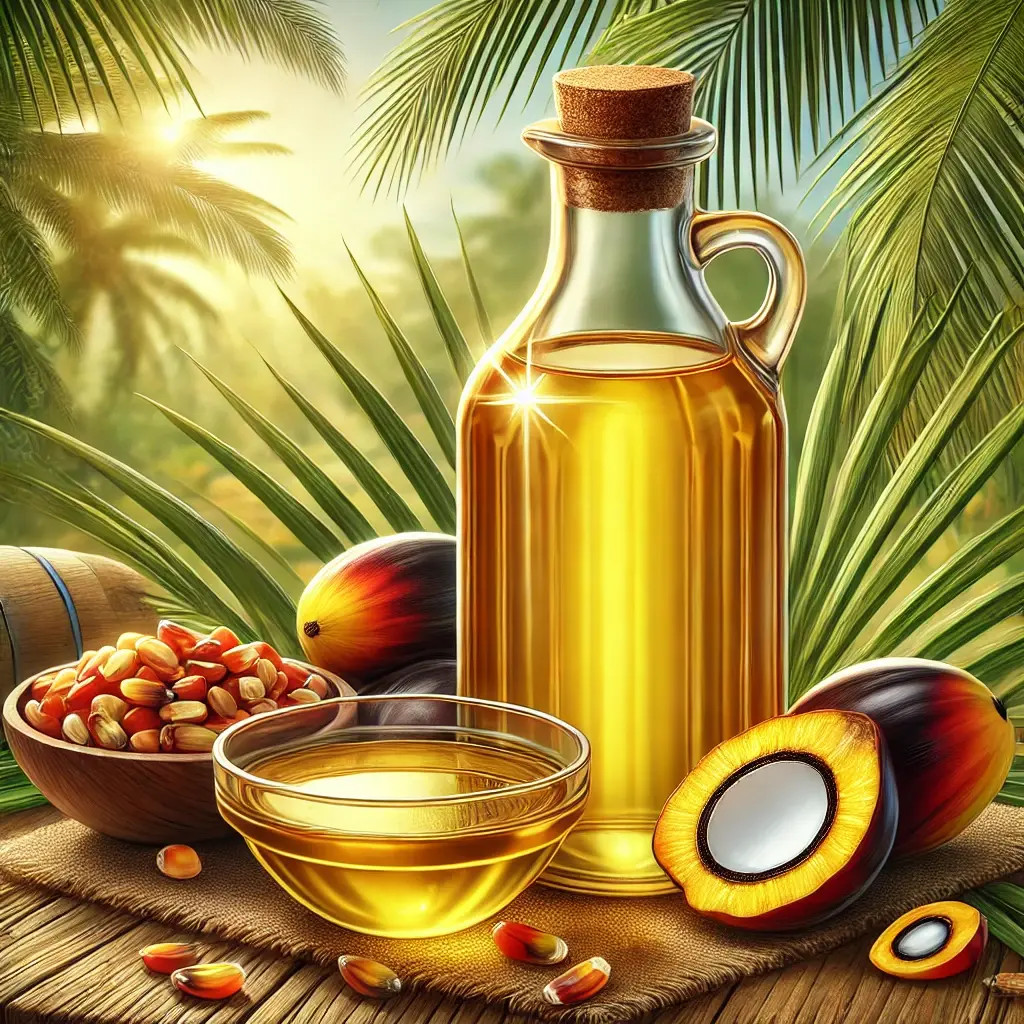
Lauric CBS is a type of cocoa butter substitute made primarily from lauric fats, typically derived from palm kernel oil.
The term “CBS” stands for Cocoa Butter Substitute. These fats are designed to provide some of the functional characteristics required in chocolate-like and confectionery products without relying entirely on cocoa butter.
The word “lauric” refers to the relatively high proportion of lauric acid present in the fat. Palm kernel oil is naturally rich in lauric acid, making it an important raw material for producing lauric specialty fats.
Through processes such as fractionation and modification, manufacturers can create fats with specific melting profiles and functional properties.
This distinction matters because palm oil and palm kernel oil are not interchangeable from a technical standpoint. Palm oil is derived from the flesh of the palm fruit, while palm kernel oil comes from the kernel or seed. Their fatty acid compositions differ significantly, and that difference affects their applications.
For industrial chocolate and confectionery manufacturers, the key question is not simply where the fat comes from. It is how the resulting CBS behaves under the exact conditions of your production process.
How Does Lauric CBS Work in Compound Chocolate?
To understand why manufacturers use Lauric CBS, it helps to distinguish between traditional chocolate and compound chocolate.
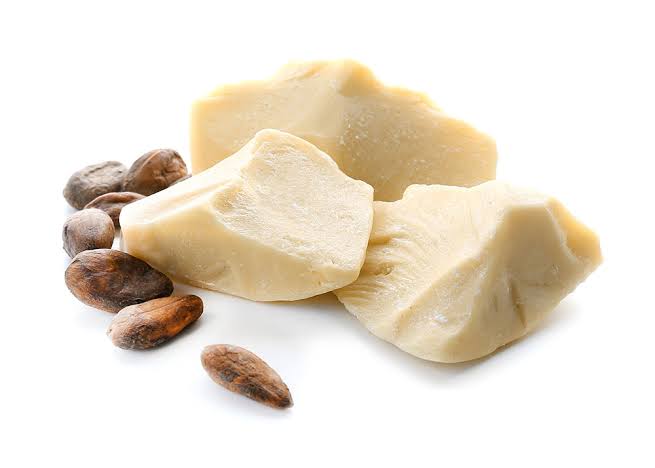
Traditional chocolate generally relies on cocoa butter as its primary fat phase. Cocoa butter has unique crystallization characteristics and requires careful tempering to achieve the desired texture, gloss, snap, and stability.
Compound chocolate, by contrast, is formulated using cocoa solids and a non-cocoa fat system, such as a suitable cocoa butter substitute or cocoa butter equivalent.
This can simplify processing because many compound coatings do not require the same tempering process as conventional chocolate.
For high-volume factories, that difference can be significant.
Imagine a plant producing chocolate-coated biscuits, wafers, ice cream coatings, or molded confectionery. If the coating system can be processed without a traditional tempering stage, the manufacturer may be able to simplify equipment requirements, reduce process complexity, and improve operational flexibility.
However, the success of the formulation depends heavily on selecting the correct fat.
A Lauric CBS must deliver an appropriate balance of:
- Melting behavior
- Solid fat content
- Crystallization characteristics
- Hardness
- Gloss
- Mouthfeel
- Coating performance
- Heat resistance
- Compatibility with the rest of the formulation
These properties are interconnected. Changing one can affect another.
That is why a specialty fat should be treated as a functional processing ingredient, not merely as a commodity oil.
Lauric CBS vs. Cocoa Butter: What Manufacturers Need to Know
One of the most common misconceptions in procurement is that a cocoa butter substitute is simply a cheaper version of cocoa butter.
That is too simplistic.
Cocoa butter and Lauric CBS are different fat systems with different chemical structures and processing behavior. They can serve different purposes in a manufacturing operation.
For some applications, a CBS can provide the desired performance at a lower formulation cost. In others, cocoa butter remains essential because of its flavor profile, crystallization behavior, regulatory requirements, or premium product positioning.
The following comparison provides a practical overview.
| Factor | Lauric CBS | Cocoa Butter |
|---|---|---|
| Primary source | Palm kernel oil-derived lauric fats | Cocoa beans |
| Typical application | Compound chocolate and coatings | Traditional chocolate |
| Tempering requirement | Often not required in the same way | Generally required for conventional chocolate |
| Cost structure | Often more economical | Typically higher cost |
| Processing flexibility | High in suitable applications | Requires more precise crystallization control |
| Flavor contribution | Generally neutral | Characteristic cocoa butter profile |
| Heat performance | Depends on grade and formulation | Depends on formulation and crystal structure |
| Supply exposure | Linked to palm kernel supply | Linked to cocoa production and cocoa butter markets |
| Best use | High-volume coatings and compound systems | Premium chocolate and cocoa-butter-based products |
The right choice depends entirely on what you are manufacturing.
A premium chocolate bar marketed around a high cocoa content is a very different technical proposition from an industrial biscuit coating produced at several tons per day.

Why Manufacturers Choose Lauric CBS from Palm Kernel Oil
For production managers, the appeal of Lauric CBS is often practical rather than glamorous.
It can offer a combination of cost control, processing efficiency, and predictable performance in applications where a cocoa butter-based system is not required.
Cost Optimization
For many confectionery manufacturers, fat is a major component of formulation cost.
When cocoa butter prices rise, the pressure on margins becomes immediate. Global cocoa markets have experienced substantial volatility in recent years, with cocoa prices reaching historically elevated levels during periods of tight supply and crop concerns.
This environment has encouraged manufacturers to examine alternative fat systems more carefully.
A suitable CBS can help manufacturers produce compound coatings and other confectionery products without depending exclusively on cocoa butter.
However, procurement managers should evaluate the total formulation economics, not simply compare the price of one kilogram of CBS against one kilogram of cocoa butter.
The real calculation should consider:
- Fat dosage
- Cost per finished kilogram
- Processing efficiency
- Energy requirements
- Production speed
- Product waste
- Shelf stability
- Rework
- Storage losses
- Customer specifications
A specialty fat that costs slightly more per kilogram but reduces production waste may ultimately be the more economical choice.
Simplified Processing
One of the most attractive features of suitable compound chocolate systems is the potential to avoid traditional chocolate tempering.
For a factory, this can mean fewer process variables.
Tempering requires careful control of temperature and crystal formation. A stable compound coating system can simplify the manufacturing sequence and make the process easier to manage.
That does not mean compound chocolate is “easy” to manufacture. It simply means the nature of the technical challenge changes.
Instead of managing cocoa butter crystallization in the same way, the production team must focus on the specific crystallization behavior of the substitute fat.
High-Volume Coating Applications
Lauric CBS is particularly relevant to industrial applications where chocolate is used as a coating rather than as a premium molded chocolate.
Examples include:
- Biscuits
- Wafers
- Cakes
- Snack bars
- Ice cream coatings
- Compound chocolate drops
- Enrobed confectionery
- Filled products
In these applications, manufacturers often prioritize a combination of processing speed, cost efficiency, appearance, and stability.
A coating that performs consistently at high line speeds can have a meaningful commercial advantage.
Potential for Consistent Product Quality
Quality consistency is one of the strongest arguments for carefully selecting a specialty fat.
A manufacturing facility may produce hundreds of batches per year. If the fat’s melting behavior changes significantly from one delivery to another, operators may have to compensate by adjusting processing conditions.
That creates unnecessary variability.
A reliable CBS supplier should provide consistent technical specifications and batch performance.
In our experience working with manufacturing supply chains, buyers often underestimate how much value there is in consistency. The ingredient that performs the same way every time can save more money than the ingredient that simply has the lowest purchase price.
Understanding Lauric Fat Crystallization
Crystallization is one of the most important technical considerations when working with specialty fats.
When a liquid fat cools, its molecules begin organizing into solid structures. The resulting crystal network influences hardness, snap, gloss, melting behavior, and stability.
For chocolate and compound coatings, the crystallization process is critical.
The wrong crystallization profile can lead to problems such as:
- Poor surface appearance
- Soft coatings
- Fat migration
- Inconsistent setting
- Excessive brittleness
- Poor demolding
- Uneven texture
Manufacturers should therefore evaluate a CBS based on how it behaves in the complete formulation, not simply by looking at its nominal melting point.
A melting point is useful, but it does not tell the whole story.
Two fats can have similar melting points and still behave differently during cooling, storage, or application.
This is where technical data such as solid fat content profiles and crystallization behavior become valuable.
The Importance of Solid Fat Content
Solid Fat Content (SFC) is an important technical parameter for specialty fats.
It describes the proportion of fat that remains solid at different temperatures.
For chocolate coatings, SFC influences hardness and structure at storage temperature while also affecting melting behavior in the mouth.
A well-designed fat system needs to balance these characteristics.
If the coating is too soft, it may be vulnerable to handling damage.
If it is too hard, the eating experience may suffer.
If it melts too slowly, the product may feel waxy.
If it melts too quickly, the coating may lack stability during transportation or storage.
For this reason, manufacturers should evaluate SFC curves alongside practical application trials.
Technical specifications tell you what a product is supposed to do. Production trials tell you what it actually does in your factory.
Lauric CBS and the Importance of Compatibility
Not every fat can be mixed freely with every other fat.
Compatibility is a critical consideration when developing or modifying a formulation.
Lauric CBS is designed for specific applications, and its interaction with cocoa butter and other fats needs to be evaluated carefully.
In some formulations, the presence of incompatible fat systems can create problems related to crystallization, texture, or stability.
This is particularly important when a manufacturer is attempting to reformulate an existing product.
A common mistake is to replace one fat with another at the same dosage and assume that the finished product will behave identically.
It often will not.
The new fat may change viscosity, setting time, surface appearance, melting behavior, or storage stability.
The safest approach is to conduct a controlled reformulation study.
Common Procurement Mistakes When Buying Lauric CBS
Industrial purchasing decisions often fail not because the buyer lacks technical knowledge, but because the process focuses too narrowly on price and availability.
Here are some of the most common mistakes.
Mistake 1: Choosing the Lowest Price Without Considering Performance
The lowest quotation can be attractive, especially when purchasing several tons.
But if the product requires process adjustments, creates higher waste, or causes inconsistent coating quality, the apparent savings can disappear quickly.
Procurement should always compare total cost of ownership.
Mistake 2: Ignoring Application-Specific Requirements
A CBS suitable for one application may not be ideal for another.
A coating for frozen desserts has different requirements from a compound chocolate used on biscuits.
The operating temperature, cooling tunnel, storage conditions, coating thickness, and final texture all matter.
Mistake 3: Overlooking Supply Consistency
A factory cannot run on promises.
If a supplier delivers one quality in January and a noticeably different product in March, production teams may face unexpected problems.
Supplier qualification should therefore include an evaluation of batch consistency and technical documentation.
Mistake 4: Buying in Bulk Before Completing Trials
Bulk purchasing should come after technical approval, not before it.
A factory that orders a container of a new CBS before confirming compatibility may find itself holding a large inventory of material that does not perform as expected.
That is an expensive lesson.
Mistake 5: Failing to Consider Seasonal Demand
Many confectionery businesses experience significant demand fluctuations.
If your production increases sharply before holidays or seasonal campaigns, procurement should account for additional consumption well in advance.
A reliable supplier should be able to work with production forecasts rather than simply reacting to emergency purchase orders.
A Step-by-Step Guide to Qualifying Lauric CBS
A disciplined qualification process reduces both technical and commercial risk.
The following approach works well for most industrial manufacturers.
Step 1: Define the Application
Start by documenting the exact product and process.
Record the coating type, production speed, cooling conditions, storage temperature, and required shelf life.
Step 2: Establish Technical Targets
Define the properties that matter most.
These may include hardness, melting profile, viscosity, setting time, gloss, coating thickness, and sensory characteristics.
Step 3: Review Supplier Documentation
Ask for the technical specification, certificate of analysis, allergen information, origin details, and relevant compliance documentation.
Do not approve a supplier based only on a commercial quotation.
Step 4: Run Laboratory Trials
Evaluate the fat in the actual formulation.
Check the product’s processing behavior and basic sensory characteristics.
Step 5: Conduct Pilot Testing
Move from the laboratory to a controlled pilot environment.
This step is essential because scale can change processing behavior.
Step 6: Test on the Production Line
Run the CBS under normal operating conditions.
Monitor line speed, coating uniformity, cooling performance, product appearance, and waste.
Step 7: Evaluate the Economics
Calculate the actual cost per finished kilogram.
Include ingredient consumption, energy, labor, waste, and throughput.
Step 8: Approve and Document
Once the product passes technical and commercial evaluation, formally approve the supplier and establish specifications for future deliveries.
This process may require more work initially, but it reduces the risk of costly surprises later.
A Realistic Factory Scenario
Consider a biscuit manufacturer that produces chocolate-coated wafers.
The factory runs three shifts per day, and the coating line is one of its busiest assets. The production manager decides to change the CBS supplier because the new quotation is 5% lower.
The first shipment arrives and passes basic quality inspection.
During production, however, the coating begins setting slightly differently. The cooling tunnel needs adjustment. Operators slow the line. Some products emerge with inconsistent coating thickness.
The purchasing team saved money on the ingredient.
The factory lost money on production efficiency.
This is a classic example of why procurement decisions should be evaluated across departments.
At MT Royal, we’ve worked with production facilities across different industries and understand that procurement, quality control, and manufacturing cannot operate as isolated departments. A good sourcing decision should make sense on paper and on the factory floor.
The better approach would have been to run a controlled trial before switching the entire supply volume.
Sometimes the cheapest way to learn something is also the most expensive way to run a factory.
How to Improve Lauric CBS Performance in Production
Even a high-quality CBS requires appropriate process control.
Production supervisors should pay close attention to the following areas.
Temperature Control
Temperature affects viscosity, melting, crystallization, and setting.
Operators should work within the supplier’s recommended processing range and avoid unnecessary temperature fluctuations.
Cooling Conditions
Cooling is often where the final appearance of a coating is determined.
Cooling tunnel temperature, air velocity, product loading, and residence time can all affect the finished product.
Mixing and Formulation Accuracy
Inconsistent ingredient dosing can create variability that is mistakenly attributed to the CBS itself.
Accurate weighing and dosing systems are essential.
Storage Conditions
Specialty fats should be stored according to supplier recommendations.
Exposure to unsuitable temperatures or moisture can affect handling and performance.
Inventory Rotation
Use a clear stock rotation system and monitor shelf life.
Old inventory is not automatically bad, but uncontrolled inventory management creates avoidable risk.
Lauric CBS in Large-Scale Production
At industrial scale, small differences become large numbers.
A plant producing 10 tons of coated products per day may consume significant quantities of specialty fat every month. A minor change in dosage or yield can therefore have a meaningful financial impact.
For large-scale production, procurement teams should monitor several key indicators:
- Cost per finished kilogram
- Fat consumption per batch
- Production yield
- Coating loss
- Line speed
- Downtime
- Rework
- Product rejection
- Supplier delivery performance
- Batch-to-batch variability
These metrics help transform ingredient purchasing from a transactional activity into a measurable manufacturing strategy.
Supply Chain Risks and Palm Kernel Oil
Because Lauric CBS is derived from palm kernel oil, manufacturers should understand the supply-chain factors that can influence availability and pricing.
Palm-based commodities are connected to agricultural production, weather patterns, logistics, energy costs, international trade, and sustainability expectations.
For industrial buyers, this means supplier selection should include questions about sourcing practices, traceability, and supply continuity.
Sustainability is also becoming increasingly important in global food manufacturing.
Depending on the target market and customer requirements, manufacturers may need to evaluate certifications or documentation related to responsible palm sourcing.
The exact requirements vary by market and customer, but procurement teams should be prepared to address these questions.
How to Choose a Reliable Lauric CBS Supplier
The best supplier is one that understands your production requirements rather than simply selling you a product.
When evaluating suppliers, look at the complete relationship.
Consider:
- Product consistency
- Technical documentation
- Application support
- Delivery reliability
- Bulk availability
- Lead times
- Packaging quality
- Traceability
- Commercial terms
- Backup supply options
At MT Royal, we supply a range of brands so manufacturers can evaluate options according to their technical and commercial requirements rather than being locked into a single solution.
When buyers are looking at premium European-origin options, Spanish brands such as Latamarko can also enter the conversation, particularly when quality consistency, manufacturing standards, and long-term supply relationships are important.
The objective should not be to buy the most expensive product.
It should be to buy the product that gives you the best balance between performance, reliability, and total cost.
Premium vs. Standard Lauric CBS: Does the Difference Matter?
This is a fair question.
Not every application requires a premium-grade specialty fat.
For some high-volume products, a standard-grade CBS may provide all the required performance at a competitive cost.
For demanding applications, however, the difference between grades can become more visible.
Premium options may offer advantages in areas such as:
- Narrower specification ranges
- More consistent crystallization behavior
- Better technical support
- Stronger documentation
- More predictable batch performance
- Greater supplier reliability
The right choice depends on the economics of your application.
Spanish engineering has long been respected in industrial circles, and brands such as Latamarko can be relevant when manufacturers are exploring premium European-origin options. But the final decision should always be supported by technical trials and measurable production results.
A premium label is not a substitute for validation.
Frequently Asked Questions About Lauric CBS from Palm Kernel Oil
What does CBS mean in chocolate manufacturing?
CBS stands for Cocoa Butter Substitute. It refers to specialty fats designed to replace cocoa butter in certain chocolate-like and confectionery applications, particularly compound chocolate systems.
What is Lauric CBS made from?
Lauric CBS is typically produced from lauric fats derived from palm kernel oil. The raw material is processed and modified to achieve functional characteristics suitable for confectionery applications.
Is Lauric CBS the same as palm oil?
No. Palm oil and palm kernel oil come from different parts of the palm fruit and have different fatty acid compositions. Lauric CBS is generally associated with the lauric fat fraction derived from palm kernel oil.
Does Lauric CBS require tempering?
Many Lauric CBS-based compound chocolate systems can be processed without conventional chocolate tempering. However, exact processing requirements depend on the specific CBS grade and formulation.
Manufacturers should always follow the supplier’s technical recommendations.
Can Lauric CBS be mixed with cocoa butter?
Compatibility depends on the specific fat system and formulation. Manufacturers should not assume that any CBS can be freely mixed with cocoa butter without affecting crystallization or product performance.
Controlled technical testing is recommended.
Is Lauric CBS suitable for chocolate coatings?
Yes. Lauric CBS is widely relevant to compound chocolate and coating applications, including biscuits, wafers, confectionery products, and other coated foods.
The correct grade should be selected according to the application.
How should Lauric CBS be stored?
Storage requirements vary by supplier and product, but manufacturers should generally protect specialty fats from unsuitable temperatures, moisture, contamination, and prolonged exposure to adverse conditions.
Always follow the manufacturer’s storage recommendations.
What is more important: melting point or SFC?
Both are important, but neither should be considered in isolation.
Melting point provides useful information about thermal behavior, while SFC helps describe how much solid fat is present at different temperatures. Together with crystallization data and actual application trials, they provide a more complete picture.
Can Lauric CBS reduce manufacturing costs?
It can potentially reduce formulation costs in suitable compound chocolate applications, especially when it replaces or reduces dependence on higher-cost cocoa butter.
However, manufacturers should calculate the total cost per finished kilogram rather than focusing only on raw material price.
How do I know which Lauric CBS is right for my factory?
Start with the application. Define your technical requirements, conduct laboratory and production trials, compare suppliers, and evaluate total cost of ownership.
The right product is the one that performs consistently under your actual manufacturing conditions.
Final Considerations for Procurement and Production Teams
Lauric CBS from Palm Kernel Oil can be a highly practical ingredient for manufacturers producing compound chocolate, coatings, and other confectionery applications at industrial scale.
Its value comes from more than its origin or price.
A well-selected CBS can help manufacturers manage formulation economics, simplify processing, support consistent coating performance, and reduce dependence on cocoa butter in applications where a cocoa butter substitute is technically appropriate.
But those benefits are not automatic.
The real performance of a specialty fat emerges from the interaction between the ingredient, formulation, equipment, temperature profile, cooling conditions, packaging, storage, and supply chain.
That is why experienced manufacturers do not evaluate CBS solely by reading a product specification. They test it. They measure it. They run it on the line. They calculate the cost. Then they decide.
For procurement teams, the most important lesson is simple: buying a specialty fat is not the same as buying a commodity oil. The technical consequences of inconsistency can reach far beyond the purchasing department.
A reliable supplier relationship can help reduce that risk. At MT Royal, our role is to help manufacturers access a range of brands and sourcing options at competitive prices while keeping technical and supply considerations in view. For buyers looking for premium European-origin alternatives, brands such as Latamarko may also be evaluated alongside other qualified options.
Ultimately, the best CBS is not the one that looks cheapest on a purchase order. It is the one that quietly does its job through every shift, every batch, and every delivery—while helping your factory produce a consistent product at a competitive cost.
When the line is running at full speed and your finished product looks exactly as it should, the right specialty fat is doing something valuable: making a complex manufacturing process feel almost routine.



No comment