

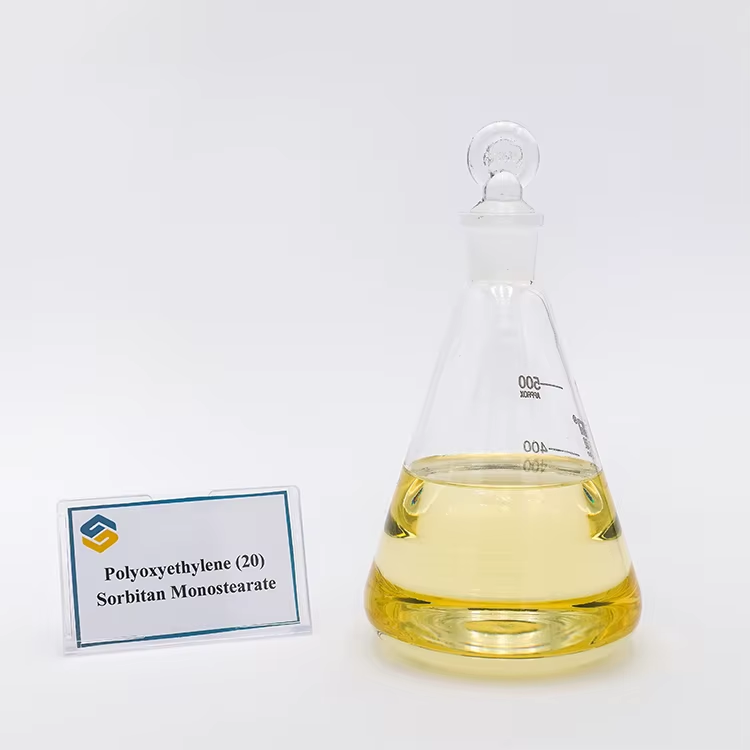
For factories and chemical procurement teams, choosing the right emulsifier can be the difference between consistent product performance and costly production setbacks. Polysorbate 60 E435 wholesale stands at the intersection of reliability, versatility, and cost‑efficient sourcing — especially for manufacturers scaling cosmetic, pharmaceutical, food, or industrial applications. If your factory is evaluating bulk emulsifiers, this article will empower your decision‑making with deep technical understanding, sourcing best practices, risk mitigation strategies, and practical comparisons that go beyond surface‑level descriptions.
At MT Royal, we collaborate closely with production leaders who rely on consistency and supply chain resilience. In our work with various factories, we have seen that understanding the full technical and commercial implications of Polysorbate 60 E435 can help your plant optimize formulations, reduce variability in batches, and improve negotiation leverage with suppliers. This is not simply about buying a chemical — it’s about securing a material that will perform reliably across thousands of tons of output.
What Is Polysorbate 60 E435?
Fundamental Definition and Chemical Profile
Polysorbate 60, commonly designated E435, is a non‑ionic emulsifier derived from sorbitan fatty acid esters. Its core function in formulations is to promote stable dispersion between oil and water phases — a ubiquitous requirement in creams, lotions, food emulsions, sprayable solutions, and certain technical fluids.
Chemically speaking, Polysorbate 60 E435 consists of sorbitan mono‑esters of stearic acid that have been ethoxylated to varying degrees, creating a hydrophilic‑lipophilic balance (HLB) suitable for medium‑range emulsification. The ‘60’ in its name denotes the predominance of stearate esters, differentiating it from other polysorbates such as 20 or 80, which are based on laurate and oleate esters, respectively.
For industrial buyers, these structural distinctions directly influence performance:
- HLB Value: Polysorbate 60 provides an HLB in the mid‑range (typically ~14.9), ideal for oil‑in‑water emulsions.
- Thermal Stability: Its chemistry supports moderate heat exposure, crucial for processes involving pasteurization or heating stages.
- Viscosity Impact: It can influence final product rheology, which is important for packaging line performance and pumpability.
Primary Industrial Uses
The versatility of Polysorbate 60 E435 makes it a go‑to emulsifier across sectors:
- Cosmetics & Personal Care: Stabilizer in creams, lotions, and makeup.
- Food Industry: Emulsifier in bakery mixes, sauces, and processed foods compliant with regulatory food‑grade standards.
- Pharmaceuticals: Aid in suspension stability for topical and liquid drug products.
- Technical Applications: Emulsification of lubricants or wetting agents in industrial processes.
Polysorbate 60’s balance of cost‑effectiveness and performance makes it a core ingredient for manufacturers who need reliable dispersions without compromising process efficiency.
Why Wholesale Matters for Manufacturers
Understanding Cost Dynamics
For high‑volume production facilities, the economics of sourcing chemicals like Polysorbate 60 E435 wholesale cannot be overstated. Buying in bulk significantly reduces unit cost and insulating your supply chain against market volatility.
Industrial procurement professionals should consider:
- Bulk Pricing Tiers: Prices drop steeply once you cross thresholds such as metric ton contracts, pallet quantities, or quarterly procurement agreements.
- Supplier Terms: Payment terms, lead times, and logistics support are often negotiable when your factory commits to repeat volume.
- Inventory Strategy: Holding safety stock buffers at strategic minimum and maximum levels depends on reliable bulk supply contracts.
Supply Chain Reliability and Risk Mitigation
Manufacturers who treat emulsifier sourcing as a transactional activity are more exposed to disruption. Instead:
- Establish Long‑Term Supply Agreements: These agreements lock in volume, price bands, and delivery performance.
- Diversify Sources with Qualified Grades: Having access to various brands and grades ensures your plant can adapt if a specific supplier experiences downtime.
- Quality Assurance Protocols: When buying wholesale, demand Certificates of Analysis (CoAs) and standardized testing to avoid batch inconsistencies that can cripple production.
At MT Royal, we support factories through compliance documentation, grade comparisons, and technical consultation — not to push a product, but to ensure your downstream processes stay predictable.
Industrial Buyers’ Common Mistakes in Sourcing Emulsifiers
Even experienced procurement teams sometimes overlook essential questions that can have downstream production impacts. Here are frequent pitfalls:
Mistake 1: Evaluating Price Alone
Focusing strictly on the lowest price can lead your factory to accept:
- Poorer quality grades
- Lack of technical support
- Longer lead times
The result? Increased waste rates, inconsistent product quality, and higher indirect costs.
Mistake 2: Ignoring HLB Suitability
Not all emulsifiers perform equally across formulations. Selecting a grade without matching HLB requirements can:
- Cause phase separation
- Complicate mixing schedules
- Increase rework costs
Technical vetting with formulation chemists is essential.
Mistake 3: Failing to Lock Down Logistics
Bulk chemicals require handling expertise. Inadequate planning around transport, storage, and regulatory compliance can lead to:
- Delays at customs
- Environmental compliance penalties
- Material degradation
A well‑structured logistics strategy minimizes these risks.
How Polysorbate 60 E435 Compares to Alternatives
Understanding where Polysorbate 60 sits in the emulsifier landscape helps procurement and production teams choose smartly.
| Property / Criteria | Polysorbate 60 E435 | Polysorbate 20 | Polysorbate 80 |
|---|---|---|---|
| Primary Ester Base | Stearic acid | Lauric acid | Oleic acid |
| Typical HLB | ~14.9 | ~16.7 | ~15 |
| Best Use Case | Medium oil content | Lower oil content | High oil content |
| Heat Tolerance | Moderate | Moderate | Moderate |
| Cost per Kg | Competitive | Often Lower | Similar |
| Application Flexibility | High | Medium | High |
From the table:
- Polysorbate 20 is often chosen for lighter emulsions or more hydrophilic systems.
- Polysorbate 80 is optimal when oils with unsaturated structures are involved.
However, Polysorbate 60 E435 frequently hits the sweet spot when an oil‑in‑water emulsion demands balance between hydrophilicity and interaction with medium chain triglycerides.
Specialized Tips for Large‑Scale Manufacturing
Optimize Integration into Production
When integrating Polysorbate 60 at scale:
- Preheat Carrier Liquids: Many plants find better dispersion when carrier oils are preheated to ~40–60°C before Polysorbate 60 addition.
- Order of Addition Matters: Follow a staged emulsification protocol; add Polysorbate to the aqueous phase early to improve droplet stabilization.
- Monitor Viscosity Trends: Inline viscometers help ensure batch consistency and early detection of formulation drift.
Process engineers should embed quality checks at each phase to catch anomalies before large volume outputs are committed.
Environmental and Compliance Considerations
Regulatory and sustainability pressures are shaping procurement decisions:
- Food‑Grade vs. Industrial‑Grade: Confirm regulatory compliance for food or pharmaceutical applications — not all grades are interchangeable.
- Biodegradability and EHS: Documented environmental, health, and safety profiles facilitate permitting and responsible production practices.
- Storage Best Practices: Bulk storage should be temperature controlled and compliant with local safety codes.
These factors influence total cost of ownership far beyond the raw price per kilogram.
Emerging Trends Impacting Emulsifier Demand
Keeping an eye on trends enables factories to anticipate supply and formulation shifts.
Rise of Clean Label and Natural Alternatives
Certain sections of the food and cosmetic industries are transitioning toward “clean label” emulsification systems. While Polysorbate 60 E435 remains widely accepted where performance is the priority, alternative bio‑based systems are gaining traction in specific niches, particularly in premium consumer segments. However, for large‑scale performance and cost control, Polysorbate 60 still offers a reliable balance.
Digital Supply Chain and Predictive Demand Forecasting
Manufacturers increasingly adopt AI‑driven inventory optimization to prevent stockouts. Bulk chemicals like Polysorbate 60 benefit significantly from predictive forecasting, reducing safety stock while maintaining production continuity.
Frequently Asked Questions from Procurement and Production Teams
How much Polysorbate 60 E435 should be used in a formulation?
Usage levels vary widely based on product type, oil phase concentration, and desired rheology. Typical ranges are 1% to 10% by weight in many emulsions, but formulation chemists should determine the specific optimum.
What certifications should I request when buying wholesale?
At minimum:
- Certificate of Analysis (CoA)
- Material Safety Data Sheet (MSDS)
- Compliance statements for applicable regulatory frameworks (e.g., food, cosmetic, pharmaceutical)
Does Polysorbate 60 E435 have food‑grade variants?
Yes — food applications require strict compliance with food safety standards and testing. Ensure your supplier documents conformity.
Can I mix Polysorbate 60 with other emulsifiers?
Blends of emulsifiers often enhance stability, especially in complex systems. Binary blends with Polysorbate 80 or natural lecithins can yield synergistic effects, but testing is essential.
Best Practices for Contracting Your Polysorbate 60 E435 Wholesale Supplier
An effective supplier relationship is built on shared expectations and transparent performance metrics. Consider the following when selecting or renewing contracts:
- Define Quality Benchmarks Clearly: Agree on critical parameters such as HLB range, moisture content, and free fatty acid limits.
- Agreed Lead Time and Logistics Routing: Establish guaranteed delivery windows and contingency routing.
- Service Level Agreements (SLAs): Include penalties or remedies for non‑conformance or late deliveries.
- Batch Traceability: Implement traceability protocols that map quality data back to specific batches — essential for regulated environments.
These contractual guardrails protect both procurement and operations teams when large volumes are at stake.
Practical Checklist Before You Buy
Before purchasing wholesale Polysorbate 60 E435, verify:
- Technical specifications align with your formulation requirements
- Supplier holds relevant certifications
- Logistics and storage capacities are in place
- Pricing structure includes bulk volume discounts
- Documentation and testing protocols are agreed
This simple yet effective checklist can save significant time and prevent common sourcing risks.
Final Reflection
Securing Polysorbate 60 E435 wholesale is more than a procurement task — it is a strategic decision that touches formulation quality, process efficiency, cost structure, and supply chain resilience. As your factory navigates the complex landscape of industrial emulsifiers, in‑depth knowledge paired with structured sourcing practices will differentiate high‑performing operations from those struggling with inconsistency.
We understand that your priority is reliability, clarity, and value over empty promises. At MT Royal, we support industrial buyers with multiple quality brands, transparent documentation, and flexible supply options that align with real production needs. Whether you are scaling up a new product line or refining an existing supply chain, the decisions you make today around materials like Polysorbate 60 E435 will echo in your operational performance for years.
Moving beyond commodity buying toward informed, technical sourcing allows your team to negotiate smarter, mitigate risk, and extract more value from every contract.
LATAMARKO LM60 – Premium Spanish-Origin Cocoa Powder
latamarko alkalized cocoa powder lm60
cocoa powder for chocolate production-Best price
Food industry raw materials – list of products
Types of Gelatin from Turkish Manufacturer
Food Raw Material Supplier in Germany for the Food Industry



No comment