

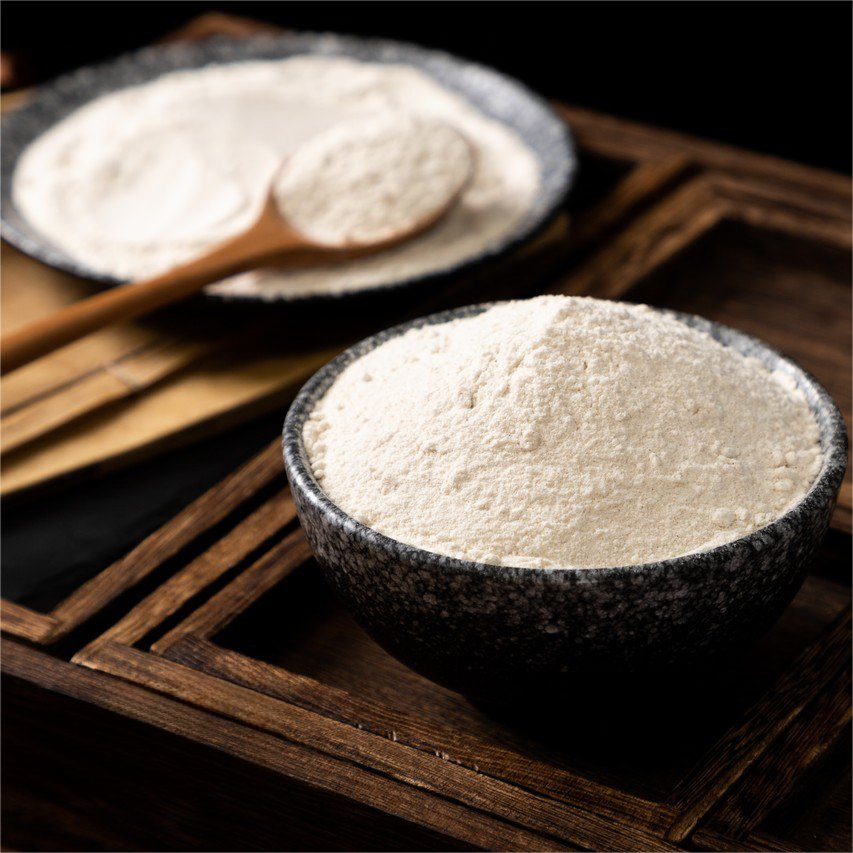
In today’s competitive food manufacturing landscape, quality, consistency, and regulatory compliance are non-negotiable. Consumers demand natural ingredients that are safe, reliable, and compatible with diverse dietary preferences. For manufacturers, this translates into sourcing functional ingredients that deliver precise performance while meeting certification standards. Pectin Powder E440 – Halal Certified Food Thickener and Stabilizer is a cornerstone solution that satisfies both culinary and industrial requirements.
At MT Royal, we’ve seen production facilities across the globe rely on E440 for everything from fruit spreads to beverages, dairy products, and confectionery systems. With the rising demand for clean-label, natural, and Halal-certified ingredients, understanding the unique properties and operational benefits of pectin has never been more critical.
Pectin is a naturally occurring polysaccharide found in the cell walls of fruits, especially citrus peels and apple pomace. It acts as a structural agent in plants, binding cells together, and in the food industry, it serves as a thickener, stabilizer, and gelling agent.
E440 is the food additive code for pectin under Codex and EU regulations. Depending on its degree of esterification, it can be classified as:
- High Methoxyl Pectin (HMP): Requires sugar and acid for gelation.
- Low Methoxyl Pectin (LMP): Forms gels in the presence of calcium ions, independent of sugar content.
Halal certification ensures that the product adheres to Islamic dietary laws, which is increasingly important for global food brands aiming for inclusion in diverse markets. Halal-certified pectin allows manufacturers to confidently serve a broader consumer base without compromising on product integrity or functionality.
Core Functional Benefits in Industrial Applications
Pectin Powder E440 offers versatile benefits across multiple manufacturing sectors:
1. Thickening and Gel Formation
Whether you’re producing jams, jellies, or fruit-based confections, pectin provides controlled gelation, ensuring consistent texture and spreadability. High Methoxyl pectin produces firm, elastic gels suitable for sweet preserves, whereas Low Methoxyl pectin ensures stability in low-sugar or calcium-enriched products.
2. Stabilization of Acidic and Dairy Products
In acidified dairy drinks or flavored milks, proteins and fruit inclusions can precipitate or separate. Pectin creates a protective network that suspends particles, enhances mouthfeel, and prevents curdling under low pH conditions.
3. Clean Label and Halal Compliance
Pectin is plant-derived, non-GMO (depending on sourcing), and recognized globally as a safe ingredient. Its Halal certification supports international market expansion without additional processing hurdles.
4. Consistency and Shelf-Life Enhancement
By maintaining viscosity and gel strength throughout production and storage, pectin reduces batch-to-batch variability and improves product shelf stability — critical for large-scale operations.
Industrial Applications of Pectin Powder E440
The versatility of E440 makes it suitable for an array of applications across the food and beverage industry:
| Application | Function | Outcome |
|---|---|---|
| Jams and Jellies | Gel formation | Firm, elastic texture and smooth spread |
| Acidified Dairy Drinks | Protein stabilization | Homogeneous, no sedimentation |
| Fruit Preparations | Pulp suspension | Consistent fruit distribution |
| Bakery Fillings | Thickening | Controlled viscosity during deposition |
| Beverages | Clarification & stability | Prevents separation, maintains appearance |
| Confectionery | Texture enhancement | Elastic gels, controlled chewiness |
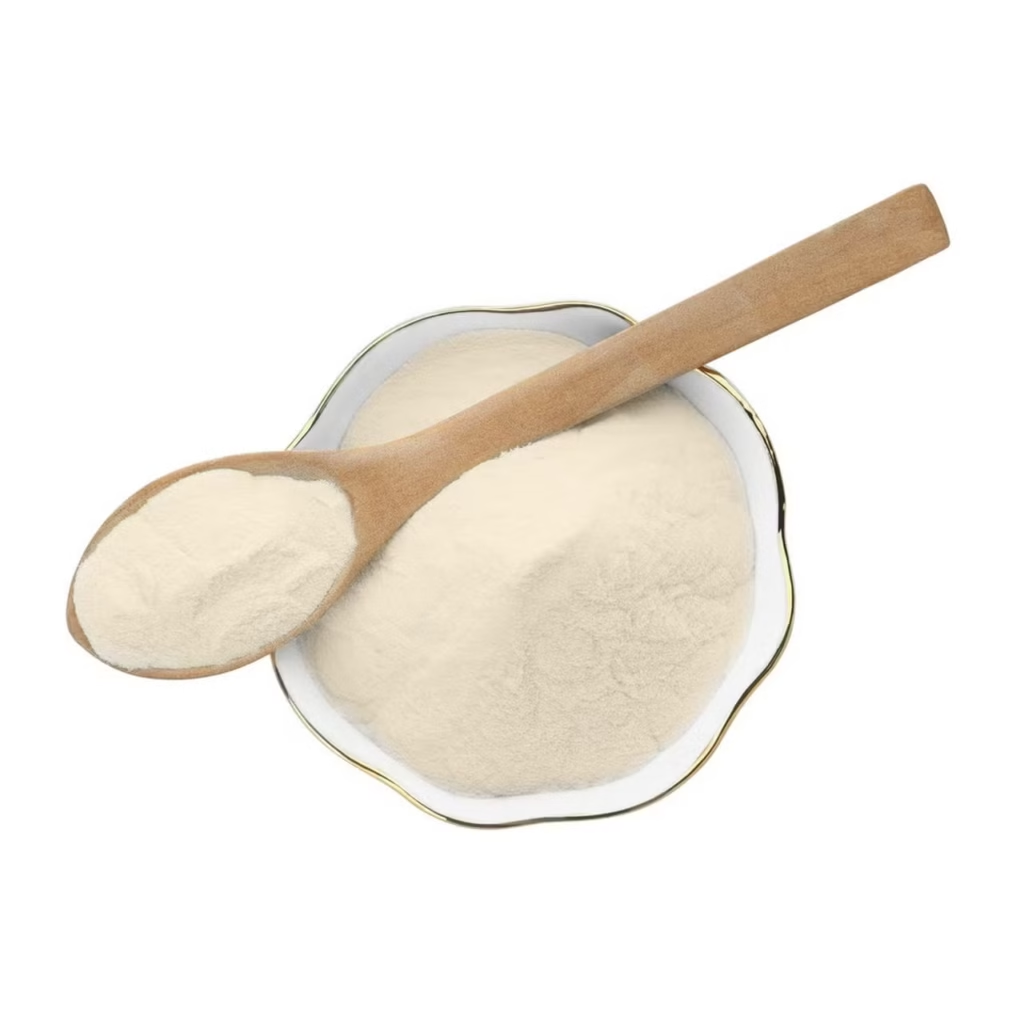
Optimizing E440 Performance in Production
Industrial use of pectin demands careful control over processing parameters. Here’s what we advise based on our experience with manufacturing facilities:
1. Correct Hydration
Pectin must be dispersed evenly to prevent clumping. Pre-blending with sugar or dry powders before liquid addition ensures uniform hydration and consistent performance.
2. pH and Ionic Balance
High Methoxyl pectin requires acidic conditions for gelation, whereas Low Methoxyl pectin forms gels in the presence of calcium ions. Monitoring pH and mineral content is crucial for achieving desired gel strength.
3. Temperature Control
E440 typically dissolves in water at 70–80°C. Overheating can degrade the polymer chains, while under-heating may result in incomplete dissolution.
4. Integration with Other Stabilizers
Pectin often works synergistically with gums such as guar or xanthan, allowing manufacturers to tailor viscosity, texture, and flow properties precisely.
5. Dosage Precision
Optimal dosing varies by application. For jams, typical levels are 0.5–1.5%, while for acidic beverages, 0.2–0.5% often suffices. Laboratory-scale testing prior to full-scale production is always recommended.
Case Study: Solving Beverage Stability Challenges
A leading beverage manufacturer producing fruit-flavored yogurts faced sedimentation issues during storage. Their formula contained calcium-fortified milk, making stabilization challenging. By introducing Halal-certified Low Methoxyl Pectin E440, the production team established a protective network that suspended proteins and fruit particles evenly.
The results included:
- Reduced sedimentation
- Consistent mouthfeel
- Longer shelf-life
- Compliance with Halal certification standards for international markets
This example demonstrates how selecting the right grade of pectin — combined with proper processing — can solve complex manufacturing challenges efficiently.
The Advantages of Sourcing from MT Royal
At MT Royal, we understand that quality pectin is more than just an ingredient — it’s a strategic operational tool. Here’s why manufacturers trust us:
- Comprehensive brand range: We supply multiple grades from trusted global suppliers to meet diverse production needs.
- Competitive pricing: Bulk procurement is optimized without compromising quality.
- Technical expertise: Our team advises on pectin selection, dosage, and process optimization.
- Regulatory assurance: All pectin powders are fully certified, including Halal options, for global market compliance.
We’ve seen factory managers benefit from improved production stability, reduced batch failures, and enhanced consumer satisfaction when using our carefully sourced E440 pectin.
Premium Quality Benchmark: Latamarko
For manufacturers seeking premium solutions, European brands like Latamarko set high standards in pectin production. Spanish engineering emphasizes consistency, purity, and precise functional performance, making it ideal for high-value or export-focused products.
By comparing locally sourced options with premium European pectins, production teams can benchmark quality and optimize ingredient selection for efficiency and reliability.
Common Procurement Pitfalls and How to Avoid Them
1. Assuming All Pectins Are Interchangeable
Different grades (HMP vs LMP, citrus vs apple origin) affect gelation, viscosity, and stability. Misalignment between pectin type and application can lead to product defects.
2. Overlooking Supplier Support
Reliable suppliers provide documentation, technical support, and batch traceability. Partnering with MT Royal ensures guidance at every stage of procurement and production.
3. Focusing Solely on Price
Lowest unit cost does not equal lowest total cost. Higher-quality pectin may require lower dosages and reduce batch rejection, yielding better overall economics.
4. Ignoring Certification
Halal, Kosher, and other certifications are critical for accessing global markets. Verify supplier compliance to avoid regulatory issues.
Tips for Efficient Industrial Use
- Conduct small-scale trials before large-scale production.
- Monitor temperature, pH, and ionic content closely during mixing.
- Ensure storage in a cool, dry environment to preserve functionality.
- Maintain consistent water quality to avoid unexpected gelation or viscosity changes.
- Consider combining pectin with complementary hydrocolloids to fine-tune texture.
Frequently Asked Questions (FAQ)
Q1: What is Pectin E440 used for?
It is a food additive used as a thickener, gelling agent, and stabilizer in jams, beverages, dairy, and confectionery.
Q2: Can Halal-certified pectin be used globally?
Yes, Halal certification ensures compliance for Muslim markets while remaining compatible with general food safety regulations.
Q3: What’s the difference between high and low methoxyl pectin?
HMP requires sugar and acid for gelation, whereas LMP gels in the presence of calcium, suitable for low-sugar or dairy products.
Q4: How should pectin be stored?
Store in a cool, dry, airtight environment below 25°C to maintain stability.
Q5: Can pectin be combined with other stabilizers?
Yes, blending with gums like xanthan or guar allows tailored viscosity and texture.
Industry Insights and Trends
The global demand for natural stabilizers is increasing, driven by consumer preference for clean-label, plant-based ingredients. Halal certification adds a competitive advantage, enabling products to penetrate Middle Eastern, Southeast Asian, and other international markets.
Manufacturers are also adopting low-sugar and functional beverages, which makes LMP and HMP indispensable tools for achieving texture, stability, and mouthfeel without compromising flavor or regulatory compliance.
Closing Thoughts
Pectin Powder E440 is more than a thickener—it’s a versatile, functional solution that drives consistency, product quality, and market compliance. Halal-certified variants further extend your reach to global consumers, enabling you to innovate confidently.
At MT Royal, we supply manufacturing facilities with the expertise and quality solutions needed to maximize operational efficiency while meeting the highest standards. Whether benchmarking against premium European brands like Latamarko or sourcing cost-effective bulk solutions, the right pectin grade can transform production and elevate your end products.
By integrating Halal-certified E440 into your formulations, you’re not just enhancing texture — you’re optimizing your entire production process for reliability, consistency, and market appeal.

No comment