


If your factory uses sodium bicarbonate as a processing aid, leavening agent, pH regulator, or formulation ingredient, the quality of your raw material can affect far more than the purchase price. Choosing the right Sodium Bicarbonate – Food grade from a dependable supplier such as MT Royal can help you control production consistency, reduce avoidable quality problems, and protect your finished product specifications.
For manufacturers, sodium bicarbonate may look like a straightforward commodity: a white powder with a familiar chemical name and a relatively stable market. In practice, industrial sourcing is more complicated. Particle size, purity, packaging, storage conditions, documentation, batch consistency, and suitability for the intended application all matter. A material that performs perfectly in one production process may be unsuitable for another.
This guide explains what food-grade sodium bicarbonate means, how manufacturers should evaluate it, where procurement teams commonly make mistakes, and how to source it intelligently for large-scale production.
Food industry raw materials – list of products
LATAMARKO LM60 – Premium Spanish-Origin Cocoa Powder
What Is Sodium Bicarbonate – Food Grade?
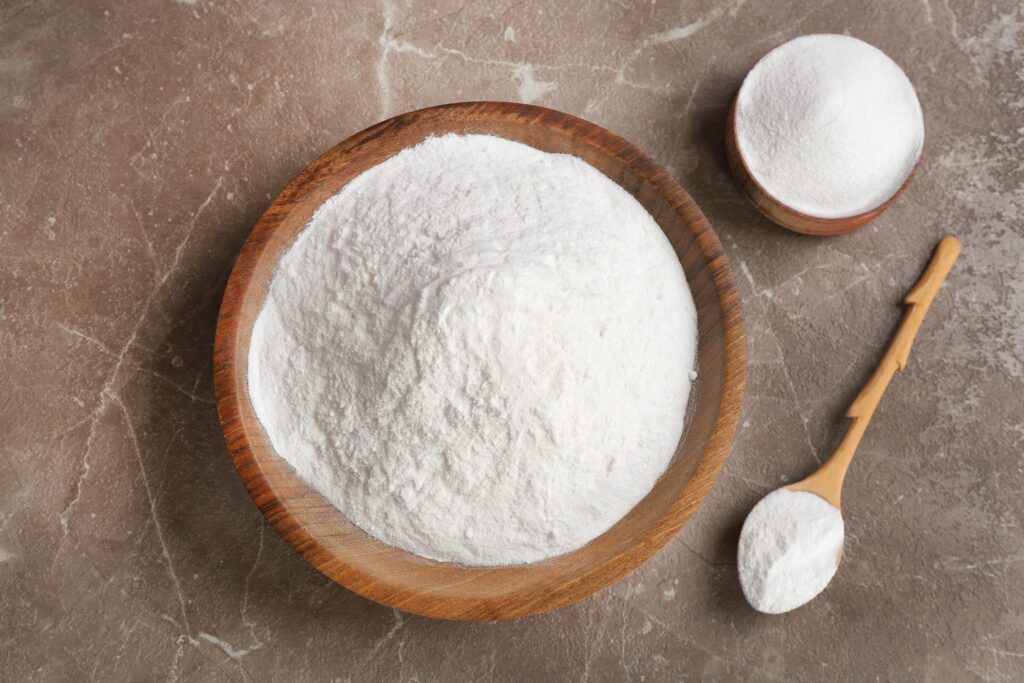
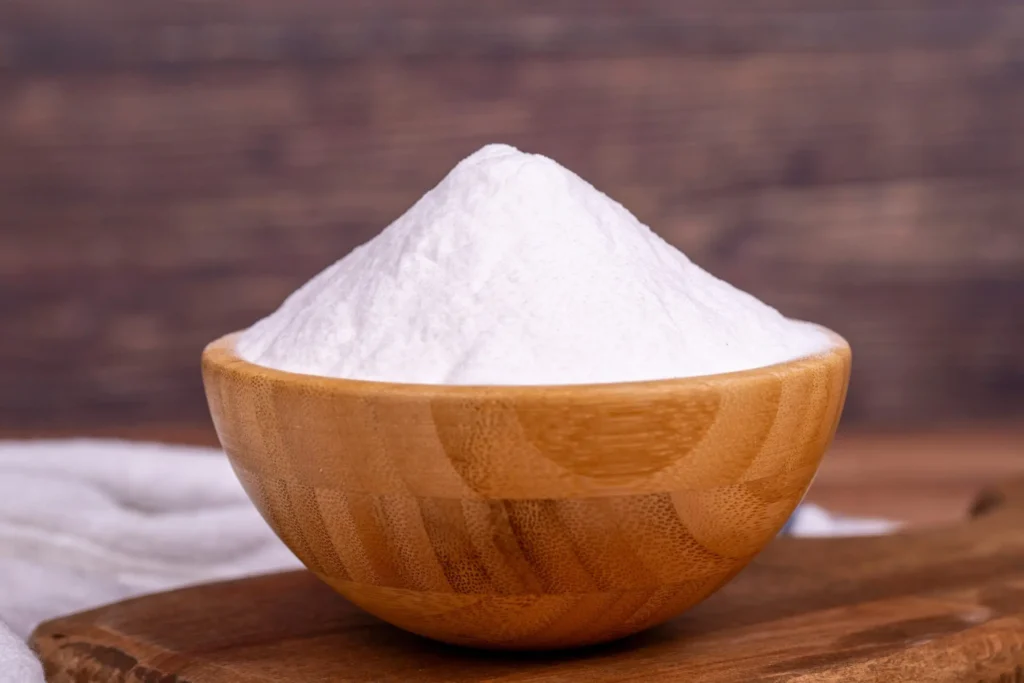
Sodium bicarbonate, commonly known as baking soda, is an inorganic compound with the chemical formula NaHCO₃. It is a white, crystalline or powdery material that reacts with acids to release carbon dioxide.
In food manufacturing, this reaction is particularly valuable. Carbon dioxide generated during processing can provide leavening, aeration, and controlled expansion in products such as baked goods. Sodium bicarbonate can also contribute to pH control, affect flavor development, influence browning, and modify the functional characteristics of certain formulations.
The term food grade is important. It indicates that the material is manufactured, handled, tested, and documented for use in food applications and must comply with the relevant food-safety and quality requirements applicable to the intended market.
Food-grade does not simply mean “chemically pure.” A factory buyer should also consider the supplier’s quality system, specifications, traceability, contaminant controls, certificate of analysis, packaging integrity, and regulatory documentation.
Sodium Bicarbonate vs. Baking Soda
The terms are often used interchangeably, but industrial procurement requires more precision.
“Baking soda” is the common commercial name for sodium bicarbonate, while “sodium bicarbonate” is the chemical name. The critical question for a manufacturer is not whether the product is called baking soda or sodium bicarbonate, but whether its grade, specification, and documentation match the intended application.
A food manufacturer should never assume that a generic sodium bicarbonate product is automatically appropriate for food production.
Why Food-Grade Sodium Bicarbonate Matters in Manufacturing
Sodium bicarbonate is used across a surprisingly broad range of food-processing operations. Its function depends on the formulation and processing conditions.
Common applications include:
- Bakery and confectionery products
- Biscuits, crackers, and cookies
- Cake and premix production
- Effervescent food formulations
- pH adjustment
- Certain beverage and food-processing applications
- Ingredient blends and dry mixes
- Specialized food-processing formulations
The performance of sodium bicarbonate is closely linked to its interaction with other ingredients. In baking, for example, available acid, moisture, temperature, mixing conditions, and formulation ratios determine how much carbon dioxide is generated and when that gas becomes available.
This means a seemingly minor change in raw-material characteristics can become a significant production issue. If the reaction profile changes, your product may show differences in volume, texture, color, taste, or internal structure.
For a high-volume factory, consistency is therefore often more valuable than a small reduction in purchase price.
Key Quality Parameters Buyers Should Evaluate
A professional procurement specification should go beyond “food-grade sodium bicarbonate.”
1. Assay and purity
The sodium bicarbonate content should meet the agreed specification. Purity is particularly important when the ingredient has a direct functional role in the formulation.
A buyer should establish acceptable limits before approving a supplier rather than relying solely on a supplier’s general product description.
2. Particle size distribution
Particle size can influence dissolution, dispersion, mixing behavior, reaction rate, and process uniformity.
Two products can have similar chemical specifications but behave differently in production because their physical characteristics differ. This is particularly relevant for dry premixes and automated dosing systems.
3. Moisture
Moisture can influence flowability, caking, storage stability, and handling characteristics. In automated manufacturing environments, poor flow can create dosing irregularities that are frustratingly expensive to diagnose.
4. Appearance and color
Food-grade sodium bicarbonate is generally expected to have a white appearance and a clean, consistent physical profile. Changes in appearance should trigger investigation rather than being dismissed as cosmetic.
5. Heavy metals and contaminants
Depending on the market and application, relevant specifications may include limits for contaminants and heavy metals. Buyers should verify the applicable regulatory requirements rather than applying one universal specification to every product.
6. Certificate of Analysis
A Certificate of Analysis (COA) provides batch-specific information and should be part of the standard receiving and quality-control process.
A strong procurement process connects the COA to the actual delivered batch, lot number, production date where applicable, and traceability records.
Common Industrial Mistakes When Sourcing Sodium Bicarbonate
Raw-material purchasing can sometimes become a race to the lowest quoted number. That approach works surprisingly well—until the production line starts asking questions.
Mistake 1: Choosing solely on price
A lower price per metric ton does not necessarily produce a lower total cost.
Consider the broader calculation:
Total raw-material cost = purchase price + logistics + handling + losses + quality incidents + production disruption + inventory costs
If an inexpensive material creates flow problems, inconsistent processing, or additional quality testing, the apparent saving can disappear quickly.
Mistake 2: Comparing products without comparing specifications
Procurement teams sometimes compare three quotations as though they were identical commodities.
They may not be.
Compare:
- Assay
- Particle size
- Moisture
- Packaging
- Shelf-life requirements
- COA parameters
- Regulatory documentation
- Origin
- Batch consistency
- Delivery lead time
- Minimum order quantity
Only then does a price comparison become meaningful.
Mistake 3: Ignoring packaging
A food ingredient can meet the chemical specification and still arrive in poor condition.
Packaging must protect the material from moisture, contamination, tearing, and excessive handling damage. For large-volume operations, pallet configuration and bag size also influence warehouse efficiency.
Mistake 4: Treating supplier qualification as a one-time event
A supplier that performed well six months ago should not automatically remain qualified forever without monitoring.
Factories should periodically review incoming quality, documentation, delivery performance, complaints, and batch-to-batch consistency.
How to Select the Right Supplier for Your Factory
Supplier evaluation should combine technical qualification and commercial reliability.
A useful approach is to divide the evaluation into four categories.
Product quality
Ask for a current technical data sheet and representative COA. Confirm that the specification matches your internal raw-material standard.
Regulatory compliance
Determine whether the supplier can provide the documentation required for your destination market and food-safety system.
Depending on the application and jurisdiction, documentation may include specifications, allergen statements, food-contact or food-grade declarations where relevant, traceability information, and other compliance documents.
Supply continuity
A factory cannot produce finished goods reliably if a critical ingredient arrives unpredictably.
Evaluate:
- Typical lead time
- Available stock
- Production capacity
- Import dependency
- Backup supply options
- Seasonal or regional logistics risks
Commercial flexibility
A supplier offering several established brands can be useful when your factory needs to balance price, availability, and technical requirements.
MT Royal’s positioning across multiple brands can therefore be relevant to procurement teams that want to compare commercially competitive options without compromising the technical specification. The important point is to select the product based on your manufacturing requirements first and commercial conditions second.
Multiple Brands: Why This Can Benefit Industrial Buyers
Manufacturers sometimes assume that using one brand indefinitely is automatically the safest strategy. It can be—but not always.
Having qualified alternatives can strengthen supply-chain resilience.
A multi-brand sourcing strategy may help you:
- Compare market pricing
- Reduce dependency on a single producer
- Respond to shortages
- Maintain production during logistics disruptions
- Identify equivalent materials
- Negotiate more effectively
However, an alternative brand should never be introduced directly into production merely because its label says “food grade.”
Your quality team should conduct a supplier and material qualification process. Depending on the application, this may include laboratory testing, pilot trials, production validation, and finished-product evaluation.
Sodium Bicarbonate in Large-Scale Production
At high production volumes, small differences become large numbers.
Imagine a factory consuming 500 kg of sodium bicarbonate per production day. A seemingly minor dosing or material-flow issue repeated across hundreds of production cycles can translate into significant annual losses.
For large-scale operations, we recommend treating sodium bicarbonate as a controlled process input rather than an ordinary warehouse commodity.
Control warehouse conditions
Sodium bicarbonate should be stored in clean, dry conditions and protected from excessive moisture and contamination.
Warehouse practices should include:
- Clearly identified lots
- Appropriate palletization
- FIFO or FEFO practices according to your internal system
- Separation from incompatible or contaminating materials
- Routine packaging inspections
- Controlled access and traceability
Validate dosing behavior
If your factory uses automated feeding equipment, verify that the supplied grade flows consistently through the system.
Bridging, caking, dust generation, or inconsistent feeding can create problems that initially look like equipment failures.
Sometimes the machine is innocent.
Monitor batch performance
For critical applications, maintain records linking raw-material lots to production batches. If a finished product later shows abnormal texture, expansion, or color, traceability allows your technical team to investigate the material quickly.
Emerging Trends in Industrial Ingredient Sourcing
The market for food ingredients is becoming increasingly data-driven. Manufacturers are paying more attention to traceability, supplier qualification, documentation quality, supply-chain resilience, and total cost of ownership.
Another important trend is dual sourcing for critical ingredients. After repeated global logistics disruptions in recent years, many factories have recognized that supplier concentration creates operational risk even when the primary supplier is reliable.
For sodium bicarbonate, dual sourcing does not necessarily mean buying from two suppliers every month. It can mean maintaining a technically qualified second source that has already passed the necessary validation process.
In our work with manufacturing environments, we have seen that this distinction matters: an emergency supplier identified after a shortage begins is very different from an alternative supplier already qualified by your quality department.
Frequently Asked Questions From Factory Managers
Is Sodium Bicarbonate – Food grade suitable for every food application?
No. Food-grade classification is a starting point, not a universal performance guarantee. Your formulation and process may require specific physical and chemical characteristics.
Can we switch between brands without changing the recipe?
Not automatically. Even when products meet the same broad food-grade requirements, differences in particle size, density, moisture, and physical behavior can affect processing.
A controlled trial is the safer approach.
What documentation should we request?
At minimum, obtain the relevant technical specification and batch-specific COA. Depending on your food-safety and regulatory requirements, additional documentation may be necessary.
Is the cheapest supplier usually the best option?
Not necessarily. Evaluate the total delivered cost and operational risk, not simply the quoted price per kilogram or ton.
How should sodium bicarbonate be stored?
Keep it in a clean, dry, appropriately managed warehouse, protected from moisture and contamination. Follow the supplier’s technical documentation and your factory’s food-ingredient storage procedures.
Should large factories buy directly from one manufacturer?
That depends on consumption volume, logistics, contractual terms, technical requirements, and supply-chain risk. A distributor or supplier such as MT Royal may provide value when multiple brands, competitive commercial options, and sourcing flexibility are important.
How can we qualify an alternative supplier?
Start with documentation review, specification comparison, sample evaluation, laboratory testing where required, production trials, and formal approval by the relevant quality and technical teams.
Making Sodium Bicarbonate Procurement a Strategic Decision
For a factory, sodium bicarbonate is inexpensive compared with machinery, labor, energy, or finished products. That can make it tempting to treat procurement as a simple price exercise.
But inexpensive ingredients can still carry expensive consequences.
A more mature approach is to evaluate quality, consistency, documentation, logistics, availability, and price as one integrated sourcing decision. This is especially important when the ingredient has a direct effect on product performance.
MT Royal can be considered within that framework as a sourcing partner offering multiple brands and competitive options. The strongest purchasing decision, however, is not the one with the most attractive quotation on paper. It is the one that fits your technical specification, arrives consistently, remains traceable, and performs predictably on your production line.
Your sodium bicarbonate specification may occupy only one page in your purchasing system, but its impact can run through the entire factory—from receiving and storage to formulation, processing, quality control, and the final product.


No comment