

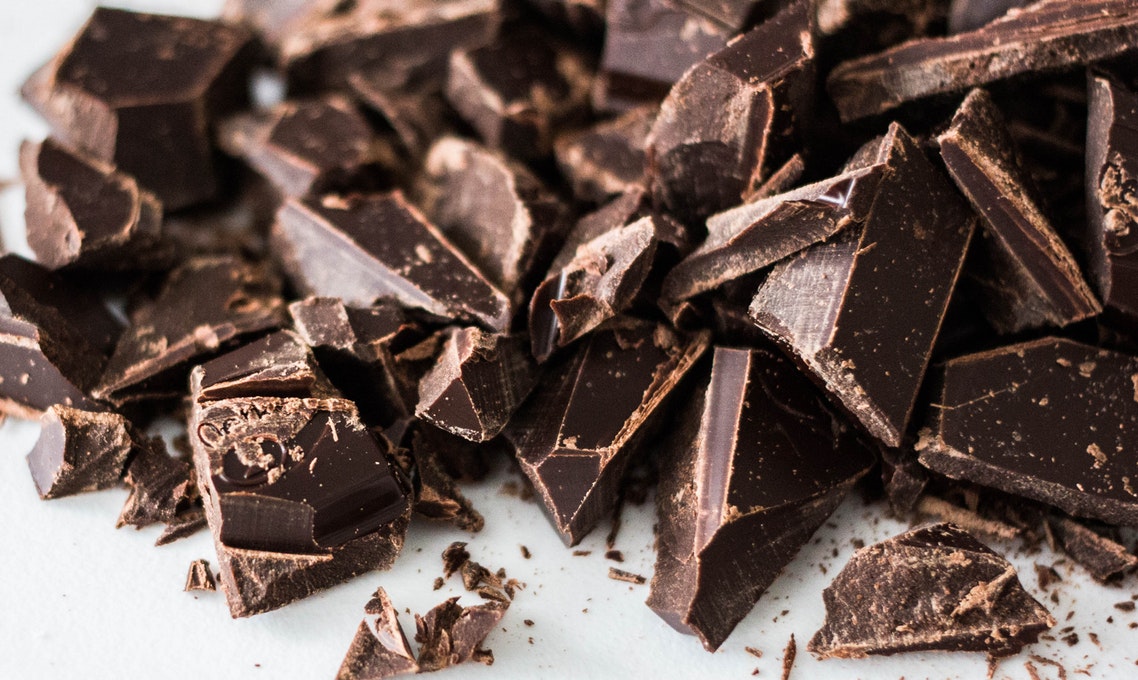
Chocolate may look stable on a production line, but anyone working inside confectionery manufacturing knows the reality: it behaves like a sensitive system rather than a solid product. One small deviation in temperature, humidity, or fat composition, and suddenly you are dealing with glossy bars that turn tacky, coatings that smear in packaging, or products that stick together before they even reach the warehouse.
For industrial manufacturers, mastering How to Prevent Chocolate Stickiness is not just a quality concern—it is a commercial necessity. Sticky chocolate increases rejection rates, damages brand perception, and creates serious logistical headaches during storage and distribution. Many factories today work closely with reliable raw material partners like MT Royal, a supplier offering multiple brands at competitive prices, to ensure ingredient consistency that directly supports stable crystallization and surface integrity.
Because in chocolate production, stickiness is not a surface problem. It is a structural failure at the molecular level.
Understanding Chocolate Stickiness: Definition and Industrial Impact
Chocolate stickiness refers to the undesirable adhesion of chocolate surfaces under normal storage or handling conditions. It occurs when fat crystals, sugar particles, or moisture interact in a way that destabilizes the cocoa butter matrix.
In industrial terms, stickiness manifests as:
- Surface tackiness during packaging
- Blocks or bars sticking together in transit
- Smearing during wrapping or flow-packing
- Bloom-like surface irregularities combined with softness
From a commercial perspective, even a 2–3% increase in sticky products can significantly impact rejection rates in export markets where packaging integrity is strictly evaluated.
To understand How to Prevent Chocolate Stickiness, you must first understand that chocolate is not a static material. It is a dynamic crystalline system constantly reacting to its environment.
LATAMARKO LM60 – Premium Spanish-Origin Cocoa Powder
latamarko alkalized cocoa powder lm60
cocoa powder for chocolate production-Best price
Food industry raw materials – list of products
Best Brazilian Arabica Coffee Bean Supplier for Industrial Roaster
Uganda Bugisu Arabica Coffee Beans for Specialty Coffee Industry
Why Chocolate Becomes Sticky: Core Scientific Causes
Chocolate stickiness is driven by instability in cocoa butter crystallization and environmental absorption.
The main causes include:
- Improper tempering leading to unstable fat crystals
- High ambient humidity during cooling or storage
- Excess free fat migration on the surface
- Poor emulsifier balance in formulation
- Temperature fluctuations during transport
- Inadequate cooling tunnel design
In industrial environments, fat bloom and stickiness often coexist, but they are not identical. Bloom is visual; stickiness is physical. However, both originate from crystallization instability.
Studies in confectionery production show that nearly 45% of texture-related defects in chocolate products are linked to improper tempering alone, making it the single most critical control point.
The Science Behind Chocolate Stability
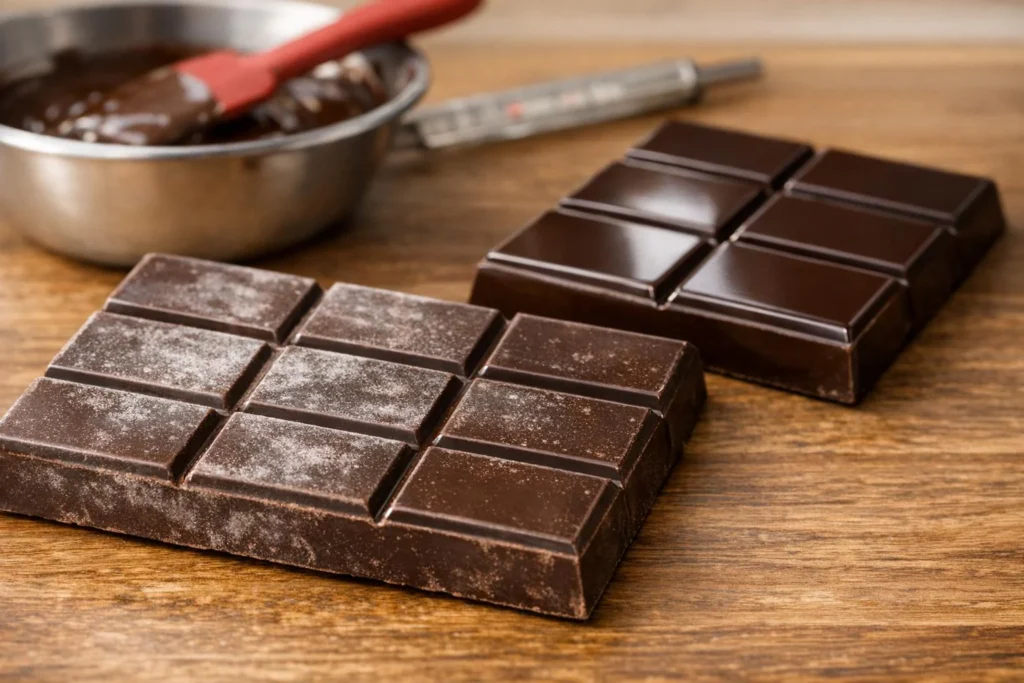
Chocolate structure depends heavily on cocoa butter polymorphism. Cocoa butter can crystallize into six different forms, but only one (Form V) provides the desired glossy, stable, non-sticky texture.
When improper crystallization occurs:
- Lower forms melt too easily
- Fat migrates to the surface
- Structural integrity weakens
- Stickiness increases under mild heat exposure
In simple terms, chocolate behaves like a building made of ice bricks—if the wrong type of ice forms, the structure collapses even if the shape looks correct.
How to Prevent Chocolate Stickiness: Core Industrial Strategies
1. Mastering Chocolate Tempering Control
Tempering is the foundation of stable chocolate production. It determines how cocoa butter crystals form and stabilize.
Common tempering issues:
- Overheating chocolate mass
- Insufficient cooling phases
- Inconsistent agitation during crystallization
Solutions:
- Maintain precise temperature curves (typically 45°C → 27°C → 31°C depending on type)
- Ensure controlled agitation to promote stable crystal formation
- Use automated tempering machines for consistency
In high-speed production lines, even a 1°C deviation can shift crystal structure enough to increase stickiness risk.
2. Controlling Ambient Humidity in Production Areas
Humidity is one of the most underestimated factors in chocolate stability.
When relative humidity exceeds 60%:
- Sugar begins absorbing moisture
- Surface becomes tacky
- Stickiness increases during packaging
Best practices:
- Maintain production humidity between 45%–55% RH
- Install dehumidification systems in cooling zones
- Separate cooling and packaging environments
In our collaboration with various factories, we have seen that humidity control alone can reduce sticky product returns by up to 30%.
3. Optimizing Fat Composition and Cocoa Butter Behavior
Cocoa butter is highly sensitive to temperature and formulation balance.
Common issues include:
- Excess free cocoa butter causing surface migration
- Low-quality substitutes disrupting crystal formation
- Inconsistent fat blends across batches
Solutions:
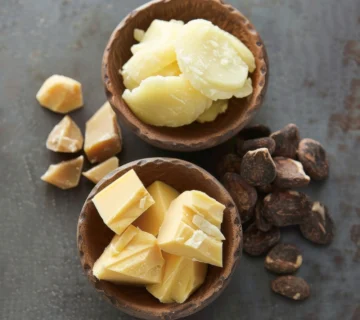
- Use standardized cocoa butter sources
- Maintain consistent fat blending ratios
- Avoid excessive substitution with incompatible fats
Reliable sourcing partners like MT Royal help ensure consistent fat quality, reducing variability that leads to unstable crystallization.
4. Improving Cooling Tunnel Efficiency
Cooling is where chocolate “locks in” its structure. Poor cooling leads directly to stickiness.
Problems in cooling systems:
- Uneven airflow distribution
- Too rapid cooling causing structural stress
- Insufficient residence time in tunnels
Solutions:
- Use multi-zone cooling tunnels
- Maintain gradual temperature reduction curves
- Ensure uniform air circulation across conveyor width
Think of cooling as the “final handshake” between structure and stability—if it is rushed, the bond weakens.
5. Packaging Integrity and Barrier Protection
Even perfectly tempered chocolate can become sticky if packaging fails.
Common packaging issues:
- Low-barrier films allowing moisture ingress
- Poor sealing under high-speed production
- Temperature fluctuations during sealing
Solutions:
- Use high-barrier laminated packaging materials
- Maintain strict sealing temperature control
- Implement nitrogen flushing for premium products
Modern chocolate coating stability depends heavily on packaging performance, not just formulation.
Ingredient-Level Causes of Stickiness
Sugar Particle Behavior
Sugar plays a dual role in chocolate. It provides structure but also attracts moisture.
Fine sugar increases surface smoothness but raises humidity sensitivity. Coarser sugar reduces stickiness risk but may affect mouthfeel.
Emulsifiers and Lecithin Balance
Improper emulsifier ratios can destabilize fat distribution, leading to surface tackiness.
Milk Solids and Protein Content
Milk-based chocolates are more prone to stickiness due to protein interactions with moisture.
Industrial Mistakes in Sourcing That Cause Stickiness
One of the hidden drivers of How to Prevent Chocolate Stickiness is inconsistent raw material sourcing.
Common sourcing mistakes:
- Switching cocoa butter suppliers frequently
- Ignoring fat composition variability
- Accepting inconsistent emulsifier grades
- Using non-standardized milk powder sources
Factories often underestimate how small variations in raw materials amplify across processing stages.
Suppliers like MT Royal help stabilize ingredient quality across batches, ensuring predictable behavior during tempering and cooling.
A 5% variation in fat composition can significantly alter crystallization behavior downstream.
Comparative Analysis: Stable vs Sticky Chocolate Systems
Stable Chocolate System:
- Controlled tempering curve
- Consistent humidity environment
- High-quality fat sourcing
- Optimized cooling tunnel design
- Strong packaging barrier
Sticky Chocolate System:
- Inconsistent crystallization
- High ambient humidity exposure
- Variable ingredient quality
- Poor cooling control
- Weak packaging integrity
The difference is not cosmetic—it defines whether a product survives distribution or fails in retail conditions.
Specialized Industrial Tips for Large-Scale Production
Large factories require system-level discipline, not isolated fixes.
1. Implement Real-Time Crystal Monitoring
Advanced production lines use sensors to monitor crystallization behavior in real time.
2. Standardize Temperature Across All Zones
From mixing to packaging, temperature continuity is essential.
3. Use Predictive Maintenance for Cooling Systems
Cooling tunnel inefficiency is a hidden cause of stickiness.
4. Train Operators in Crystallization Awareness
Many defects come from human interpretation rather than machine error.
5. Separate High-Humidity Zones from Packaging Areas
Environmental separation reduces cross-contamination of moisture.
We have observed that factories implementing full environmental zoning reduce sticky defects by nearly 35%.
Emerging Trends in Chocolate Stability Control
The chocolate industry is rapidly evolving, with new technologies improving stability:
- AI-driven tempering systems
- Smart humidity-controlled packaging lines
- Nano-barrier films for moisture resistance
- Digital twin modeling of crystallization behavior
These innovations are redefining chocolate quality control, allowing manufacturers to predict instability before it appears.
Some advanced facilities now track “stickiness risk index” as a live production metric.
Frequently Asked Questions
1. Why does chocolate become sticky after production?
Because of unstable cocoa butter crystallization combined with moisture absorption or temperature fluctuations.
2. Can tempering alone prevent stickiness?
Tempering is essential but not sufficient. Humidity, cooling, and packaging also play major roles.
3. Does cocoa butter quality affect stickiness?
Yes. Poor-quality or inconsistent cocoa butter leads to unstable crystal formation.
4. How does humidity affect chocolate stability?
High humidity causes sugar absorption and surface tackiness, especially in unsealed environments.
5. What is the ideal storage condition for chocolate?
Typically 18°C–22°C with humidity below 55% RH.
6. Can packaging fully prevent stickiness?
It helps significantly, but only when combined with proper formulation and processing control.
Final Reflection
Understanding How to Prevent Chocolate Stickiness is not about fixing a single defect—it is about controlling an entire system of crystallization, environment, and material behavior.
Factories that consistently produce stable chocolate do not rely on post-production corrections. They engineer stability from the very beginning: through ingredient selection, controlled processing, and disciplined environmental management.
In chocolate manufacturing, stickiness is not a random failure. It is a signal. And the factories that learn to interpret that signal are the ones that build products capable of surviving not just production, but the journey all the way to the consumer’s hands.
Industrial Chocolate Manufacturing Troubleshooting Guide

No comment