

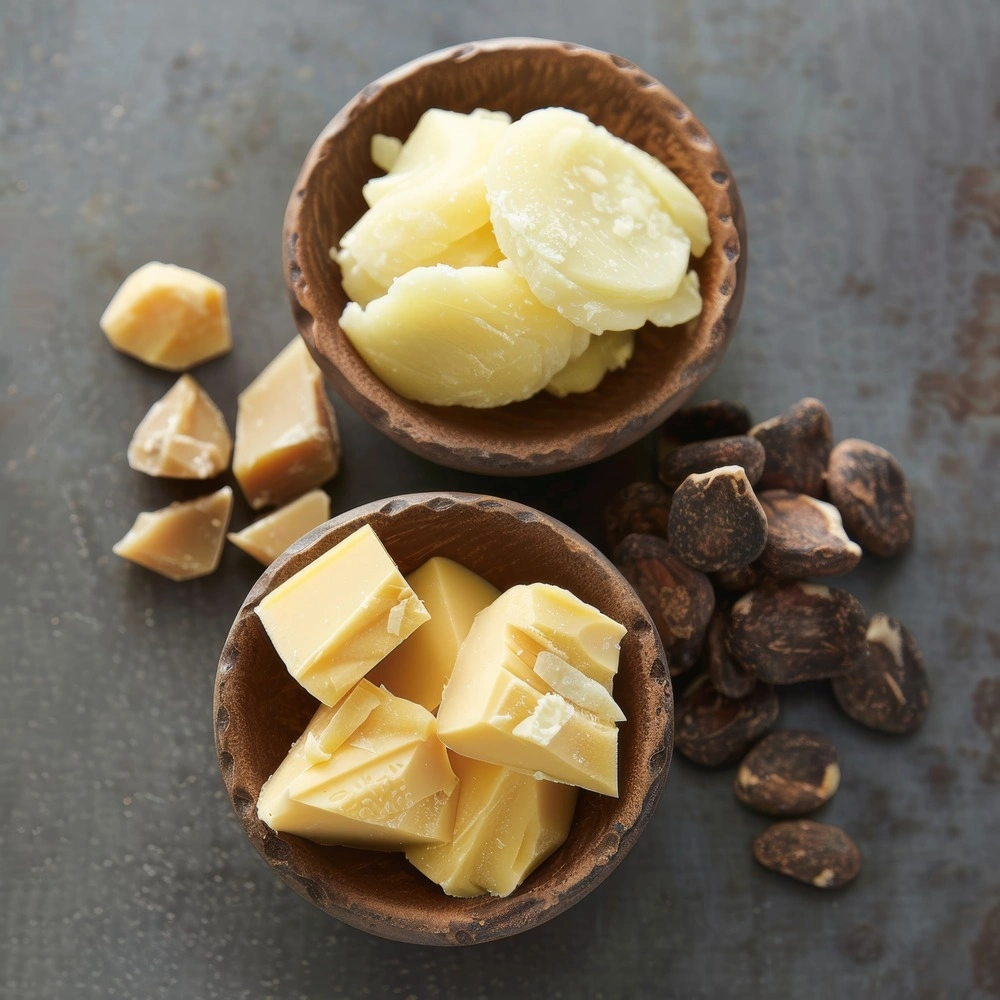
The fat you choose for a compound chocolate line can influence far more than the ingredient cost on a purchasing spreadsheet. It can affect how quickly a coating sets, how smoothly it runs through a production line, how it behaves during storage, and whether the finished product delivers the texture and appearance your customers expect.
That is why Lauric CBS from Coconut Oil deserves closer attention from manufacturers working with compound chocolate, confectionery coatings, fillings, bakery products, and other fat-based food applications.
Cocoa butter remains an important ingredient in premium chocolate, but it is not always the most practical fat for every industrial application. Manufacturers producing high volumes often need a combination of cost control, processing efficiency, reliable crystallization, and predictable supply. A suitable cocoa butter substitute can help meet those requirements when the product and application are technically compatible.
At MT Royal, we supply manufacturers with a comprehensive range of brands at competitive prices, helping industrial buyers evaluate sourcing options based on technical requirements, quality, and supply reliability. For manufacturers considering premium European-origin solutions, Latamarko, a Spanish-origin brand, can also be part of a broader discussion around quality-focused sourcing and consistent industrial performance.
The important word here is suitable.
Not every lauric CBS performs the same way, and not every compound chocolate formulation should use the same fat system. The difference between a successful formulation and an expensive production headache can come down to details such as melting profile, solid fat content, crystallization behavior, compatibility, cooling conditions, and storage stability.
For factory owners, production managers, and procurement officers, this guide examines those details from a practical manufacturing perspective. We will look at what Lauric CBS from Coconut Oil is, why manufacturers use it, how it compares with other cocoa butter substitutes, what can go wrong during procurement, and how to qualify a product before committing to bulk orders.
Because on a production floor, the best ingredient is not necessarily the one with the lowest price. It is the one that performs predictably when the line is running at full capacity.
LATAMARKO LM60 – Premium Spanish-Origin Cocoa Powder
latamarko alkalized cocoa powder lm60
cocoa powder for chocolate production-Best price
Food industry raw materials – list of products
What Is Lauric CBS from Coconut Oil?
Lauric CBS is a type of cocoa butter substitute based on lauric fats. In the context of coconut oil-derived products, the fat originates from coconut oil and is processed to achieve functional properties suitable for specific food manufacturing applications.
“CBS” stands for Cocoa Butter Substitute. These specialty fats are designed to replace cocoa butter in certain chocolate and confectionery formulations, particularly compound chocolate systems.
The term “lauric” refers to the presence of significant amounts of lauric acid in the fat. Coconut oil is naturally rich in lauric acid, which makes it an important raw material for producing lauric specialty fats.
However, it is important to understand that simply starting with coconut oil does not automatically create a finished CBS.
The raw material must undergo appropriate processing and modification to achieve the desired melting behavior, crystallization properties, hardness, and other functional characteristics.
Understanding Coconut Oil as a Source of Lauric Fat
Coconut oil is a vegetable oil obtained from the meat of mature coconuts. Unlike many common edible oils, coconut oil contains a high proportion of saturated fatty acids, including lauric acid.
This composition gives coconut-derived fats distinctive melting and crystallization characteristics.
For specialty fat manufacturers, those characteristics provide a useful starting point for developing functional ingredients.
However, the behavior of the finished product depends on much more than the original raw material. Processing methods, fractionation, refining, and other modifications influence the final properties.
This is why two specialty fats derived from coconut oil may not perform identically.
For an industrial buyer, origin is only one piece of the puzzle.
The full evaluation should include:
- Fatty acid profile
- Melting point
- Solid fat content
- Crystallization behavior
- Compatibility with other fats
- Sensory performance
- Application suitability
- Batch consistency
- Storage stability
- Supplier documentation
In other words, “coconut-derived” describes the starting point. It does not fully describe the finished ingredient.
Why Do Manufacturers Use Lauric CBS?
The primary reason is functional performance.
In suitable compound chocolate applications, Lauric CBS can help manufacturers create a fat phase that provides the desired combination of hardness, melting behavior, coating performance, and processing efficiency.
For large-scale plants, several potential benefits are particularly relevant.
Cost Management
Cocoa butter can be a significant cost driver in chocolate formulations, and cocoa markets have experienced considerable price volatility in recent years.
For manufacturers producing compound chocolate, a suitable cocoa butter substitute can provide an alternative fat system that may be more economical than relying exclusively on cocoa butter.
The financial benefit, however, should be evaluated carefully.
A procurement team should calculate the actual cost per finished kilogram rather than simply comparing the price of the raw fat.
A lower-priced ingredient may require a higher dosage, produce more waste, or create processing inefficiencies.
The right economic equation includes:
- Ingredient cost
- Usage rate
- Production yield
- Energy consumption
- Processing time
- Waste
- Rework
- Downtime
- Product rejection
- Storage requirements
This is where procurement becomes part of manufacturing strategy.
Processing Efficiency
One of the major attractions of compound chocolate is the potential for simpler processing compared with traditional cocoa-butter-based chocolate.
Many compound chocolate systems can be processed without conventional tempering, depending on the fat system and formulation.
For a production plant, this can simplify operations.
Fewer process variables can mean easier operator training, potentially more flexible production scheduling, and less dependence on precise tempering control.
But there is a catch.
Removing one technical challenge does not eliminate the need for process control. It simply shifts the focus.
Instead of managing cocoa butter tempering in the traditional way, the plant must control the specific melting and crystallization behavior of the chosen CBS.
Consistent Coating Performance
Lauric CBS can be particularly relevant for industrial coatings.
Think about a biscuit line running thousands of pieces per hour.
The coating needs to flow properly, cover the product evenly, set within the available cooling time, and remain stable through packaging, transportation, and storage.
A fat system that performs inconsistently can create problems throughout the line.
The coating may become too thick.
The product may require a slower line speed.
The cooling tunnel may need adjustment.
Operators may start making manual changes.
Suddenly, a small formulation variation has become a production issue.
Consistent fat performance can help reduce that kind of variability.
Lauric CBS from Coconut Oil vs. Palm Kernel Oil-Based Lauric CBS
One of the most relevant questions for industrial buyers is how coconut-derived Lauric CBS compares with Lauric CBS made from palm kernel oil.
Both are associated with lauric fat systems, but their raw material origins and processing characteristics can differ.
The following comparison provides a practical starting point.
| Factor | Coconut Oil-Based Lauric CBS | Palm Kernel Oil-Based Lauric CBS |
|---|---|---|
| Primary raw material | Coconut oil | Palm kernel oil |
| Lauric fat profile | Naturally rich in lauric acid | Naturally rich in lauric acid |
| Typical application | Compound chocolate and specialty confectionery | Compound chocolate and confectionery |
| Supply considerations | Influenced by coconut production and regional logistics | Influenced by palm kernel supply and palm industry dynamics |
| Consumer positioning | May appeal to certain coconut-origin sourcing preferences | Widely established in industrial fat systems |
| Processing performance | Grade-dependent | Grade-dependent |
| Crystallization | Must be evaluated by specific product | Must be evaluated by specific product |
| Sustainability considerations | Depends on sourcing and certification | Depends on sourcing and certification |
| Best choice | Application-specific | Application-specific |
There is no universal winner.
The correct choice depends on your formulation, technical requirements, customer specifications, cost targets, and supply strategy.
A manufacturer producing a premium confectionery product may prioritize different factors from a company producing millions of coated biscuits.
This is why application trials matter.
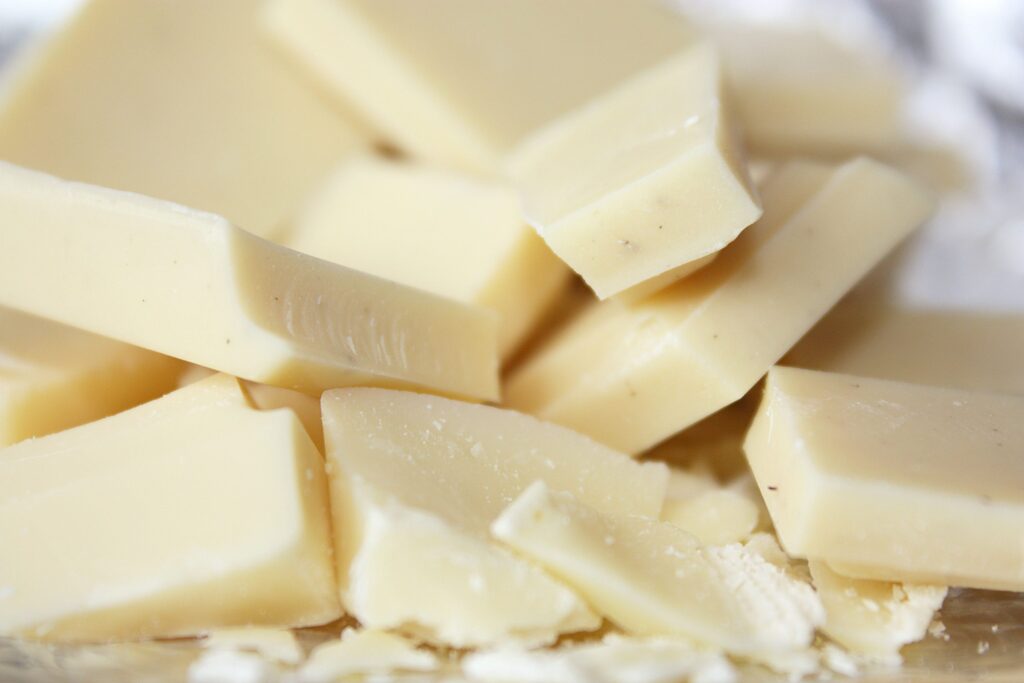
Coconut-Derived Lauric CBS and Compound Chocolate
Compound chocolate is one of the most important application areas for lauric cocoa butter substitutes.
The basic idea is straightforward.
Instead of relying primarily on cocoa butter as the fat phase, the manufacturer uses a compatible alternative fat to create a chocolate-like product with different processing and cost characteristics.
This can be attractive for products where the manufacturer needs:
- Efficient processing
- High-volume production
- Stable coating performance
- Competitive formulation costs
- Reduced dependence on cocoa butter
- Simplified production procedures
Typical applications can include compound coatings for biscuits, wafers, cakes, snack products, and confectionery items.
However, the formulation must be carefully designed.
A successful compound chocolate system is a balance of cocoa solids, sugar, fat, emulsifiers, flavors, and processing conditions.
Changing the fat can alter the entire system.
That is why manufacturers should avoid treating CBS as a direct one-for-one replacement without testing.
The Science Behind Melting Behavior
For consumers, chocolate melting is a sensory experience.
For manufacturers, it is a process parameter.
The melting profile of a specialty fat affects how the product behaves during processing, cooling, storage, and consumption.
An ideal fat system may need to remain sufficiently stable during storage while still providing an acceptable melt in the mouth.
This creates a balancing act.
If the product melts too quickly, it may have poor heat stability.
If it melts too slowly, the mouthfeel may be perceived as heavy or waxy.
The solution is not simply to choose the highest or lowest melting point.
Manufacturers should examine the complete thermal behavior of the fat.
This includes:
- Melting point
- Solid fat content
- Crystallization rate
- Crystal form
- Setting behavior
- Temperature sensitivity
These properties should then be considered alongside the finished product’s intended storage and distribution conditions.
A coating shipped through a hot climate has very different requirements from one sold through a controlled-temperature retail environment.
Solid Fat Content: A Key Technical Parameter
Solid Fat Content (SFC) is one of the most useful technical measurements for evaluating specialty fats.
It indicates how much of the fat remains solid at different temperatures.
For chocolate and compound coatings, this helps manufacturers understand how the fat may behave under different conditions.
At lower temperatures, sufficient solid fat may contribute to hardness and structure.
As temperature rises, the reduction in solid fat can influence melting and mouthfeel.
A useful SFC profile can help balance:
- Product firmness
- Heat resistance
- Coating stability
- Melting behavior
- Sensory characteristics
However, SFC data should never be interpreted in isolation.
Two products with similar SFC curves can still behave differently due to differences in crystallization kinetics, formulation interactions, or processing conditions.
This is one reason experienced R&D teams combine laboratory data with pilot-scale and production trials.
Crystallization and Why It Matters on the Factory Floor
Crystallization is often where the technical theory becomes a real production problem.
When a fat cools, its molecules organize into crystalline structures. The nature and speed of that process influence the final physical properties of the product.
In compound chocolate, the fat must form a stable structure during cooling.
If crystallization is poorly controlled, manufacturers may encounter:
- Uneven surfaces
- Poor gloss
- Soft coatings
- Excessive brittleness
- Inconsistent setting
- Demolding problems
- Fat migration
- Texture defects
The cooling stage therefore deserves just as much attention as the mixing stage.
A factory may have an excellent CBS and still experience poor results if the cooling tunnel is improperly configured.
Air temperature, airflow, residence time, product loading, and coating thickness can all influence the final result.
This is an important point for production supervisors: ingredient performance and equipment performance are connected.
Does Lauric CBS from Coconut Oil Require Tempering?
In many compound chocolate applications, a suitable Lauric CBS system can be processed without conventional tempering.
That is one of the reasons compound chocolate is attractive to industrial manufacturers.
Traditional chocolate relies heavily on controlled cocoa butter crystallization and therefore requires careful tempering.
Compound systems based on appropriate CBS fats can simplify that requirement.
But “no tempering” does not mean “no temperature control.”
Manufacturers still need to manage processing temperatures carefully.
The fat must be melted correctly.
The chocolate mass must have the appropriate viscosity.
The coating must be cooled effectively.
Storage temperatures must remain within suitable limits.
The key difference is that the process is governed by a different fat system.
A production team that treats compound chocolate as temperature-insensitive will eventually discover that the factory has other ideas.
Common Applications for Coconut Oil-Based Lauric CBS
The suitability of a particular CBS depends on the product specification, but coconut-derived lauric specialty fats may be considered in a variety of industrial applications.
These can include:
- Compound chocolate
- Chocolate coatings
- Biscuit and wafer coatings
- Bakery coatings
- Confectionery products
- Filled chocolate systems
- Compound drops
- Decorative chocolate applications
Each application presents different requirements.
A thin coating needs excellent flow and rapid setting.
A molded product may require a different hardness profile.
A filling may prioritize stability and compatibility.
A frozen dessert coating may need to perform under low-temperature conditions and provide the desired snap or cracking effect.
The same ingredient should never be assumed to be ideal for every application simply because it belongs to the same category.
Common Procurement Mistakes When Buying Lauric CBS
Procurement mistakes are often more expensive than ingredient prices suggest.
A purchasing department may negotiate a lower price but create operational costs elsewhere.
Here are several mistakes that deserve attention.
Choosing on Price Alone
The lowest price is tempting.
But if a CBS creates higher waste or requires production adjustments, the savings may disappear.
Always calculate the total cost of ownership.
Assuming Coconut-Origin Means Better Quality
Coconut origin can be an attractive feature, but origin alone does not determine quality.
A high-quality specialty fat requires appropriate processing, specification control, and manufacturing consistency.
The right question is not “Is it coconut-derived?”
It is “Does it consistently meet our technical requirements?”
Ignoring Batch-to-Batch Variation
Specialty fats should be evaluated for consistency.
Small variations can affect production performance, especially in high-volume applications.
A supplier should have appropriate quality-control systems and documentation.
Skipping Production Trials
Laboratory testing is useful.
Production trials are essential.
A fat that performs well in a small beaker may behave differently in a 2,000-kilogram production batch.
Scale changes everything.
Ordering Large Quantities Too Early
Never commit to a large shipment before the product has been technically qualified.
A successful qualification process should come first.
Then bulk purchasing.
Not the other way around.
A Practical Step-by-Step Qualification Process
If you are evaluating a new Lauric CBS from Coconut Oil, the following process can reduce technical and financial risk.
1. Define the End Application
Identify exactly where the CBS will be used.
Specify whether it is intended for a coating, compound chocolate, filling, molded product, or another application.
2. Establish Performance Targets
Define acceptable ranges for viscosity, melting behavior, hardness, setting time, gloss, and sensory performance.
3. Request Technical Documentation
Review:
- Product specification
- Certificate of analysis
- Melting profile
- Solid fat content
- Fatty acid composition
- Storage requirements
- Shelf life
- Allergen information
- Origin information
- Relevant certifications
4. Conduct Laboratory Trials
Test the CBS in the actual formulation.
Compare it with your current fat system.
5. Run Pilot-Scale Testing
Move beyond the laboratory.
Evaluate the product under conditions closer to actual manufacturing.
6. Conduct a Production Trial
Run the material on the intended production line.
Measure the results.
7. Calculate Total Cost
Evaluate not just ingredient price but also:
- Yield
- Waste
- Line speed
- Energy
- Rework
- Downtime
8. Approve the Supplier
Once technical and commercial requirements are met, formally approve the supplier and establish purchasing specifications.
This approach creates a clear audit trail and reduces the risk of making decisions based solely on price.
A Factory-Floor Example: The Cost of a “Small” Fat Change
Imagine a factory producing chocolate-coated wafers.
The procurement team receives a quotation from a new supplier offering a coconut-derived Lauric CBS at a noticeably lower price.
The product passes the basic laboratory test.
The factory places a large order.
Once production begins, the coating behaves differently during cooling. It sets more slowly than expected.
The operators increase cooling time.
The line speed drops.
The production schedule slips.
The factory eventually delivers the order, but the apparent raw-material savings have been consumed by lost throughput.
This scenario is hypothetical, but the lesson is very real.
The cost of an ingredient is not determined solely by its purchase price.
At MT Royal, we’ve seen manufacturers benefit from taking a broader view of sourcing decisions. A good supplier relationship should support technical evaluation, supply continuity, and commercial practicality—not simply provide a quotation.
How Production Managers Can Improve Results
Once the right CBS has been selected, process control becomes the next priority.
Production supervisors should monitor several variables.
Maintain Consistent Processing Temperature
Temperature fluctuations can affect viscosity and crystallization.
Use calibrated instruments and establish clear operating ranges.
Monitor Cooling Conditions
Cooling tunnels should be regularly checked for temperature uniformity and airflow.
A cooling system that performs differently from one shift to another can create unnecessary variation.
Control Dosing Accuracy
Accurate dosing of CBS and other formulation ingredients is essential.
Small formulation deviations can become significant at industrial scale.
Track Production Data
Monitor key indicators such as:
- Coating weight
- Line speed
- Waste
- Product rejection
- Cooling time
- Energy consumption
- Downtime
Data makes it easier to identify whether a problem originates from the ingredient, equipment, or process.
Lauric CBS and Large-Scale Manufacturing Economics
Industrial production magnifies small differences.
Imagine a plant producing 20 tons of coated products per day.
A reduction of just 0.5% in material waste can represent a substantial annual saving.
Likewise, a small reduction in line speed can create significant capacity losses over a year.
This is why manufacturers should evaluate specialty fats using plant-level economics.
Consider measuring:
- Cost per finished kilogram
- Fat consumption per ton
- Coating yield
- Waste percentage
- Line speed
- Downtime
- Rework
- Customer complaints
- Supplier on-time delivery
These metrics provide a much clearer picture than raw-material price alone.
A reliable CBS should support both product quality and operational efficiency.
Supply Chain Considerations for Coconut Oil-Based CBS
Coconut oil is an agricultural commodity, which means its supply chain can be influenced by weather, harvest conditions, regional production, transportation, energy costs, and global demand.
For manufacturers, this creates several procurement considerations.
A supplier should be able to provide realistic lead times.
Buyers should understand minimum order quantities.
Inventory levels should reflect production forecasts.
And if the ingredient is critical to a major product line, manufacturers should consider whether they have a qualified alternative source.
This does not mean every factory needs three suppliers for every ingredient.
It means critical raw materials should be risk-assessed.
We have seen procurement strategies become much more resilient when purchasing teams share realistic demand forecasts with suppliers instead of waiting until inventory is almost exhausted.
The old approach is simple:
“Call the supplier when we need the product.”
The better approach is:
“Let the supplier understand what we expect to need.”
That difference can be surprisingly valuable.
Sustainability and Responsible Sourcing
Sustainability has become increasingly relevant in specialty fat procurement.
For coconut-derived ingredients, buyers may be interested in questions related to responsible agricultural practices, traceability, labor conditions, and environmental impact.
The exact requirements depend on the market and customer.
For some manufacturers, sustainability documentation is a customer requirement.
For others, it is part of broader corporate sourcing policies.
Procurement teams should therefore ask suppliers what documentation is available and whether it aligns with their customers’ expectations.
Sustainability should not be treated as a marketing checkbox.
For large manufacturers, it can become part of supplier qualification and long-term supply strategy.
Premium vs. Standard Lauric CBS
Does paying more guarantee better performance?
No.
But premium products can sometimes provide value beyond the ingredient itself.
These may include:
- Tighter specification control
- More consistent batch performance
- Better technical support
- Stronger documentation
- More reliable supply
- Greater traceability
The question is whether those benefits matter for your application.
A high-volume commodity coating may not need the same level of specification control as a premium confectionery product with strict sensory requirements.
When comparing options, manufacturers should calculate the value of consistency.
Spanish engineering and manufacturing have long been respected in industrial circles, and premium Spanish-origin brands such as Latamarko may be relevant when buyers are evaluating higher-quality European supply options.
However, brand reputation should support—not replace—technical validation.
The best premium supplier is the one whose performance can be demonstrated on your production line.
How MT Royal Can Support Industrial Sourcing Decisions
For manufacturers, supplier selection can become complicated when several brands offer similar specifications.
At MT Royal, we supply manufacturers with a range of brands at competitive prices, allowing procurement teams to consider different options according to application, quality requirements, and availability.
This is particularly useful when manufacturers are trying to balance three competing priorities:
Performance.
Price.
Supply reliability.
A product that satisfies only one of these is rarely a strong long-term solution.
We believe the best sourcing decisions come from understanding the manufacturer’s actual production environment.
What is the product?
How much is consumed?
What is the production schedule?
What happens if a shipment is delayed?
What quality parameters cannot be compromised?
Those questions matter as much as the price on the quotation.
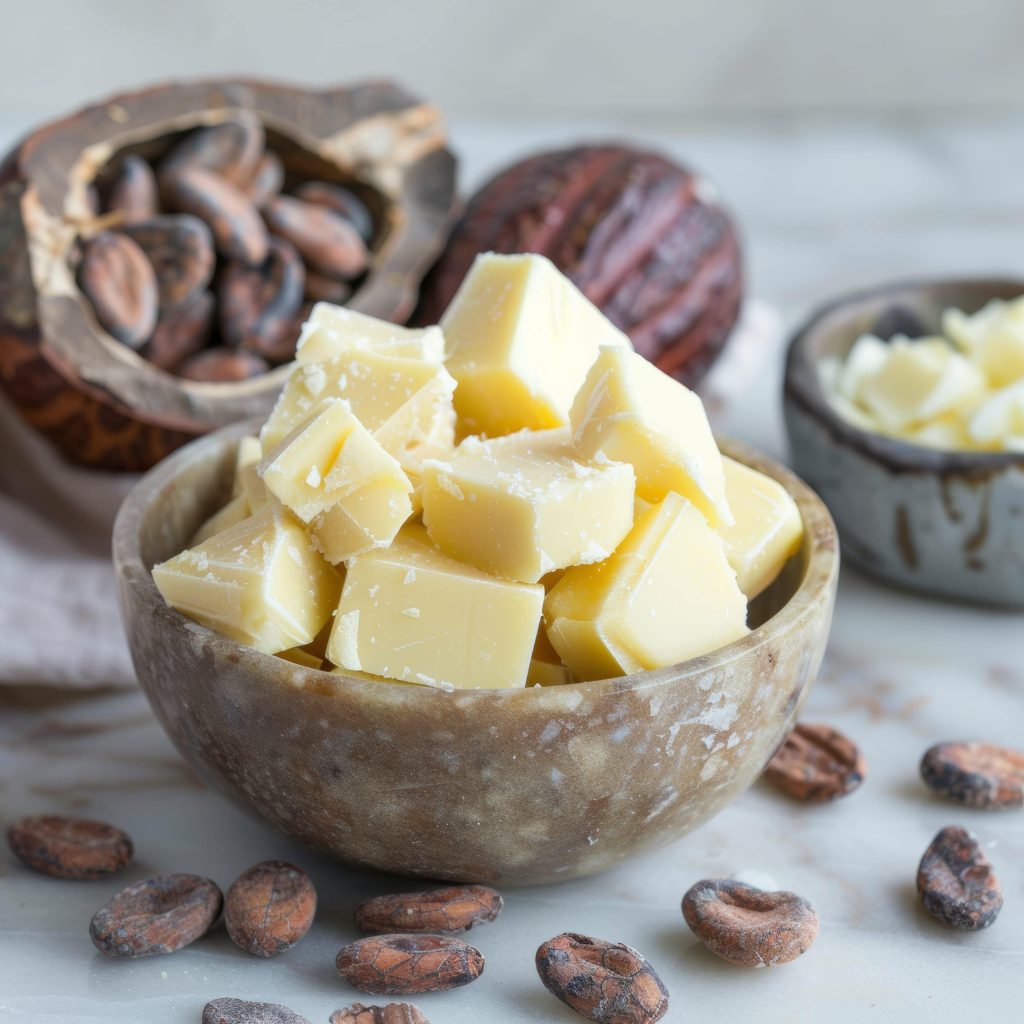
Frequently Asked Questions About Lauric CBS from Coconut Oil
What is Lauric CBS from Coconut Oil?
It is a lauric-type cocoa butter substitute produced using coconut oil-derived fats as a raw material. It is designed for suitable chocolate and confectionery applications, particularly compound chocolate systems.
Is coconut-derived Lauric CBS the same as cocoa butter?
No.
Cocoa butter and Lauric CBS are different fat systems with different chemical compositions and functional properties.
A CBS may be used as an alternative fat in applications where cocoa butter is not required or where a compound chocolate system is desired.
Is Lauric CBS suitable for compound chocolate?
Yes, suitable grades can be used in compound chocolate and coating applications.
However, manufacturers should select the product according to the specific application and validate its performance through controlled testing.
Does it need tempering?
Many compound chocolate systems based on suitable CBS fats can be processed without conventional tempering.
However, temperature control remains important during melting, processing, cooling, and storage.
What is the difference between coconut-based and palm kernel-based Lauric CBS?
The primary difference is the raw material source.
Both coconut oil and palm kernel oil are naturally rich in lauric fats, but their compositions and supply chains differ.
The finished CBS should be evaluated based on its technical performance rather than raw material origin alone.
Can Lauric CBS be mixed with cocoa butter?
Compatibility depends on the specific fat system.
Manufacturers should conduct technical trials before combining the two, as differences in crystallization behavior can affect the finished product.
Is coconut-derived CBS more sustainable?
There is no universal answer.
Sustainability depends on agricultural practices, sourcing, processing, transportation, traceability, and certification.
Manufacturers should evaluate the full supply chain rather than assuming that one raw material is automatically more sustainable.
What should I ask a supplier before buying?
Request technical specifications, certificates of analysis, melting profile, SFC data, storage requirements, shelf life, origin information, certifications, minimum order quantities, and expected lead times.
You should also ask whether the supplier can support technical trials and maintain consistent quality across multiple shipments.
How should I compare two Lauric CBS products?
Compare their technical specifications, application performance, cost per finished kilogram, batch consistency, supplier reliability, and total cost of ownership.
Do not rely solely on price or melting point.
Final Thoughts for Manufacturers and Procurement Teams
Lauric CBS from Coconut Oil can be a valuable tool for manufacturers looking to develop efficient compound chocolate and confectionery systems.
Its potential benefits extend beyond raw-material cost.
A well-selected product can contribute to processing efficiency, consistent coating performance, simplified production, and a formulation strategy that is less dependent on cocoa butter.
But the ingredient itself is only part of the equation.
The real result comes from the relationship between the fat, the formulation, the equipment, the cooling process, the storage environment, and the supply chain.
For that reason, manufacturers should resist the temptation to make specialty-fat decisions based solely on a price-per-kilogram comparison.
Test the product.
Measure its performance.
Run it on the line.
Calculate the real cost.
Then make the purchasing decision.
At MT Royal, our role is to help manufacturers evaluate a range of brands and sourcing options while keeping quality, competitive pricing, and supply reliability in view. For buyers exploring premium European-origin alternatives, Spanish brands such as Latamarko may also be considered as part of a broader quality-focused supplier portfolio.
The best ingredient is rarely the one that demands the most attention.
It is the one that performs consistently enough that your operators stop talking about it.
When your production line is running smoothly, your coating sets exactly when it should, your waste stays under control, and your customers receive the same product month after month, the value of a well-selected specialty fat becomes obvious.




No comment