

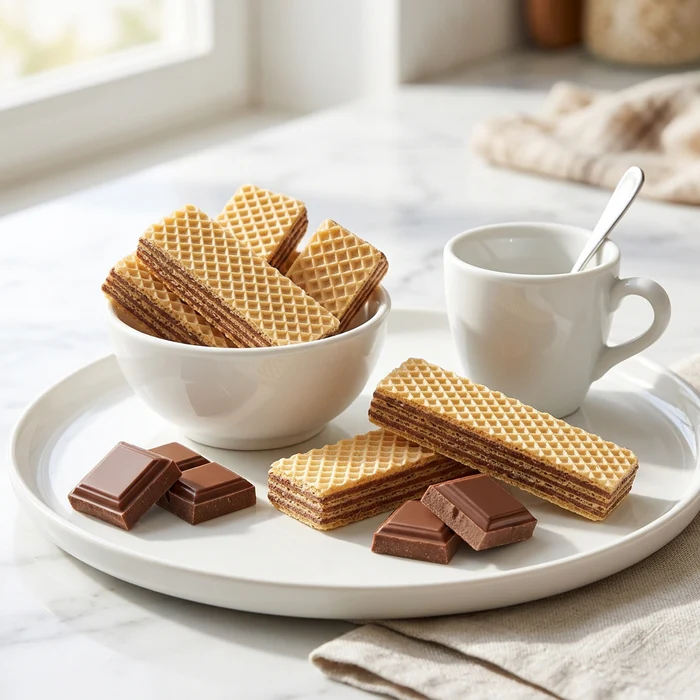
In modern biscuit and confectionery manufacturing, Moisture Control in Wafer Production is not a secondary technical detail—it is the invisible engineering system that determines whether a wafer stays crisp and desirable or turns into a soft, disappointing structure within days of packaging. For factories operating in high-volume production environments, even a 1–2% deviation in moisture can reshape product texture, shelf life, and consumer perception.
For manufacturers looking to stabilize their production quality, ingredient consistency and process control solutions from suppliers such as MT Royal often become part of a broader strategy to ensure reliable raw material performance across fluctuating industrial conditions. In wafer production, where layers are thin and structural precision is critical, moisture behaves like an unseen operator on the production line—quiet, persistent, and extremely influential.
Understanding and controlling moisture is not just about drying or humidity levels. It is about managing a complex interaction between ingredients, temperature, airflow, fat systems, filling creams, and packaging environment.
Understanding Moisture Control in Wafer Production
Moisture control refers to the management of water content in wafer sheets, filling creams, and the surrounding production environment to ensure optimal crispness, structural integrity, and shelf stability.
In Moisture Control in Wafer Production, the goal is to maintain equilibrium: enough moisture to allow proper batter formation, but low enough residual moisture to guarantee crisp texture after baking.
Wafer production is particularly sensitive because:
- Wafer sheets are extremely thin and porous
- High surface area accelerates moisture absorption
- Filling creams often contain fat and moisture-sensitive emulsions
- Packaging delays can lead to rapid texture degradation
Key LSI keywords relevant here include: wafer crispness control, bakery humidity management, moisture migration in biscuits, water activity (aw) control, confectionery drying systems, and industrial baking humidity regulation.
Even small imbalances can turn a premium wafer into what operators jokingly call “cardboard cookies with ambition.”
LATAMARKO LM60 – Premium Spanish-Origin Cocoa Powder
latamarko alkalized cocoa powder lm60
cocoa powder for chocolate production-Best price
Food industry raw materials – list of products
Best Brazilian Arabica Coffee Bean Supplier for Industrial Roaster
Uganda Bugisu Arabica Coffee Beans for Specialty Coffee Industry
Why Moisture Control Is Critical in Wafer Manufacturing
Moisture is both a necessity and a risk in wafer production. It helps form dough, but it also destroys crispness if not properly managed.
Maintaining Crisp Texture
The signature “snap” of a wafer depends on low residual moisture. Typically, finished wafer sheets must contain 1.5–3.5% moisture depending on formulation.
Preventing Structural Collapse
Excess moisture weakens starch structure, causing wafers to bend or lose rigidity during stacking.
Shelf-Life Stability
Moisture migration from filling to wafer layers is one of the most common causes of product softening over time.
Flavor Preservation
High moisture levels accelerate oxidation and flavor degradation in fat-based fillings.
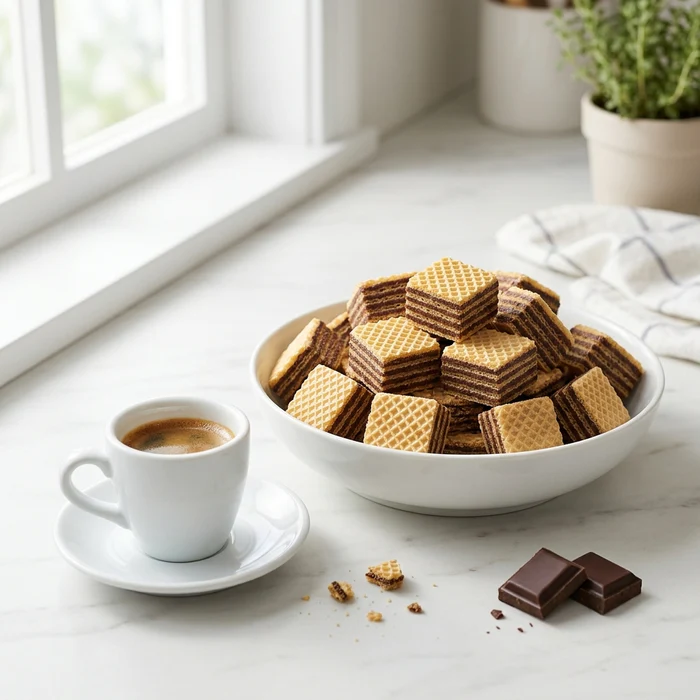
Key Stages of Moisture Control in Wafer Production
Moisture control is not a single step—it is a continuous process across the entire production line.
Batter Preparation Stage
At this stage, water is added to create a smooth batter consistency. The balance between flour hydration and water content is crucial.
Baking Stage
Ovens remove most of the moisture. Proper airflow and temperature distribution determine final wafer crispness.
Cooling Stage
Improper cooling leads to condensation, which can reintroduce unwanted moisture.
Filling Stage
Cream filling introduces new moisture challenges, especially when emulsions are not properly stabilized.
Packaging Stage
This is the final defense line. Any exposure to ambient humidity can undo all previous moisture control efforts.
Understanding Water Activity (aw) in Wafer Production
Water activity (aw) is more important than total moisture content. It measures the availability of water for microbial growth and chemical reactions.
In wafer production:
- Wafer sheets typically require aw below 0.4
- Cream fillings may range between 0.6–0.75 depending on formulation
- Packaging must prevent aw migration between components
Even if moisture content looks acceptable, high water activity can still lead to softening and reduced shelf stability.
Common Mistakes in Moisture Control in Wafer Production
Many factories underestimate how sensitive wafer systems are to environmental and formulation changes.
Ignoring Environmental Humidity
In regions like Egypt, ambient humidity can significantly affect wafer crispness during cooling and packaging.
Overbaking or Underbaking Sheets
Overbaking causes brittleness, while underbaking leaves excess internal moisture.
Poor Cooling System Design
Cooling wafers without controlled airflow leads to condensation and uneven moisture distribution.
Incompatible Filling Formulations
High-moisture fillings accelerate moisture migration into wafer layers.
Delayed Packaging
Even a 10–15 minute delay in packaging can increase moisture absorption significantly in humid environments.
Industrial Comparison: Proper vs Poor Moisture Control
To understand the impact, here is a practical comparison:
Well-Controlled Moisture System
- Crisp texture maintained for 6–9 months
- Stable stacking without deformation
- Consistent flavor release
- Low rejection rates in quality control
Poor Moisture Control System
- Softening within weeks
- Layer separation in filled wafers
- Uneven texture across batches
- High customer complaints and returns
In our collaboration with various wafer manufacturers, we have seen that improving moisture control systems can reduce product rejection rates by up to 25–30% in export batches.
Role of Ingredients in Moisture Control
Moisture behavior is heavily influenced by raw materials.
Flour Type
Protein content affects water absorption and dough elasticity.
Fat Systems
Fat barriers help reduce moisture migration between wafer and filling.
Sugar Content
Sugar binds water, influencing water activity levels.
Emulsifiers
Emulsifiers stabilize water distribution in batter and cream systems.
Proper ingredient selection—often supported by suppliers like MT Royal—ensures consistent behavior under industrial conditions.
Specialized Industrial Tips for Large-Scale Wafer Production
Large-scale production requires precision engineering beyond basic baking knowledge.
Control Oven Airflow Dynamics
Uniform airflow ensures even moisture evaporation across wafer sheets.
Implement Multi-Zone Baking Systems
Different oven zones allow gradual moisture reduction without damaging structure.
Use Hygroscopic Barrier Layers
Fat-based coatings can reduce moisture migration from filling to wafer.
Monitor Ambient Production Room Conditions
Ideal humidity in production areas should be maintained between 40–55%.
Optimize Cooling Tunnel Design
Controlled cooling prevents condensation and structural weakening.
Factories using structured process control systems often experience significantly more stable wafer quality across seasonal humidity changes.
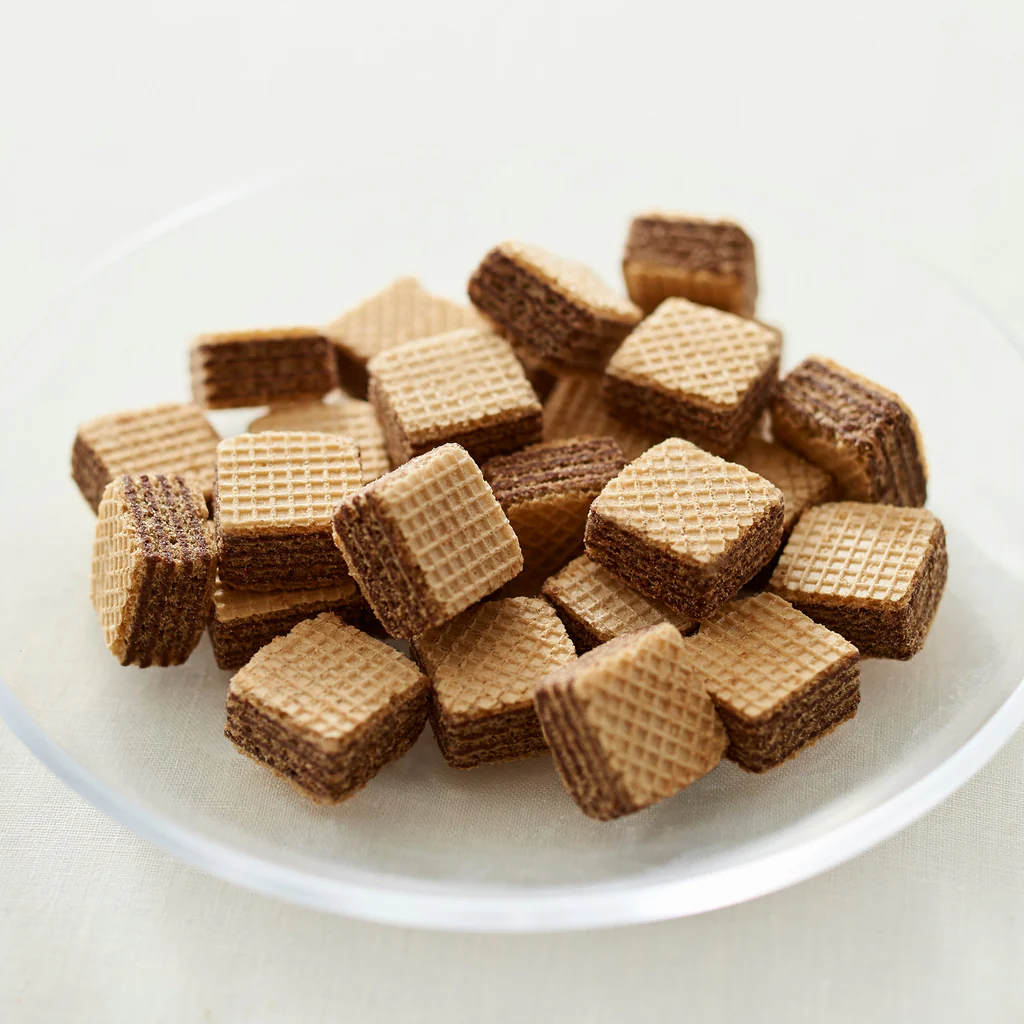
Moisture Migration Between Wafer and Filling
One of the most critical challenges in Moisture Control in Wafer Production is migration between layers.
This occurs because:
- Wafer layers are dry and porous
- Cream fillings contain moisture and fat
- Natural equilibrium drives water movement
Over time, moisture moves from filling to wafer, softening the structure.
Solutions Include:
- Using low-moisture filling formulations
- Increasing fat barrier effectiveness
- Adjusting water activity balance between components
- Improving packaging barrier properties
Packaging and Moisture Barrier Technology
Packaging is the final and often most underestimated defense against moisture problems.
High-Barrier Films
Prevent external humidity from entering the product.
Modified Atmosphere Packaging (MAP)
Reduces oxidation and stabilizes internal moisture balance.
Vacuum Sealing Techniques
Minimizes air and moisture exchange.
Desiccant Integration (Limited Use)
In some industrial applications, moisture absorbers are added to packaging environments.
Without proper packaging, even perfectly baked wafers can lose quality rapidly.
Emerging Trends in Moisture Control in Wafer Production
The wafer industry is evolving toward more precise and data-driven moisture management systems.
Smart Humidity Sensors
Real-time monitoring of production environments is becoming standard in modern factories.
AI-Based Oven Control Systems
Automated systems adjust baking conditions based on moisture feedback loops.
Low-Moisture Clean Label Formulations
Manufacturers are reducing additives while maintaining stability through better process control.
Sustainable Packaging Materials
New barrier films aim to reduce environmental impact without sacrificing moisture protection.
Predictive Shelf-Life Modeling
Factories now simulate moisture migration behavior before full-scale production.
Frequently Asked Questions from Factory Managers
What is the ideal moisture level for wafer sheets?
Most industrial wafer sheets require 1.5–3.5% moisture depending on formulation and climate.
Why do wafers become soft after packaging?
This is usually caused by moisture migration from filling or poor barrier packaging.
Can humidity in the factory affect wafer quality?
Yes. Even small changes in ambient humidity can alter cooling and moisture absorption rates.
How can I reduce moisture migration in filled wafers?
Use low-moisture fillings, fat barriers, and high-quality packaging materials.
Why do factories rely on suppliers like MT Royal?
Because consistent ingredient quality helps stabilize moisture behavior across batches, reducing production variability.
Final Industry Perspective
In wafer manufacturing, moisture is not just a physical parameter—it is a silent decision-maker that shapes every bite the consumer experiences. Moisture Control in Wafer Production is the discipline that separates stable, export-ready products from inconsistent batches that struggle in competitive markets.
A wafer line without proper moisture control is like a precision machine operating in a rainstorm: it may function, but never at its intended performance level.
Factories that master moisture control gain more than product quality—they gain predictability, efficiency, and brand reliability in global markets.
The difference between a crisp wafer and a soft one is rarely visible on the production line. It is engineered, controlled, and protected long before the product reaches the consumer’s hands.

No comment