

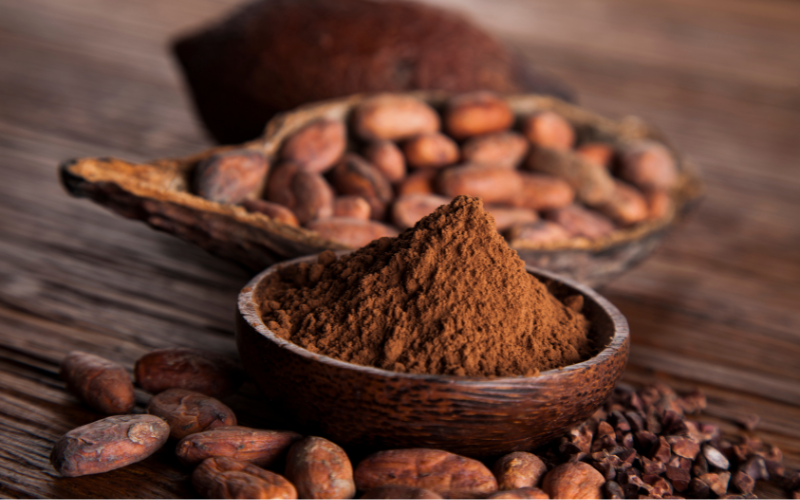
In a modern food manufacturing plant, waste is rarely just “waste.” It is downtime, rework, rejected batches, clogged production lines, recalibration hours, and sometimes even lost customer contracts. And surprisingly often, the hidden trigger behind all of this is something as unassuming as cocoa powder stability.
At first glance, cocoa powder seems like a static ingredient—brown, dry, predictable. But anyone who has spent time on a production floor knows the truth is more complicated. One shipment flows smoothly through pneumatic systems, disperses evenly in mixers, and delivers consistent color across batches. The next behaves like a completely different material: clumping in silos, resisting dispersion, shifting viscosity, and quietly pushing defect rates upward.
This is where the question How does cocoa powder stability reduce production waste? becomes less of a theoretical discussion and more of a practical production strategy. Stability is not just about shelf life—it is about process reliability, batch uniformity, and ultimately how efficiently your plant converts raw materials into sellable product.
Across global supply chains, manufacturers are realizing that cocoa powder is not merely an ingredient. It is a process variable. And when that variable is unstable, everything downstream becomes more expensive.
At MT Royal, we supply manufacturers across confectionery, bakery, dairy, and beverage sectors, and we’ve seen firsthand how stability differences in cocoa powder quietly determine whether a production line runs like clockwork—or like a constant troubleshooting exercise. Alongside trusted European references such as Spanish-origin Latamarko, which is known for its consistency standards in premium applications, the industry is shifting toward stability-first procurement thinking rather than price-only sourcing.
LATAMARKO LM60 – Premium Spanish-Origin Cocoa Powder
latamarko alkalized cocoa powder lm60
cocoa powder for chocolate production-Best price
Food industry raw materials – list of products
Understanding cocoa powder stability in industrial terms
Cocoa powder stability is not a single property—it is a combination of physical, chemical, and functional consistency over time and under processing conditions.
In industrial environments, stability typically refers to:
- Moisture stability (resistance to humidity absorption and clumping)
- Particle stability (consistent particle size distribution over time)
- Emulsion stability (behavior in liquid systems and dispersibility)
- pH stability (especially in alkalized cocoa variants)
- Flavor stability (resistance to oxidation and flavor drift)
When any of these parameters fluctuate, production systems react immediately—often in ways that are expensive and invisible until waste becomes measurable.
For example, a slight increase in moisture content may not be noticeable during procurement inspection, but on a high-speed mixing line it can result in:
- inconsistent blending
- poor flow through feeders
- partial batch segregation
- increased rejection rates
This is why manufacturers increasingly treat cocoa powder not as a commodity, but as a functional raw material with engineering-like specifications.
The hidden link between instability and production waste
Production waste in cocoa-based manufacturing rarely comes from dramatic failures. It comes from micro-inefficiencies that accumulate.
Let’s break it down in real factory terms:
A cocoa powder with unstable flow properties might require:
- longer mixing cycles
- higher energy input
- additional sieving steps
- manual intervention to prevent clogging
Each of these adjustments seems small. But over thousands of batches per year, they translate into measurable cost leakage.
Waste appears in several forms:
- Material waste: off-spec batches, over-dosing corrections
- Time waste: extended mixing or cleaning cycles
- Energy waste: higher motor loads, longer processing times
- Labor waste: operator intervention and line monitoring
- Opportunity waste: reduced throughput capacity
In our experience supplying manufacturing facilities, we’ve seen that instability-related waste often accounts for more cost impact than raw ingredient price differences themselves.
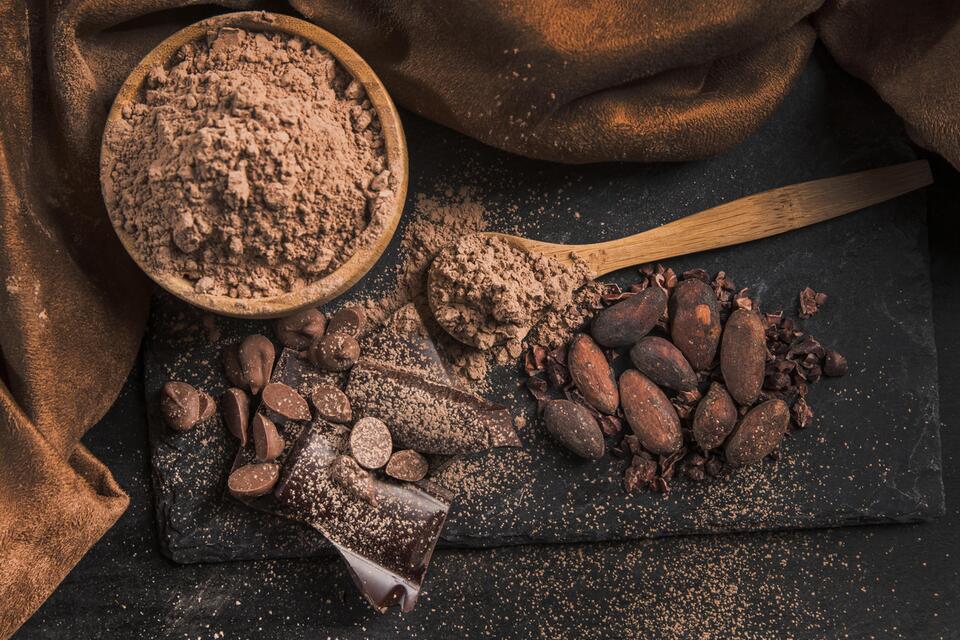
Moisture stability: the silent production disruptor
If there is one factor that causes more industrial headaches than others, it is moisture absorption.
Cocoa powder is hygroscopic, meaning it naturally absorbs moisture from the environment. When stability is weak, even small humidity fluctuations in storage or transport can lead to:
- clumping inside silos
- uneven dosing in automated systems
- blockages in pneumatic conveying lines
Once clumping begins, the entire system becomes less predictable.
Factories often respond by overcorrecting:
- increasing anti-caking agents
- adding extra sieving stages
- slowing down production speed
All of which increase cost per unit.
Stable cocoa powders, by contrast, maintain consistent flow behavior even in variable humidity environments, reducing the need for reactive process adjustments.
Particle size stability and its effect on batch consistency
One of the least visible but most important stability factors is particle size distribution.
Even when two cocoa powders look identical, differences in micron range can drastically affect:
- dispersion in liquid systems
- sedimentation rates
- mixing homogeneity
- surface texture in finished products
Unstable particle size leads to what production managers often describe as “mystery variability”—where batches pass technical specs but fail sensory consistency checks.
This is especially critical in beverage and dairy plants, where sedimentation or layering can result in rejected products even when formulation is technically correct.
Premium-grade European suppliers, particularly those with strict engineering control like Latamarko in Spain, have built reputations on tight particle consistency, which directly reduces waste from reprocessing or reformulation.
How cocoa instability increases rework cycles
Rework is one of the most expensive forms of industrial waste because it consumes resources twice.
Here is a typical scenario:
- Batch is produced
- Slight instability causes viscosity or color deviation
- Quality control flags inconsistency
- Batch is reprocessed or downgraded
What looks like a minor deviation becomes a full secondary production cycle.
The real issue is not just material loss—it is production capacity loss. A reworked batch occupies equipment that could have been producing new product.
Instability in cocoa powder increases the probability of:
- inconsistent color development during heating
- uneven fat distribution in emulsions
- unpredictable flavor intensity
Each of these increases the likelihood of rework loops.
Strategic waste reduction through specification control
Reducing waste starts long before cocoa enters the production line. It begins at procurement specification level.
Key stability-focused parameters include:
- maximum moisture content threshold
- controlled pH range for alkalized cocoa
- defined particle size distribution band
- minimum fat consistency range
- flowability index under humidity stress
When these are clearly defined and enforced, production variability drops significantly.
At MT Royal, we work with manufacturers to align sourcing decisions with actual production behavior, not just lab sheet data. This alignment is often where waste reduction begins—because it removes ambiguity from the supply chain.
The role of supplier consistency in reducing plant-level waste
One of the most overlooked contributors to waste is supplier variability.
Even if specifications are technically met, variation between batches from different origins can create:
- small formulation adjustments
- recalibration of dosing systems
- inconsistent mixing times
This is why many manufacturers move toward consolidated sourcing strategies rather than multi-supplier fragmentation.
Stable supply relationships reduce:
- onboarding variability
- qualification testing cycles
- unexpected production adjustments
Spanish-origin premium suppliers like Latamarko are often referenced in industrial procurement discussions for their tight batch-to-batch control, especially in high-spec applications where even minor variation leads to waste amplification.
Comparison: stable vs unstable cocoa powder in production
| Factor | Stable Cocoa Powder | Unstable Cocoa Powder |
|---|---|---|
| Flow behavior | Consistent and predictable | Prone to clumping |
| Mixing time | Short and uniform | Extended and variable |
| Batch consistency | High repeatability | Frequent deviations |
| Waste rate | Low | Elevated |
| Equipment strain | Minimal | Increased wear |
| Rework frequency | Rare | Common |
This comparison highlights a key truth: stability is not a quality luxury—it is a waste control mechanism.
Step-by-step: how factories can reduce waste through cocoa stability
Step 1: Define stability requirements before sourcing
Clarify what “stable” means for your process, not just your supplier’s specification sheet.
Step 2: Run real-world line testing
Lab results rarely capture industrial stress conditions like humidity shifts or high-speed mixing.
Step 3: Monitor early production cycles closely
The first 3–5 production runs often reveal stability issues that lab tests miss.
Step 4: Standardize suppliers where possible
Reducing supplier variation reduces downstream process variability.
Step 5: Track waste metrics explicitly
Measure scrap rate, rework cycles, and downtime separately for clearer insight.
Common misconceptions about cocoa stability
One common misunderstanding is that higher price automatically means higher stability. In reality, stability depends more on processing control than cost alone.
Another misconception is that small variations do not matter. In continuous production systems, even small deviations accumulate quickly across high-volume output.
Finally, many assume stability issues can be corrected with additives or process adjustments. While partially true, this approach often increases complexity and long-term cost.

Frequently asked questions
Why does unstable cocoa powder increase production waste?
Because it creates inconsistencies in mixing, flow, and product formation, leading to rework, rejection, and downtime.
Is cocoa stability more important than flavor profile?
In industrial manufacturing, yes—because instability affects entire production efficiency, not just sensory output.
Can equipment compensate for unstable cocoa?
Only partially. Equipment adjustments often increase cost and reduce throughput efficiency.
How do suppliers influence cocoa stability?
Through processing control, drying methods, particle engineering, and quality consistency across batches.
Final reflection for production decision-makers
In manufacturing, waste rarely announces itself loudly. It appears as small inefficiencies that slowly erode margins—extra minutes in mixing, slightly higher rejection rates, or unplanned cleaning cycles.
Cocoa powder stability sits right at the center of this invisible cost structure. When it is controlled, production flows smoothly. When it is not, everything downstream quietly becomes more expensive.
And perhaps the real question is not whether your cocoa powder is stable enough—but how much instability your current system is already absorbing without you noticing.

No comment