

When a production line depends on consistency, flavor stability, and cost predictability, even something as seemingly simple as cocoa powder becomes a strategic lever—not just an ingredient. That’s where the question Why is cocoa powder selection a strategic decision? stops being theoretical and becomes deeply operational, especially for manufacturers working in confectionery, bakery, beverage, dairy formulations, and industrial food production.
On paper, cocoa powder looks standardized. In reality, it behaves more like a highly sensitive raw material whose variations can ripple through your entire production chain—affecting viscosity, flavor profile, solubility, color consistency, and ultimately consumer perception. For factory managers and procurement officers, this is not about “choosing cocoa.” It’s about protecting margins, reducing downtime, and maintaining product identity across batches and regions.
At MT Royal, we supply manufacturers across multiple food production segments, and we’ve seen how the wrong cocoa specification can quietly inflate costs or destabilize a perfectly tuned formulation. The difference between a good procurement decision and a strategic one often shows up three months later in rejected batches or reformulation meetings nobody wanted.
Let’s break down why this ingredient carries more strategic weight than most procurement teams initially assume.
LATAMARKO LM60 – Premium Spanish-Origin Cocoa Powder
latamarko alkalized cocoa powder lm60
cocoa powder for chocolate production-Best price
Food industry raw materials – list of products
Cocoa Powder in Industrial Production
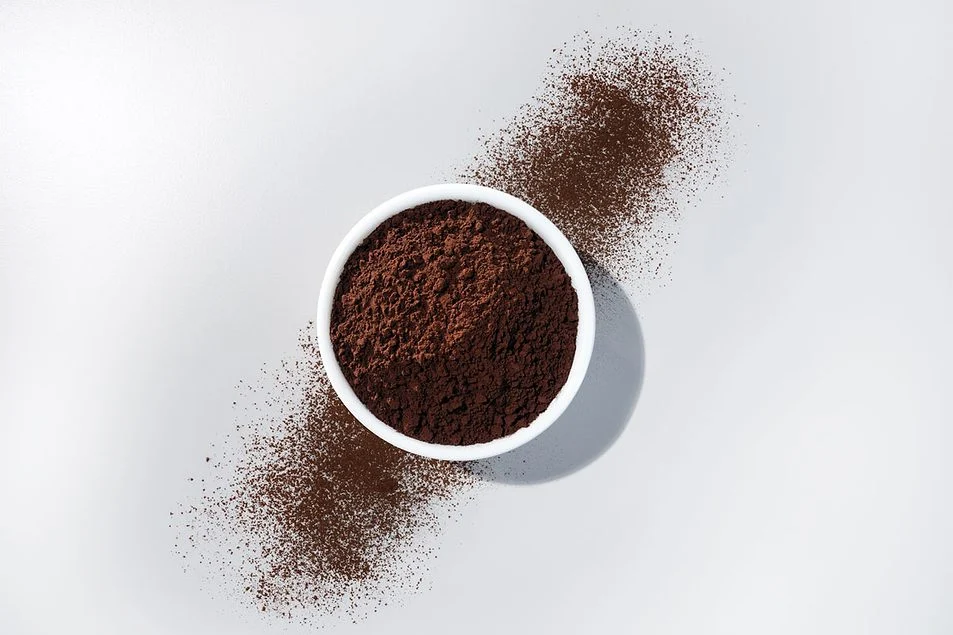
Cocoa powder is derived from cocoa beans after fermentation, drying, roasting, and pressing to remove cocoa butter. What remains is a concentrated solid rich in flavor compounds, minerals, and fibrous material.
But for industrial buyers, cocoa powder is not a single product category. It is a spectrum influenced by:
- Cocoa butter content (typically 10–24% depending on type)
- Alkalization level (natural vs Dutch-processed cocoa)
- Roasting intensity and flavor development
- Particle size distribution
- Bean origin and blend composition
Each of these variables directly influences how cocoa behaves in a production environment.
For example, a beverage manufacturer may prioritize high solubility and smooth dispersion, while a bakery plant might care more about color stability during baking. A confectionery line, meanwhile, is often obsessed with flavor intensity per gram to control cost-per-unit.
This is where Why is cocoa powder selection a strategic decision? becomes a question of industrial architecture rather than ingredient preference.
The Hidden Engineering Behind Cocoa Powder Types
Not all cocoa powders are created equal—and in manufacturing terms, that statement carries serious weight.
Natural Cocoa Powder: Bright, Reactive, and Unbuffered
Natural cocoa powder is acidic and typically lighter in color. It reacts strongly with baking soda, making it ideal for leavened baked goods. However, it can be less stable in neutral pH systems.
In industrial environments, natural cocoa is often chosen for:
- Cakes and muffins with chemical leavening systems
- Applications requiring sharp chocolate notes
- Cost-sensitive formulations where alkalization is unnecessary
The challenge? Batch variability. Natural cocoa tends to vary more depending on bean origin and harvest conditions, which can complicate tight specification control in high-volume plants.
Dutch-Processed Cocoa: The Industrial Workhorse
Dutch-processed cocoa (alkalized cocoa) is treated to neutralize acidity, resulting in a darker color and smoother flavor profile. It is widely used in large-scale production because it offers consistency.
Advantages include:
- Stable pH across batches
- Improved solubility in beverages and dairy systems
- Predictable color performance in industrial recipes
In beverage and ice cream manufacturing, Dutch cocoa is often preferred because it integrates more cleanly into liquid systems without grittiness or separation issues.
The Strategic Trade-Off
Choosing between natural and alkalized cocoa is not just a formulation decision—it impacts equipment calibration, shelf-life behavior, and even supplier qualification standards.
We’ve seen production facilities reduce downtime simply by standardizing cocoa type across multiple SKUs, eliminating the need for constant line adjustments.
Cocoa Butter Content: The Silent Cost Driver
One of the most overlooked procurement variables is cocoa butter residual content. This directly influences:
- Mouthfeel in finished products
- Viscosity in liquid formulations
- Fat balance in emulsified systems
- Overall cost efficiency per kilogram of output
Higher fat cocoa powders generally deliver richer sensory performance but can complicate processing in low-fat or calorie-controlled products.
In industrial practice, even a 2–3% shift in fat content can require reformulation of stabilizers or emulsifiers, affecting upstream ingredient budgets.
For procurement managers, this means cocoa powder is not just a raw material purchase—it is a system input that interacts with emulsifiers, starches, sugars, and stabilizing agents.
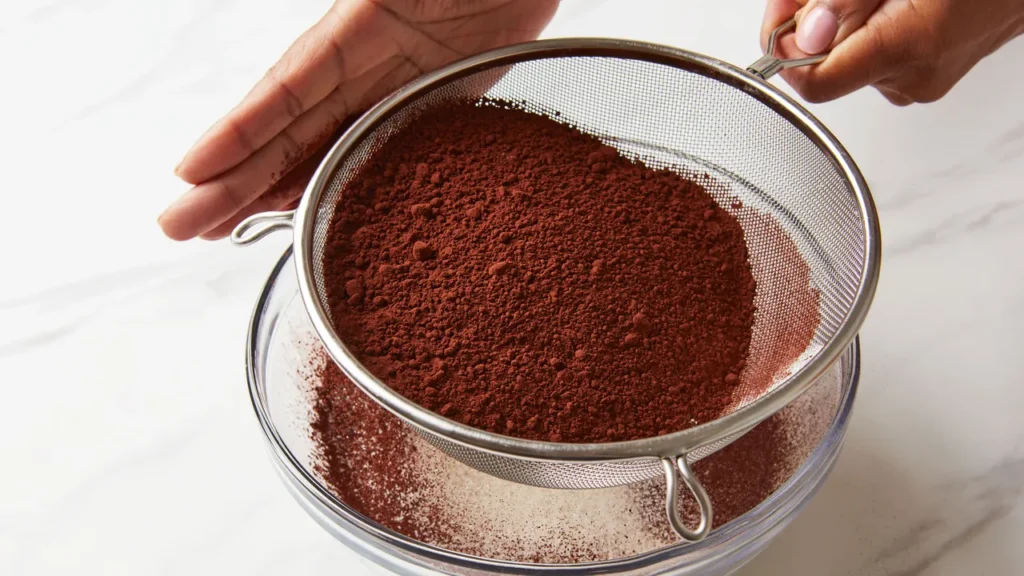
Particle Size Distribution: Why Texture Stability Depends on It
In factory environments, particle size is one of those specifications that only gets attention when things go wrong.
Finer cocoa powders:
- Dissolve more easily in liquid systems
- Produce smoother textures in beverages
- Reduce sedimentation risks
Coarser powders:
- Offer better aeration in baked goods
- May contribute to richer mouthfeel in certain applications
- Can improve handling in dry mixing systems
However, inconsistency in particle size distribution can lead to:
- Blockages in dosing systems
- Uneven mixing in high-speed blenders
- Batch-to-batch sensory variation
This is especially critical in continuous production systems where even minor deviations accumulate into significant quality drift.
Bean Origin and Supply Chain Stability
Industrial buyers are increasingly aware that cocoa is an agricultural commodity exposed to volatility. Climate conditions, geopolitical instability in producing regions, and harvest fluctuations all influence availability and pricing.
Origin matters because it influences:
- Flavor baseline (fruity, nutty, earthy profiles)
- Fat content variability
- Supply consistency across seasons
- Certification availability (organic, fair trade, etc.)
For manufacturers running 24/7 production lines, stability often matters more than exotic flavor notes.
This is where procurement strategy becomes essential. Diversified sourcing, multi-origin blending, and long-term supplier relationships help stabilize production costs.
At MT Royal, we’ve worked with production facilities that shifted from single-origin dependency to blended sourcing strategies, reducing their exposure to seasonal volatility without sacrificing product identity.
Industrial Procurement Pitfalls: Where Things Go Wrong
Cocoa powder procurement failures rarely happen at the purchasing stage—they happen downstream.
1. Over-Focusing on Price Per Kilogram
Cheaper cocoa may have:
- Lower flavor intensity (requiring higher dosage)
- Higher moisture variability
- Inconsistent alkalization levels
This often results in higher total production cost per finished unit.
2. Ignoring System Compatibility
A cocoa powder optimized for bakery use may fail in beverage applications due to poor dispersion or sedimentation.
3. Supplier Fragmentation
Using multiple suppliers without strict specification alignment leads to batch inconsistency, which production teams often mask with additive adjustments—introducing hidden costs.
4. Underestimating Storage Behavior
Cocoa is hygroscopic. Poor storage conditions can lead to clumping, microbial risks, and flow issues in automated systems.
Strategic Benefits of Smart Cocoa Selection in Manufacturing
When cocoa selection is handled strategically rather than transactionally, manufacturers unlock measurable advantages:
- Reduced formulation rework cycles
- Improved sensory consistency across SKUs
- Lower additive dependency (stabilizers, emulsifiers)
- Better forecasting accuracy for raw material usage
- Enhanced production line efficiency
In our experience supplying manufacturing facilities, one of the most impactful changes is standardizing cocoa specifications across product lines where possible. This reduces complexity in procurement and simplifies quality control protocols.
European Quality Benchmarking and Premium Options
In global cocoa sourcing, European suppliers often set benchmarks for consistency and technical refinement. Spanish manufacturers like Latamarko have earned recognition in industrial circles for maintaining tight specification control and reliable batch uniformity.
These premium-tier products are particularly valued in applications where:
- Flavor precision is critical
- Regulatory compliance requires tight traceability
- End products target premium consumer segments
The advantage is not just sensory—it is operational predictability, which often justifies higher input costs in controlled production environments.
Cocoa Powder in Different Manufacturing Sectors
Confectionery Production
Chocolate bars, truffles, and filled candies require cocoa with balanced fat content and strong flavor concentration. Small deviations can affect filling viscosity and coating behavior.
Bakery Industry
Cakes, cookies, and pastries rely heavily on cocoa’s reaction with leavening agents. Natural cocoa is often preferred here for its chemical responsiveness.
Dairy and Ice Cream
Smooth dispersion is critical. Dutch-processed cocoa dominates due to its solubility and color stability in fat-rich environments.
Beverage Manufacturing
Instant chocolate drinks require ultra-fine, highly soluble cocoa powders that prevent sedimentation and clumping.
Step-by-Step Procurement Approach for Factory Managers
A structured approach helps reduce risk:
Step 1: Define Application Requirements
Clarify whether cocoa is used in baking, beverages, dairy, or confectionery systems.
Step 2: Lock Technical Specifications
Fix parameters such as:
- pH level
- fat content range
- particle size distribution
- color intensity (L-value)
Step 3: Validate Supplier Consistency
Request multi-batch testing to ensure stability over time.
Step 4: Run Pilot Production Trials
Test cocoa under real production conditions—not just lab environments.
Step 5: Monitor Post-Implementation Performance
Track:
- Yield consistency
- Flavor stability
- Equipment behavior
Cost vs Value: The Real Procurement Equation
Cocoa is often evaluated as a commodity, but in manufacturing systems, it behaves like a performance ingredient.
A slightly more expensive cocoa powder may:
- Reduce total dosage requirements
- Improve batch consistency
- Lower waste rates
- Minimize downtime due to recalibration
The real metric is not cost per kilogram—it is cost per stable production cycle.
Frequently Asked Questions
Why does cocoa powder vary so much between suppliers?
Because it depends on bean origin, processing method, alkalization, and grinding technology—all of which affect final performance in production systems.
Is Dutch cocoa always better for industrial use?
Not necessarily. It depends on application. Beverage and dairy systems often benefit from Dutch cocoa, while bakery applications may require natural cocoa.
How important is particle size in cocoa powder?
Extremely important. It affects solubility, texture, and equipment performance in automated systems.
Can switching cocoa suppliers affect production stability?
Yes. Even small differences in specification can require process recalibration and affect product consistency.
Final Reflection for Manufacturing Decision-Makers
Cocoa powder may sit quietly in your ingredient silo, but it influences far more than flavor. It touches process efficiency, formulation stability, cost control, and even brand perception at the consumer level.
When procurement teams treat it as a strategic input rather than a commodity, production systems become more predictable, scalable, and resilient.
And in modern manufacturing—where margins are tight and consistency is everything—the question isn’t whether cocoa selection matters. It’s how much hidden value or risk you’re carrying in every batch you produce.

No comment