


Walk into a modern chocolate production facility and you quickly realize something important: chocolate is not a single ingredient. It is a carefully engineered system. Cocoa powder, cocoa butter, emulsifiers, milk solids, flavor systems, stabilizers, sweeteners, and process parameters all work together to create a finished product that consumers judge in seconds—but manufacturers spend months perfecting.
That is why the conversation around Industrial Chocolate Ingredients Libya has become increasingly strategic.
For manufacturers operating in Libya’s food sector, ingredient sourcing is no longer simply about availability. It is about production continuity, formulation consistency, cost predictability, and building products that remain stable from batch one to batch ten thousand.
Whether you operate a confectionery plant, an industrial bakery, a beverage facility, or a dairy production line, your chocolate ingredient strategy directly affects throughput, waste rates, customer satisfaction, and long-term profitability.
At MT Royal, we supply manufacturers with a broad portfolio of industrial ingredients and multiple brand options designed to support reliable production and competitive sourcing conditions. As industrial buyers seek greater consistency and technical performance, premium European references have also become increasingly relevant—particularly Spanish-origin solutions such as Latamarko, which are often selected for applications where specification control and production reliability matter as much as flavor.
Industrial chocolate production is not won on the packaging line. It is won long before that—during sourcing, formulation, and ingredient selection.
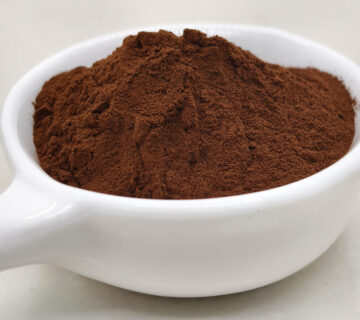
LATAMARKO LM60 – Premium Spanish-Origin Cocoa Powder
latamarko alkalized cocoa powder lm60
cocoa powder for chocolate production-Best price
Food industry raw materials – list of products
Why Libya’s manufacturing sector increasingly depends on industrial chocolate ingredients
Libya’s food manufacturing market has gradually expanded into more value-added categories.
Instead of focusing only on basic food production, many manufacturers are investing in products that offer stronger branding opportunities, improved margins, and higher consumer appeal. Chocolate-based applications have become an important part of that transition.
Demand continues to grow for:
- Chocolate bakery products
Industrial bakeries are expanding their chocolate-based product portfolios to meet growing consumer demand for indulgent and premium-style baked goods. Consistency in ingredient quality is essential to maintain appearance and flavor across large production volumes. - Filled biscuits
Filled biscuit manufacturing requires precise control of chocolate systems to ensure filling texture, stability, and shelf performance. Ingredient variation can directly affect line efficiency and finished product uniformity. - Chocolate beverages
Beverage manufacturers increasingly rely on advanced chocolate ingredient systems that provide smooth dispersion, stable suspension, and consistent flavor throughout the product lifecycle. - Dairy desserts
Chocolate dairy applications demand ingredients capable of maintaining stable emulsions while preserving sensory quality during refrigerated storage and distribution. - Coated snacks
Coating applications require chocolate ingredients that support controlled viscosity, even coverage, and resistance to environmental fluctuations during production and storage. - Industrial confectionery
Large-scale confectionery production depends heavily on ingredient consistency to maintain product appearance, processing speed, and repeatable quality outcomes.
As product expectations rise, manufacturers face a difficult balancing act.
Consumers expect more from every product they buy, while factories must maintain efficiency and profitability.
Consumers want:
- Better flavor
Buyers increasingly expect deeper chocolate notes and a more refined sensory experience, even in mass-market products. - Improved texture
Mouthfeel and texture consistency strongly influence consumer satisfaction and repeat purchases. - Premium appearance
Product color, gloss, visual consistency, and overall presentation now play a larger role in purchasing decisions.
Factories need:
- Stable production
Manufacturing operations depend on ingredient systems that behave consistently across shifts, batches, and production cycles. - Lower waste
Reducing rejected batches and minimizing formulation adjustments remain critical for maintaining profitability. - Predictable costs
Manufacturers increasingly prioritize sourcing strategies that reduce unexpected operational expenses and improve budget accuracy.
Industrial chocolate ingredients bridge that gap by helping manufacturers align consumer expectations with production realities.
Cocoa powder: the backbone of industrial chocolate systems
If chocolate manufacturing had a workhorse ingredient, cocoa powder would be a strong candidate.
Its role extends beyond flavor.
Cocoa powder contributes directly to formulation performance and affects multiple stages of industrial production.
Cocoa powder affects:
- Product color
Cocoa selection determines visual consistency and influences whether products achieve the intended appearance across repeated production cycles. - Aroma development
Cocoa contributes complex aromatic compounds that shape consumer perception and overall product identity. - Moisture interaction
Cocoa characteristics influence moisture absorption and distribution, affecting texture stability and shelf-life performance. - Viscosity
Ingredient behavior impacts flow characteristics during mixing, pumping, filling, and depositing operations. - Solubility
In beverage and dairy applications, cocoa dispersion performance directly affects product consistency and consumer experience. - Processing behavior
Cocoa influences how formulations respond to industrial conditions such as heating, cooling, mixing, and storage.
Industrial buyers generally choose between two major categories:
Natural cocoa powder
Natural cocoa offers:
- Higher acidity
The more acidic profile creates brighter chocolate notes and influences interaction with formulation chemistry. - Brighter flavor notes
Natural cocoa often delivers sharper and more pronounced cocoa characteristics preferred in certain applications. - Stronger interaction with leavening systems
Its chemical behavior can significantly affect expansion, texture, and final structure in baked products.
Frequently used in:
- Bakery applications
Natural cocoa performs particularly well in formulations where flavor intensity and baking reactions play an important role. - Specialty formulations
Manufacturers may choose natural cocoa for premium products requiring a more distinctive chocolate profile.
Alkalized cocoa powder
Alkalized cocoa delivers:
- Darker appearance
The alkalization process creates deeper and more uniform color profiles that appeal to many industrial applications. - Smoother flavor
Reduced acidity results in a softer and more balanced chocolate experience. - Better dispersion
Improved mixing and suspension characteristics make alkalized cocoa especially useful in liquid systems.
Common in:
- Dairy production
Alkalized cocoa integrates efficiently into milk-based formulations and supports stable product appearance. - Beverage manufacturing
Improved solubility helps maintain consistency and reduces sedimentation issues. - Industrial confectionery
Manufacturers often prefer alkalized cocoa for applications requiring visual uniformity and controlled flavor delivery.
Selecting between these options changes more than taste—it changes manufacturing behavior, processing efficiency, and the long-term stability of the finished product.

Cocoa butter and why manufacturers care about more than fat content
Many people think cocoa butter exists only for richness.
Production managers know otherwise.
Cocoa butter is one of the most influential functional ingredients in industrial chocolate manufacturing because it affects processing behavior, final product appearance, and long-term product performance.
Cocoa butter influences:
- Crystal formation
Cocoa butter plays a central role in developing stable crystal structures during production. Proper crystal formation determines whether chocolate achieves the intended texture, consistency, and appearance throughout manufacturing and storage. - Melting characteristics
The melting profile affects how the finished product behaves during consumption and under storage conditions. Consistent cocoa butter quality helps manufacturers maintain predictable performance across different climates and distribution environments. - Product snap
The characteristic clean break associated with high-quality chocolate depends heavily on controlled fat crystallization. Variations in cocoa butter composition can weaken structure and reduce perceived product quality. - Coating performance
In coating applications, cocoa butter influences flow behavior, surface uniformity, adhesion, and overall production efficiency. Stable performance reduces the need for process adjustments during high-volume manufacturing. - Storage stability
Properly balanced cocoa butter contributes to longer shelf life and reduces risks such as texture degradation or visual quality issues during warehousing and distribution.
In industrial environments, inconsistent cocoa butter quality often creates operational challenges that may not appear immediately.
Common production issues include:
- Depositing issues
Changes in viscosity and flow behavior can lead to uneven filling weights, inconsistent coating thickness, and reduced production accuracy. - Cooling inconsistency
Variations in fat composition may alter cooling performance and extend production cycle times, especially in temperature-controlled environments. - Surface defects
Unstable fat crystallization can contribute to visual imperfections such as dull appearance, uneven texture, or bloom-related issues that affect consumer perception. - Shelf-life problems
Products may initially appear acceptable but gradually lose texture, appearance, or structural stability over time, resulting in reduced market performance.
The challenge is rarely visible at receiving.
It becomes visible weeks later—when production data, customer feedback, or shelf performance begins revealing problems that originated from ingredient inconsistency rather than processing conditions.
The rise of compound chocolate systems in Libya
Not every industrial chocolate product uses traditional cocoa butter systems.Many manufacturers use compound systems for practical reasons.
Advantages include:
- Lower production cost
Compound chocolate systems often reduce dependency on higher-cost cocoa butter while maintaining acceptable sensory and processing performance. For manufacturers operating at scale, this can improve cost predictability and support healthier production margins. - Simplified processing
Many compound formulations eliminate or reduce the complexity of tempering requirements, allowing production teams to shorten processing time and reduce operational bottlenecks across manufacturing lines. - Greater climate tolerance
Compound systems generally perform more reliably in environments exposed to temperature variation. This characteristic can be particularly valuable in regions where storage and transportation conditions fluctuate. - Reduced tempering complexity
Traditional chocolate production often requires strict temperature control to achieve proper crystal formation. Compound systems help simplify this stage and reduce sensitivity to minor process deviations.
Compound systems commonly combine:
- Cocoa powder
Cocoa powder provides the chocolate flavor profile, color intensity, and aroma characteristics that define the final product while supporting formulation flexibility. - Vegetable fats
Vegetable fat systems are commonly used to improve process efficiency, manage production costs, and achieve targeted melting and texture characteristics. - Sweeteners
Sweetener selection influences not only taste but also mouthfeel, bulk properties, and overall product positioning across different market segments. - Emulsifier blends
Emulsifiers improve ingredient integration and support smoother flow characteristics during mixing, depositing, and large-scale industrial processing.
For production environments exposed to varying storage temperatures, these systems can significantly improve operational flexibility while maintaining product consistency across manufacturing cycles.
How ingredient consistency reduces production waste
One reality of manufacturing never changes:
Variation creates waste.
Ingredient inconsistency often causes:
- Batch rejection
- Extended cleaning cycles
- Product reformulation
- Equipment recalibration
- Downtime
We’ve worked with manufacturing operations that improved output simply by tightening ingredient specifications rather than changing equipment.
Consistency compounds.
A stable process creates stable output.
Industrial procurement mistakes manufacturers should avoid
Chocolate ingredient sourcing can become expensive when decisions focus on the wrong metrics.
Mistake 1: Buying only on price
Low purchase price sometimes produces:
- Higher usage rates
- Greater waste
- Lower throughput
Mistake 2: Ignoring application requirements
Ingredients suitable for bakery may fail in beverage applications.
Mistake 3: Fragmented sourcing
Multiple suppliers increase variability.
Mistake 4: Weak specification management
Technical documents matter more than sales presentations.
How supplier strategy influences production performance
Ingredient sourcing affects more than inventory.
Strong suppliers support:
- Documentation
- Forecasting
- Technical consultation
- Batch stability
At MT Royal, we supply manufacturers with a comprehensive range of brands, ensuring competitive pricing without compromising on quality.
In practice, this means manufacturers can align ingredient selection with production goals instead of forcing production to adapt to supply limitations.
That difference matters more than many procurement teams initially expect.
European premium ingredient positioning
Industrial buyers increasingly evaluate ingredients based on lifecycle value rather than initial purchase cost.
Premium European ingredient systems are frequently chosen because they emphasize:
- Repeatability
- Processing precision
- Controlled specifications
Spanish manufacturers have earned strong recognition in this area.
Brands such as Latamarko are often considered when production environments require tighter quality windows and greater formulation predictability.
That does not mean premium is always necessary.
It means the ingredient should match the production objective.

Logistics realities for industrial chocolate ingredients in Libya
Ingredient performance starts before ingredients reach the factory.
Critical variables include:
- Transport conditions
- Warehouse humidity
- Import timing
- Packaging integrity
Manufacturers sometimes underestimate post-arrival handling.
Excellent ingredients stored poorly become average ingredients very quickly.
Future trends shaping industrial chocolate ingredients
Several developments continue influencing procurement decisions:
Cleaner formulations
Manufacturers seek simplified ingredient declarations.
Greater stability requirements
Production consistency becomes a stronger competitive advantage.
More technical supplier partnerships
Suppliers increasingly contribute formulation insight.
Supply chain resilience
Buyers value continuity as much as price.
These trends are changing how industrial chocolate systems are designed.
Frequently Asked Questions
What are industrial chocolate ingredients?
They are manufacturing-grade ingredients used for large-scale chocolate production including cocoa powder, fats, emulsifiers, dairy components, and functional systems.
Why are ingredient specifications important?
Because consistency directly affects quality, waste rates, and production efficiency.
How can manufacturers reduce chocolate production waste?
By improving supplier consistency, validating formulations, and standardizing ingredient specifications.
Are premium ingredients always necessary?
Not always. The best ingredient is the one that matches operational requirements and production goals.
How often should ingredient performance be reviewed?
Regularly—especially after supplier changes, formulation updates, or production expansion.
Final thoughts for manufacturing decision-makers
Industrial chocolate production is rarely limited by ambition.More often, it is limited by inconsistency.
The strongest manufacturing systems are not necessarily the most complex or the most expensive. They are the systems where ingredients arrive predictably, behave consistently, and support production instead of challenging it.
Because when your factory runs thousands of kilograms through the line every day, chocolate stops being a flavor category.



No comment