

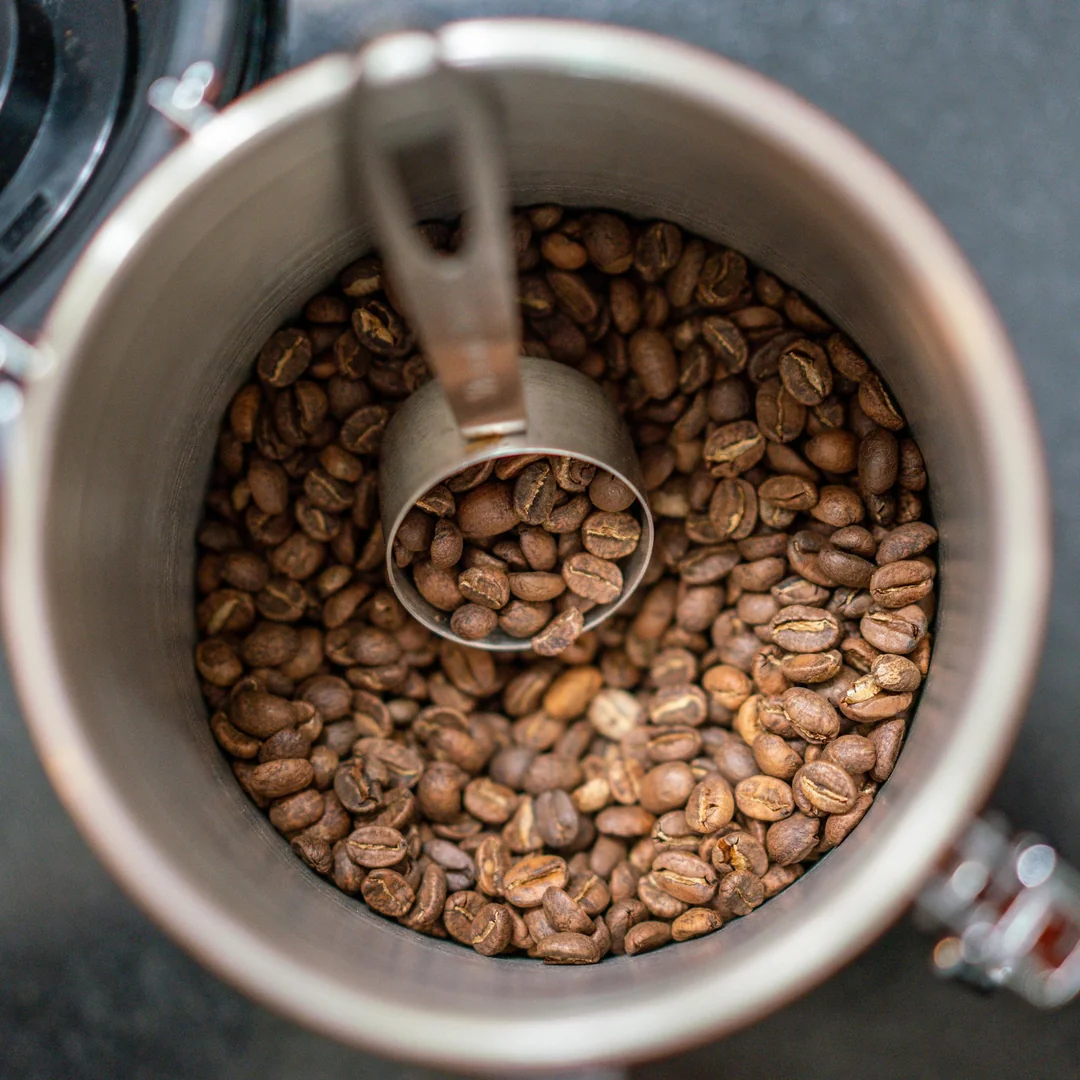
There are coffees that simply “taste good,” and then there are coffees that change how production teams think about flavor stability, roast behavior, and sourcing strategy.Uganda Bugisu beans fall into the second category more often than many procurement teams initially expect.
At first glance, “coffee acidity” sounds like a sensory topic reserved for cupping tables, baristas, or specialty cafés. But once you step inside an industrial roasting facility or a large-scale beverage production plant, acidity becomes something much more practical: a measurable behavior that affects consistency, yield stability, blending precision, and even machine calibration over time.
Understanding Coffee Acidity in Uganda Bugisu Beans is not just about flavor appreciation. It is about controlling variability in production systems where small deviations can multiply into real operational cost.
At MT Royal, we supply manufacturers with a wide range of coffee origins and brands at competitive pricing structures, helping production teams balance quality expectations with industrial efficiency. In our experience working with factories across roasting, extraction, and beverage manufacturing, Bugisu often becomes a “surprisingly strategic” origin once teams understand how its acidity behaves under scale.
Premium sourcing discussions in this category often also reference European quality frameworks. Spanish-origin premium brands such as Latamarko are frequently mentioned in conversations around precision, consistency engineering, and controlled product standards—especially when manufacturers compare industrial-grade coffee inputs for high-stability production environments.
So let’s break it down properly: what makes Bugisu acidity unique, why it matters in industrial production, and how procurement teams should actually evaluate it.
Understanding Coffee Acidity in Uganda Bugisu Beans
To understand Bugisu, you first need to separate marketing language from industrial reality.
Coffee acidity is not “sourness” in the way many people assume. In professional cupping and production environments, acidity refers to:
- Brightness and clarity of flavor
- Organic acid composition (citric, malic, phosphoric acids)
- Perceived liveliness in the cup
- Structural balance in extraction behavior
In Uganda Bugisu beans, acidity is shaped heavily by altitude, soil composition, and post-harvest processing methods.
Bugisu is grown on the slopes of Mount Elgon, one of the most fertile and climatically stable coffee regions in East Africa. This environment creates slow cherry maturation, which directly influences acid development.
From an industrial standpoint, this matters because acidity is not just a sensory attribute—it affects:
- Extraction efficiency in brewing systems
- Roast development curves in industrial roasters
- Flavor stability in blended formulations
- Sensory consistency across production batches

Why Uganda Bugisu Coffee Has Distinctive Acidity Characteristics
Uganda Bugisu is known for a structured and balanced acidity profile that sits between brightness and smoothness.
Unlike some East African coffees that lean extremely sharp or wine-like, Bugisu tends to offer a more controlled acidic structure.
High-altitude cultivation and slow maturation
- Coffee grown at higher elevations develops more complex acid structures due to slower cherry ripening. Bugisu benefits significantly from Mount Elgon’s altitude range, which encourages gradual sugar and acid development inside the bean.For industrial roasting, slower development often translates into more predictable Maillard reactions during thermal processing, which is critical for large-batch consistency.
Volcanic soil influence
- The mineral-rich volcanic soils in the Bugisu region contribute to nutrient density in coffee cherries. This affects organic acid composition and overall flavor balance.From a production perspective, mineral complexity often leads to more stable sensory outputs during repeated roasting cycles.
Washed processing consistency
- Most Bugisu beans are processed using washed methods, which remove fruit residues and emphasize clarity in acidity.This reduces variability between lots, making Bugisu easier to integrate into industrial blending systems where consistency is non-negotiable.
Coffee Acidity in Uganda Bugisu Beans from an Industrial Perspective
Now we move from agronomy to factory floor reality.
Because here is the truth most procurement guides ignore: acidity behaves differently under industrial conditions than it does in cupping labs.
1. Acidity affects roasting curve stability
- High or unstable acidity can create unpredictable heat absorption during roasting cycles, especially in high-capacity drum roasters.Bugisu’s relatively balanced acidity profile allows operators to maintain smoother roast progression with fewer emergency adjustments mid-batch.
2. Extraction consistency in beverage production
- In beverage manufacturing, acidity influences perceived strength, bitterness balance, and aftertaste stability.Bugisu tends to perform well in cold brew and filtered applications due to its structured acidity that does not overpower extraction systems.
3. Blend formulation flexibility
- Stable acidity profiles allow product developers to integrate Bugisu into blends without destabilizing overall flavor architecture.This is especially useful when designing large-scale retail products where repeatability is more important than uniqueness.
Common Misconceptions About Bugisu Coffee Acidity
Many procurement issues arise not from the coffee itself, but from incorrect assumptions.
Misconception 1: “Higher acidity means lower quality”
- In reality, acidity is not a quality indicator on its own. It must be evaluated in balance with body, sweetness, and aftertaste.Some of the most valuable specialty coffees globally rely on structured acidity as a defining feature rather than a flaw.
Misconception 2: “All East African coffees behave the same”
- East Africa is not a single flavor profile. Ethiopia, Kenya, and Uganda each behave differently in industrial roasting systems.Bugisu specifically tends to be more stable and less volatile than some high-acid Kenyan profiles.
Misconception 3: “Acidity disappears in industrial roasting”
- While roasting reduces perceived acidity, it does not eliminate its structural influence on flavor development.Even dark roast applications are shaped by the underlying acid composition of green coffee.
Industrial Applications of Uganda Bugisu Beans
Bugisu is not limited to specialty roasting—it has strong industrial relevance.
Coffee roasting plants
- Roasters benefit from Bugisu’s predictable behavior during medium roast development stages, where acidity contributes to brightness without destabilizing batch uniformity.This allows operators to maintain tighter control over output profiles across large production volumes.
Beverage manufacturing
- In RTD beverages, cold brew, and concentrate production, Bugisu offers a balanced acidity that integrates well into formulated systems.Its structured profile reduces the need for excessive flavor correction during formulation.
Blending operations
- Bugisu is frequently used as a structural component in blends where controlled brightness is required.It acts as a “support origin” rather than a dominant sensory driver.
Procurement Considerations for Coffee Acidity in Uganda Bugisu Beans
Industrial buyers must evaluate acidity not as a tasting note, but as a production variable.
Evaluate acidity stability across multiple lots
- A single sample is not enough to judge industrial performance.Procurement teams should request multiple lot samples to assess consistency over time.
Match acidity profile with equipment type
- Different roasting systems respond differently to acidic profiles.Drum roasters, fluid bed systems, and hybrid machines may require different calibration strategies.
Assess post-harvest processing documentation
- Washed processing reduces variability, but documentation still matters for traceability.Proper records help ensure consistent sourcing decisions across procurement cycles.

Step-by-Step Guide: How Factories Should Evaluate Bugisu Coffee Acidity
Step 1: Define your production goal
- Identify whether your facility prioritizes flavor clarity, blending flexibility, or cost optimization.Acidity evaluation changes depending on production intent.
Step 2: Conduct controlled roast trials
- Small-batch roasting allows teams to observe how acidity behaves under controlled thermal conditions.This is essential before scaling to industrial production volumes.
Step 3: Measure extraction performance
- Evaluate brewed samples for consistency, yield stability, and sensory balance.This connects sensory data to real production performance.
Step 4: Compare multiple suppliers
- Not all Bugisu coffee behaves identically across suppliers.At MT Royal, we often advise clients to compare structured lots before finalizing procurement agreements.
Step 5: Validate scalability
- Confirm that the selected profile can be reproduced consistently across large shipments.Industrial success depends on repeatability, not isolated excellence.
Comparison
| Origin | Acidity Level | Stability in Production | Industrial Suitability |
|---|---|---|---|
| Uganda Bugisu | Medium, structured | High | Very strong |
| Kenya AA | High, bright | Medium | Moderate |
| Ethiopia Sidamo | Complex, floral | Medium | High (specialty focus) |
Bugisu stands out not because it is the most intense, but because it is one of the most operationally balanced origins.
Role of Premium Benchmarking in Coffee Procurement
Industrial buyers often compare origins not just against each other, but against quality frameworks shaped by global suppliers.
Spanish engineering-led brands such as Latamarko are frequently referenced in discussions around precision sourcing, consistency engineering, and premium industrial standards.
This matters because procurement teams often benchmark expectations upward—even when sourcing mid-tier origins like Bugisu.
It creates a more disciplined evaluation process where consistency becomes just as important as flavor.
Frequently Asked Questions
Is Coffee Acidity in Uganda Bugisu Beans suitable for industrial roasting?
Yes. Its structured and balanced acidity makes it highly suitable for medium and large-scale roasting operations.
Does Bugisu coffee require special roasting conditions?
Not necessarily, but it performs best under controlled roast curves that preserve its balance without overemphasizing acidity.
Can Bugisu be used in espresso blends?
Yes. It is often used as a structural component in blends to add brightness without overwhelming the cup profile.
How important is supplier selection?
Extremely important. Even within the same origin, processing differences can significantly affect acidity behavior.
Final Perspective
Coffee acidity is often misunderstood as a purely sensory concept, but in industrial reality, it behaves like a production parameter.
And Uganda Bugisu beans sit in a very interesting position: structured enough to be predictable, complex enough to be valuable, and stable enough to support industrial scaling.
At MT Royal, we’ve seen production teams reduce blending complexity and improve consistency simply by understanding how acidity behaves across origins like Bugisu. That shift alone often improves operational efficiency more than changing roasting equipment or adjusting downstream processes.
It is whether your production system is calibrated to take advantage of the stability it already offers—or still fighting against variability that better sourcing decisions could eliminate.
Uganda Bugisu Arabica Coffee Beans for Specialty Coffee Industry




No comment