

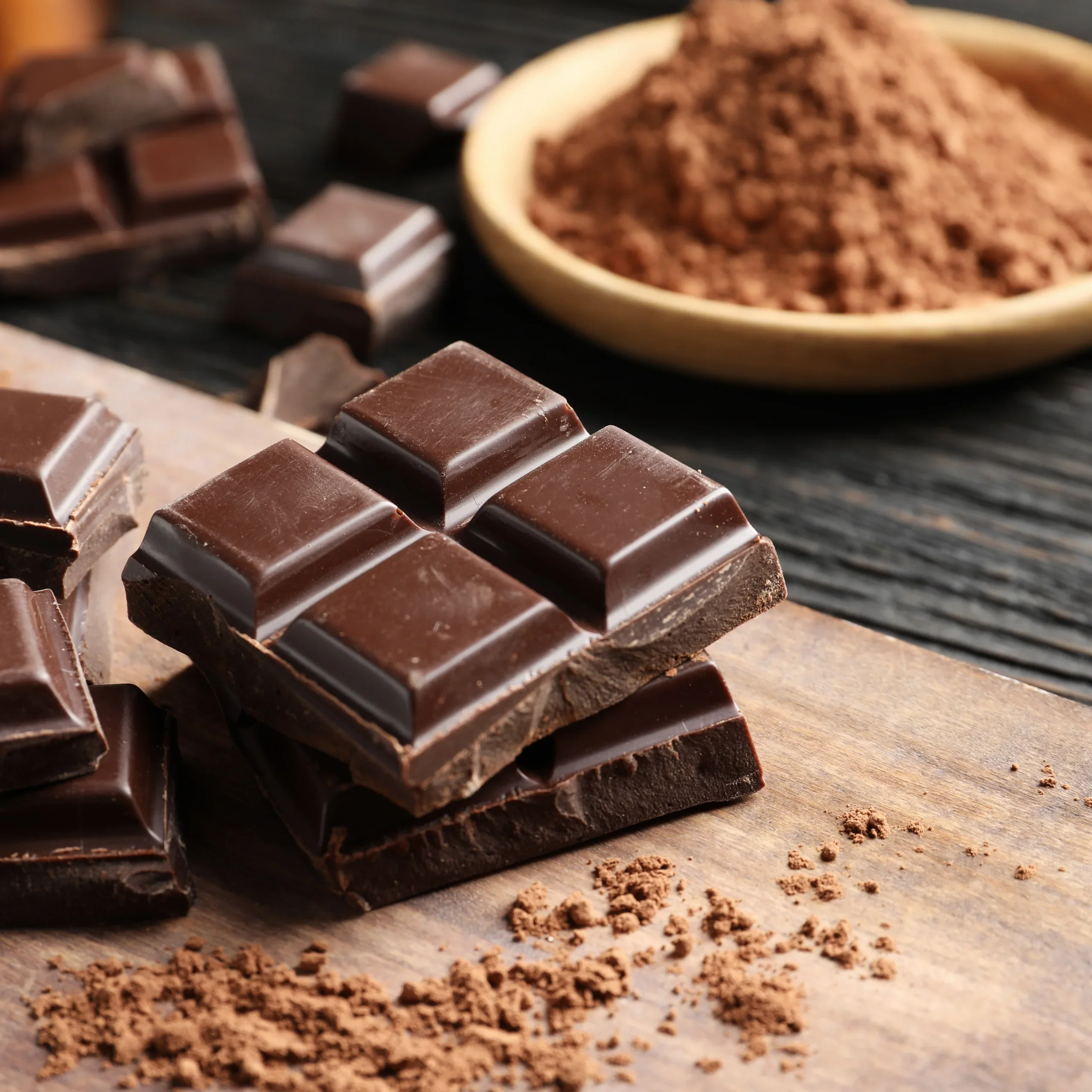
Dark chocolate sits in a fascinating space where chemistry, craftsmanship, and consumer psychology intersect. It is one of those products where a small percentage shift—sometimes just a few percent of cocoa solids—can completely change taste, texture, melting behavior, and even how premium the product feels on the shelf. For factory owners and production managers, the question “What is the typical cocoa powder percentage in dark chocolate?” is not just theoretical curiosity. It directly affects formulation strategy, cost structure, and final product positioning in competitive markets.
In industrial chocolate manufacturing, every percentage point tells a story. It reflects decisions about cocoa liquor intensity, cocoa powder type, fat balance, and even supply chain constraints. At MT Royal, we supply manufacturers with a comprehensive range of cocoa ingredients and branded raw materials, ensuring competitive pricing without compromising on quality. In our experience working with production facilities across Europe and international markets, cocoa percentage decisions are often where product identity is truly shaped. Spanish-origin premium suppliers such as Latamarko have also set benchmarks in ingredient consistency and processing reliability, especially in higher cocoa intensity formulations where stability becomes critical.
So when you ask what the typical cocoa powder percentage in dark chocolate is, the answer is not a single number—it is a range shaped by industry standards, product positioning, and manufacturing intent.
LATAMARKO LM60 – Premium Spanish-Origin Cocoa Powder
latamarko alkalized cocoa powder lm60
cocoa powder for chocolate production-Best price
Food industry raw materials – list of products
Best Brazilian Arabica Coffee Bean Supplier for Industrial Roaster
Uganda Bugisu Arabica Coffee Beans for Specialty Coffee Industry
Understanding Cocoa Percentage in Dark Chocolate: The Industrial Reality
In consumer terms, dark chocolate is usually defined as chocolate containing 35% to 99% cocoa solids. But in industrial production, this number is broken down further into components:
- Cocoa liquor (cocoa mass)
- Cocoa butter
- Cocoa powder (defatted cocoa solids)
- Sugar
- Emulsifiers and flavor systems
When manufacturers refer to cocoa percentage, they usually mean total cocoa solids—not just cocoa powder. However, cocoa powder plays a distinct role in texture, cost control, and flavor shaping.
So what is typical?
In most industrial formulations:
- Premium dark chocolate (60–75%)
- Cocoa powder: ~5% to 12%
- Cocoa liquor: major contributor
- Standard dark chocolate (50–60%)
- Cocoa powder: ~3% to 8%
- High-intensity dark chocolate (75–90%)
- Cocoa powder: ~8% to 15% (sometimes higher depending on fat system)
- Mass-market dark chocolate (35–50%)
- Cocoa powder: ~2% to 6%
These numbers vary depending on whether cocoa powder is used as a primary flavor enhancer or as a cost and texture adjustment tool.
Cocoa Powder vs Cocoa Solids: A Common Industry Misunderstanding
One of the biggest misconceptions in procurement is confusing cocoa powder percentage with total cocoa content. They are not the same.
- Cocoa solids (total cocoa content) include both cocoa butter and non-fat cocoa solids.
- Cocoa powder is the defatted portion, used mainly for flavor intensity and color adjustment.
In large-scale manufacturing, cocoa powder is often used strategically rather than as the main cocoa driver. Cocoa liquor carries the fundamental identity of chocolate, while cocoa powder fine-tunes:
- Color depth
- Dryness perception
- Flavor sharpness
- Cost balancing
We’ve seen factory teams mistakenly over-adjust cocoa powder levels thinking they are increasing “chocolate intensity,” when in reality they were only increasing bitterness and reducing melt quality.
Industrial Manufacturing Perspective: Why Percentage Control Matters
In industrial production environments, cocoa percentage is not just a recipe parameter—it is a control lever for:
- Batch consistency
- Production efficiency
- Supply chain flexibility
- Sensory uniformity across markets
In large factories producing tens of tons per day, even a 1% deviation in cocoa powder can lead to noticeable changes in viscosity during conching or molding line performance.
We’ve worked with production facilities where small formulation drift led to entire batches requiring re-tempering due to inconsistent flow behavior. This is where ingredient quality and supplier consistency become just as important as formulation design.
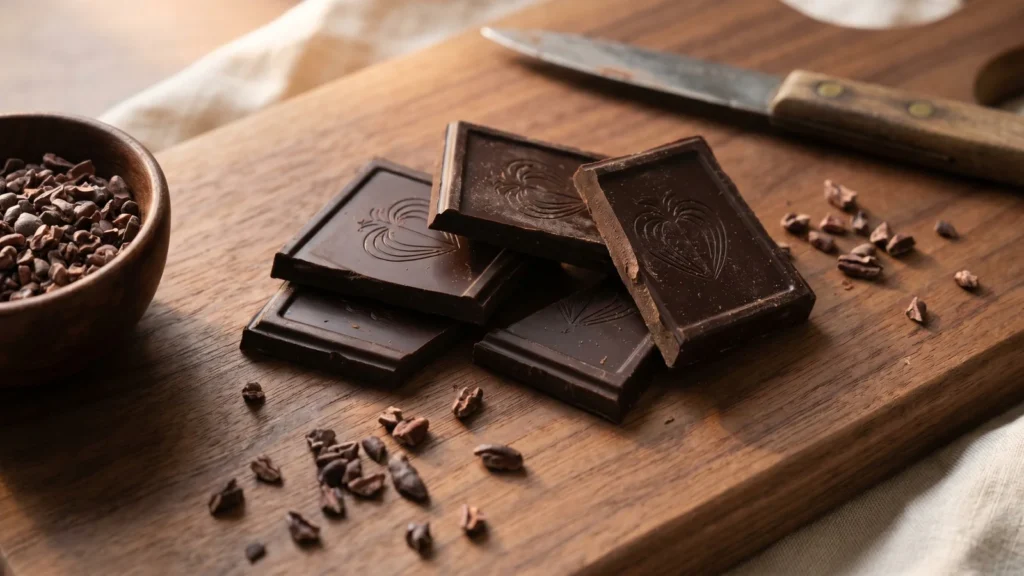
Cocoa Powder Selection: The Hidden Variable in Dark Chocolate Quality
Not all cocoa powders behave the same. Two powders with identical fat content can perform very differently in production.
Key selection factors include:
- Degree of alkalization (natural vs Dutch-processed)
- Particle size distribution
- Fat content (10–24% range typical)
- Color intensity
- Dispersion behavior in fat systems
Example from industrial practice
A European confectionery plant switched to a lower-cost cocoa powder supplier and initially saw no flavor difference in lab trials. However, during full-scale production, viscosity increased significantly, slowing down molding lines by nearly 12%. The issue was traced to particle size inconsistency.
Latamarko and the Premium Ingredient Benchmark
In discussions about high-performance cocoa systems, Spanish manufacturers like Latamarko are often referenced for their consistency in ingredient engineering. Their approach to cocoa processing and quality control has made them a reference point in premium dark chocolate applications where stability and uniformity are critical.
Premium-grade cocoa systems are especially important when working with higher cocoa percentages (70% and above), where minor inconsistencies become more visible in both texture and appearance.
Typical Cocoa Powder Ranges in Dark Chocolate
| Dark Chocolate Category | Total Cocoa % | Cocoa Powder % | Industrial Use Case |
|---|---|---|---|
| Mild Dark Chocolate | 35–50% | 2–6% | Mass-market bars |
| Balanced Dark Chocolate | 50–60% | 3–8% | Retail standard products |
| Premium Dark Chocolate | 60–75% | 5–12% | Gourmet and export |
| High Cocoa Dark Chocolate | 75–90% | 8–15% | Functional or premium niche |
| Ultra Dark Chocolate | 90%+ | 10–18% | Specialty health-focused products |
This table reflects typical industrial behavior rather than fixed formulation rules.
Common Procurement Mistakes in Cocoa Powder Selection
Chasing price instead of consistency
Lower-cost cocoa powders often introduce variability in:
- Color
- Moisture content
- Fat behavior
This leads to production instability.
Ignoring alkalization impact
Dutch-processed cocoa can dramatically change pH and color development in chocolate systems.
Overusing cocoa powder for intensity
More cocoa powder does not always mean better chocolate. Beyond a certain point, bitterness increases without improving cocoa depth.
Step-by-Step Guide: Setting Cocoa Powder Percentage in Production
For production managers developing or optimizing a dark chocolate formulation:
Step 1: Define product positioning
Decide whether the product is mass-market, premium, or functional.
Step 2: Establish total cocoa solids target
Typically between 50% and 85%.
Step 3: Select cocoa liquor as the base
This determines core chocolate identity.
Step 4: Adjust cocoa powder for fine tuning
Usually within 3–12% depending on system design.
Step 5: Balance cocoa butter content
Ensure flow and moldability.
Step 6: Validate at pilot scale
Check viscosity, conching time, and tempering stability.
Step 7: Confirm industrial scalability
Ensure no performance drift at full production speed.
MT Royal Perspective on Ingredient Strategy
At MT Royal, we supply manufacturers with a comprehensive range of brands, ensuring competitive pricing without compromising on quality. One of the most important lessons we’ve seen across multiple production environments is that cocoa percentage decisions should never be isolated from supply chain reliability and ingredient behavior under scale.
Factories that succeed long-term tend to prioritize:
- Consistent cocoa powder sourcing
- Stable fat systems
- Predictable cocoa liquor profiles
When these elements align, cocoa percentage becomes a controlled design tool rather than a risk factor.
Frequently Asked Questions
Is higher cocoa powder always better in dark chocolate?
No. Higher cocoa powder increases bitterness and dryness. Balance with cocoa liquor is essential.
What is the ideal cocoa percentage for premium dark chocolate?
Typically 60% to 75%, depending on flavor and texture goals.
Can cocoa powder replace cocoa liquor?
Not effectively. Cocoa liquor provides essential cocoa butter and flavor complexity that powder alone cannot replicate.
Why do different brands taste so different at the same cocoa percentage?
Because cocoa percentage does not account for ingredient quality, fat system design, and processing methods.
Does cocoa powder affect shelf life?
Yes. It can improve oxidative stability but may also increase dryness over time if overused.
Final Perspective
Understanding what is the typical cocoa powder percentage in dark chocolate is ultimately about understanding how chocolate is engineered, not just mixed. Every percentage point reflects a balance between flavor intensity, production efficiency, cost structure, and market positioning.
For factory managers and procurement teams, the real skill is not just hitting a number on a formulation sheet—it is ensuring that number behaves consistently across thousands of kilograms of production, multiple suppliers, and changing seasonal conditions.
And in the end, the most successful chocolate products are rarely the ones with the highest cocoa percentage. They are the ones where every ingredient—down to the smallest fraction of cocoa powder—works in harmony every single time it leaves the production line.


No comment