

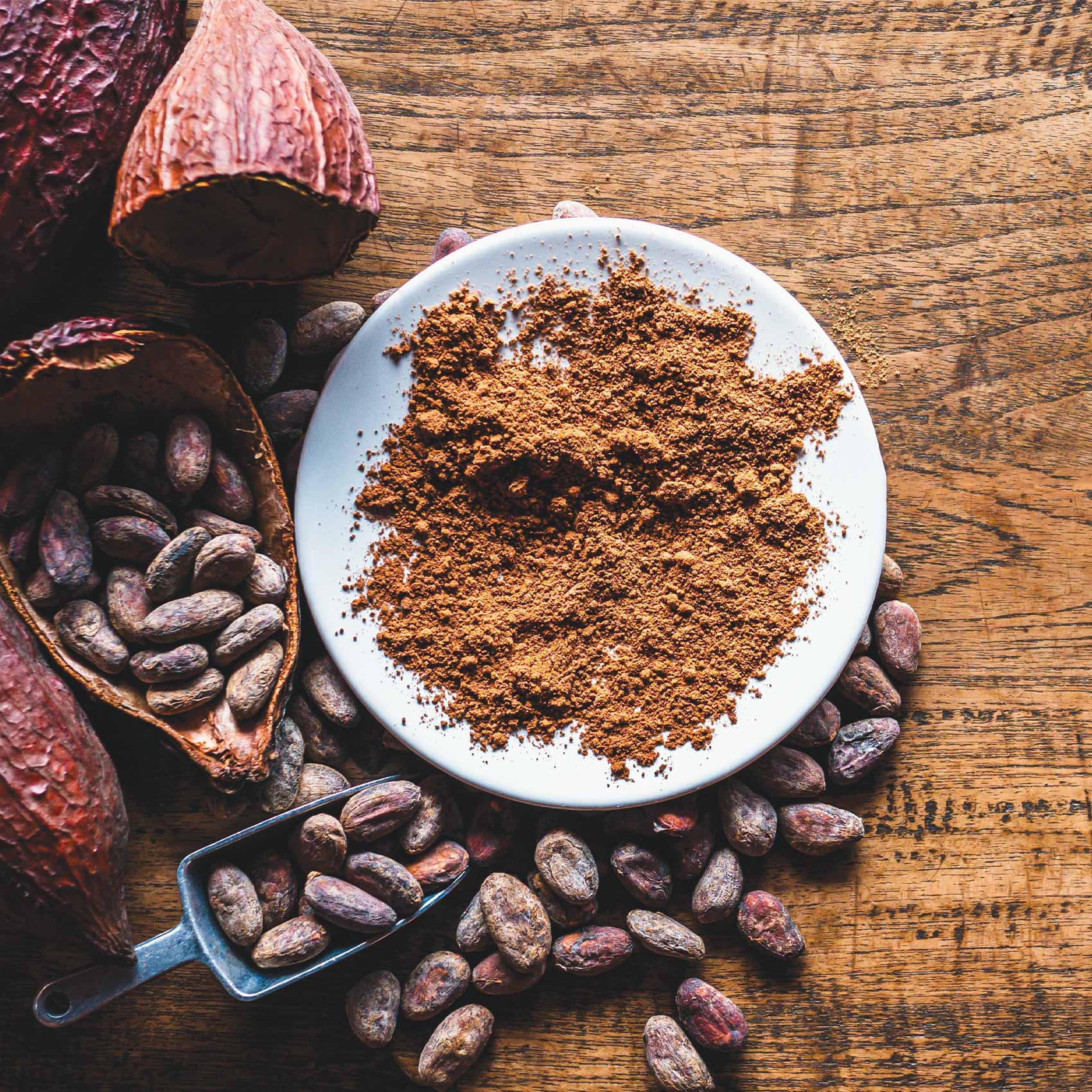
In modern food manufacturing, cocoa is no longer just an ingredient—it is a controlled engineering material that shapes flavor, color, aroma, and even production efficiency. Among its many industrial forms, alkalized cocoa powder holds a special position, especially for factories producing bakery goods, beverages, confectionery coatings, and instant mixes.
For procurement teams in Kuwait, sourcing stability, color consistency, and flavor neutrality is not optional—it is a production necessity. This is exactly where the discussion around an Alkalized Cocoa Powder Supplier in Kuwait | Latamarko Spain becomes more than a purchasing topic. It becomes a decision tied directly to line efficiency, consumer consistency, and brand identity in highly competitive FMCG markets.
As demand for chocolate-flavored products grows across the Gulf region, manufacturers are under pressure to ensure that every batch behaves identically under heat, humidity, and high-speed processing conditions. In this environment, suppliers like MT Royal play a critical role by connecting manufacturers with reliable global brands while maintaining flexibility in pricing and sourcing strategies.
Among premium European origins, Spanish engineering excellence—particularly from Latamarko—has become increasingly recognized for its stability in industrial cocoa processing and its consistent alkalization control.
Understanding Alkalized Cocoa Powder in Industrial Production
Alkalized cocoa powder, often referred to as “Dutch-processed cocoa,” is cocoa that has been treated with alkaline solutions to modify its pH level. This process changes not only the color but also the flavor profile and solubility.
For manufacturing environments, these changes are not cosmetic—they are functional.
Key transformations include:
- Darker, more uniform color suitable for bakery applications
- Reduced acidity for smoother taste profiles
- Improved dispersibility in liquid systems
- Enhanced compatibility with dairy and sugar systems
In industrial beverage plants, for example, alkalized cocoa ensures that powder dissolves evenly without clumping, even in high-speed mixing systems. That alone can significantly reduce downtime and cleaning cycles.
From a technical standpoint, cocoa alkalization also affects polyphenol content, which influences antioxidant properties and flavor intensity—factors that product developers carefully balance depending on target market preferences.
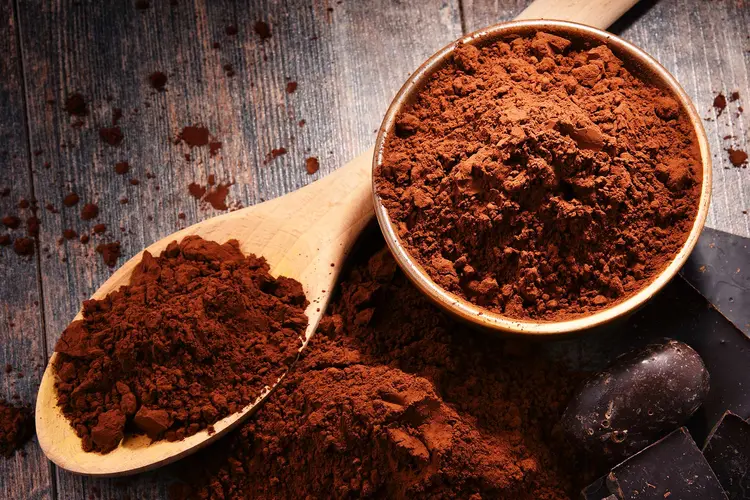
Why Kuwait’s Manufacturing Sector Depends on Stable Cocoa Inputs
Kuwait’s food production sector has expanded rapidly in recent years, especially in packaged bakery products, ready-to-drink beverages, and instant dessert mixes. However, unlike larger agricultural economies, Kuwait relies entirely on imported raw materials.
This creates a unique set of procurement realities:
- Dependence on maritime supply chains through regional hubs
- Sensitivity to Gulf climate conditions during storage
- Need for consistent batch uniformity due to high-speed production lines
- Pressure to maintain cost efficiency under competitive retail pricing
In such an environment, even minor variations in cocoa powder alkalization levels can create visible inconsistencies in product color or taste.
We’ve seen production facilities in the region adjust entire formulation ratios simply to compensate for supplier inconsistency—something that quickly erodes profitability over time.
Latamarko Spain and the Standardization of Cocoa Quality
European cocoa processors have long focused on precision-controlled alkalization techniques, and Spanish producers in particular have developed a strong reputation for balancing color stability with flavor neutrality.
Latamarko represents this engineering-first approach, where consistency is prioritized over variability.
This matters significantly for industrial buyers because alkalized cocoa powder is not just an ingredient—it is a functional component in formulation stability.
Spanish manufacturers like Latamarko have set benchmarks in:
- Controlled pH adjustment for predictable baking performance
- Fine particle engineering for improved solubility
- Stable color grading across production batches
For Kuwaiti manufacturers, these characteristics translate into fewer reformulation cycles and smoother production scaling when demand spikes.
LSI Context: Where Alkalized Cocoa Powder Actually Impacts Production
To understand the real industrial importance, it helps to break down where alkalized cocoa powder interacts with production systems:
- Bakery formulation chemistry – affecting dough color and Maillard reactions
- Instant beverage solubility systems – ensuring rapid dispersion in water or milk
- Confectionery coating stability – influencing surface texture and appearance
- Dry mix blending uniformity – preventing segregation in high-speed mixers
- Flavor masking in fortified foods – balancing bitterness in protein blends
Each of these areas requires precise ingredient behavior. If alkalization levels vary, entire production lines may need recalibration.
MT Royal’s Role in Industrial Cocoa Procurement Networks
At MT Royal, we supply manufacturers with a comprehensive range of brands, ensuring competitive pricing without compromising on quality. Over time, we’ve seen how cocoa powder variability can quietly become one of the most expensive inefficiencies in a production plant.
Unlike visible machinery breakdowns, ingredient inconsistency creates hidden losses:
- Increased rework rates
- Batch rejection in quality control
- Line stoppages for recalibration
- Shelf-life inconsistency in finished goods
Our approach is to help manufacturers build sourcing strategies that reduce these invisible costs while maintaining flexibility across multiple suppliers.
In many cases, procurement teams initially focus on price per kilogram. But after a few production cycles, they realize that stability—not unit price—is what truly protects margins.
Common Procurement Mistakes in Alkalized Cocoa Sourcing
Despite its importance, alkalized cocoa powder is often underestimated during supplier selection. Some of the most common mistakes include:
1. Treating all alkalized cocoa as identical
Not all cocoa powders have the same pH level, fat content, or color intensity, even if labeled similarly.
2. Ignoring application-specific requirements
A cocoa ideal for bakery may perform poorly in beverage systems due to solubility differences.
3. Overlooking humidity sensitivity in Kuwait
Improperly packaged cocoa powder can absorb moisture during transit or storage, affecting flow properties.
4. Prioritizing cost over consistency
Lower-cost batches often introduce variability that increases downstream production costs.
5. Weak supplier qualification processes
Without technical validation, factories risk inconsistent alkalization profiles across shipments.
These mistakes are rarely visible at the procurement desk—but they become very real on the production floor.
Industrial Benefits of Premium Alkalized Cocoa Powder
When manufacturers switch to high-consistency cocoa sources, improvements tend to appear quickly:
- More uniform product color across batches
- Improved solubility in automated mixing systems
- Reduced need for formulation adjustments
- Better shelf stability in packaged goods
- Lower rejection rates during quality control checks
Premium European suppliers, particularly those with Spanish engineering expertise such as Latamarko, achieve this consistency through tightly controlled alkalization environments and advanced particle processing systems.
Kuwait Supply Chain Considerations for Cocoa Ingredients
Kuwait’s geographic and climatic conditions introduce unique challenges for ingredient logistics:
- High ambient temperatures affecting storage stability
- Dependence on Jebel Ali and regional distribution hubs
- Seasonal demand fluctuations during Ramadan and holidays
- Limited local warehousing options for bulk raw materials
Because of this, procurement strategies often include safety stock planning and multi-supplier diversification.
We’ve seen manufacturers adopt rolling inventory models, where shipments are staggered to avoid exposure to single-point supply delays. This approach reduces risk but requires highly consistent product quality across suppliers.
Technical Comparison: Alkalized Cocoa Powder Performance
| Parameter | Standard Industrial Grade | Premium European Grade (Latamarko-style) |
|---|---|---|
| pH stability | Moderate variation | Highly controlled |
| Color consistency | Batch-dependent | Uniform across production |
| Solubility | Acceptable | Optimized for instant dispersion |
| Particle fineness | Medium grind | Ultra-fine controlled milling |
| Flavor neutrality | Variable bitterness | Balanced and stable profile |
These differences may appear subtle on paper, but in industrial production they can determine whether a product meets export-grade consistency standards.
Step-by-Step Guide for Procurement Managers
Choosing the right alkalized cocoa powder supplier requires a structured approach:
- Define product application clearly
Bakery, beverage, or confectionery use will dictate cocoa specifications. - Request technical specifications (TDS)
Focus on pH level, fat content, and particle size distribution. - Conduct pilot production trials
Test under real plant conditions, not just lab samples. - Evaluate storage behavior in local climate
Kuwait’s humidity and heat can significantly affect performance. - Benchmark multiple suppliers
Include both cost-focused and premium European options. - Monitor batch consistency over time
Long-term stability matters more than initial performance.

Frequently Asked Questions
What is alkalized cocoa powder used for?
It is used in bakery, beverage, and confectionery manufacturing to improve color, solubility, and flavor stability.
Why is alkalized cocoa important in Kuwait’s food industry?
Because Kuwait relies on imported ingredients, consistency and stability are essential for uninterrupted production.
How does Latamarko compare to other cocoa suppliers?
Latamarko is known for controlled alkalization, consistent color profiles, and strong performance in industrial environments.
What role does MT Royal play in sourcing?
MT Royal connects manufacturers with multiple global brands, ensuring flexibility, competitive pricing, and reliable supply chains.
A Closing Reflection for Production Teams
In industrial food manufacturing, the most important variables are not always the most visible ones. Machines are monitored, operators are trained, and processes are documented—but ingredients quietly determine whether everything works as expected.
Alkalized cocoa powder sits at that intersection of chemistry and production reality. When it is consistent, production flows smoothly. When it is not, everything downstream feels the impact.
So the real question for factory managers in Kuwait is not simply which supplier offers the best price—but which supplier allows your production line to behave like a system you can trust, day after day, batch after batch.
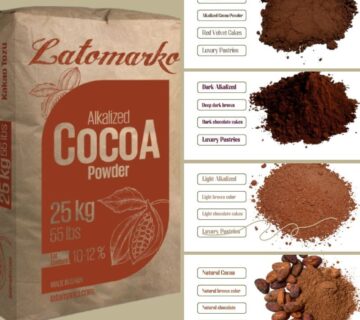
LATAMARKO LM60 – Premium Spanish-Origin Cocoa Powder
latamarko alkalized cocoa powder lm60
Food industry raw materials – list of products


No comment