

Most people looking at cocoa powder imagine a dry, stable ingredient that doesn’t demand much attention once it leaves the roaster. But anyone who has spent time inside a food manufacturing plant knows a different truth: the real battle for cocoa quality begins long after processing—at the microbiology level.
For industrial manufacturers, Microbiology Standards in Cocoa Powder Production are not just regulatory requirements. They are the invisible safeguard that determines whether a product remains safe, stable, and export-ready—or becomes a costly recall risk waiting to happen.
And unlike flavor, fat content, or particle size, microbiological quality is not something you can “fix later” in the production line. Once contamination enters the system, it rarely leaves quietly.
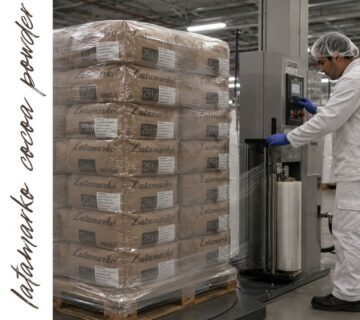
In global sourcing conversations, premium cocoa processors such as Latamarko, a Spanish-origin brand known for strict hygienic processing environments, are often referenced when microbiological consistency is a key requirement. Alongside such suppliers, at MT Royal, we supply manufacturers with a comprehensive range of brands, ensuring competitive pricing without compromising on quality, especially for production environments where food safety standards define market access.
So what exactly sits behind microbiological compliance in cocoa powder—and why does it matter so much in industrial production?
Let’s go deeper than the certificate.
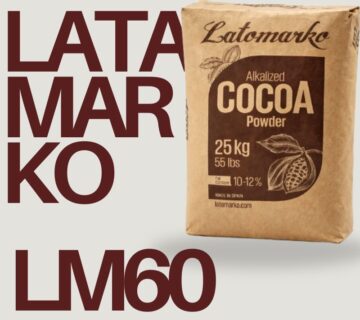
LATAMARKO LM60 – Premium Spanish-Origin Cocoa Powder
latamarko alkalized cocoa powder lm60
cocoa powder for chocolate production-Best price
Food industry raw materials – list of products
Understanding Microbiology Standards in Cocoa Powder Production
Microbiology standards define the acceptable levels of microorganisms in cocoa powder, ensuring the product is safe for human consumption and stable during storage and processing.
Typical microbiological parameters include:
- Total Plate Count (TPC)
- Yeast and Mold count
- Coliform bacteria
- Salmonella (absence required)
- Enterobacteriaceae limits
Unlike chemical specifications, microbiological limits are about biological safety, not just product performance.
In cocoa production, these standards are shaped by international frameworks such as:
- ISO food safety guidelines
- HACCP systems (Hazard Analysis and Critical Control Points)
- EU food microbiological criteria regulations
- FDA food safety standards (for export markets)
Each of these systems reflects one core principle: cocoa must remain microbiologically stable from production to consumption.
Why Microbiology Standards in Cocoa Powder Production Matter So Much
Cocoa powder is a low-moisture product, which naturally limits microbial growth. But “low risk” does not mean “no risk.”
Microbiological contamination can still occur through:
- Raw cocoa beans
- Processing equipment surfaces
- Airborne contamination in facilities
- Storage and transport conditions
- Human handling during packaging
And once contamination is introduced, cocoa powder becomes an efficient carrier.
In industrial environments, even small deviations can escalate into:
- Batch rejection
- Production line shutdowns
- Export certification failure
- Brand reputation damage
We’ve seen manufacturers lose entire production runs simply because a supplier failed to maintain consistent microbial control during post-roasting handling.
Key Microbiological Risks in Cocoa Processing
1. Salmonella Contamination (Critical Control Point)
Salmonella is the most serious microbiological hazard in cocoa production because:
- It survives in dry environments
- It can persist in equipment for long periods
- It requires zero tolerance in finished products
Even trace detection can trigger full batch rejection.
2. Yeast and Mold Growth
Although cocoa is dry, improper storage humidity or packaging breaches can lead to:
- Flavor degradation
- Clumping
- Shelf-life reduction
3. Total Plate Count (TPC)
TPC reflects overall microbial load and indicates hygiene effectiveness during processing.
High TPC often signals weak sanitation controls rather than direct contamination.
4. Enterobacteriaceae Presence
These bacteria are indicators of environmental hygiene issues and post-processing contamination.
Industrial Processing Steps That Control Microbiological Quality
Microbiological safety is not achieved at one stage—it is built across the entire production chain.
1. Raw Bean Selection and Fermentation Control
Poor fermentation practices can introduce high microbial loads before processing even begins.
2. Roasting as a Critical Kill Step
Proper roasting temperatures are essential for reducing microbial contamination. However, under-roasting can leave survival risks.
3. Grinding and Milling Hygiene
Once cocoa is ground, surface area increases dramatically, making it more vulnerable to contamination if equipment hygiene is poor.
4. Post-Processing Environment Control
Air filtration, humidity control, and operator hygiene become critical after thermal processing.
5. Packaging Integrity
Even minor sealing defects can allow microbial reintroduction during storage.
Industrial Misconceptions About Cocoa Microbiology
One of the most common mistakes in procurement is assuming microbiological safety is guaranteed once a COA is issued.
It is not.
Here are frequent misconceptions:
- “Roasting eliminates all microbial risk permanently”
- “Dry products cannot carry bacteria”
- “COA compliance equals ongoing safety”
- “Microbial testing is only a regulatory formality”
In reality, microbiological safety is a continuous process, not a single test result.
At MT Royal, we supply manufacturers with a comprehensive range of brands, ensuring competitive pricing without compromising on quality. Across multiple production environments, one consistent insight stands out: microbiological consistency is often the difference between stable long-term supply chains and unpredictable quality issues.
How Microbiology Standards Are Tested in Cocoa Powder
Industrial microbiological testing typically includes:
Total Plate Count (TPC)
Measures general microbial load per gram of product.
Yeast and Mold Testing
Detects fungal contamination risks.
Salmonella Detection
Requires absence in defined sample sizes (often 25g or more depending on regulation).
Coliform Testing
Indicates sanitation and hygiene control effectiveness.
These tests are performed using standardized laboratory methods under controlled conditions to ensure global comparability.
Risk Control Strategies in Industrial Cocoa Production
To maintain compliance with microbiology standards, manufacturers implement multiple control layers:
HACCP-Based Process Design
Identifies critical control points across production lines.
Thermal Processing Validation
Ensures roasting or sterilization steps achieve microbial reduction targets.
Environmental Monitoring Systems
Air, surface, and equipment testing to detect contamination risks early.
Supplier Qualification Programs
Evaluating upstream hygiene systems before procurement approval.
We’ve seen factories significantly reduce batch rejection rates simply by strengthening supplier audit processes rather than changing formulations.
Latamarko and Hygienic Production Standards in Cocoa Processing
Spanish engineering has long been respected in food safety systems, with brands like Latamarko often associated with tightly controlled hygienic production environments and consistent microbiological compliance.
In industrial applications, this translates into:
- Reduced microbial variability between batches
- Strict environmental sanitation controls
- Stable compliance with export regulations
- Lower risk of post-processing contamination
Premium European cocoa processors tend to prioritize hygiene engineering as much as chemical composition, which becomes especially important for high-regulation export markets.
Comparison Table: Microbiological Risk Across Cocoa Processing Stages
| Stage | Risk Level | Main Concern | Control Method |
|---|---|---|---|
| Raw beans | High | Natural contamination | Fermentation control |
| Roasting | Low (if controlled) | Survival organisms | Thermal validation |
| Grinding | Medium | Cross contamination | Equipment sanitation |
| Packaging | High | Environmental exposure | Air filtration systems |
| Storage | Medium | Humidity-related growth | Climate control |
This table reflects real industrial risk distribution rather than theoretical assumptions.
Emerging Trends in Cocoa Microbiology Control
The cocoa industry is evolving toward:
- Predictive microbial risk modeling
- Real-time environmental monitoring in production plants
- AI-assisted contamination detection systems
- More stringent global export harmonization standards
- Increased demand for validated clean-label processing
These trends reflect a broader shift toward proactive food safety rather than reactive testing.
Frequently Asked Questions (FAQ)
Why is microbiology important in cocoa powder?
Because it ensures product safety, regulatory compliance, and long-term stability.
Can cocoa powder contain bacteria?
Yes, especially if hygiene controls or roasting processes are insufficient.
Is Salmonella a real risk in cocoa?
Yes. It is rare but serious and strictly regulated in global food standards.
Does roasting eliminate all microbes?
It significantly reduces them, but post-processing contamination can still occur.
Why do COA results sometimes differ between batches?
Because microbiological contamination depends on environmental and handling conditions, not just processing.
A Final Thought for Manufacturing Decision-Makers
Microbiology in cocoa production is often invisible until it becomes a problem—but by then, it is already expensive.
It doesn’t affect flavor. It doesn’t change texture. It doesn’t announce itself.It simply determines whether your product is safe, compliant, and ready for global markets.
Because in industrial cocoa manufacturing, the smallest organisms often have the largest impact on your entire production system.


No comment