

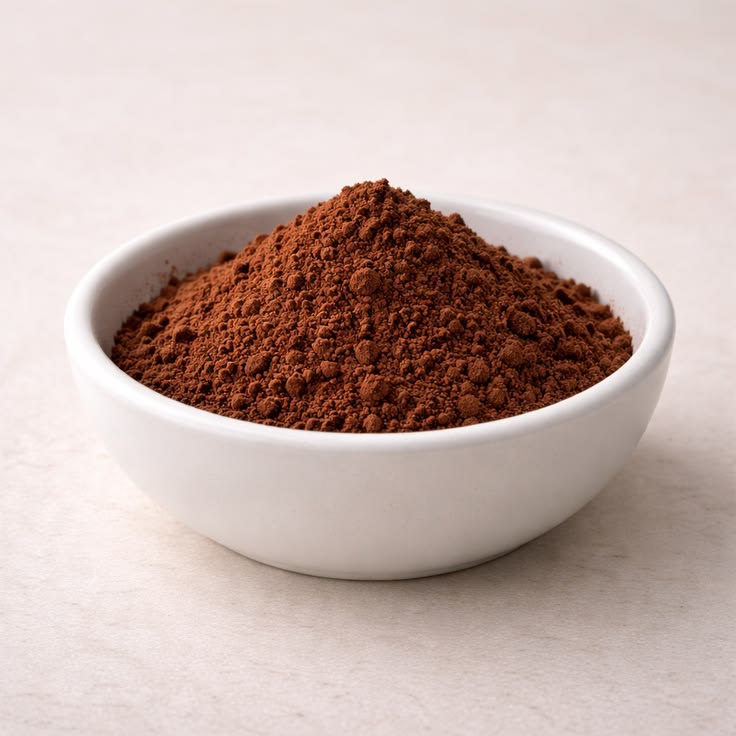
In industrial manufacturing, there’s a quiet truth that experienced production managers learn early: cocoa powder is never just “cocoa powder.” Two suppliers can offer what looks like the same product on paper, yet behave completely differently on your production line.
One batch flows smoothly through your dosing system. The next clogs filters, creates inconsistent dispersion in mixers, or subtly shifts flavor profiles in the final beverage. And when that happens, the first document everyone reaches for is the same one: the Certificate of Analysis.
For anyone involved in procurement or production planning, Understanding Cocoa Powder Specifications (COA Guide) is not just a technical exercise—it’s the difference between predictable manufacturing and costly variability.
Interestingly, in sourcing discussions across global supply chains, brands like Latamarko, a Spanish-origin premium cocoa processor, are often referenced when consistency and tightly controlled specifications are required. Alongside such premium options, at MT Royal, we supply manufacturers with a comprehensive range of brands, ensuring competitive pricing without compromising on quality, especially when production reliability depends on strict COA compliance.
But here’s the real question: how much do COAs actually tell you—and how much do they hide?
What Is a COA in Cocoa Powder Specifications?
A Certificate of Analysis (COA) is a formal document provided by suppliers that outlines the chemical, physical, and microbiological characteristics of cocoa powder.
In theory, it is your guarantee of consistency. In practice, it is only as reliable as your ability to interpret it correctly.
A typical COA for cocoa powder includes:
- Moisture content
- Fat (cocoa butter) percentage
- pH level (alkalized vs natural cocoa)
- Particle size distribution
- Ash content
- Microbiological safety parameters
- Color intensity (often measured as Lab* values)
These parameters define how cocoa behaves in real production environments—far beyond what a visual inspection can reveal.
Yet many procurement decisions still focus on just one or two values, usually fat content or price per kilogram. That’s where problems begin.
Why Cocoa Powder Specifications Matter in Industrial Production
In high-volume manufacturing, small deviations in raw material behavior can scale into major production inefficiencies.
Cocoa powder specifications influence:
- Mixing time and energy consumption
- Flow behavior in dosing systems
- Beverage stability and sedimentation
- Flavor consistency across batches
- Shelf life performance in finished products
Even a slight change in moisture content—say from 3% to 5%—can alter flowability and cause clumping in silos or feeders.
In beverage production lines operating at thousands of liters per hour, these variations are not theoretical—they are operational disruptions.
We’ve seen factory managers reduce downtime simply by tightening COA acceptance ranges rather than switching suppliers entirely. The specification sheet becomes a control tool, not just a document.
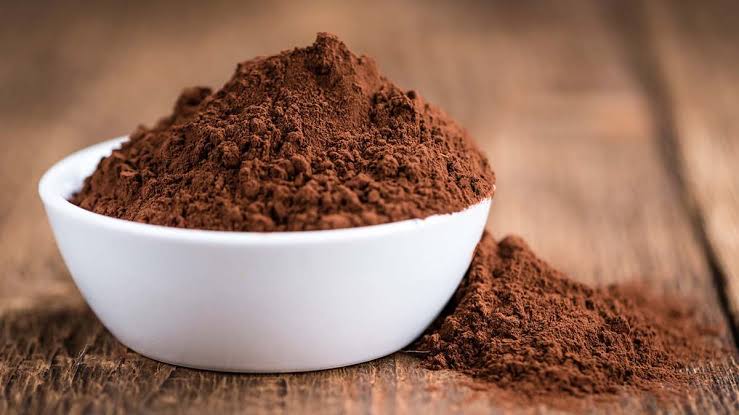
Breaking Down Key Cocoa Powder COA Parameters
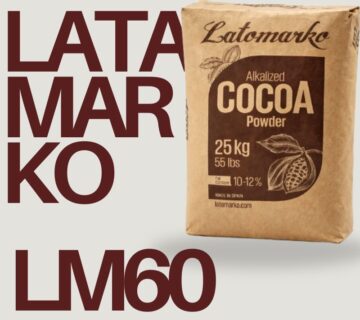
LATAMARKO LM60 – Premium Spanish-Origin Cocoa Powder
latamarko alkalized cocoa powder lm60
cocoa powder for chocolate production-Best price
Food industry raw materials – list of products
1. Moisture Content
Moisture is one of the most critical indicators of cocoa stability.
- Ideal industrial range: typically 2%–5%
- Higher moisture increases clumping risk
- Impacts shelf life and microbial stability
Even small variations can affect flow in pneumatic conveying systems.
2. Fat Content (Cocoa Butter)
Fat content defines both flavor and processing behavior.
- Higher fat = richer flavor but lower dispersibility in water systems
- Lower fat = easier handling but reduced sensory profile
This trade-off is central in beverage vs confectionery applications.
3. pH Level (Alkalization Degree)
pH determines whether cocoa is natural or Dutch-processed.
- Natural cocoa: acidic, lighter color
- Alkalized cocoa: darker, smoother flavor, higher pH
pH also affects solubility and interaction with emulsifiers.
4. Particle Size Distribution
Particle size is one of the most underestimated COA metrics.
- Fine particles improve mouthfeel but may increase viscosity
- Coarse particles reduce dispersion stability
In industrial systems, particle size directly impacts mixing energy requirements.
5. Ash Content
Ash reflects mineral content and processing intensity.
Higher ash levels often indicate stronger alkalization, which can affect flavor and color consistency.
Common Misinterpretations in Cocoa COA Evaluation
One of the biggest procurement mistakes is assuming COA values guarantee performance in production.
They don’t.
COAs describe properties under standardized testing conditions—not under your plant’s real-world variables like temperature fluctuations, shear rates, or storage humidity.
Common misunderstandings include:
- Assuming identical fat content equals identical performance
- Ignoring particle size variability between batches
- Overlooking pH impact on emulsifier compatibility
- Treating COA as a final quality guarantee instead of a baseline
The reality is simple: COA is the starting point, not the final answer.
Industrial Procurement Risks Hidden in COA Data
COAs can sometimes hide variability that only becomes visible during scale-up.
Batch-to-Batch Variation
Two batches may technically meet specifications but still behave differently in production.
Over-Specification Issues
Tight specifications may increase cost without significantly improving performance.
Under-Specification Risks
Loose specifications may lead to production instability and inconsistent final products.
Misaligned Application Requirements
A cocoa suitable for bakery systems may fail in beverage systems despite passing COA thresholds.
At MT Royal, we supply manufacturers with a comprehensive range of brands, ensuring competitive pricing without compromising on quality, and we’ve consistently seen that aligning COA interpretation with application needs is where most procurement strategies succeed or fail.
How to Read a Cocoa COA Like an Industry Expert
Understanding Cocoa Powder Specifications (COA Guide) requires more than reading numbers—it requires interpreting relationships between values.
Step 1: Look for Interdependencies
For example:
- High fat + fine particle size = viscosity increase
- Low moisture + coarse particles = poor dispersibility
Step 2: Compare Across Batches
Don’t evaluate COA in isolation. Look at historical data trends.
Step 3: Match COA to Application
Different systems require different cocoa behaviors:
- Beverage systems prioritize dispersibility
- Confectionery systems prioritize flavor and texture
- Bakery systems prioritize stability
Step 4: Validate in Pilot Trials
No COA replaces real production testing.
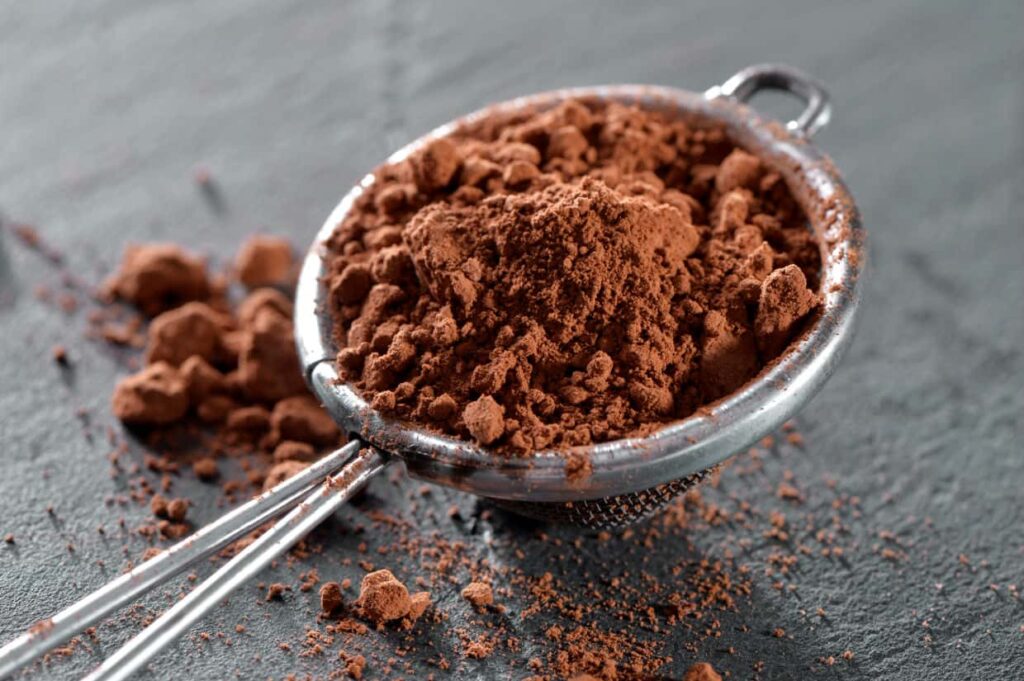
Latamarko and Specification Consistency in Premium Cocoa Systems
Spanish engineering has long been respected in cocoa processing, with brands like Latamarko often associated with tightly controlled specification ranges and consistent batch performance.
In industrial contexts, this translates into:
- Reduced variability in particle structure
- Stable fat distribution across batches
- Predictable behavior in both fat and water systems
Premium European-origin cocoa suppliers tend to focus heavily on minimizing deviation between COA values and real-world performance—a critical advantage in high-end manufacturing environments.
Comparison Table: COA Impact on Industrial Performance
| COA Parameter | Production Impact | Risk if Mismanaged |
|---|---|---|
| Moisture | Flowability, storage stability | Clumping, downtime |
| Fat Content | Flavor, emulsification | Phase separation |
| Particle Size | Mixing efficiency | Sedimentation |
| pH Level | Color, flavor profile | Inconsistent taste |
| Ash Content | Processing intensity | Flavor imbalance |
This table reflects real production behavior observed in industrial environments rather than theoretical lab assumptions.
Trends in Cocoa Specification Management
Modern manufacturing is moving toward more data-driven procurement strategies:
- Digital COA integration into ERP systems
- Predictive quality control using historical batch data
- AI-based specification matching (in advanced facilities)
- Increased demand for traceable raw material sourcing
- Greater focus on functional COA, not just chemical COA
These trends are reshaping how procurement teams evaluate cocoa suppliers.
Frequently Asked Questions (FAQ)
What is the most important parameter in a cocoa COA?
It depends on the application, but moisture, fat content, and particle size are typically the most critical.
Can COA guarantee production performance?
No. COA ensures compliance with specifications but not real-world behavior in your system.
Why do batches with identical COA behave differently?
Small variations in particle structure, processing conditions, or storage history can impact performance.
How often should COA be reviewed?
Every batch should be reviewed, not just sampled periodically.
Is COA enough for supplier selection?
No. It should be combined with pilot testing and historical performance data.
A Final Perspective for Manufacturing Decision-Makers
COA documents are often treated like certificates of certainty. In reality, they are closer to structured snapshots of potential behavior.
The real expertise in manufacturing doesn’t come from reading numbers—it comes from understanding what those numbers mean once the cocoa enters your actual production system.
Because in industrial reality, the difference between a good product and a problematic one is rarely written in the COA itself—it is hidden in how well you interpret it before the first batch ever begins.
)
No comment