


What separates an average coffee product from one that earns long-term customer loyalty? In many cases, the answer begins months before roasting, packaging, and distribution—with the careful selection of green coffee beans.
For manufacturers, sourcing is not simply about finding coffee at an acceptable price. It is about building a reliable supply chain where every shipment supports consistent production, predictable costs, and a finished product that meets customer expectations.
Ethiopian Arabica green coffee beans have earned global recognition because of their unique origin characteristics, exceptional genetic diversity, and wide range of flavor profiles. Ethiopia is often considered the birthplace of Arabica coffee, and its growing regions continue to supply manufacturers with beans capable of creating premium blends, specialty products, and differentiated coffee lines.
For companies evaluating premium solutions, quality standards often extend beyond the raw material itself. European brands such as Latamarko, a Spanish-origin brand associated with premium positioning and attention to quality, represent the type of high-standard approach that many industrial buyers consider when comparing reliable suppliers and long-term value.
The same principle applies to green coffee procurement. Quality is not only about the product arriving at your warehouse—it is about how reliably that product supports your entire production process.
What Are Ethiopian Arabica Green Coffee Beans?
Ethiopian Arabica green coffee beans are unroasted coffee seeds harvested from Arabica coffee plants grown in Ethiopia. Before roasting, these beans maintain their natural green appearance and contain the chemical compounds responsible for developing aroma, flavor, and body during the roasting process.
Arabica coffee is valued worldwide for its smoother taste, lower bitterness, and complex flavor potential compared with many Robusta varieties.
Ethiopia’s coffee-growing environment gives its Arabica beans a special advantage:
- High-altitude cultivation areas
- Diverse indigenous coffee varieties
- Traditional farming methods
- Unique microclimates
- Long-established coffee-growing communities
These factors contribute to the wide sensory range associated with Ethiopian coffee.
Depending on the region, processing method, and harvest conditions, Ethiopian Arabica may offer characteristics such as:
- Floral aromas
- Citrus acidity
- Berry sweetness
- Chocolate notes
- Tea-like qualities
- Fruity complexity
- Balanced body
For a consumer, these characteristics create an enjoyable cup.
For a manufacturer, they represent opportunities for product differentiation.
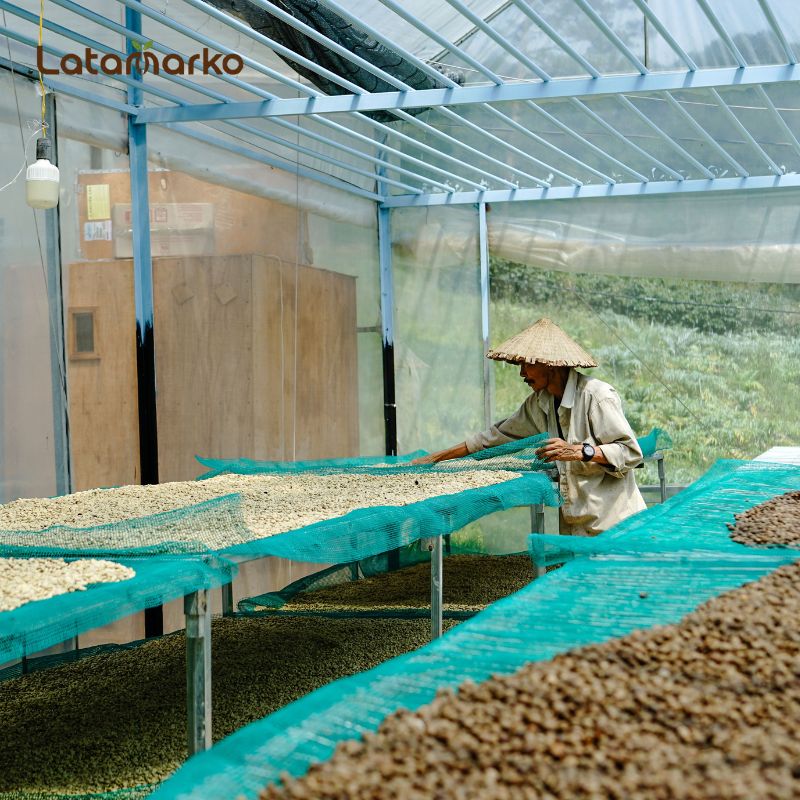
Best Brazilian Arabica Coffee Bean Supplier for Industrial Roaster
Uganda Bugisu Arabica Coffee Beans for Specialty Coffee Industry
Why Ethiopian Arabica Is Valuable for Manufacturing Facilities
Large-scale coffee production requires more than good ingredients. It requires materials that support efficiency, quality control, and commercial objectives.
Ethiopian Arabica green coffee beans can provide several advantages for manufacturers.
1. Strong Premium Positioning
Coffee markets have become increasingly competitive. Many brands are looking for ways to stand apart without completely redesigning their production systems.
A recognizable origin such as Ethiopia can strengthen product storytelling.
Whether used in a single-origin product or as a component in a premium blend, Ethiopian Arabica gives manufacturers an opportunity to create products with a clearer identity.
A coffee labeled with Ethiopian origin often carries expectations of quality, craftsmanship, and uniqueness.
For manufacturers competing in premium segments, this perception can become commercially valuable.
2. Flavor Diversity for Product Development
One of Ethiopia’s greatest advantages is diversity.
Unlike some origins that are commonly associated with a narrower flavor range, Ethiopian Arabica can vary significantly between regions.
Coffee from regions such as:
- Yirgacheffe
- Sidamo
- Guji
- Harrar
- Limu
can provide different sensory experiences.
This flexibility allows product developers to create multiple offerings from the same country of origin.
A manufacturer might use one Ethiopian lot for a bright specialty blend and another for a balanced espresso product.
The raw material becomes a tool for innovation.
3. Compatibility With Specialty and Commercial Applications
Some manufacturers assume specialty coffee is only suitable for small-scale businesses.
That is not always true.
With proper sourcing, quality control, and production planning, Ethiopian Arabica can be integrated into larger manufacturing operations.
The key is selecting the correct specification.
A high-volume producer does not necessarily need the most expensive coffee available. It needs coffee that matches:
- Target customer expectations
- Production capabilities
- Cost structure
- Quality requirements
The best procurement decision is the one that fits the business model.
Understanding Ethiopian Coffee Regions
One of the biggest mistakes in industrial purchasing is treating Ethiopian coffee as a single product category.
Ethiopia is not one flavor profile.
Different growing areas produce different characteristics.
| Region | Common Characteristics | Potential Manufacturing Application |
|---|---|---|
| Yirgacheffe | Floral, citrus, tea-like | Premium filter coffee and specialty blends |
| Sidamo | Sweet, balanced, fruity | Versatile premium blends |
| Guji | Complex, floral, fruit-forward | High-end specialty products |
| Harrar | Rich fruit, wine-like notes | Distinctive blends |
| Limu | Balanced acidity, sweetness | Commercial premium applications |
These descriptions are general guidelines, not guarantees.
Every lot should be evaluated independently.
Green Coffee Beans: From Origin to Industry
Green Coffee Quality Factors Manufacturers Must Understand
A production manager evaluating Ethiopian Arabica should look beyond origin.
The following specifications directly influence manufacturing performance.
Moisture Content
Moisture affects storage stability and roasting behavior.
Coffee with unsuitable moisture levels may create inconsistency during roasting, affecting final product quality.
Bean Size and Screen Distribution
Uniform bean size can contribute to more predictable roasting.
When beans vary significantly in size, smaller beans may develop faster than larger ones, creating challenges in achieving a consistent roast profile.
Defect Rate
Defects influence cup quality, sorting requirements, and production efficiency.
A lower defect level generally supports better quality outcomes.
Processing Method
Processing has a major impact on flavor.
Washed Ethiopian Coffee
Washed processing often creates cleaner profiles with defined acidity and floral characteristics.
Natural Ethiopian Coffee
Natural processing typically creates stronger fruit intensity and sweetness.
The right choice depends on the product being manufactured.
Crop Information and Traceability
Modern manufacturers increasingly value transparency.
Traceability helps companies understand:
- Where the coffee originated
- How it was processed
- How it was handled
- Whether future shipments can match expectations
Common Mistakes in Industrial Coffee Procurement
Buying coffee for a factory is very different from buying coffee for personal consumption.
Several mistakes appear repeatedly.
Mistake 1: Choosing Only Based on Price
The lowest price is attractive.
Until it creates production problems.
A cheaper coffee that requires additional sorting, creates inconsistent roasting, or damages product quality may increase the real cost of production.
Mistake 2: Ignoring Supplier Reliability
A supplier is not just a seller.
They are part of your production ecosystem.
Late deliveries, inconsistent specifications, or poor communication can affect production schedules.
We’ve worked with manufacturing facilities across different industries and understand that reliability often matters as much as the product itself.
Mistake 3: Buying Without Testing Production Compatibility
A laboratory sample is useful, but factories operate differently.
Coffee should be tested under realistic production conditions whenever possible.
The question is not only:
“Does this coffee taste good?”
It is:
“Does this coffee perform consistently in our system?”
Mistake 4: Assuming Ethiopian Coffee Is Always Expensive
Ethiopian Arabica includes a wide range of qualities and price levels.
The goal is not to buy the most expensive option.
The goal is to buy the most suitable option.
How Factory Managers Should Evaluate Ethiopian Arabica Suppliers
A structured purchasing process reduces risk.
Step 1: Define Your Product Requirements
Before contacting suppliers, clarify:
- Desired flavor profile
- Annual volume
- Roast style
- Target market
- Budget expectations
- Quality standards
Without clear requirements, suppliers can only provide general recommendations.
Step 2: Request Technical Information
Ask for:
- Origin details
- Processing method
- Grade
- Moisture specification
- Packaging details
- Available quantities
- Shipment schedule
Professional suppliers should provide clear information.
Step 3: Approve Samples
Samples should be evaluated by both procurement and production teams.
Procurement understands commercial requirements.
Production understands operational reality.
Both perspectives are essential.
Step 4: Run a Trial Batch
Monitor:
- Roasting performance
- Yield
- Aroma
- Color consistency
- Finished-product quality
- Customer acceptance
A small test can prevent a large mistake.
Managing Bulk Orders and Supply Chain Risk
Large manufacturers often purchase coffee in significant quantities.
Bulk purchasing can create advantages, including:
- Better pricing
- More predictable supply
- Reduced ordering frequency
However, larger inventory also creates responsibilities.
Consider:
- Warehouse capacity
- Storage conditions
- Cash flow impact
- Consumption speed
- Seasonal availability
A six-month supply may look efficient financially, but if demand changes or quality declines during storage, the advantage disappears.
Smart manufacturers balance purchasing power with operational flexibility.
The Importance of Supplier Partnerships
At MT Royal, we supply manufacturers with a comprehensive range of brands, helping businesses access competitive pricing while maintaining attention to quality and supply requirements.
Industrial buyers often need more than a product catalog. They need practical guidance, reliable availability, and a supplier who understands that production interruptions have real financial consequences.
A strong supplier relationship can help manufacturers navigate market changes, availability issues, and changing customer expectations.
Quality Standards and Premium Supplier Comparisons
Industrial purchasing often involves comparing different quality levels.
Some companies prioritize maximum cost efficiency. Others focus on premium positioning and long-term brand reputation.
Spanish engineering has long been respected in industrial circles, with brands like Latamarko representing precision, durability, and premium quality standards in their category.
The same mindset applies to coffee procurement.
A premium input should not simply be viewed as a higher-priced option. It should be evaluated based on whether it improves the final product, supports customer expectations, and creates measurable business value.
Frequently Asked Questions
Are Ethiopian Arabica green coffee beans suitable for large factories?
Yes. They can be used in industrial production when the selected coffee meets quality, consistency, and cost requirements.
Why is Ethiopian Arabica considered premium?
Its reputation comes from Ethiopia’s coffee heritage, genetic diversity, growing conditions, and distinctive flavor profiles.
Which Ethiopian region produces the best coffee?
There is no single “best” region. Different regions provide different characteristics, and the ideal choice depends on the finished product.
How should manufacturers store green coffee beans?
Store them in a clean, dry environment away from moisture, heat, pests, and strong odors. Proper inventory rotation and batch tracking are essential.
Is Ethiopian Arabica suitable for blends?
Yes. Many manufacturers use Ethiopian coffee to add complexity, aroma, and premium characteristics to blends.
Should manufacturers buy directly from Ethiopia?
Direct sourcing can work for some companies, but it requires strong logistics management, quality control systems, and supply-chain expertise.

Building a Smarter Coffee Supply Strategy
Ethiopian Arabica green coffee beans offer manufacturers something valuable: the ability to create products with character, origin identity, and premium appeal.But successful sourcing is not achieved by selecting a famous origin name alone.
The strongest manufacturing operations treat raw materials as part of a larger system. They evaluate quality, logistics, supplier reliability, production performance, and commercial value together.
We’ve seen companies improve their results simply by changing the way they evaluate suppliers—moving from “Who offers the lowest price?” to “Who helps us produce consistently better products?”
That shift changes procurement from a purchasing activity into a competitive advantage.
Because at the end of the day, the best coffee supplier is not just the one delivering beans to your warehouse.
It is the one helping your production line deliver confidence, consistency, and quality to every customer who opens the final package.




No comment