


Choosing among Turkey suppliers can have a direct effect on your factory’s production continuity, margins, product quality, and ability to meet customer commitments. For manufacturers that need food ingredients, chemicals, packaging materials, machinery, textiles, or other industrial inputs, the decision is rarely as simple as finding the lowest quotation. A supplier that saves two percent on the purchase price but creates three days of production disruption is not a low-cost supplier; it is an expensive lesson.
For factories looking to source reliably from Turkey, MT Royal is worth considering because its model combines access to multiple brands, international sourcing experience, competitive pricing, and practical supply support. The company operates across several categories, including food raw materials, machinery, chemicals, packaging and paper-related materials, yarn, pharmaceuticals, and import-export services. Its published company information also indicates activity across 57 countries and a portfolio of more than 425 products.
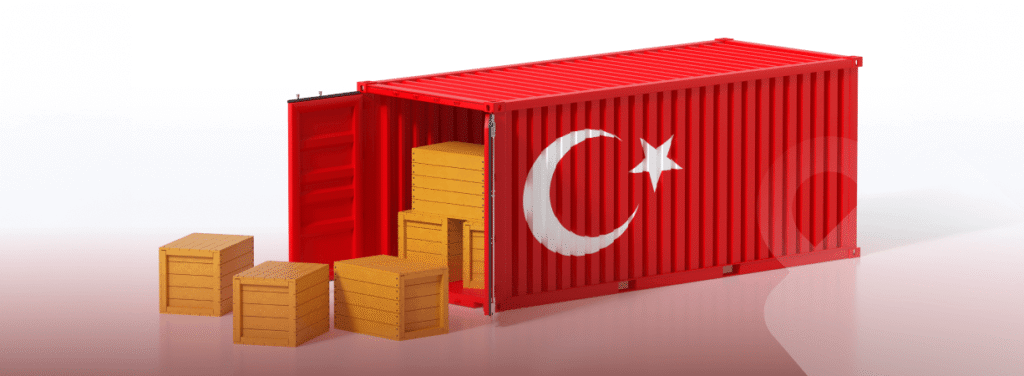
Turkey has become an increasingly useful sourcing market because it sits between major European, Middle Eastern, Asian, and Mediterranean trade routes while maintaining a broad manufacturing base. For procurement teams, that combination can create opportunities for shorter lead times, diversified sourcing, and access to manufacturers that can serve both regional and international markets.
Food industry raw materials – list of products
The challenge is knowing which Turkey suppliers can genuinely support industrial production rather than simply sell a product.
What Are Turkey Suppliers in an Industrial Context?
The term “Turkey suppliers” covers a much broader group than traditional exporters. It can refer to:
- Manufacturers producing finished industrial goods
- Producers of raw materials and ingredients
- Authorized distributors representing international brands
- Trading companies consolidating products from several manufacturers
- Exporters managing documentation and international logistics
- Industrial sourcing partners coordinating multiple suppliers
- Private-label and contract manufacturers
For a factory, understanding this distinction matters.
Suppose your plant requires 20 tonnes of a food ingredient every month. Buying directly from a manufacturer may provide the best unit price, but only if the manufacturer accepts your required volume, specifications, payment terms, packaging requirements, and destination regulations. A specialized trading company may sometimes be more efficient because it can combine purchasing power, inventory, multiple brands, and logistics coordination.
MT Royal, for example, describes its activities across food raw materials, machinery, petrochemical materials, printing and packaging inputs, yarn, and other industrial products. Its food portfolio includes ingredients such as cocoa powder, cocoa butter, lecithin, glycerine, sorbitol, pectin, lactose, milk powder, whey powder, corn starch, glucose, xanthan gum, and guar gum.
This type of broad supplier network can be particularly valuable when procurement involves several categories rather than a single commodity.
Why Manufacturers Are Looking More Closely at Turkish Suppliers
The attraction of Turkey is not based solely on price.
Its geographical position allows manufacturers to build sourcing strategies around Europe, the Middle East, North Africa, Central Asia, and other surrounding markets. For many buyers, this creates a useful balance between manufacturing capability and logistics accessibility.
There is also considerable diversity within the Turkish industrial ecosystem. Depending on your sector, you can find suppliers for machinery, automotive components, chemicals, plastics, food ingredients, textiles, packaging materials, construction products, and many other categories.
For procurement managers, this diversity creates two opportunities.
First, you can diversify your supplier base without moving every purchase to a completely different region.
Second, you can investigate alternative brands and specifications instead of becoming dependent on a single manufacturer.
That second point is often underestimated. In industrial purchasing, supplier diversification is not merely a finance department exercise. It is a form of operational insurance.
What Makes a Good Industrial Supplier?
A professional supplier should be evaluated across several dimensions rather than judged by the quotation alone.
1. Product consistency
A raw material that performs differently from one shipment to another can force your production team to compensate through formulation or process adjustments.
For example, if a food manufacturer purchases an ingredient whose moisture, particle size, color, viscosity, or functional performance varies significantly, the factory may experience changes in processing behavior or finished-product quality.
2. Documentation
Before placing a significant order, determine whether the supplier can provide the documentation your market requires.
Depending on the product, this may include:
- Certificate of Analysis
- Safety Data Sheet
- Technical Data Sheet
- Certificate of Origin
- Product specification
- Allergen statement
- Halal or other relevant certification
- GMO or non-GMO documentation
- Packaging specifications
- Batch and traceability information
A beautiful product brochure cannot replace missing documentation.
3. Production capacity
Ask whether the supplier can support your future demand, not only your first purchase.
A supplier may comfortably deliver 2 tonnes but struggle when your factory scales to 20 tonnes per month. Procurement should therefore assess capacity, inventory policy, production scheduling, and backup arrangements before the factory becomes dependent on the source.
4. Lead time and inventory
Lead time should be measured from purchase confirmation to the point at which the goods are actually available for production—not simply from dispatch.
MT Royal states that it maintains raw-material inventory in Istanbul’s free-zone environment and emphasizes its ability to supply large volumes.
For manufacturers, local or strategically positioned inventory can be valuable because it provides a buffer against international freight delays and sudden production requirements.

The Most Common Mistakes When Sourcing From Turkey Suppliers
Even experienced procurement teams can make mistakes when entering a new market.
Mistake 1: Selecting the lowest price
A low quotation can hide additional expenses such as freight, customs charges, testing, insurance, payment fees, rejected batches, or long lead times.
Your real objective should be total landed cost, not invoice price.
A useful calculation is:
Total landed cost = product price + freight + insurance + duties/taxes + customs costs + inspection + warehousing + financing + expected quality-related losses
The cheapest quotation often becomes much less impressive after the spreadsheet is finished.
Mistake 2: Comparing different specifications
Two suppliers can quote the “same” product while offering materially different grades.
For industrial procurement, compare specification sheets line by line. Check purity, concentration, particle size, moisture, color, viscosity, packaging, origin, shelf life, and other parameters relevant to the application.
Mistake 3: Ignoring batch-to-batch performance
A successful sample does not automatically prove commercial-scale consistency.
Your factory should establish an approval process that moves from:
Sample → laboratory testing → pilot production → commercial trial → approved specification → recurring purchasing
Skipping the middle stages is a little like testing a truck by looking at the tires.
Mistake 4: Depending on one supplier
Single sourcing can make sense for strategic reasons, but critical materials should normally have a documented contingency plan.
A second approved supplier does not necessarily need to receive regular orders. It does, however, need to be technically qualified before an emergency occurs.
Mistake 5: Treating logistics as someone else’s problem
Procurement, production, warehouse, quality control, and logistics should agree on the delivery model before the purchase order is issued.
Terms such as EXW, FOB, CIF, and DDP can substantially change who carries transportation costs and risks.
When a Multi-Brand Supplier Makes More Sense
Factories sometimes assume that buying directly from the manufacturer is always superior. That is not necessarily true.
A multi-brand supplier can be useful when:
- You want to compare several brands for the same application.
- Your factory imports multiple categories.
- You need consolidated purchasing.
- You need smaller quantities than a manufacturer’s minimum order.
- You require inventory within Turkey.
- You want alternative brands during supply disruptions.
- Your procurement team needs one commercial contact for several products.
MT Royal’s food-material portfolio illustrates this model. Its published product information lists several internationally recognized brands across categories such as cocoa ingredients, lecithin, glycerine, sorbitol, and pectin, while also offering Turkish-origin products.
The value is not simply “more brands.” The real advantage is the ability to compare technical suitability, availability, origin, and price within one sourcing process.
Specialized Sourcing Tips for Large-Scale Production
Large factories should approach supplier selection differently from smaller buyers.
Build an approved-material specification
Do not write purchasing specifications around a brand name when the production requirement can be expressed technically.
Instead of saying “we need Brand X,” define the critical performance parameters. This gives procurement room to negotiate alternative brands without compromising production quality.
Separate critical and non-critical characteristics
Not every specification has the same importance.
For a particular raw material, color may be critical while packaging dimensions may be negotiable. For another, viscosity may be the key parameter while color has a broad acceptable range.
Classify requirements into:
- Critical
- Major
- Minor
This makes supplier qualification faster and more defensible.
Establish safety stock scientifically
Safety stock should reflect demand variability, supplier lead-time variability, and the cost of a stockout.
If a material can stop an entire production line, carrying slightly more inventory may be financially rational even when the material itself is inexpensive.
Use dual sourcing intelligently
Dual sourcing does not mean automatically splitting every purchase 50/50.
A stronger strategy can be:
- Primary supplier: 70–80%
- Qualified secondary supplier: 20–30%
- Emergency source: technically screened but inactive
The precise allocation should depend on material criticality, price, qualification requirements, and market volatility.
In our work across industrial sourcing scenarios, one recurring lesson is that supplier resilience should be designed before disruption rather than improvised during it.
The Role of Quality Control in Turkish Industrial Sourcing
Quality assurance should begin before shipment.
For important materials, consider a three-stage quality process:
Pre-shipment
Review specifications, production batch information, packaging, documentation, and inspection requirements.
Arrival inspection
Check packaging integrity, quantity, batch numbers, labeling, and visible condition.
Laboratory or production verification
Test the characteristics that matter to your manufacturing process before releasing the material into unrestricted production.
This is particularly important for food ingredients and chemicals, where a material can appear perfectly normal while failing a critical analytical parameter.
MT Royal states that its sourcing model includes quality checks and supplier coordination, while its product range covers both food and broader industrial categories.
For a factory, the important question is not whether a supplier says “quality guaranteed.” The important question is: How is quality actually demonstrated, documented, and controlled?
Emerging Trends Among Turkey Suppliers
Industrial procurement is changing quickly, and several trends are shaping supplier selection.
Greater demand for traceability
Factories increasingly need visibility beyond the immediate supplier. Customers, regulators, and quality departments want to know where materials originate and how they move through the supply chain.
More flexible sourcing
Manufacturers are moving away from rigid, single-source procurement strategies and toward supplier portfolios that can adapt to changing costs and availability.
Inventory closer to customers
Strategic warehousing is becoming increasingly important. Holding selected materials closer to manufacturing markets can reduce exposure to transport delays and improve response time.
Technical purchasing rather than price purchasing
Modern procurement teams are increasingly involving engineering, quality, R&D, and production in supplier approval. The result is a shift from “Who gives us the lowest quote?” toward “Which supplier gives us the best commercial and technical outcome?”
For international buyers, Turkey’s combination of manufacturing diversity and geographic position makes this trend particularly relevant.
Why MT Royal Can Be Considered in a Turkey Supplier Strategy
MT Royal is not limited to a single product category. Its published services span food raw materials, machinery and spare parts, petrochemical materials, printing and packaging inputs, yarn, and international import-export activity.
That breadth can be useful for factories that prefer a sourcing partner capable of handling more than one procurement requirement.
Its food-industry offering is particularly broad, with products ranging from cocoa ingredients and dairy powders to starches, sweeteners, hydrocolloids, glycerine, and other raw materials. The company also states that it has more than 20 years of experience in food raw-material production and supply and can supply large volumes from inventory and international sourcing channels.
For a procurement manager, however, the correct approach is still to evaluate MT Royal against the same criteria applied to any other supplier: specification, documentation, pricing, capacity, delivery performance, certifications, payment terms, and quality history.
That is precisely how a professional sourcing relationship should begin.
Frequently Asked Questions About Turkey Suppliers
Are Turkey suppliers suitable for large factories?
Yes, depending on the industry and supplier. Turkey has a diverse industrial manufacturing base, and suppliers range from specialized manufacturers to large trading and export companies. The critical issue is matching the supplier’s actual production and logistics capability with your required volume.
Is buying from a Turkish supplier always cheaper?
No. Price depends on product origin, specifications, exchange rates, transportation, order volume, duties, packaging, and market conditions. Turkey may offer an attractive total-cost structure, but every purchase should be evaluated using landed cost.
Should I buy directly from a manufacturer or through a trading company?
It depends on your requirements. Direct purchasing can work well for very high-volume standardized products. A trading company can be more practical when you need multiple brands, smaller or mixed quantities, inventory support, consolidated sourcing, or international logistics coordination.
How can I verify a supplier before placing a large order?
Request company documentation, technical specifications, certificates, references where appropriate, samples, commercial terms, and evidence of production or inventory capability. For critical materials, conduct a controlled trial before moving to full-scale purchasing.
Can one supplier provide several product categories?
Some can. MT Royal, for example, publicly lists multiple industrial categories rather than specializing in only one product family.
What should be included in a supplier agreement?
At minimum, define product specifications, acceptable tolerances, packaging, quantity, delivery terms, inspection procedures, documentation, payment conditions, claims procedure, non-conformance handling, and responsibilities for logistics and customs.
The Real Goal Is Supply Reliability
The strongest sourcing strategy is not the one with the longest supplier list or the lowest purchase price. It is the one that gives your factory predictable quality, dependable delivery, competitive total cost, and enough flexibility to respond when the market changes.
Turkey suppliers can offer significant advantages when they are evaluated systematically. The right partner can become more than a source of materials: it can provide access to alternative brands, manufacturing capacity, inventory, technical options, and international logistics.
MT Royal fits particularly well into sourcing situations where a manufacturer needs access to multiple product categories and brands while maintaining a commercially competitive purchasing structure. Its published international network, product breadth, and sourcing capabilities make it a candidate worth evaluating alongside other qualified suppliers.
For your factory, the next step should not be to ask only, “What is your price?” Ask the more useful questions: What is your specification? What is your realistic monthly capacity? Where is the stock? How consistent are your batches? Which documents accompany every shipment? What happens when demand suddenly doubles?
Those questions turn procurement from a transaction into supply-chain engineering. And in manufacturing, that distinction can determine whether your supplier supports production—or becomes the bottleneck everyone discovers during the worst possible week.




No comment