

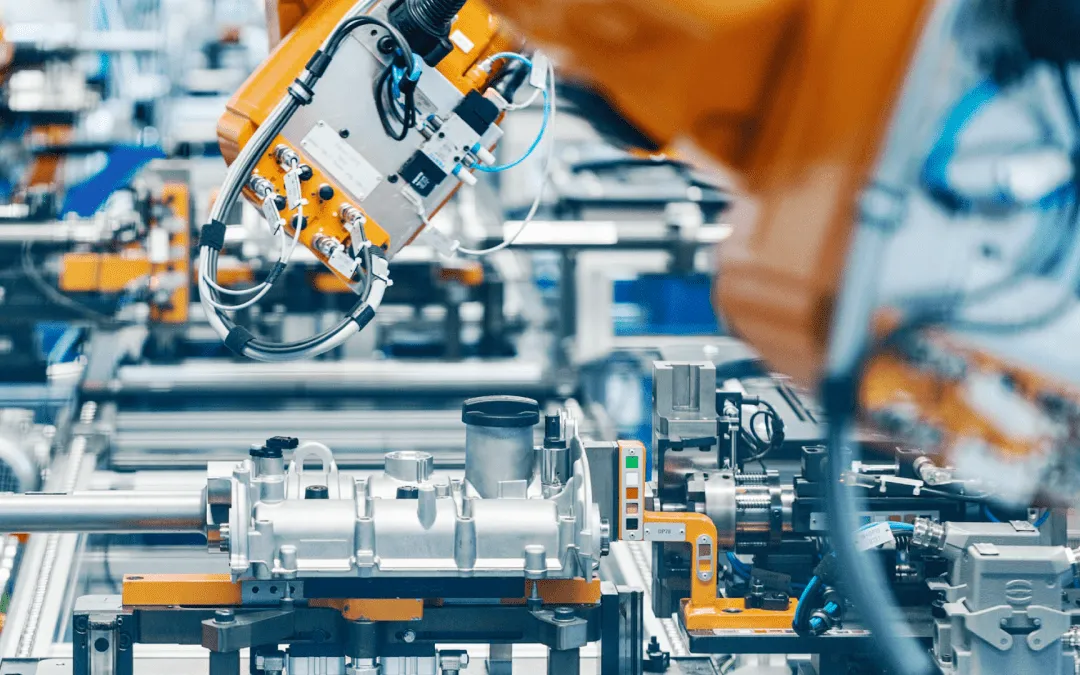
If your factory is planning to expand capacity, replace aging machinery, or establish a new production line, buying the right Turkey industrial equipment can be a strategic decision rather than a simple purchasing exercise. MT Royal is worth considering when you need access to industrial machinery, construction and mining equipment, crushing and screening systems, and related spare parts from a supplier that can work across multiple equipment categories and brands.
For manufacturers, the importance of equipment goes far beyond the machine’s purchase price. A crusher with poor throughput, a conveyor that repeatedly fails, or a production line that consumes excessive energy can quietly drain profitability month after month. The right machine, by contrast, becomes part of the factory’s competitive advantage.
Turkey has developed a substantial industrial and machinery ecosystem serving domestic manufacturers and international markets. In 2025, Türkiye’s total merchandise exports reached $273.4 billion, a 4.5% increase from the previous year. Machinery is part of a broader export-oriented manufacturing base that includes automotive, chemicals, electrical-electronics, steel, construction equipment, and other industrial sectors.
For an international buyer, however, the interesting question is not simply whether Turkey manufactures machinery. It is whether a particular machine will deliver the required capacity, reliability, energy efficiency, serviceability, and total cost of ownership in your factory.
That is where careful equipment selection matters.
Food industry raw materials – list of products
Why Turkish Industrial Machinery Is Attracting International Buyers
Turkey’s geographical position is one obvious advantage. It provides manufacturers and equipment suppliers with commercial access to Europe, the Middle East, Central Asia, North Africa, and other nearby markets.
But geography alone does not make industrial equipment competitive.
The country’s machinery industry has also developed around export-oriented manufacturing and increasingly sophisticated production capabilities. TİM reported that machinery and equipment investments in Türkiye reached approximately $170 billion annually in 2023, up 86% from 2019, while Türkiye’s share of global machinery and equipment investments reached about 3%.
That investment matters to buyers because equipment quality is increasingly connected to engineering capability, component availability, production automation, and after-sales support.
For factories considering Turkish machinery, this creates an opportunity to compare not just price but the complete commercial proposition.
The Most Important Factors When Buying Industrial Equipment
1. Production Capacity
Capacity should be the first technical question, not the last.
If your quarry requires 250 tons per hour, buying a machine advertised as “high capacity” is not enough. You need to understand actual throughput under your specific feed conditions.
Production capacity can be affected by:
- Feed size
- Material hardness
- Moisture content
- Abrasiveness
- Desired output size
- Feed consistency
- Closed-circuit configuration
- Machine settings
- Operator practices
A machine rated for a particular theoretical capacity may deliver substantially different results in real operating conditions.
When evaluating Turkey industrial equipment, ask suppliers to define the assumptions behind their capacity figures.
2. Energy Consumption
Energy efficiency is becoming increasingly important because machinery operating costs accumulate over thousands of operating hours.
A machine that costs slightly more to purchase but consumes significantly less electricity can have a lower lifetime cost than a cheaper alternative.
For large production facilities, calculate:
Annual energy cost = operating hours × average power consumption × electricity price
Then compare that figure across equipment options.
Do not stop at motor horsepower. Look at the relationship between power input and useful production output.
The more meaningful indicator is often energy consumed per ton, cubic meter, unit, or finished product.
3. Maintenance Requirements
Maintenance is where many equipment purchasing decisions become expensive.
Before purchasing machinery, determine:
- Which components require routine inspection?
- How often does lubrication occur?
- Which wear parts need periodic replacement?
- How long does a typical service intervention take?
- Are critical components locally available?
- Can maintenance be performed by your existing technicians?
- Does the supplier provide technical documentation?
MT Royal states that it supplies spare parts for its own machinery as well as compatible parts for other machines. Its crushing-equipment operation also emphasizes spare-parts availability and reduced replacement time.
For a factory operating continuously, this can be more important than an attractive initial quotation.

Turkey Industrial Equipment for Mining and Aggregate Production
Mining, quarrying, and aggregate processing require particularly careful machinery selection because equipment is exposed to high loads, abrasive materials, dust, vibration, and continuous operation.
A typical crushing and screening plant may include:
- Primary crusher
- Vibrating feeder
- Secondary or cone crusher
- Screens
- Conveyors
- Washing equipment where required
- Stockpiling systems
- Electrical and automation systems
The components must work as a system.
A bottleneck in one section can reduce the output of the entire plant.
Cone Crushers
Cone crushers are commonly used in secondary and tertiary crushing. They reduce material through compression between the mantle and concave and can be configured for different product requirements.
MT Royal’s KMH range includes cone crusher models such as the KMH 420, KMH 430, KMH 440, and KMH 660. The company’s published specifications and descriptions position these machines for mining, construction, aggregate processing, and related applications.
The KMH 430 and 440 systems also incorporate hydraulic adjustment and automation features intended to help maintain crusher settings and monitor operating parameters.
For buyers, the important point is not the model number itself. It is whether the machine matches your feed material and target product.
Screening Equipment
Screens determine how effectively material is separated into different size fractions.
When selecting a screen, consider:
- Deck area
- Number of decks
- Feed rate
- Material density
- Moisture
- Desired cut points
- Screen media
- Wear characteristics
An oversized crusher cannot compensate for an undersized screening system. The plant is only as strong as its least capable bottleneck.
Construction Equipment: More Than Excavators
Construction machinery is another major segment of Turkey industrial equipment.
Depending on your project, you may require:
- Excavators
- Wheel loaders
- Backhoe loaders
- Concrete equipment
- Asphalt machinery
- Compaction equipment
- Material handling machinery
- Crushing and screening plants
MT Royal’s published construction and mining equipment portfolio includes equipment from manufacturers such as XCMG and Caterpillar, alongside its own machinery and other industrial equipment categories.
This multi-brand approach can be useful when a buyer wants to compare equipment according to application rather than automatically committing to one manufacturer.
Common Mistakes When Sourcing Industrial Machinery from Turkey
Buying on Price Alone
The lowest price is rarely the same thing as the lowest operating cost.
A $100,000 machine that produces 15% less usable output than a $110,000 alternative may be significantly more expensive over its lifetime.
Always compare:
- Purchase price
- Installation
- Freight
- Customs and taxes
- Energy consumption
- Wear parts
- Maintenance labor
- Downtime
- Expected service life
This is the essence of total cost of ownership.
Ignoring Spare Parts
One of the most expensive sentences in industrial operations is:
“We are waiting for the part.”
Before signing a purchase order, identify critical spare parts and establish realistic delivery times.
For high-wear equipment, consider purchasing an initial spare-parts package together with the machine.
Selecting Capacity Without Considering the Entire Line
A crusher producing 300 tons per hour is not particularly useful if your feeder can deliver only 180 tons per hour.
Similarly, increasing production capacity may require larger conveyors, upgraded electrical infrastructure, additional screening capacity, or larger stockpile arrangements.
Always evaluate the complete production line.
Failing to Define the End Product
A quarry producing road aggregate does not necessarily need the same configuration as one producing premium concrete aggregate.
The desired output determines:
- Crushing stages
- Crusher type
- Crusher settings
- Screen configuration
- Recirculation
- Washing requirements
Your final product specification should therefore be defined before equipment selection.
How to Compare Turkish Industrial Equipment Suppliers
When comparing suppliers, use a structured scorecard rather than relying on impressions.
Consider assigning each supplier a score from 1 to 10 for:
| Evaluation Area | What to Examine |
|---|---|
| Equipment quality | Materials, engineering, manufacturing standards |
| Capacity | Real production under your conditions |
| Energy efficiency | Consumption per unit of output |
| Spare parts | Availability and lead times |
| Service | Technical support and installation |
| Price | Purchase and delivered cost |
| Warranty | Coverage and conditions |
| Delivery | Manufacturing and shipping schedule |
| Customization | Ability to adapt the equipment |
| Documentation | Manuals, drawings and technical data |
This creates a more objective procurement process.
In our experience with industrial purchasing, the most useful supplier conversations happen when buyers bring actual production data rather than simply asking for a catalog. Feed size, annual tonnage, operating hours, target product sizes, material characteristics, and site limitations allow the supplier to recommend equipment based on engineering requirements.
Specialized Tips for Large-Scale Production
Large factories and quarry operations should approach equipment purchasing differently from smaller buyers.
Calculate Availability, Not Just Capacity
A machine rated at 400 tons per hour does not produce 400 tons every hour of the year.
Consider:
Effective production = theoretical capacity × utilization × availability
If a machine has frequent shutdowns, maintenance requirements, or feed interruptions, its theoretical rating becomes much less meaningful.
Keep Critical Spares on Site
For continuous operations, identify components with long procurement times.
Depending on the machine, this may include:
- Bearings
- Wear liners
- Belts
- Hydraulic components
- Sensors
- Seals
- Electrical components
- Crusher wear parts
Inventory should be based on failure probability, replacement lead time, and downtime cost.
Measure Cost per Ton
For crushing and aggregate operations, cost per ton can be more revealing than the machine’s purchase price.
A simplified calculation can include:
Cost per ton = energy + wear parts + maintenance + labor + depreciation + other operating costs
This allows you to compare different equipment configurations using a common financial metric.
Plan for Future Capacity
If your factory expects production to increase by 40% over the next three years, equipment selection should account for that trajectory.
Buying equipment that is perfectly matched to today’s production but impossible to expand later can create another capital expenditure sooner than expected.
MT Royal and the Role of a Multi-Brand Equipment Supplier
For an international factory, the value of a supplier is not limited to having machines available for sale.
The supplier should ideally understand the relationship between equipment, application, spare parts, logistics, and operating conditions.
MT Royal’s industrial equipment activities include crushing, screening and washing systems, construction and mining equipment, machinery supply, spare parts, and project-oriented equipment solutions. The company states that it can also design and produce machinery based on a customer’s project requirements rather than limiting buyers to catalog configurations.
Its KMH crushing range is particularly relevant for aggregate and mining applications. MT Royal describes its systems as incorporating automation, hydraulic adjustment, lubrication systems, and designs intended to reduce maintenance and downtime.
For buyers who need flexibility, a multi-brand supplier can also make commercial sense. Instead of treating every purchase as a search for one universal “best machine,” you can evaluate different brands according to application, budget, availability, and technical requirements.
That is often the more professional approach.
Emerging Trends in Industrial Equipment Procurement
Industrial machinery purchasing is changing in several important ways.
Automation Is Becoming Standard
Modern equipment increasingly includes sensors, digital controls, automated lubrication, monitoring systems, and operator interfaces.
The goal is not technology for its own sake. Automation should improve consistency, safety, maintenance planning, or energy performance.
Predictive Maintenance Is Gaining Importance
Instead of waiting for a bearing or hydraulic component to fail, factories can increasingly monitor temperature, vibration, pressure, and operating patterns.
The objective is simple: turn an unexpected shutdown into a scheduled maintenance task.
Energy Efficiency Is Becoming a Procurement Metric
Energy prices can transform the economics of machinery over its operating life. Buyers should therefore request realistic consumption data and evaluate energy use relative to production output.
Equipment Is Becoming More Application-Specific
The era of buying generic equipment and hoping it fits is fading.
Modern industrial procurement increasingly starts with the process and works backward toward the machine.
That means your supplier should understand what you are trying to produce, not merely which machine you saw in a catalog.
Frequently Asked Questions About Turkey Industrial Equipment
Is Turkey a good source of industrial equipment?
Turkey has a substantial manufacturing and export base, and its machinery sector serves international markets. In 2023, TİM reported machinery and equipment exports of $28.2 billion, including free zones, and noted that Türkiye’s share of global machinery and equipment investment had reached approximately 3%.
The more important issue is selecting the right supplier for your specific application.
What should I ask a Turkish machinery supplier before ordering?
Ask about actual capacity, technical specifications, energy consumption, installation requirements, warranty conditions, spare-parts availability, production lead time, testing, documentation, and after-sales service.
Is Turkish equipment cheaper than European machinery?
Price varies considerably by equipment type, manufacturer, specifications, and configuration. A meaningful comparison should consider total delivered cost and lifetime operating expenses rather than country of origin alone.
Can industrial machinery be customized?
Yes. Depending on the supplier and machine, customization can involve dimensions, configuration, automation, electrical systems, capacity, material handling, and plant layout. MT Royal states that it provides project-specific machinery design and production for equipment not found in its standard catalog.
How important are spare parts when purchasing equipment?
Extremely important. For equipment operating continuously, the cost of one prolonged shutdown can exceed the apparent savings from buying a cheaper machine.
Should we buy equipment from one brand?
Not necessarily. A multi-brand sourcing strategy can allow you to select equipment according to the requirements of each production stage. The key is ensuring that the complete system remains technically compatible.
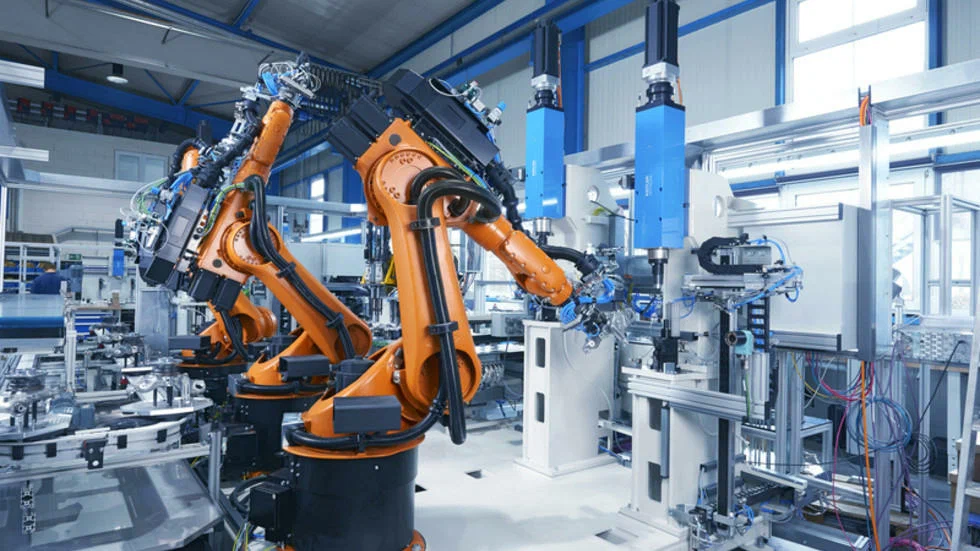
The Real Value of Industrial Equipment Is What It Produces
A machine should never be judged only by its steel, motor, bearings, control panel, or price tag.
Judge it by what happens after installation.
Does it maintain the required production rate? Does it produce consistent material? Can your maintenance team service it? Are spare parts available when you need them? Does its energy consumption make economic sense? Can the equipment support your factory five years from now?
Those are the questions that distinguish capital expenditure from a productive investment.
Turkey industrial equipment offers manufacturers a broad field of options, from crushing and screening systems to heavy construction machinery and specialized production equipment. Turkey’s expanding industrial and export ecosystem gives international buyers meaningful access to engineering, manufacturing, and equipment supply capabilities.
For your factory, the smartest purchasing strategy is therefore not to search for the cheapest machine or even the machine with the largest capacity. Search for the equipment that creates the strongest relationship between output, reliability, energy use, maintenance, and lifetime cost.
That is where suppliers such as MT Royal can become useful: not simply as a source of machinery, but as a channel for comparing equipment, brands, configurations, spare parts, and project requirements under one procurement process. Its published portfolio ranges from KMH crushing equipment and complete crushing-related systems to construction and mining machinery and replacement parts.
The best machine is not the one that looks most impressive in a catalog. It is the one that keeps your production line moving when the quotation has long since been forgotten.



No comment