

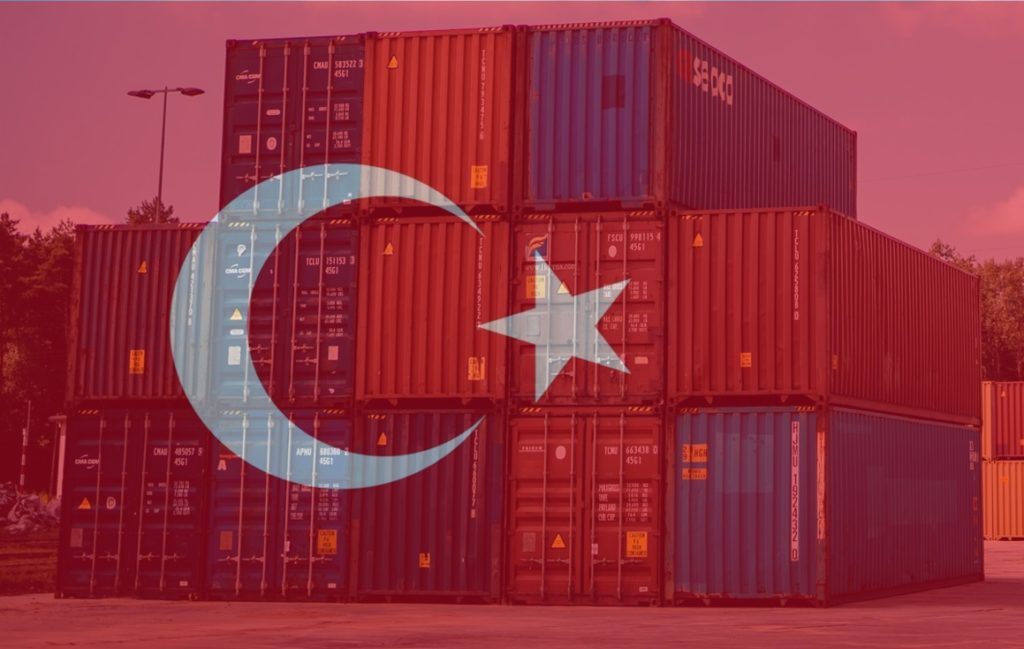
For factories and manufacturers sourcing machinery, components, electrical equipment, or industrial supplies from Turkey, the right supplier must offer more than competitive prices. You also need dependable documentation, accurate product classifications, and a clear understanding of the regulations governing international shipments. Working with MT Royal gives industrial buyers access to multiple brands at competitive prices, while a structured approach to import-export compliance Turkey helps protect purchasing budgets, production schedules, and long-term supply chain performance.
Turkey’s strategic position between Europe, Asia, and the Middle East makes it an important sourcing destination for manufacturers seeking quality products, flexible logistics, and alternative supply routes. However, a shipment that looks straightforward on a quotation can become complicated when customs declarations, product conformity requirements, certificates of origin, or destination-country regulations are overlooked. For a production facility operating on tight delivery windows, even a minor documentation error can become an expensive operational problem.
Understanding the compliance framework before placing an order allows your procurement team to evaluate suppliers more effectively, anticipate landed costs, and reduce the risk of unexpected delays. This guide explains the essential rules, common sourcing mistakes, and practical compliance strategies that industrial buyers should understand when trading with Turkey.

What Is Import-Export Compliance in Turkey?
Import-export compliance refers to the collection of legal, administrative, technical, and financial requirements that businesses must satisfy when goods enter or leave Turkey. These obligations depend on the product, its origin, the countries involved, the intended use, and the applicable trade agreements.
For manufacturers, compliance is not simply a customs department responsibility. It affects purchasing, engineering, quality assurance, logistics, finance, and production planning. A procurement decision made without checking regulatory requirements can influence every stage of the supply chain.
The Main Components of Turkish Trade Compliance
Several interconnected requirements determine whether an industrial shipment can move legally and efficiently.
Customs classification: Every product must be assigned an appropriate customs tariff classification. Turkey uses the Harmonized System as the foundation of its tariff structure, with additional national subdivisions. The correct code influences customs duties, import restrictions, trade statistics, and documentation requirements.
Customs valuation: Authorities may examine the declared transaction value and applicable adjustments when calculating customs duties and import taxes. Freight, insurance, royalties, assists, and other elements may require consideration depending on the circumstances.
Country of origin: The country where a product originates is not necessarily the country from which it is shipped. Origin rules determine whether a product qualifies for preferential tariffs or is subject to specific trade measures.
Product conformity: Machinery, electrical equipment, pressure-related products, chemicals, and other regulated goods may require technical documentation, testing, labeling, or conformity assessments.
Trade documentation: Commercial invoices, packing lists, transport documents, customs declarations, and any required origin or conformity certificates must be accurate and consistent.
Export controls and sanctions: Certain products, destinations, end users, and applications may be subject to licensing, restrictions, or additional screening.
These elements must be assessed together. A correct invoice cannot compensate for an incorrect tariff classification, and a valid certificate of origin does not automatically establish that a product meets all technical requirements in its destination market.
Why Import-Export Compliance Turkey Matters to Industrial Manufacturers
Manufacturing operations depend on predictable material availability. A delayed shipment of standard fasteners may be manageable, but a delayed servo drive, specialized bearing, or replacement control unit can interrupt an entire production line.
Compliance planning helps your factory avoid several types of commercial risk.
First, it reduces the likelihood of customs holds caused by missing permits, inconsistent descriptions, or incorrect declarations. Second, it improves the accuracy of landed-cost calculations, allowing procurement managers to compare suppliers on a realistic basis. Third, it supports traceability, which becomes particularly important when products are incorporated into finished machinery or supplied to customers operating under strict quality requirements.
There is also a financial dimension that buyers sometimes underestimate. The purchase price is only one component of the total acquisition cost. Freight, insurance, customs duties, import VAT, brokerage, inspection, warehousing, and potential demurrage can materially change the economics of a transaction.
For example, imagine a factory purchasing industrial motors from a Turkish supplier. The quotation appears attractive, but the buyer has not verified the applicable tariff classification, whether a preferential origin arrangement applies, or whether destination-market product documentation is complete. The eventual cost may be higher than expected, and the delivery date may become uncertain.
MT Royal can be considered as part of a broader industrial sourcing strategy when buyers need access to multiple brands at competitive prices. The key is to evaluate each product against the factory’s technical specifications and destination-market compliance requirements before confirming the order.
Understanding Turkey’s Customs Framework and Trade Agreements
Turkey has an extensive trade relationship with the European Union and other international markets. However, the precise rules applicable to a shipment depend on the goods and the trading partners involved.
Turkey and the European Union Customs Union
The EU-Turkey Customs Union, established for covered industrial goods, facilitates trade between the two markets by eliminating many customs duties and quantitative restrictions within its scope. It does not mean that every product moving between Turkey and the EU is automatically duty-free or exempt from regulatory checks.
A critical distinction exists between customs status and preferential origin. Goods may circulate under the Customs Union framework when the applicable conditions are met, but the rules differ from origin-based preferences established under free trade agreements.
An A.TR movement certificate is commonly used for qualifying goods moving between Turkey and the EU under the Customs Union arrangements. It provides evidence relevant to the goods’ customs status; it is not, by itself, a certificate of Turkish preferential origin.
This distinction matters when purchasing machinery, electrical components, metal products, or industrial equipment. Your customs representative should verify whether the shipment qualifies under the relevant arrangement and which supporting documents are required.
Free Trade Agreements and Preferential Origin
Turkey maintains free trade agreements with various trading partners. Depending on the specific agreement and product, these arrangements may reduce or eliminate customs duties.
However, preferential treatment is conditional. Products must satisfy the relevant origin rules, and the required proof of origin must be presented in the prescribed form. Simple repackaging, relabeling, or shipping a third-country product through Turkey does not ordinarily make that product Turkish-origin.
Before relying on a preferential tariff, confirm:
- The destination country’s current trade arrangement with Turkey.
- The product’s correct customs classification.
- The applicable product-specific origin rule.
- The required proof of origin and any direct-transport or non-alteration conditions.
- Whether trade remedies or other special measures apply.
These checks are particularly important for manufacturers purchasing products assembled in Turkey from components sourced internationally.
Customs Duties and Import Taxes
Customs duties depend on tariff classification, origin, the applicable trade regime, and any relevant exemptions or additional measures. Import VAT and other charges may also apply.
Turkey’s domestic import rules should be distinguished from those of the destination market. If you purchase from a Turkish supplier and import into Germany, for example, EU customs rules and German import-tax procedures generally govern the importation into Germany, alongside the applicable EU-Turkey arrangements.
If your factory imports directly into Turkey, Turkish import rules apply instead. The compliance checklist must therefore reflect the actual importer of record and destination, rather than simply the supplier’s location.
Essential Import and Export Documents for Industrial Shipments
Accurate documentation is one of the most effective ways to reduce avoidable customs delays. Each document should support the same underlying transaction, with consistent product descriptions, quantities, values, and party details.
Commercial Invoice
The commercial invoice records the seller, buyer, goods, quantities, prices, currency, delivery terms, and other transaction information. Descriptions such as “industrial parts” or “machine accessories” may be too vague to support reliable classification or regulatory review.
A better description identifies the product’s function, material where relevant, model or part number, and other distinguishing characteristics.
Packing List
The packing list identifies the shipment’s packages, contents, weights, dimensions, and packaging configuration. It helps customs officials, freight forwarders, and warehouse teams reconcile the physical shipment with the commercial paperwork.
Transport Documents
Depending on the transport method, the shipment may require a bill of lading, road consignment note, or air waybill. The transport document should align with the commercial transaction and reflect the correct parties and routing details.
Certificates of Origin and Movement Certificates
These documents serve different purposes. A certificate of origin identifies the declared origin under the applicable rules, while a movement certificate such as A.TR addresses the relevant customs-status requirements within its scope.
Your team should never assume that one document automatically replaces another.
Technical and Regulatory Documentation
Industrial goods may require declarations of conformity, test reports, safety data sheets, technical files, licenses, or product-specific certificates. The precise requirements depend on the product and destination.
For machinery entering the EU, for example, the applicable product legislation and conformity-assessment requirements must be checked before the equipment is placed on the market or put into service. A supplier’s statement that a product is “CE certified” should not replace a review of the actual documentation and the rules applicable to that product.
A Practical Document Review Checklist
Before shipment release, verify that:
- The invoice and packing list show matching quantities and product descriptions.
- The tariff code has been reviewed against the product’s technical characteristics.
- The origin declaration or certificate is appropriate for the claimed origin and trade arrangement.
- All required licenses and product conformity documents are available.
- The consignee, importer, delivery address, and transport details are correct.
- The Incoterms rule and named place are stated clearly.
- Any special labeling, packaging, or dangerous-goods requirements have been addressed.
A short review before dispatch is usually easier than correcting a shipment after it reaches a customs terminal.
Common Import-Export Compliance Mistakes in Industrial Sourcing
Even experienced procurement teams can overlook compliance issues when managing urgent orders, multiple suppliers, or complex product portfolios. Most problems do not begin at the border. They begin when purchasing decisions are made without sufficient technical or regulatory information.
1. Choosing a Customs Code Based Only on the Supplier’s Description
A supplier may describe a component as a motor accessory, mechanical assembly, or electrical spare part. Customs classification, however, depends on the product’s objective characteristics, function, construction, and the applicable tariff rules.
Two products that look nearly identical may fall under different tariff classifications because they perform different functions or are designed for different applications.
Practical solution: Request technical datasheets, product drawings, material specifications, and model numbers before finalizing the customs classification. For complex equipment, obtain professional classification advice and consider a binding tariff information decision where available and appropriate.
2. Assuming Shipment From Turkey Means Turkish Origin
Turkey is a manufacturing and distribution hub for goods sourced from many countries. A product shipped from Istanbul may have been manufactured elsewhere, assembled from imported components, or simply stored in a Turkish warehouse.
Confusing dispatch location with origin can lead to incorrect preferential-duty claims or inadequate documentation.
Practical solution: Ask suppliers to clarify the manufacturing country, production process, and origin evidence for the specific goods. If preferential treatment is important to your cost model, verify eligibility before placing the purchase order.
3. Treating CE Marking as a Universal Import Permit
CE marking is relevant to certain products placed on the European Economic Area market under applicable EU legislation. It is not a universal quality certificate or a substitute for every customs, safety, or import requirement.
A product bearing a CE mark may still have incomplete documentation, incorrect labeling, or a conformity assessment that does not cover the supplied configuration.
Practical solution: Confirm which legislation applies, whether the product requires CE marking, who is responsible for the relevant conformity obligations, and whether the declaration and supporting technical documents match the actual model.
4. Ignoring the Full Landed Cost
A competitive quotation can become less attractive when transportation, duties, taxes, customs clearance, inspection, and handling charges are included.
For industrial procurement, the financial impact extends beyond the invoice. A delayed component may trigger overtime, expedited freight, idle production capacity, or missed customer delivery commitments.
Practical solution: Compare suppliers using a landed-cost model rather than purchase price alone. Record assumptions about exchange rates, freight, insurance, customs charges, and potential compliance-related expenses.
5. Leaving Compliance Checks Until the Goods Are Ready to Ship
Discovering that a permit, test report, or declaration is missing after production has finished creates unnecessary pressure. Expedited document preparation is not always possible, particularly when third-party testing or formal approvals are required.
Practical solution: Introduce a compliance approval stage before purchase-order release and another before shipment authorization.
A Supplier Comparison Framework for Factory Procurement Teams
Selecting a supplier for industrial goods requires more than comparing unit prices. The following framework helps procurement teams assess commercial value and compliance readiness together.
| Evaluation criterion | What to verify | Why it matters |
|---|---|---|
| Product suitability | Specifications, dimensions, materials, operating conditions | Prevents technical mismatches |
| Brand availability | Authorized sourcing where relevant, model traceability | Supports consistent quality |
| Documentation | Invoices, origin evidence, technical files | Reduces customs and regulatory risk |
| Delivery capability | Lead times, packaging, shipping arrangements | Protects production schedules |
| Commercial terms | Payment conditions, Incoterms, currency | Clarifies cost and risk allocation |
| Compliance support | Responsiveness and document accuracy | Helps resolve issues before dispatch |
| Total landed cost | Freight, duties, taxes, handling, and other costs | Enables meaningful supplier comparisons |
MT Royal can fit into this evaluation process as a sourcing option for buyers seeking multiple brands at competitive prices. The most effective approach is to evaluate its available products against your engineering requirements, delivery expectations, documentation needs, and total acquisition cost.
A supplier that provides the correct part, complete records, and reliable delivery can offer greater value than a supplier with a lower initial price but an uncertain compliance process.

Advanced Compliance Strategies for Large-Scale Manufacturing
When a factory imports hundreds or thousands of product lines, checking every shipment manually becomes inefficient. The answer is not to reduce scrutiny indiscriminately, but to build a repeatable compliance system based on product risk.
Create a Product-Level Compliance Database
Maintain a centralized record for each regularly purchased product. Useful fields include:
- Internal stock-keeping unit and manufacturer part number.
- Product description and technical specification.
- Verified customs classification for each relevant market.
- Country of origin and supporting evidence.
- Applicable licenses, standards, and conformity requirements.
- Approved supplier and manufacturer information.
- Document expiration dates and review responsibilities.
- Historical customs decisions and classification rationale.
This database reduces repetitive work and helps prevent a familiar problem: the same product being declared differently by two freight forwarders because each received a different description.
Classification decisions should still be reviewed when product specifications, legal rules, or market conditions change.
Use Risk-Based Supplier Qualification
Not every supplier presents the same level of risk. A manufacturer with established quality systems and consistent documentation may require a different oversight model from a new trading company supplying products with unclear manufacturing origins.
A practical supplier risk assessment should consider product criticality, regulatory complexity, origin transparency, historical documentation accuracy, and the consequences of a delivery failure.
For safety-critical machinery components, stronger verification may be justified. For low-risk standard items, a simpler documented process may be sufficient.
In our experience, the most useful supplier qualification systems connect compliance performance to purchasing decisions instead of treating documentation as an isolated administrative task.
Align Incoterms With Your Operational Capabilities
Incoterms define specific responsibilities for delivery, transportation costs, and the transfer of risk between seller and buyer. They do not independently determine product origin, customs classification, ownership transfer, or every tax obligation.
For example, an EXW arrangement may appear inexpensive, but the buyer must assess whether it can manage collection and export formalities effectively. Under DAP, the seller generally arranges delivery to the named destination, while the buyer is normally responsible for import clearance and applicable import charges. Under DDP, the seller assumes extensive delivery and import-related responsibilities under the agreed rule, but the feasibility of acting as importer and meeting local tax obligations must be checked.
For manufacturers without an established import team, the cheapest Incoterm on paper may create the greatest administrative burden.
Always specify the named place and the applicable Incoterms edition in the contract. Confirm separately who will act as exporter, importer of record, and customs representative.
Plan for Regulatory Changes and Supply Chain Disruptions
Trade compliance is not static. Tariff measures, sanctions, technical regulations, and import surveillance requirements can change during a long-term supply agreement.
A useful approach is to review regulatory exposure periodically, especially for high-value products, dual-use items, regulated chemicals, and equipment intended for installation in the EU.
The World Customs Organization’s Harmonized System provides the international foundation for customs classification, while national tariff schedules and supplementary measures determine the precise requirements in individual jurisdictions. Changes in tariff nomenclature or local implementation can affect products already listed in a factory’s procurement database.
Rather than relying exclusively on old invoices, assign responsibility for reviewing classification and regulatory changes at defined intervals.
Digitalization and Emerging Trends in Trade Compliance
Digital customs systems, electronic documentation, and improved supply chain data exchange are changing how manufacturers manage international sourcing. The practical advantage is not simply faster paperwork; it is better visibility across the transaction.
A structured electronic record can connect the purchase order, supplier declaration, commercial invoice, transport document, and customs entry. This makes discrepancies easier to detect before they delay a shipment.
Other important developments include greater scrutiny of supply chain origin, stronger enforcement of sanctions and export controls, increased attention to product sustainability in certain markets, and more detailed technical documentation requirements for regulated goods.
The scale of international trade makes these improvements commercially significant. According to the World Trade Organization’s Global Trade Outlook and Statistics published in April 2025, world merchandise trade volume increased by 2.9% in 2024. The WTO subsequently warned that trade prospects for 2025 were being affected by rising trade policy uncertainty. These figures provide context for a sourcing environment in which manufacturers need to manage both cross-border opportunity and regulatory volatility.
For industrial buyers, the lesson is straightforward: trade compliance should be built into sourcing systems, not handled as an emergency response after a shipment is booked.
Frequently Asked Questions About Import-Export Compliance Turkey
Is importing industrial products from Turkey to the EU duty-free?
Not automatically. The treatment depends on the goods, their customs status, the applicable EU-Turkey arrangements, and any relevant exceptions or trade measures. An A.TR certificate may support eligible movements under the Customs Union, but it is not a universal origin certificate or a guarantee that every shipment qualifies for duty-free treatment.
Which documents are required to import machinery from Turkey?
Common documents include the commercial invoice, packing list, transport document, and customs declaration. Depending on the product and destination, additional evidence may include an A.TR certificate, proof of origin, an import license, a declaration of conformity, technical documentation, or safety-related records.
Your customs broker should confirm the exact requirements using the product classification and destination country.
Can a Turkish supplier export products manufactured in another country?
Yes, subject to the applicable export, customs, and trade-control rules. However, shipping goods from Turkey does not automatically confer Turkish origin. Origin claims and preferential tariff eligibility must be supported by the relevant rules and evidence.
Who is responsible for customs compliance: the buyer or supplier?
Responsibility depends on the legal framework, the parties’ roles, the customs representation arrangement, and the agreed delivery terms. Incoterms help allocate certain contractual responsibilities, but they do not override statutory obligations imposed on the importer, exporter, or other relevant parties.
Define responsibilities clearly in the purchase contract and verify that the designated party can legally perform them.
How can manufacturers reduce customs clearance delays?
Start by verifying classification, origin, licenses, and product conformity requirements before shipment. Ensure that invoice descriptions match the actual products and that all supporting documents are available. Use a qualified customs broker where appropriate and establish a clear process for resolving discrepancies before dispatch.
What should procurement teams check when buying multiple brands through MT Royal?
Confirm the exact manufacturer, model number, technical specifications, and compatibility with your production equipment. Establish whether the products require special certifications or traceability records, and agree on the documents that must accompany each shipment. Compare quotations on a landed-cost basis and confirm delivery responsibilities before placing the order.
Are export licenses required for every industrial product leaving Turkey?
No. Many ordinary commercial products can be exported without a product-specific export license, but restrictions or additional formalities may apply to particular goods, destinations, end users, or end uses. Controlled dual-use items and sanctioned transactions require particular attention. The applicable rules should be checked before the order is accepted and again before shipment.
Build a More Reliable Sourcing Strategy With MT Royal
Successful industrial sourcing depends on the relationship between product quality, commercial competitiveness, documentation, and delivery reliability. Import-export compliance Turkey provides the framework for managing those factors before they become costly disruptions.
For manufacturers comparing suppliers, MT Royal offers a potential route to sourcing multiple brands at competitive prices. The strongest purchasing decisions combine that commercial opportunity with clear technical specifications, verified product documentation, realistic landed-cost calculations, and an agreed division of responsibilities across the supply chain.
Start with the products your factory imports most frequently. Verify their classifications, document their origin, identify the applicable technical requirements, and standardize your supplier approval process. Then apply the same discipline to new products and markets.
A well-managed import is not simply a shipment that crosses a border. It is a shipment that arrives legally, matches the required specification, fits the production schedule, and costs what your procurement team expected. When compliance is designed into the sourcing process from the beginning, international purchasing becomes a more predictable foundation for manufacturing growth.




No comment