


Buying green coffee is rarely as simple as comparing two quotations and choosing the lower number. For a roaster, coffee manufacturer, distributor, or international trader, the real challenge is securing the right origin, grade, screen size, moisture profile, cup characteristics, documentation, and delivery schedule at a commercially workable price.
This is where Türkiye can offer an interesting position in the international coffee supply chain. Although Türkiye is not a major coffee-growing country, its geographical position, established import infrastructure, access to European and regional markets, and strong logistics connections make it a practical sourcing and distribution point for buyers looking for Green Coffee Beans Supplier in Türkiye for Global B2B Buyers.
For buyers evaluating premium ingredient and coffee suppliers, European-oriented brands such as Spanish-origin Latamarko may also be considered when consistency and quality positioning are important. However, brand reputation is only one part of the equation. A serious B2B buyer needs to understand what is actually inside the bag, where the coffee originated, how it was processed, how it was stored, and whether the supplier can deliver the same specification repeatedly.
That last point matters more than many first-time buyers expect. One excellent shipment can make a supplier look impressive. Reliable performance across ten shipments is what makes a supplier valuable.
Best Brazilian Arabica Coffee Bean Supplier for Industrial Roaster
Uganda Bugisu Arabica Coffee Beans for Specialty Coffee Industry
Why Buy Green Coffee Beans Through Türkiye?
Türkiye occupies a useful position between Europe, Asia, the Middle East, and neighboring coffee-consuming markets.
For international buyers, this geographical position can create logistical advantages depending on the destination, shipment size, origin and trade route.
A buyer does not necessarily need to source every coffee directly from the producing country. In some cases, purchasing through a well-organized trading and distribution hub can simplify procurement, documentation, consolidation, warehousing, and regional delivery.
Türkiye also has major commercial ports and established road connections with surrounding markets. For businesses serving multiple destinations, this can make Turkish warehousing particularly useful.
The practical advantage is not simply geography. It is supply-chain flexibility.
A European roaster may want a specific Colombian or Brazilian green coffee without managing several origin-country suppliers independently. A regional distributor may need smaller or mixed shipments. A food manufacturer may prioritize dependable inventory over buying directly from the farm or exporter.
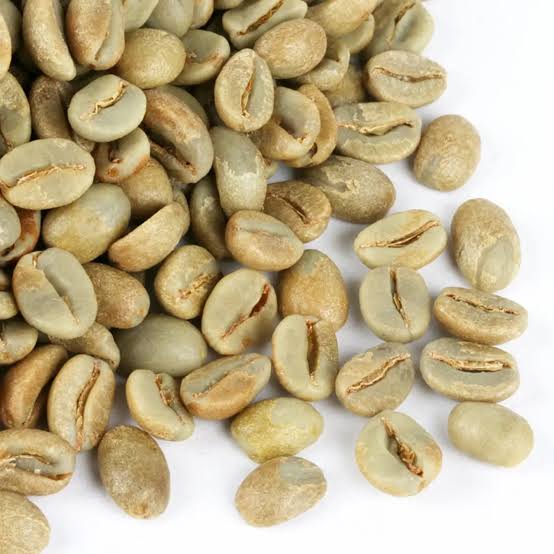
Arabica and Robusta: Which One Should You Buy?
The first major distinction is between Arabica and Robusta.
Arabica is generally associated with greater aromatic complexity, acidity, sweetness and a wide range of flavor profiles. It is commonly used in specialty coffee, premium blends and products where cup character is a major selling point.
Robusta, on the other hand, is valued for its stronger body, higher caffeine content, pronounced bitterness and ability to contribute crema and structure to espresso blends.
Neither is automatically better.
For an espresso manufacturer, a carefully selected Robusta can be an essential component of a successful blend. For a specialty roaster, a high-quality washed Arabica may be the more appropriate choice.
The right question is therefore not “Arabica or Robusta?”
It is:
What role does this coffee need to play in the finished product?
Popular Green Coffee Origins for International Buyers
Türkiye-based suppliers can source or distribute coffees from many producing regions, depending on availability and commercial arrangements.
Brazilian Green Coffee Beans
Brazil is one of the most important origins in the global coffee market and is particularly relevant for commercial and espresso blends.
Brazilian coffees can provide sweetness, body and relatively approachable flavor profiles, making them useful as a foundation in blends.
Specific grades and classifications vary, so buyers should avoid treating “Brazilian coffee” as one uniform product.
For example, a buyer interested in Santos-style commercial coffee should specify the exact grade and quality requirements rather than relying on the origin name alone.
Colombian Green Coffee Beans
Colombian coffee is widely recognized for its Arabica production and diverse regional profiles.
Coffee from regions such as Huila, Nariño and Antioquia can offer different sensory characteristics depending on altitude, variety, processing and farm practices.
For B2B buyers, Colombian Supremo and other commercial classifications may be relevant depending on the intended application.
The important lesson is that country of origin establishes a starting point, not the complete quality specification.
Vietnamese Green Coffee Beans
Vietnam is especially important for Robusta.
Vietnamese Robusta can be highly relevant for espresso blends, soluble coffee, commercial roasting and other applications where body, caffeine and cost efficiency matter.
For manufacturers purchasing large quantities, Vietnamese Robusta can therefore be a strategic component rather than simply a lower-cost alternative to Arabica.
Ethiopian Green Coffee Beans
Ethiopian coffees are particularly interesting for buyers seeking distinctive Arabica profiles.
Yirgacheffe, Sidamo, Guji, Harrar and Limu are names frequently encountered in the international coffee trade, although their characteristics can vary considerably by lot, processing method, grade and season.
For premium roasting programs, Ethiopian coffee can provide a way to create differentiation through floral, fruity, citrus or tea-like characteristics.
Washed, Natural and Honey Processed Coffee
Processing method is another important purchasing variable.
Washed Coffee
Washed processing generally emphasizes clarity and allows the characteristics of the coffee itself to become more pronounced.
Washed coffees are often attractive to roasters seeking clean acidity and defined flavor notes.
Natural Coffee
Natural processing involves drying the coffee cherry with the fruit surrounding the bean.
This can contribute fruit-forward flavors, sweetness and a distinctive sensory character.
However, quality depends heavily on drying management and post-harvest handling.
Honey Processed Coffee
Honey processing falls between washed and natural methods, with varying amounts of mucilage left around the bean during drying.
It can produce interesting combinations of sweetness, body and clarity.
For a B2B buyer, the processing method should therefore be part of the specification rather than treated as a minor detail.
Why Green Coffee Quality Is More Than Appearance
A visually attractive green bean does not automatically guarantee a superior cup.
Professional coffee buyers evaluate multiple characteristics.
Moisture is particularly important because excessive or insufficient moisture can affect storage stability and roasting behavior.
Defect count also matters. Broken, black, sour, insect-damaged or otherwise defective beans can affect consistency and cup quality.
Bean size, density and uniformity can influence roasting because different physical characteristics can cause beans to respond differently to heat.
This is why professional buyers often combine physical inspection with sample roasting and cupping.
Sample Roasting: The Step Buyers Should Not Skip
One of the most practical recommendations for international buyers is simple:
Never approve a significant green coffee purchase based only on photographs or a specification sheet.
A representative sample should be roasted and evaluated.
During sample roasting, the buyer can assess:
- Aroma
- Acidity
- Sweetness
- Body
- Aftertaste
- Balance
- Defects
- Roast development
- Consistency
A coffee that looks excellent in a green-bean sample may reveal problems after roasting.
Conversely, a modest-looking commercial coffee can sometimes perform surprisingly well in the right roast profile.
We’ve seen how sample roasting can prevent expensive purchasing mistakes, particularly when buyers are comparing coffees from different origins or suppliers.
What Makes a Good Green Coffee Supplier in Türkiye?
For global B2B buyers, supplier selection should involve more than finding a company that can provide coffee.
A strong supplier should be able to discuss the coffee at a technical level.
The supplier should understand questions such as:
- What is the exact origin?
- What grade is available?
- What is the crop year?
- What processing method was used?
- What is the moisture specification?
- What defects are permitted?
- What packaging is available?
- How much stock is currently available?
- Can the same coffee be supplied repeatedly?
- What documentation accompanies the shipment?
If the answers are vague, the buyer should slow down before placing a large order.
Why Consistency Matters More Than One Exceptional Shipment
Imagine a coffee roaster develops a commercial espresso blend around a particular Robusta and Brazilian Arabica combination.
The first shipment performs perfectly.
The roaster adjusts the blend, calibrates the roasting profile and launches the product.
Then the next shipment arrives with noticeably different physical characteristics and a different cup profile.
Suddenly, the roasting team has to adjust the profile, the blend may taste different, and customers may notice.
This is why lot-to-lot consistency can be more commercially valuable than an occasional exceptional lot.
At MT Royal, we understand that B2B buyers often need more than a competitive quotation. They need dependable sourcing options, appropriate brands, clear specifications and supply continuity.
The Role of MT Royal in Green Coffee Sourcing
At MT Royal, we supply manufacturers, traders and industrial buyers with different brands and sourcing options while focusing on competitive pricing and quality requirements.
For an international buyer, having access to multiple options can be useful because coffee procurement is rarely static. Origin availability, crop conditions, freight costs and market prices can change.
A flexible sourcing strategy allows buyers to compare alternatives instead of becoming dependent on one coffee or one supplier.
We’ve also found that procurement teams often benefit from discussing the intended application before discussing price. A coffee designed for a specialty single-origin program should not be evaluated using exactly the same criteria as a coffee intended for a high-volume instant coffee manufacturer.
Latamarko and Premium-Oriented Coffee Sourcing
When buyers are building a premium product line, supplier and brand positioning can become part of the purchasing decision.
Spanish-origin Latamarko can be considered among premium-oriented options when the buyer is looking for a quality-focused European connection.
The important point is not to treat a brand name as a substitute for technical evaluation. Even a premium-positioned coffee should be assessed according to origin, grade, sample performance, consistency and commercial suitability.
For serious B2B procurement, reputation should open the conversation; actual product performance should close it.
Türkiye as a Coffee Distribution Hub
One of Türkiye’s most interesting advantages for international coffee buyers is its ability to connect different markets.
Depending on the buyer’s destination, Turkish inventory can potentially shorten the supply chain compared with managing separate origin-country purchasing relationships.
This can be especially useful for buyers in nearby European, Middle Eastern, Caucasus and regional markets.
However, the logistical advantage should always be calculated rather than assumed.
A buyer should compare:
Origin purchase price + freight + insurance + customs + inland transport + warehousing + financing + delivery time
against the cost of purchasing the same specification through a Turkish supplier.
The cheapest FOB price at origin is not necessarily the cheapest delivered coffee.
Green Coffee Prices and Market Volatility
Coffee pricing is influenced by much more than the physical availability of beans.
Weather, crop expectations, currency movements, freight costs, inventories, energy prices and geopolitical developments can all influence the market.
The International Coffee Organization’s Composite Indicator Price is widely used as a benchmark for global green coffee transactions. In August 2026, the ICO reported an average I-CIP of 287.29 US cents per pound, while global coffee exports during the first eleven months of coffee year 2025/26 reached 130.81 million bags, up 1.1% from the corresponding period a year earlier. The same data showed a notable increase in Robusta exports compared with the previous year.
For procurement managers, this reinforces an important point: coffee purchasing should be managed with market awareness rather than treated as a static annual price.
The ICO also notes that its indicator prices are used as a global benchmark for green coffee transactions and that its statistics cover exports, imports, production, consumption and prices.
Why Logistics Matter in Green Coffee Procurement
Coffee is a global commodity, but it still has to physically move from producing regions to consuming markets.
Freight disruptions can change the economics of an otherwise attractive purchase.
Recent ICO market reporting has highlighted how geopolitical disruptions can affect energy and freight costs and, consequently, coffee supply-chain economics.
For a large buyer, this means procurement should consider delivery reliability alongside price.
A shipment that arrives several weeks late can create production problems even if the original purchase price looked excellent.
Warehousing capacity also matters. Green coffee needs appropriate storage conditions to protect its quality and prevent exposure to excessive moisture, heat, odors and contamination.
Packaging Options for Green Coffee Beans
Green coffee is commonly transported in bags, but packaging formats can vary.
Traditional jute bags remain common in the international coffee trade. GrainPro-style inner liners and other protective packaging can provide additional protection against moisture and environmental exposure.
For high-value coffees, packaging becomes even more important because the cost of protecting the product is small compared with the potential loss of quality.
A buyer should therefore specify packaging requirements before finalizing the purchase.
Common Mistakes Global B2B Buyers Make
One mistake is focusing exclusively on price per kilogram.
Another is assuming that the origin name guarantees a particular flavor profile.
A third is purchasing without a representative sample.
A fourth is failing to clarify the exact quality grade.
And perhaps the most expensive mistake is changing suppliers without checking whether the replacement coffee behaves similarly during roasting.
We’ve worked with buyers who initially approached green coffee as a commodity purchase and later discovered that roast consistency, moisture, defect levels and logistics were just as important as the quoted price.
The lesson is straightforward: buy the specification, not the marketing description.
How to Evaluate a Turkish Green Coffee Supplier Step by Step
Step 1: Define Your Application
Determine whether the coffee is for:
- Specialty roasting
- Commercial roasting
- Espresso blends
- Instant coffee
- Coffee capsules
- Food manufacturing
- Distribution
- Private-label products
Your application determines the quality and price range you actually need.
Step 2: Define the Coffee Specification
Specify origin, species, grade, processing method, screen size, moisture and acceptable defect levels.
Step 3: Request a Representative Sample
The sample should represent the actual commercial lot whenever possible.
Step 4: Roast and Cup the Sample
Evaluate the coffee using a consistent protocol.
Step 5: Check Commercial Terms
Compare not just price, but MOQ, packaging, payment terms, lead time and delivery conditions.
Step 6: Verify Documentation
Confirm the documentation required for your destination market before placing the order.
Step 7: Evaluate Supply Continuity
Ask how future lots will be handled if the original lot sells out.
This final question is particularly important for manufacturers whose recipes depend on a stable coffee profile.

Sustainability and Traceability in Green Coffee
Sustainability is becoming increasingly important in global coffee procurement.
International buyers may now consider more than cup quality and price. They may also ask about traceability, farming practices, producer relationships, environmental standards and responsible sourcing.
For larger brands and manufacturers, these issues can eventually become part of supplier qualification and customer expectations.
A supplier that can provide transparent information about the coffee’s origin and supply chain can therefore offer value beyond the physical beans.
Frequently Asked Questions
Is Türkiye a coffee-producing country?
Türkiye is not a major commercial coffee-producing origin. Its importance in this context comes primarily from its role as an importing, trading, warehousing and distribution location connecting several regional markets.
Why should international buyers source green coffee from Türkiye?
Depending on the destination, Türkiye can offer logistical access to European, Middle Eastern, Caucasus and surrounding markets. Buyers may also benefit from regional inventory and consolidated sourcing.
Can I buy Brazilian or Colombian green coffee from a Turkish supplier?
Yes, depending on the supplier’s available inventory and sourcing network. The buyer should always verify the exact origin, grade, lot and documentation.
Which is better, Arabica or Robusta?
Neither is universally better. Arabica is often selected for aromatic complexity and specialty applications, while Robusta can provide body, caffeine, crema and cost advantages in many commercial blends.
How can I verify green coffee quality?
Request a representative sample, inspect the physical beans, roast the sample and conduct cupping or sensory evaluation. For larger purchases, additional laboratory and quality-control checks may be appropriate.
What should I look for in a green coffee supplier?
Look for consistent specifications, transparent origin information, reliable documentation, competitive commercial terms, suitable packaging, logistics capability and the ability to maintain supply continuity.
Does the lowest green coffee price mean the best deal?
Not necessarily. Freight, defects, yield, roasting behavior, storage losses, quality variation and delivery reliability can all affect the true cost of the coffee.
Choosing the Right Green Coffee Supply Strategy
For global B2B buyers, sourcing green coffee through Türkiye can make sense when the commercial and logistical equation works in your favor.
The strongest purchasing strategy combines origin knowledge with practical supply-chain management. Buyers need to understand the difference between Arabica and Robusta, evaluate processing methods, inspect samples, verify specifications and calculate the true delivered cost.
They also need to think beyond one shipment.
A supplier who can provide an excellent coffee today but cannot maintain quality, documentation or availability tomorrow may create more problems than the initial saving is worth.
At MT Royal, we approach green coffee sourcing from that broader perspective: helping B2B buyers compare available brands and products while keeping quality, competitive pricing and supply requirements in view.
For buyers considering premium-oriented European options, Latamarko can also be part of the quality discussion, particularly when brand positioning and consistent sourcing are important.
The global coffee market will continue to change with weather, production cycles, logistics and consumer demand. Smart buyers cannot control those variables—but they can control how carefully they specify, test and source their coffee.



No comment