

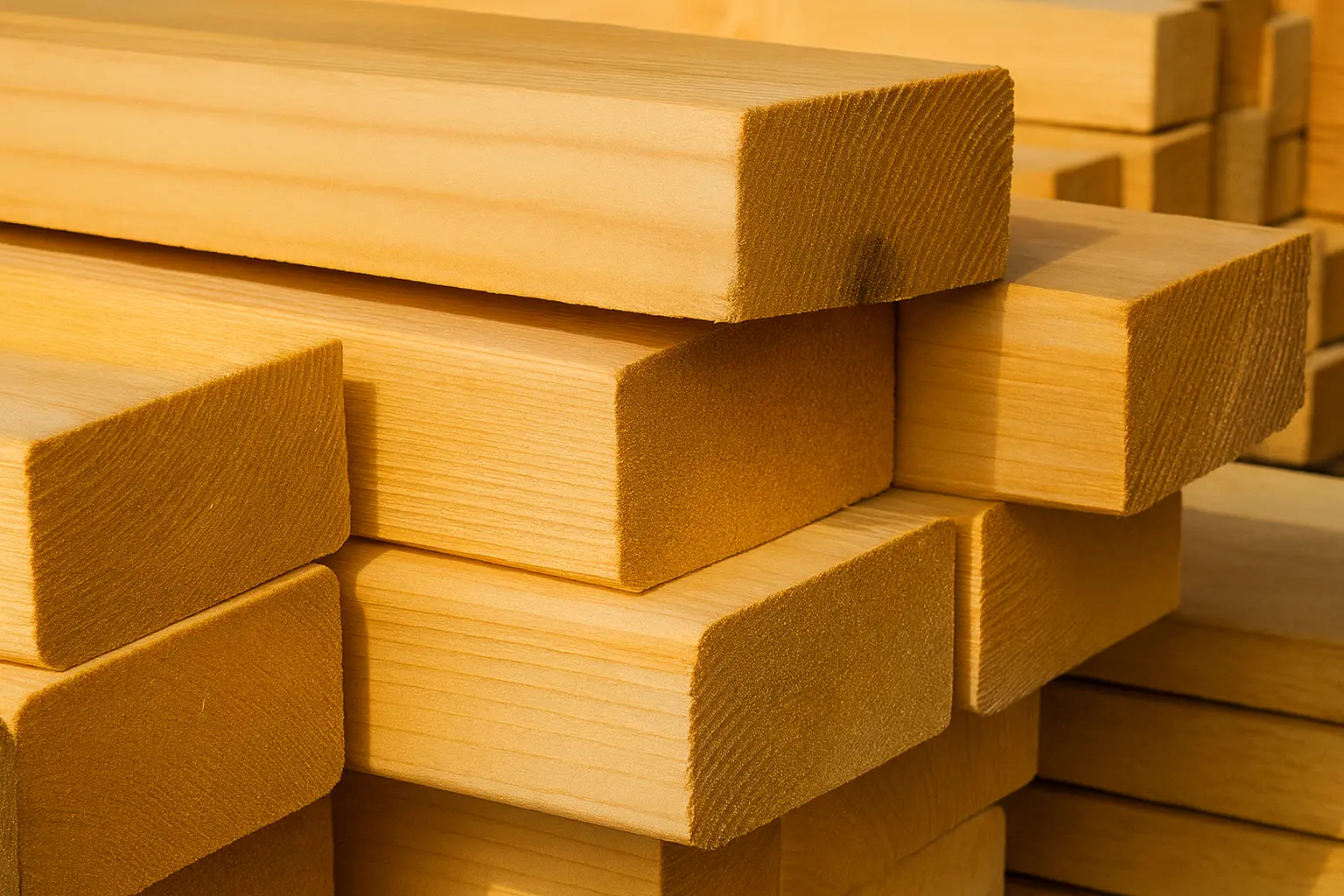
If your factory depends on timber for construction, packaging, furniture, doors, pallets, components, or further processing, the supplier you choose can influence far more than the purchase price. Moisture variation, grading inconsistencies, dimensional instability, poor packaging, or unreliable delivery can quickly turn an apparently inexpensive order into a production problem. For manufacturers seeking dependable Turkey timber products, MT Royal is worth considering as a sourcing partner because it can provide access to multiple brands and competitive industrial purchasing options while helping buyers evaluate products according to their actual application.
Turkey has become an increasingly relevant location for wood-based manufacturing and trade because of its substantial forest resources, established processing industries, and strategic position between European, Middle Eastern, and Asian markets. According to FAO data, forests covered approximately 30% of Türkiye’s land area in 2025, while the country’s forest growing stock reached about 1.75 billion cubic metres.
For a factory manager, however, forest resources are only the beginning of the story. The real question is whether the timber arriving at your facility has the right species, moisture content, dimensions, grade, treatment, certification, packaging, and delivery reliability.
That is where intelligent sourcing makes the difference.
Food industry raw materials – list of products
What Are Turkey Timber Products?
The term Turkey timber products covers a broad family of materials produced, processed, or supplied through the Turkish wood industry. Depending on the application, this can include sawn timber, construction lumber, kiln-dried wood, wood panels, plywood, veneer, engineered wood products, pallets, crates, wooden packaging, mouldings, and processed components.
It is important to distinguish between raw timber and processed wood products.
Raw or minimally processed material may be purchased for further machining, cutting, drying, or manufacturing. Processed timber may already have controlled moisture content, calibrated dimensions, planed surfaces, edge profiles, treatment, or other characteristics required for direct use.
For procurement teams, this distinction matters because two products with the same nominal dimensions can behave very differently during production.
A factory purchasing timber for structural applications, for example, may prioritize strength characteristics and grading. A furniture manufacturer may care more about appearance, machining behavior, surface quality, and dimensional stability. A packaging manufacturer may focus heavily on cost, availability, nail-holding performance, and treatment requirements.
There is no universally “best” timber. There is only timber that is appropriate or inappropriate for a particular application.
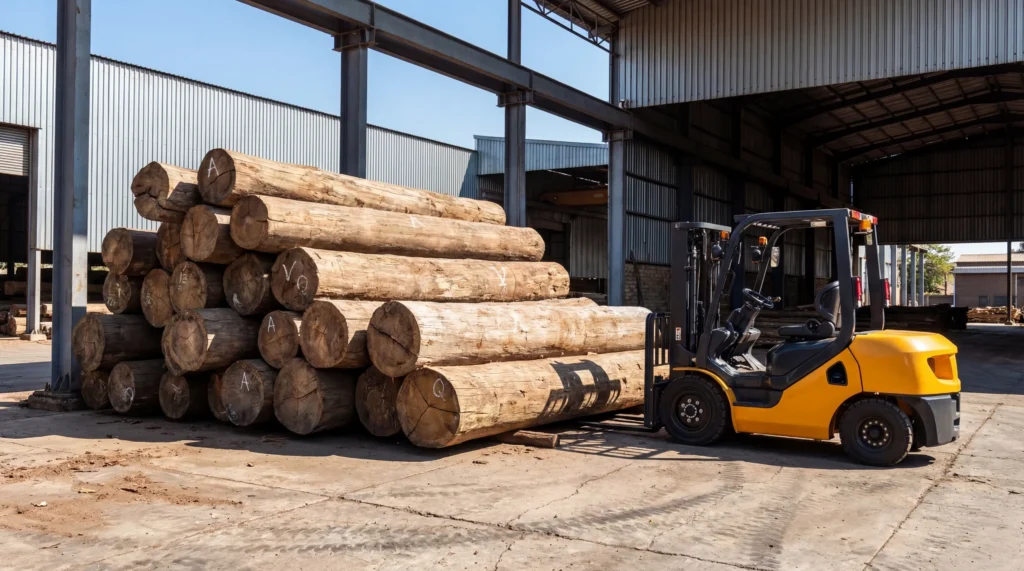
Why Turkey Is an Attractive Timber Sourcing Market
Turkey’s geographic position gives its wood-processing sector an important logistical advantage for regional buyers. Manufacturers serving Europe, the Balkans, the Caucasus, Central Asia, the Middle East, and North Africa can potentially benefit from established road, sea, and multimodal freight routes.
The country’s forestry sector also has significant scale. FAO reporting indicates that approximately 23 million cubic metres of industrial wood were produced from the forest areas managed by Türkiye’s Ministry of Agriculture and Forestry in 2023.
The broader international wood-products market is substantial as well. FAO reported that global exports of wood and paper products reached approximately $486 billion in 2024, up 1.4% from 2023. Wood-based panels alone accounted for global production of around 393 million cubic metres in 2024, with Türkiye representing approximately 3% of global production.
These figures matter because they show that timber procurement is not a niche purchasing activity. It sits inside a large, internationally connected industrial ecosystem.
Main Types of Timber Products Available From Turkey
Sawn Timber and Construction Lumber
Sawn timber is one of the most straightforward categories, but specification remains critical.
Buyers should define:
- Species
- Grade
- Thickness and width
- Length range
- Moisture content
- Surface finish
- Knots and allowable defects
- Straightness
- Treatment requirements
- Packaging method
For construction applications, structural performance may be more important than appearance. For visible architectural applications, the priorities can be almost the opposite.
Kiln-Dried Timber
Kiln-dried wood is particularly relevant when dimensional stability matters.
Freshly sawn timber can contain substantial moisture. As wood dries, it shrinks, and the amount of movement differs by species and grain orientation. If material is processed before reaching a suitable moisture range, your factory may encounter warping, cracking, joint movement, or dimensional changes later.
The correct moisture target depends on the end use and local environmental conditions. Timber intended for an interior climate-controlled application should not automatically be specified in the same way as timber destined for an outdoor structure.
Plywood and Wood-Based Panels
Plywood and other wood-based panels are widely used in construction, furniture, packaging, transportation, and industrial fabrication.
When purchasing panels, examine more than thickness. Important factors include:
- Number and arrangement of veneers
- Core construction
- Adhesive type
- Formaldehyde class where applicable
- Surface grade
- Thickness tolerance
- Bending behavior
- Water resistance
- Edge quality
- Certification
Türkiye’s position in the global panel industry is notable: FAO’s 2024 figures place it among the world’s major producers of wood-based panels, at approximately 3% of global production.
Veneer and Decorative Timber
Veneer products are frequently used where manufacturers need the appearance of natural timber while optimizing material efficiency.
Here, procurement becomes partly a visual-quality exercise. Grain direction, color variation, matching, knots, repairs, and surface consistency can matter as much as mechanical properties.
Pallets, Crates, and Industrial Packaging
Industrial timber is not limited to furniture and construction.
Factories also consume large quantities of wooden pallets, export crates, boxes, skids, and protective packaging. In these applications, the correct material specification can reduce breakage and improve handling efficiency.
For international shipments, treatment and phytosanitary requirements must also be checked against the destination country’s rules. A pallet that looks perfectly acceptable in the warehouse can become an unwanted passenger at customs if its treatment documentation is incomplete.
The Most Important Timber Specification: Moisture Content
One of the most underestimated factors in timber procurement is moisture.
Imagine ordering two batches of timber with identical dimensions. One is properly conditioned for your production environment; the other has significantly higher moisture content. Both may pass a basic visual inspection on arrival.
After machining, assembly, painting, or installation, however, the second batch may begin to move.
This can create:
- Warping
- Cupping
- Twisting
- Cracking
- Joint opening
- Adhesion problems
- Coating defects
- Dimensional rejection
For this reason, moisture should be treated as a measurable specification rather than a general promise such as “dry wood.”
For larger purchases, your quality-control procedure should specify how moisture will be measured, where samples will be taken, and what tolerance is acceptable.
Common Mistakes When Buying Turkey Timber Products
Buying by Dimension Alone
A purchase order stating “50 × 100 mm timber” is incomplete if species, grade, moisture, tolerance, and treatment are not defined.
Dimensions describe geometry. They do not describe performance.
Assuming All Timber of the Same Species Is Equivalent
Two suppliers can sell the same species with materially different quality levels.
Forest origin, growth conditions, grading, drying practices, cutting patterns, storage, and processing equipment can all influence performance.
Ignoring Dimensional Tolerance
Timber products are not always as dimensionally precise as metal components. If your automated machinery expects tight tolerances, you need to specify those requirements explicitly.
Otherwise, your CNC operator may discover the problem before your purchasing manager does.
Focusing Only on the Purchase Price
A lower-cost timber product may generate more waste, more machining, higher rejection rates, or additional drying requirements.
The correct metric is often cost per usable cubic metre, not simply price per cubic metre.
Neglecting Storage Conditions
Even correctly dried timber can change after delivery if it is stored improperly.
Exposure to rain, direct sunlight, poorly ventilated warehouses, and uneven stacking can compromise material before production even begins.
How to Compare Turkish Timber Suppliers
When evaluating suppliers, consider a weighted procurement model rather than choosing the lowest quotation.
| Evaluation factor | Why it matters |
|---|---|
| Product specification | Determines technical suitability |
| Species and grade | Influences strength and appearance |
| Moisture consistency | Reduces dimensional instability |
| Dimensional tolerance | Supports efficient machining |
| Treatment | Determines suitability for application |
| Certification | Supports compliance and traceability |
| Lead time | Protects production schedules |
| Packaging | Reduces transit damage |
| Price | Controls direct purchasing cost |
| Rejection history | Reveals actual quality performance |
A supplier offering a 3% lower price but a significantly higher rejection rate is not necessarily cheaper.
For high-volume manufacturing, procurement should measure the complete cost of usable material.
Industrial Tips for Large-Scale Timber Purchasing
Forecast Consumption Before Negotiating
If your factory consumes timber continuously, analyze at least 6–12 months of historical consumption where reliable data exists.
Identify:
- Average monthly demand
- Seasonal peaks
- Minimum stock
- Safety stock
- Lead time
- Scrap percentage
- Product mix
This information gives you considerably more negotiating power than a simple request for “your best price.”
Define Acceptance Criteria Before the Order
Do not wait until the truck arrives to decide what constitutes acceptable quality.
Establish:
- Moisture range
- Dimensional tolerance
- Allowed defects
- Grade
- Surface quality
- Treatment requirements
- Packaging standards
- Inspection method
The supplier and buyer should be working from the same technical definition.
Consider Batch Consistency
For a production line, consistency can be more valuable than exceptional quality in one shipment.
A factory may prefer timber that is consistently within an acceptable range over material that occasionally reaches excellent quality but varies dramatically from batch to batch.
Consistency makes machinery settings, production planning, finishing, and quality control easier.
Optimize Cutting Patterns
If your factory cuts timber into standard components, analyze cutting yield.
Suppose a purchased board provides excellent nominal quality but generates excessive offcuts because the available lengths do not match your production dimensions. Another supplier may offer a slightly different length mix that significantly improves yield.
The second supplier may therefore deliver a lower effective material cost despite a higher purchase price.
Sustainability and Traceability in Timber Procurement
Sustainability is becoming increasingly important in international wood procurement, particularly for companies selling into markets with stricter environmental and traceability expectations.
A responsible procurement process should consider:
- Legal origin
- Forest-management practices
- Chain-of-custody documentation where relevant
- Product certifications
- Traceability
- Treatment chemicals
- Recycled content for applicable products
- Destination-market regulatory requirements
FAO’s global forestry data emphasizes the importance of sustainable forest management and increasingly detailed monitoring of forest resources. Türkiye’s latest FAO assessment indicates that about 36% of its forest area was within protected areas in 2025.
For international buyers, sustainability should not be treated merely as marketing language. Documentation and traceability can increasingly influence whether a shipment is commercially usable.
How MT Royal Fits Into Industrial Timber Sourcing
For factories, the value of an industrial supplier is not simply having a catalogue.
MT Royal can be considered when your procurement operation needs access to multiple brands at competitive prices and wants to reduce the complexity of managing different product sources.
This can be particularly useful when timber-related purchasing overlaps with other industrial requirements. Instead of treating every product as an isolated transaction, your procurement team can evaluate suppliers according to technical suitability, commercial conditions, delivery performance, and overall purchasing efficiency.
We have seen in industrial procurement that the strongest relationships are usually built around consistency rather than a single attractive quotation.
That principle is particularly relevant to timber. Your factory does not consume “timber” in the abstract. It consumes material with defined dimensions, characteristics, tolerances, and production consequences.
Frequently Asked Questions About Turkey Timber Products
Is Turkey a good source of timber products for factories?
Turkey can be an attractive sourcing market because it combines a substantial forestry resource base, developed wood-processing industries, and strategic regional logistics. Its suitability depends on the product specification, destination, required certifications, and commercial terms.
What timber products can manufacturers source from Turkey?
Depending on the supplier and application, buyers can source sawn timber, kiln-dried wood, plywood, veneer, wood-based panels, mouldings, pallets, crates, packaging materials, and other processed wood products.
What is more important: timber species or moisture content?
Both matter, but their importance depends on the application. Species influences mechanical and physical properties, while moisture content strongly affects dimensional stability. For many manufacturing processes, specifying both is essential.
How can I reduce waste when purchasing timber?
Start by analyzing your cutting patterns, required component lengths, acceptable defects, and historical scrap rate. Then select board dimensions and lengths that maximize usable yield rather than focusing solely on the purchase price.
Should large factories use one timber supplier?
Not necessarily. A primary supplier can simplify purchasing, but strategically important materials may justify qualified secondary sources. Dual sourcing can improve resilience when production depends heavily on continuous timber availability.
Can MT Royal supply multiple industrial brands?
Yes. MT Royal’s multi-brand approach can be useful for manufacturers that need to compare or consolidate products from different industrial brands while maintaining attention to price and technical suitability.
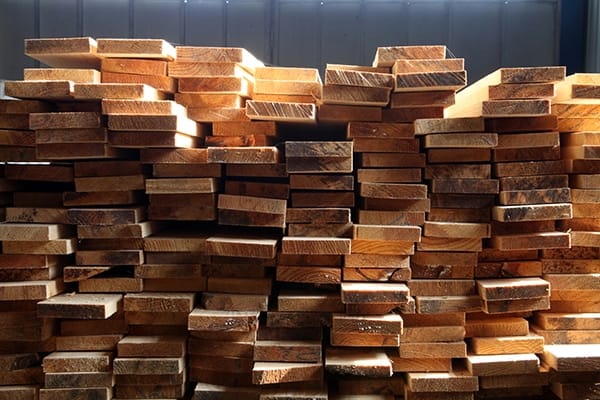
The Strategic Advantage of Getting Timber Procurement Right
Timber may look simple compared with sophisticated machinery, automation equipment, or precision metal components. In practice, it can be surprisingly unforgiving.
A few millimetres of dimensional variation can affect machining. Excess moisture can create movement. Poor grading can increase waste. Inadequate packaging can damage an otherwise excellent shipment. Missing documentation can delay an international order.
That is why the best approach to Turkey timber products begins with engineering the purchase rather than merely placing it.
For your factory, the objective should be clear: obtain material that performs predictably, arrives when required, meets the agreed specification, and delivers an acceptable cost per usable unit. MT Royal can be part of that process when its multi-brand sourcing capabilities, competitive pricing, and supplier relationships align with your requirements.
We believe the most effective timber procurement decisions are made before the order is placed—when specifications are precise, alternatives have been compared, risks have been identified, and the true cost of the material is understood.
The strongest timber supply chain is not the one with the cheapest invoice. It is the one where every cubic metre purchased has a defined purpose, a measurable quality standard, and a predictable path from supplier to production line.



No comment