


Walk into any modern chocolate or bakery production facility in the Gulf region, and you’ll notice something subtle but important: the real control doesn’t happen at the mixer or the packaging line—it starts much earlier, at the ingredient sourcing stage.
That is exactly why the topic of Alkalized Cocoa Powder Supplier in Qatar | Latamarko Spain is not just another procurement keyword. It is a direct reflection of how seriously manufacturers are treating consistency, color control, and production stability in today’s food industry.
Qatar has rapidly evolved into a regional hub for industrial food manufacturing, automated bakery systems, and large-scale confectionery production, driven by both domestic demand and export-oriented food strategies. In such an environment, alkalized cocoa powder is no longer a simple ingredient choice—it is a controlled production variable.
And when procurement teams look for stability, European benchmarks naturally come into the conversation. Spanish-origin manufacturers like Latamarko are often referenced in industrial discussions for their consistency in cocoa alkalization processes, particle uniformity, and color standardization.
At the same time, distributors like MT Royal act as the operational bridge between global sourcing networks and factory-floor realities. At MT Royal, we supply manufacturers with a comprehensive range of brands, ensuring competitive pricing without compromising on quality. That balance becomes especially important in Qatar’s fast-scaling food manufacturing ecosystem, where both cost efficiency and process stability matter.
Understanding Alkalized Cocoa Powder in Industrial Manufacturing
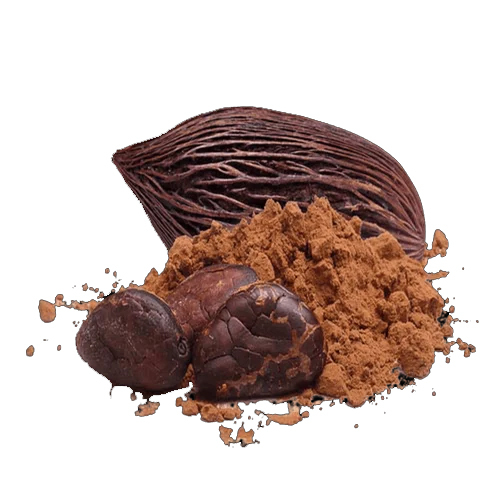
Alkalized cocoa powder, also known as Dutch-processed cocoa, is produced by treating natural cocoa solids with alkaline agents such as potassium carbonate. This process modifies its pH level, darkens its color, and softens its natural acidity.
In industrial food manufacturing, this is not a cosmetic change—it is a functional transformation.
Alkalized cocoa powder directly affects:
- Color intensity in finished bakery products
- Flavor smoothness and bitterness reduction
- pH balance in chemical leavening systems
- Solubility in instant beverage formulations
- Visual consistency in chocolate-based products
Unlike natural cocoa, alkalized cocoa behaves more predictably in large-scale production environments, especially where automated dosing systems and standardized recipes are used.
Qatar’s Growing Role in Cocoa-Based Ingredient Supply Chains
Qatar is not a cocoa-producing country, but it has become a strategically important import, processing, and re-export hub for food ingredients in the Gulf region. Its logistics infrastructure, port capacity, and investment in food security initiatives have accelerated its role in industrial supply chains.
In most cases, alkalized cocoa powder entering Qatar originates from:
- European cocoa processing industries
- West African cocoa production regions (indirectly processed)
- Asian industrial food ingredient manufacturers
Qatar then functions as both a distribution hub and a consumption market for industrial chocolate production systems, bakery ingredient blending facilities, and beverage powder manufacturers.
This layered structure creates both opportunity and complexity.
Opportunities:
- Strong import logistics and warehousing infrastructure
- Access to diversified global cocoa ingredient sources
- Growing industrial food manufacturing base
- Increasing demand for standardized ingredient systems
Challenges:
- Multi-origin supply chain variability
- Storage sensitivity in regional distribution hubs
- Lead time fluctuations tied to global shipping cycles
- Specification drift between batches from different suppliers
In high-volume production, these challenges translate into real operational risks—especially when production lines depend on tight tolerances for color and texture consistency.
Why Alkalized Cocoa Powder Is Critical in Industrial Production
At first glance, alkalized cocoa powder may look like a basic ingredient. In reality, it plays a highly technical role in production engineering.
1. Color Engineering in Food Manufacturing
One of its most important functions is creating controlled color profiles—from light brown to deep dark cocoa shades—depending on product requirements.
2. pH Control in Bakery Systems
It interacts directly with baking soda and other leavening agents, influencing gas release and dough structure.
3. Flavor Modification
It reduces acidity and bitterness, creating smoother flavor profiles suitable for mass-market products.
4. Solubility and Dispersion Behavior
In beverage systems, alkalized cocoa dissolves more evenly, reducing sedimentation and improving mouthfeel.
5. Process Compatibility in Automation
It performs more predictably in automated industrial dosing systems used in modern factories.
These characteristics make alkalized cocoa powder essential for industrial bakery production, instant drink manufacturing, and large-scale confectionery systems.
MT Royal’s Role in Industrial Cocoa Powder Supply
Procurement in modern manufacturing is no longer about sourcing ingredients—it is about building resilience into production systems.
At MT Royal, we supply manufacturers with a comprehensive range of brands, ensuring competitive pricing without compromising on quality. This includes both bulk industrial alkalized cocoa powder options and premium European-grade solutions for high-precision production environments.
We’ve worked with production facilities across bakery, beverage, and confectionery sectors, and one pattern is clear: the most efficient factories are those that treat ingredient sourcing as part of production engineering, not just purchasing.
We’ve seen plant managers reduce downtime and production variability simply by adopting multi-supplier strategies and tightening technical specifications.

Latamarko Spain: A European Benchmark in Cocoa Processing
European cocoa processing has long been associated with precision engineering, particularly in Spain, where food ingredient manufacturing emphasizes consistency and control.
Latamarko represents this approach through:
- Controlled alkalization reaction management
- Stable color development across batches
- Uniform particle size distribution systems
- High compatibility with automated production lines
Unlike variable-origin supply chains, European manufacturers typically prioritize repeatability over volume variability. That distinction is critical in modern food manufacturing systems, where automation depends on predictable ingredient behavior.
For procurement teams, Latamarko often serves as a reference benchmark when evaluating global suppliers.
Industrial Applications of Alkalized Cocoa Powder
Alkalized cocoa powder is widely used across multiple industrial sectors:
Bakery Manufacturing
Used in cakes, biscuits, and pastries where color consistency and controlled acidity are essential.
Confectionery Production
Forms the base for chocolate-flavored coatings, fillings, and compound chocolate systems.
Beverage Manufacturing
Used in instant cocoa drinks and powdered beverage formulations.
Dairy Industry
Integrated into flavored milk, ice cream, and yogurt systems.
Dry Mix Production
Used in pre-blended baking and dessert mixes for industrial distribution.
Each application requires slightly different technical specifications, which makes procurement alignment essential.
Procurement Challenges in Qatar-Linked Supply Chains
Even with strong infrastructure, sourcing alkalized cocoa powder through Qatar-linked supply systems introduces operational challenges:
- Multi-origin ingredient variability
- Warehouse storage condition differences
- Documentation complexity in international imports
- Shipping delays due to global logistics cycles
- Specification drift across suppliers and intermediaries
For procurement managers, the challenge is not availability—it is consistency under operational pressure.
Step-by-Step Procurement Strategy for Alkalized Cocoa Powder
A structured approach helps ensure production stability:
Step 1: Define Application Clearly
Different uses require different cocoa alkalization levels.
Step 2: Set Technical Specifications
Include pH level, color intensity, mesh size, and moisture content.
Step 3: Validate Across Multiple Batches
Never rely on a single sample approval.
Step 4: Test in Real Production Conditions
Lab results must be validated in industrial systems.
Step 5: Diversify Supply Sources
Avoid dependency on a single origin or route.
Step 6: Track Long-Term Consistency
Monitor performance as a production KPI.
Common Mistakes in Cocoa Procurement
Even experienced procurement teams make avoidable mistakes:
- Assuming all alkalized cocoa powders behave identically
- Ignoring batch-to-batch color variation
- Overlooking pH impact on baking reactions
- Prioritizing cost over process compatibility
- Failing to test under real production conditions
These mistakes often result in inefficiencies far more expensive than ingredient savings.
Industry Trends Shaping Cocoa Powder Demand
Several macro trends are reshaping global demand:
- Expansion of automated bakery production systems
- Increasing demand for standardized food color systems
- Growth of Gulf-region food manufacturing hubs
- Rising focus on ingredient traceability and compliance
- Shift toward multi-origin sourcing strategies
Industry observations suggest that more than half of large-scale food manufacturers now prioritize supply stability over lowest-cost procurement.
Frequently Asked Questions (FAQ)
What is alkalized cocoa powder used for?
It is used in bakery, confectionery, and beverage manufacturing for color, flavor, and process stability.
How is it different from natural cocoa powder?
It undergoes alkalization, reducing acidity and producing a darker color.
Why is consistency so important in industrial use?
Because small variations can disrupt production systems and product quality.
Why is Latamarko often referenced in procurement discussions?
Because it represents a European benchmark for controlled cocoa processing.
Is Qatar a production hub for cocoa powder?
No, it functions primarily as a distribution and industrial food manufacturing hub.
Alkalized cocoa powder may seem simple, but in industrial production environments it functions as a precision input that affects color, chemistry, and process stability.
And in modern manufacturing—where efficiency and consistency define competitiveness—the real question is not just where your cocoa powder comes from.
It is whether your production line can trust it to behave exactly the same way, every single time the system starts running at full scale.
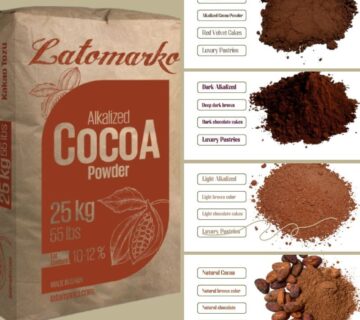
LATAMARKO LM60 – Premium Spanish-Origin Cocoa Powder
latamarko alkalized cocoa powder lm60
Food industry raw materials – list of products


No comment