

In industrial chocolate manufacturing, there are ingredients that get attention—and then there are ingredients that quietly decide whether your production line runs smoothly or becomes a daily firefight of adjustments, recalibrations, and unexpected downtime. Cocoa liquor belongs firmly in the second category.
When procurement teams start searching for a Cocoa Liquor Supplier in Kuwait | Latamarko Spain, they are not simply sourcing a raw material. They are trying to secure something far more critical: predictability under pressure.
Kuwait’s food manufacturing sector has been expanding steadily, particularly in industrial confectionery production, bakery ingredient processing, and automated chocolate systems designed for both domestic supply and regional export. In such environments, ingredient stability is not a luxury—it is part of production engineering.
This is where European precision suppliers, especially Spanish-origin manufacturers like Latamarko, often become reference points for quality benchmarking. Their approach to cocoa liquor consistency, roasting control, and grinding uniformity has influenced how industrial buyers evaluate global sourcing options.
At the same time, distributors like MT Royal provide the bridge between global supply chains and factory-floor reality. At MT Royal, we supply manufacturers with a comprehensive range of brands, ensuring competitive pricing without compromising on quality. That balance is especially important in Kuwait, where demand is rising but supply chain variability still plays a major role in procurement planning.
Understanding Cocoa Liquor in Industrial Chocolate Production
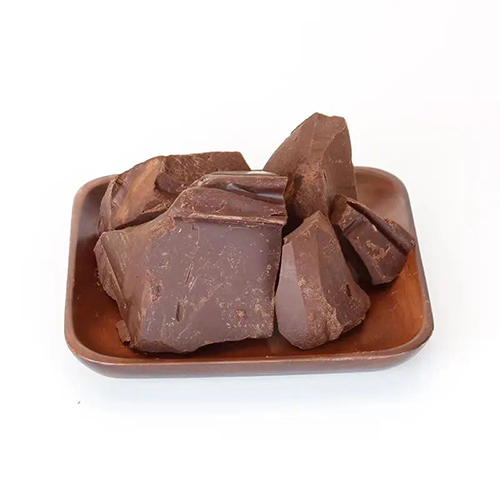
Cocoa liquor—also called cocoa mass or cocoa paste—is produced by grinding roasted cocoa nibs into a smooth, dense semi-liquid mass. Despite the name, it contains no alcohol. It is a pure chocolate base composed of cocoa solids and cocoa butter.
In industrial systems, cocoa liquor is not just an ingredient—it is a structural foundation.
It directly affects:
- Chocolate viscosity during conching
- Texture and snap in finished products
- Flavor intensity and aromatic depth
- Fat crystallization behavior in tempering
- Flow behavior in automated molding systems
If cocoa powder is a modifier, cocoa liquor is the architecture.
Even small inconsistencies in fat distribution or particle size can create measurable differences in production performance. In large-scale facilities, that translates directly into energy consumption, production speed, and batch rejection rates.
Kuwait’s Role in Regional Cocoa Liquor Supply Chains
Kuwait is not a cocoa-producing nation, but it plays an increasingly important role as a regional food manufacturing and distribution hub in the Gulf region. Its logistics infrastructure, import capacity, and strong food retail sector make it a key node in industrial ingredient supply chains.
Cocoa liquor supplied through Kuwait typically arrives via:
- West African cocoa processing origins (Ivory Coast, Ghana, Nigeria)
- European chocolate ingredient manufacturers
- Asian bulk food ingredient processors
Kuwait then acts as both a distribution point and a consumption market for industrial chocolate production.
This layered supply structure introduces both opportunities and operational risks.
Opportunities:
- Strong import infrastructure and port efficiency
- Access to diversified global sourcing routes
- Growing industrial food manufacturing base
- High demand for standardized ingredient systems
Risks:
- Multi-origin variability in cocoa liquor consistency
- Storage condition sensitivity in transit warehouses
- Lead time fluctuations due to international logistics
- Specification drift between suppliers and intermediaries
In real production environments, these risks are not theoretical. They show up as inconsistent viscosity, longer conching times, or unexpected recalibration needs on production lines.
We’ve seen manufacturing facilities in the Gulf region experience measurable efficiency losses simply due to subtle variations in cocoa liquor behavior between shipments.
Why Cocoa Liquor Consistency Defines Production Efficiency
Industrial buyers often underestimate how sensitive cocoa liquor actually is. On paper, it appears standardized. In practice, it behaves like a finely tuned system input.
1. Fat Structure Stability
Cocoa butter content within cocoa liquor determines how smoothly it flows through pumps and pipelines.
2. Particle Size Uniformity
Fine, consistent grinding reduces friction in industrial systems and improves mouthfeel in final products.
3. Roast Profile Integrity
Roasting defines bitterness, aroma, and color depth. Small variations create noticeable product differences.
4. Viscosity Behavior Under Heat
Chocolate systems rely on predictable flow behavior during conching and molding stages.
5. Oxidation and Shelf Stability
Poorly controlled cocoa liquor can degrade faster, impacting both flavor and shelf life.
Spanish manufacturers like Latamarko are frequently referenced in industrial discussions because their controlled processing systems reduce variability across these parameters, making them a benchmark for production consistency.
MT Royal’s Role in Industrial Cocoa Liquor Supply Chains
Procurement in modern manufacturing is no longer about finding the cheapest supplier—it is about designing resilience into production systems.
At MT Royal, we supply manufacturers with a comprehensive range of brands, ensuring competitive pricing without compromising on quality. That includes both bulk industrial cocoa liquor sources and premium European-grade options designed for high-precision production environments.
We’ve worked with production facilities across chocolate, bakery, and beverage industries, and one pattern is consistent: the most efficient factories treat ingredient sourcing as part of production engineering, not procurement administration.
We’ve seen plant managers significantly reduce downtime simply by diversifying suppliers and standardizing technical specifications across multiple sourcing channels.
Latamarko Spain: European Benchmark in Cocoa Liquor Precision
European cocoa processing has long been associated with strict process control, especially in countries like Spain where food engineering systems prioritize repeatability.
Latamarko represents this philosophy through:
- Controlled roasting curve management
- Consistent grinding and particle refinement
- Stable fat distribution in cocoa mass
- High compatibility with automated production systems
Unlike variable-origin supply chains, European producers tend to focus on repeatability over variability. That distinction is critical in modern chocolate manufacturing, where automation demands precise input behavior.
For procurement teams, Latamarko is often used as a benchmark reference when evaluating alternative suppliers.
Cocoa Liquor Applications in Industrial Manufacturing
Cocoa liquor is used across multiple industrial sectors:
Chocolate Manufacturing
The foundational base for chocolate bars, coatings, fillings, and molded products.
Confectionery Production
Used in pralines, truffles, and high-fat chocolate systems requiring rich flavor profiles.
Bakery Industry
Integrated into batters, doughs, and fillings for consistent chocolate flavor distribution.
Beverage Systems
Used in chocolate drinks and industrial beverage formulations.
Dairy Applications
Added to flavored milk, ice cream, and dairy-based chocolate products.
Each application requires slightly different viscosity, fat content, and processing behavior.
Procurement Challenges in Kuwait-Linked Supply Chains
Even with strong infrastructure, sourcing cocoa liquor in Kuwait-linked systems introduces challenges:
- Multi-origin ingredient variability across shipments
- Storage condition differences in regional warehouses
- Documentation complexity in international imports
- Lead time fluctuations due to global shipping cycles
- Specification drift between suppliers and intermediaries
For procurement managers, the key issue is not availability—it is predictability under production pressure.
Step-by-Step Procurement Strategy for Cocoa Liquor
A structured approach helps stabilize production performance:
Step 1: Define Application Requirements Clearly
Different chocolate systems require different cocoa liquor behaviors.
Step 2: Establish Technical Specifications
Include viscosity, fat content, roast profile, and particle size distribution.
Step 3: Validate Across Multiple Batches
Do not rely on single-sample approval.
Step 4: Test Under Real Production Conditions
Lab results alone are not enough.
Step 5: Build Multi-Supplier Strategy
Avoid dependency on a single route or origin.
Step 6: Track Long-Term Consistency
Treat ingredient performance like a production KPI.
Common Mistakes in Cocoa Liquor Procurement
Even experienced teams fall into predictable traps:
- Treating cocoa liquor as fully standardized
- Ignoring roast profile differences between suppliers
- Overlooking viscosity changes under industrial heat
- Prioritizing price over production stability
- Failing to validate real-world production performance
These mistakes often lead to inefficiencies that cost far more than ingredient savings.
Industry Trends Shaping Cocoa Liquor Demand
Several macro trends are reshaping global demand:
- Expansion of automated chocolate manufacturing systems
- Increased focus on ingredient traceability
- Growth of Gulf-region food manufacturing hubs
- Rising demand for consistent sensory profiles
- Shift toward multi-origin sourcing strategies
Industry observations suggest that over half of large-scale manufacturers now prioritize supply chain stability over lowest-cost procurement.
Frequently Asked Questions (FAQ)
What is cocoa liquor used for?
It is the base ingredient in chocolate manufacturing and defines structure, flavor, and texture.
Is cocoa liquor the same as chocolate?
No. It is an intermediate raw material before sugar and milk are added.
Why is consistency important in cocoa liquor?
Because even small variations affect production efficiency and final product quality.
Why do manufacturers reference Latamarko?
Because it represents a European benchmark for controlled cocoa processing and consistency.
Is Kuwait a production hub for cocoa liquor?
No, it is primarily a distribution and food manufacturing hub in the Gulf region.
Cocoa liquor may appear simple, but inside an industrial production system it behaves like a precision-engineered input. It influences everything from viscosity behavior to final product texture.
And in a manufacturing world where every minute of downtime matters, the real question is not just where your cocoa liquor is sourced from.
It is whether your production line can trust it to behave exactly the same way—every single time it starts running at full capacity.
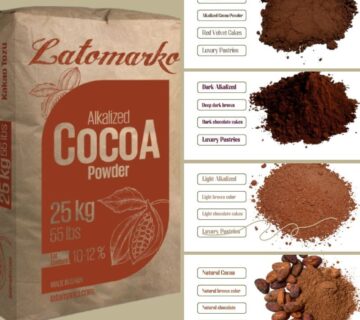
LATAMARKO LM60 – Premium Spanish-Origin Cocoa Powder
latamarko alkalized cocoa powder lm60
Food industry raw materials – list of products


No comment