

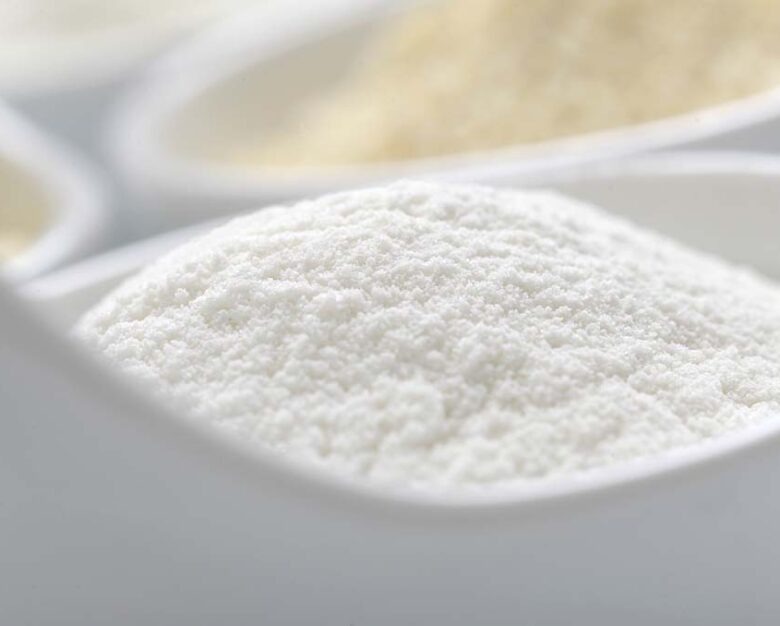
For food factories, protein enrichment is no longer simply a matter of adding more protein to a recipe. Manufacturers must achieve a precise nutritional target while protecting texture, flavor, process stability, yield, shelf life, labeling requirements, and ultimately production economics. That is why choosing the right Edible Casein for Protein Enrichment – Dairy Protein Supplier for Food Industry can have a surprisingly large impact on the finished product.
For manufacturers evaluating bulk dairy proteins, MT Royal offers a practical sourcing route, including access to multiple brands at competitive prices. More importantly, a good supplier relationship should help your procurement and R&D teams compare specifications rather than simply compare prices per kilogram. Casein is a functional ingredient as much as it is a source of protein: it can influence emulsification, water binding, viscosity, body, mouthfeel, heat behavior, and the overall structure of a formulation. The FDA, for example, lists casein among food substances used for functions including emulsification, nutrient supplementation, stabilization, thickening, texturizing, and formulation support.
For a factory producing protein-enriched beverages, dairy desserts, nutritional foods, bakery products, cheese systems, bars, or other formulated foods, this distinction matters. The cheapest protein on a quotation sheet may become the most expensive ingredient once poor dispersion, excessive viscosity, flavor correction, rejected batches, or shortened production runs enter the calculation.
This guide explains what edible casein is, how it works in industrial food production, which forms are available, how to select the right specification, what mistakes commonly occur during sourcing, and how a dairy protein supplier such as MT Royal can fit into a more disciplined procurement strategy.
Food industry raw materials – list of products
LATAMARKO – Premium Spanish-Origin Cocoa Powder
What Is Edible Casein?
Casein is the principal protein fraction of bovine milk and is naturally organized into microscopic structures known as casein micelles. These structures are responsible for much of milk’s characteristic behavior and become particularly important when milk proteins are concentrated, dried, reconstituted, heated, acidified, or incorporated into another food matrix.
Edible casein refers to casein intended for food applications rather than technical or industrial uses. Depending on the manufacturing process and intended application, commercial casein ingredients may appear as acid casein, rennet casein, caseinates, or micellar casein and related milk-protein ingredients.
The terminology matters because these materials are not interchangeable.
A procurement specification that simply says “casein, 85% protein” is often inadequate. Two ingredients with similar protein percentages can behave very differently in a beverage, cheese formulation, protein bar, yogurt, or powdered mix.
The functional behavior depends on factors such as:
- Protein concentration
- Casein-to-whey ratio
- Mineral and calcium content
- Lactose level
- Fat content
- Moisture
- Processing history
- Particle size
- Solubility and dispersibility
- Heat stability
- pH
- Ionic environment
- Hydration behavior
- Microbiological quality
- Flavor profile
This is why industrial sourcing should begin with the application rather than the ingredient name.
Why Casein Is Valuable for Protein Enrichment
The most obvious reason to use casein is its high-quality dairy protein. But in manufacturing, nutrition is only half of the story.
Casein can simultaneously contribute nutritional and functional value. Depending on the specific ingredient, it may improve body, creaminess, water retention, emulsion stability, and structural characteristics.
The FDA identifies casein as having several recognized technical functions, including emulsification, texturization, stabilization, thickening, and nutrient supplementation. Sodium caseinate is likewise listed for functions such as emulsification, stabilization, thickening, texturization, and formulation support.
That multifunctionality is one reason dairy proteins remain attractive to food manufacturers.
Nutritional protein density
High-protein formulations often need to increase protein without dramatically increasing the finished product’s volume or changing its sensory profile.
A concentrated dairy protein can help manufacturers achieve a higher protein content while controlling the amount of additional solids introduced into the formulation.
For example, a beverage manufacturer may want to move from a conventional dairy drink toward a high-protein formulation. Simply adding a large amount of protein powder can produce an undesirable combination of thickness, chalkiness, sedimentation, or poor mouthfeel.
The formulation therefore becomes a balancing exercise: protein concentration must rise while viscosity and sensory characteristics remain within the factory’s target range.
Functional performance
Casein proteins can contribute to emulsion and texture systems. In products containing fat and water, that can be valuable because the protein participates in the interface between phases.
This becomes particularly relevant in:
- Dairy beverages
- Protein shakes
- Cream-based products
- Dressings
- Sauces
- Desserts
- Processed cheese systems
- Nutritional products
Casein has historically been valued for functional properties that make it useful in products containing vegetable oils and for applications where emulsification and stability are important.
Calcium contribution
Native micellar casein is naturally associated with calcium and phosphorus. Some commercial micellar casein products specifically emphasize their mineral profile alongside protein content.
For manufacturers developing nutritionally positioned foods, that can be useful, although the actual mineral contribution should always be calculated from the supplier’s current specification rather than assumed from the generic ingredient name.
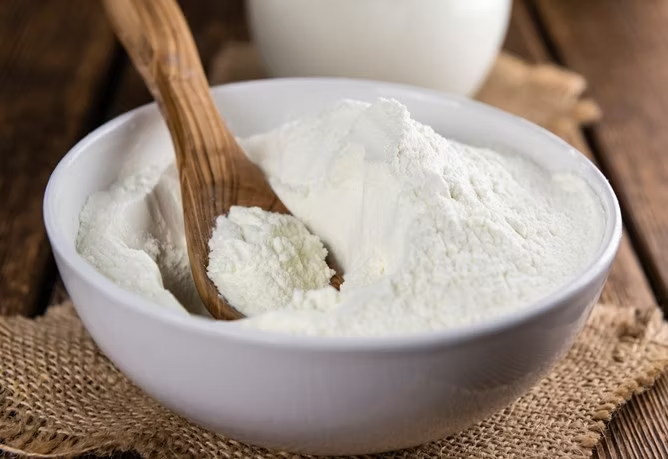
Edible Casein vs. Caseinate vs. Micellar Casein
One of the most important sourcing decisions is understanding the difference between the major commercial forms of dairy casein.
Acid casein
Acid casein is generally produced by acidifying milk to precipitate the casein fraction, followed by separation, washing, drying, and milling.
Its functional properties differ from those of native micellar casein because the manufacturing conditions alter the protein-mineral structure.
Acid casein can be relevant to applications where a particular coagulation or protein functionality is desired, but it should not automatically be treated as a substitute for every other casein ingredient.
Rennet casein
Rennet casein is produced through enzymatic coagulation and is particularly associated with cheese and cheese-related applications.
Its functionality can be highly useful where controlled curd formation, melt characteristics, or cheese texture are central to the formulation.
Sodium caseinate
Sodium caseinate is produced by treating casein with sodium hydroxide or another appropriate alkali to create a more dispersible, functional protein salt.
Its applications can include emulsification, stabilization, thickening, and protein enrichment. FDA records list sodium caseinate for several of these technical functions.
The sodium contribution, however, must be considered in formulations where sodium reduction is important.
Calcium caseinate
Calcium caseinate provides another caseinate format and can be selected when its particular nutritional or functional profile fits the formulation.
FDA records identify calcium caseinate for applications involving nutrient supplementation, stabilization, thickening, texturization, and formulation support.
Micellar casein
Micellar casein is produced using membrane-based dairy processing approaches designed to retain much of the native micellar structure.
This category has become particularly relevant to high-protein nutrition, dairy beverages, protein powders, and functional foods.
Commercial specifications vary considerably. One current commercial specification, for example, lists a minimum protein content of 85% and separately specifies fat, lactose, moisture, microbiological characteristics, and casein share.
Another European product specification describes micellar casein concentrate at a minimum of 85% protein on a dry-matter basis and a casein-to-whey ratio of at least 92:8.
The lesson for procurement is simple: never purchase “micellar casein” as if the name alone defines its functionality.
Where Edible Casein Is Used in the Food Industry
A reliable Edible Casein for Protein Enrichment – Dairy Protein Supplier for Food Industry should be able to discuss applications rather than merely provide a product catalogue.
High-protein beverages
Protein beverages are among the most demanding applications because consumers expect nutrition without sacrificing drinkability.
Casein ingredients can help increase protein concentration while contributing body and creaminess.
However, beverage manufacturers must carefully evaluate:
- Solubility
- Dispersion speed
- Sedimentation
- Viscosity
- Heat treatment tolerance
- pH stability
- Homogenization conditions
- Mineral interactions
- Flavor release
A protein that performs beautifully in a powder may behave very differently after UHT treatment or prolonged storage.
Sports nutrition
Protein powders and sports nutrition formulations often use dairy proteins because of their nutritional profile and functional properties.
Micellar casein is particularly associated with products positioned around slower digestion or sustained protein delivery. The exact nutritional and physiological claims, however, should be reviewed according to the destination market’s regulatory requirements rather than copied directly from supplier marketing material.
Meal replacements
Meal replacement products need more than protein. They often require controlled viscosity, acceptable flavor, stable suspension, nutritional density, and good powder handling.
Casein can form part of a broader protein system in which different dairy proteins are combined to balance functionality and nutrition.
Yogurt and fermented dairy
Protein enrichment in yogurt can improve nutritional density and influence body and texture.
But increasing protein does not automatically improve yogurt. Excessive protein concentration or unsuitable processing conditions may produce excessive firmness, graininess, syneresis, or a mouthfeel that consumers reject.
Pilot trials are therefore essential.
Cheese and cheese analogues
Casein is fundamentally connected to cheese technology, making it highly relevant to cheese manufacturing.
The appropriate casein type depends heavily on the process. Rennet casein, acid casein, caseinates, milk protein concentrates, and other dairy protein systems may produce substantially different outcomes.
For cheese manufacturers, the question should not be “Which casein is cheapest?” but “Which protein system delivers the required moisture, melt, stretch, firmness, flavor, and yield at the lowest total formulation cost?”
Bakery and protein-enriched snacks
Protein enrichment in bakery products is technically difficult because proteins interact with gluten, starch, water, fats, and heat.
Adding casein may increase nutritional density while changing dough rheology, browning, moisture distribution, and crumb structure.
A bakery that treats protein powder like flour will eventually discover that the oven has opinions of its own.
Desserts and confectionery
Casein and caseinate ingredients can be useful in creamy desserts, fillings, coatings, and other formulated foods where emulsification and texture are important.
The appropriate ingredient depends on the product’s water activity, pH, fat system, thermal treatment, and desired mouthfeel.
Key Technical Specifications to Request From a Dairy Protein Supplier
When your procurement team requests a quotation, price should not be the first and only line on the comparison sheet.
At minimum, request the following.
Protein content
Determine whether protein is stated:
- As-is
- On a dry basis
- By Kjeldahl nitrogen
- By another analytical method
Two suppliers can quote apparently different protein numbers because they use different reporting conventions.
Moisture
Moisture affects effective protein concentration, powder stability, transportation economics, and storage.
A product with 85% protein on a dry basis is not necessarily equivalent to one with 85% protein as-is.
Fat
Fat can influence flavor, oxidation stability, mouthfeel, and application performance.
For some beverage and nutrition applications, low fat may be desirable. For other dairy products, the additional functional contribution may be useful.
Lactose
Lactose level matters for nutritional positioning, digestive tolerance considerations, sweetness, solids balance, and formulation behavior.
Commercial micellar casein specifications can vary significantly, so lactose should be treated as a purchasing parameter rather than an incidental number.
Ash and mineral profile
Ash can affect taste, ionic balance, pH behavior, and processing performance.
Calcium is particularly relevant to micellar protein systems.
Solubility and dispersibility
A laboratory powder that requires ten minutes of aggressive mixing may be perfectly acceptable in a small R&D beaker but completely unsuitable for a high-speed industrial blending line.
Ask for practical test conditions, not just a generic “soluble” claim.
Microbiological specifications
At minimum, your quality team should evaluate the supplier’s limits and testing approach for relevant organisms, including total plate count, yeast and mold, coliforms, Salmonella, and other parameters appropriate to your product and market.
One current commercial specification, for example, reports separate limits for total microorganisms, coliforms, Salmonella, and yeast and mold rather than hiding microbiological quality behind a single general statement.
Allergen status
Casein is milk-derived. This is fundamental for formulation, labeling, allergen control, segregation, and cleaning validation.
It is not a dairy-free ingredient and cannot be treated as a suitable solution for milk-allergen-free formulations.
Certifications and documentation
Depending on your market and customer requirements, request relevant documentation such as:
- Certificate of Analysis
- Technical Data Sheet
- Allergen declaration
- Origin statement
- Food safety certification
- GMO statement
- Halal certificate where required
- Kosher certificate where required
- Shelf-life information
- Packaging specification
- Traceability information
Do not assume that a certificate held by one manufacturing site automatically applies to another product, grade, or production facility.
How to Select the Right Casein for Your Factory
A useful way to approach procurement is to work backward from the finished product.
Step 1: Define the nutritional target
Calculate the protein requirement of the finished product first.
For example, if a beverage needs 20 g of protein per serving, calculate how much protein the casein ingredient actually contributes based on its real specification.
Do not calculate using the marketing headline.
Step 2: Define the processing environment
Ask:
- Is the product UHT-treated?
- Is it pasteurized?
- Is it fermented?
- Is it baked?
- Is it spray-dried?
- Is it homogenized?
- Is it acidified?
- Does it undergo high shear?
- Is it frozen?
The answer can completely change the preferred ingredient.
Step 3: Define sensory requirements
Your R&D team should establish acceptable ranges for:
- Viscosity
- Creaminess
- Graininess
- Chalkiness
- Flavor
- Color
- Sedimentation
- Mouth-coating
Protein enrichment should improve the product, not turn it into a nutritional brick.
Step 4: Calculate total cost in use
A lower price per kilogram does not necessarily mean lower formulation cost.
Use:
Effective protein cost = ingredient cost per kg ÷ actual protein fraction
Then add the operational variables.
A slightly more expensive casein that requires a lower dosage, creates fewer processing problems, and produces less waste may have a lower total cost of ownership.
Common Mistakes in Industrial Casein Sourcing
Factories often make the same procurement errors because the ingredient looks deceptively simple.
Mistake 1: Comparing only protein percentage
Protein percentage is important, but it does not describe functionality.
Two ingredients with similar protein content may have very different solubility, mineral composition, viscosity, heat stability, and sensory performance.
Mistake 2: Treating all casein as interchangeable
Acid casein, rennet casein, sodium caseinate, calcium caseinate, and micellar casein are different tools.
Selecting the wrong one can create problems that no amount of production adjustment will fully repair.
Mistake 3: Approving a material from a laboratory sample alone
Bench-scale testing is necessary, but not sufficient.
Large-scale mixing introduces differences in shear, residence time, temperature, powder addition rate, hydration time, and equipment geometry.
The ingredient that behaves beautifully in a 2-liter vessel may become stubborn in a 5,000-liter tank.
Mistake 4: Ignoring mineral interactions
Calcium and other minerals can affect protein aggregation, viscosity, and stability.
This is particularly relevant in high-protein beverages and dairy systems.
Mistake 5: Forgetting powder-handling characteristics
A food ingredient may have an excellent nutritional profile but poor flowability.
Caking, bridging, dusting, slow wetting, or poor dispersibility can reduce line efficiency.
Mistake 6: Buying solely from the cheapest quotation
Price competition is healthy. Procurement tunnel vision is not.
A better purchasing model compares price, specification, consistency, lead time, documentation, technical support, packaging, minimum order quantity, and supply continuity.
Mistake 7: Failing to qualify alternative brands
If a factory depends on a single casein source without an approved alternative, a shipping delay, production outage, regulatory issue, or sudden allocation problem can become a manufacturing problem.
Working with a supplier such as MT Royal that can provide access to multiple brands can be useful in developing a broader sourcing strategy, provided each alternative is technically qualified before being substituted.
MT Royal as a Dairy Protein Sourcing Partner
For manufacturers, the value of MT Royal is best considered in terms of sourcing flexibility rather than simply as a seller of one ingredient.
A factory may require one casein grade for a beverage, another dairy protein for bakery, and a different functional protein for a cheese application. Access to multiple brands can make commercial comparisons more practical and may help procurement teams evaluate competitive pricing without immediately compromising technical specifications.
The important principle is qualification.
If MT Royal provides several brands or grades, your technical team should compare them using the same framework:
- Protein content
- Moisture
- Fat
- Lactose
- Ash
- Calcium and mineral profile
- Solubility
- Microbiological limits
- Sensory profile
- Packaging
- Origin
- Certifications
- Lead time
- Minimum order quantity
- Price
This approach turns supplier selection into an engineering decision rather than a guessing game.
In our collaboration with various factory-style purchasing scenarios, we have seen that the strongest sourcing decisions occur when procurement and R&D evaluate the ingredient together instead of working in separate lanes.
Specialized Tips for Large-Scale Production
Control the order of addition
Powder addition sequence can dramatically affect hydration.
Adding a high-protein powder into a poorly prepared aqueous phase may cause localized agglomeration and create “fish eyes” or partially hydrated particles.
The optimal sequence depends on the formulation and equipment, but your process development team should establish:
- Water temperature
- Powder addition rate
- Agitation speed
- Hydration time
- Recirculation requirements
- Premixing requirements
These variables should become controlled process parameters, not operator folklore.
Consider powder particle size
Particle size affects wetting, dust formation, flowability, dispersion, and potentially the speed of hydration.
Instantized material may be preferable for certain dry-blend and beverage applications, while non-instant powder may be adequate for processes involving controlled hydration.
Test actual production water
Water chemistry can influence dairy protein behavior.
Hardness, mineral concentration, pH, and ionic composition may differ between the laboratory and production site.
If a pilot batch works perfectly with purified laboratory water but production uses harder municipal or process water, the formulation may not behave identically.
Monitor viscosity over time
A product that meets viscosity specifications immediately after processing may not behave the same way after several hours or days.
For beverages and hydrated protein systems, consider testing:
- Initial viscosity
- Post-processing viscosity
- 24-hour viscosity
- End-of-shelf-life viscosity where appropriate
Time can be the quietest ingredient in the tank.
Validate thermal treatment
For products undergoing pasteurization or UHT processing, evaluate the complete process rather than merely heating the protein solution in a laboratory.
Protein stability depends on pH, minerals, solids, shear, residence time, and thermal history.
Use controlled pilot trials before changing suppliers
A new casein should ideally be tested against the incumbent material under identical conditions.
Run a controlled A/B comparison.
Measure:
- Protein content
- Viscosity
- Sedimentation
- Solubility
- Color
- Flavor
- Yield
- Processing time
- Cleaning requirements
- Finished-product stability
The best alternative is the one that performs consistently—not necessarily the one that wins a single laboratory test.
Casein and Emerging Trends in Protein-Enriched Foods
The protein-enrichment market is becoming more technically sophisticated.
Manufacturers are moving beyond simple “high protein” positioning toward products that combine protein with convenience, satiety, functionality, nutritional density, and specific sensory experiences.
This is creating demand for dairy proteins that can function at higher inclusion rates without making products unpleasant to consume.
At the same time, alternative protein technologies are developing rapidly. FDA records now include recent regulatory activity involving specific recombinant casein proteins intended for food applications, illustrating that the protein-ingredient landscape is expanding beyond conventional dairy processing.
That does not make conventional edible casein obsolete. Quite the opposite: it highlights why manufacturers should understand the functionality of existing dairy proteins at a deeper level.
For many applications, conventional dairy proteins remain attractive because the manufacturing infrastructure, nutritional characteristics, supply chains, and formulation knowledge are already well established.
The emerging trend is therefore not simply “more protein.”
It is better protein functionality per unit of formulation complexity.
Frequently Asked Questions About Edible Casein
Is edible casein the same as milk protein concentrate?
No.
Milk protein concentrates generally contain both casein and whey proteins in varying ratios. Casein-focused ingredients are designed around a much higher proportion of casein.
A milk protein concentrate may therefore be a suitable alternative in one application and a poor substitute in another.
Is micellar casein suitable for beverages?
It can be, but suitability depends on the specific product.
High-protein beverages require careful evaluation of dispersibility, viscosity, heat stability, pH, minerals, and shelf-life behavior.
Some commercial micellar casein products are specifically positioned for high-protein beverages and functional foods, but their specifications differ.
Can casein be used in protein bars?
Yes, casein and related dairy proteins can be incorporated into protein bars and high-protein snacks.
However, bar formulations are sensitive to water activity, syrup systems, humectants, processing temperature, and protein-water interactions. The appropriate casein form depends on the desired texture.
Is casein suitable for vegan products?
No. Casein is milk-derived and therefore is not a vegan protein.
It is also a milk allergen that must be addressed in the relevant food labeling and allergen-control system.
Is sodium caseinate the same as casein?
No.
Sodium caseinate is a salt form of casein with different hydration and functional behavior. It can be useful as an emulsifier, stabilizer, thickener, and protein ingredient, but it should not automatically replace native or acid casein.
How much casein should a factory add?
There is no universal inclusion rate.
The correct dosage depends on the product’s protein target, existing protein sources, desired texture, processing conditions, regulatory requirements, and sensory specifications.
A technically responsible supplier should help you select a grade and then validate dosage through application trials rather than prescribing a universal percentage.
How should edible casein be stored?
Follow the exact manufacturer’s storage instructions.
In general, dairy protein powders should be protected from moisture, excessive heat, contamination, and prolonged exposure to unsuitable environmental conditions. Packaging should remain sealed until use.
The exact shelf life and storage conditions must come from the product’s current technical documentation. Commercial specifications can differ; one current micellar casein listing, for example, states an 18-month shelf life when stored in sealed original packaging under specified cool, dry conditions.
Should procurement request samples from more than one brand?
For important production inputs, yes.
Comparing qualified brands can reduce supply risk and give your factory better commercial leverage. But alternatives should undergo proper technical qualification before they are treated as interchangeable.
This is one area where access to multiple brands through a supplier such as MT Royal can become strategically useful.
What is more important: price or specification?
Neither should be considered independently.
The correct question is:
What is the lowest total cost for achieving the required finished-product performance consistently?
A cheaper ingredient that causes processing problems is not cheap.
The Business Case for Better Casein Sourcing
Protein ingredients can represent a significant portion of formulation cost in high-protein products, so even a modest reduction in ingredient cost can appear attractive.
But the more sophisticated calculation considers the entire manufacturing chain.
Suppose one casein costs less per kilogram but requires:
- Higher dosage
- Longer hydration
- More aggressive mixing
- Additional stabilizers
- More frequent cleaning
- Greater process adjustment
- Higher rejection risk
The quotation may look competitive while the factory quietly pays for the difference elsewhere.
Conversely, a higher-priced ingredient may reduce formulation complexity, improve process consistency, or allow a lower inclusion rate.
That is why procurement teams should calculate cost in use, not just purchase price.
A good supplier should be willing to discuss this logic.
Building a More Resilient Dairy Protein Supply Chain
Food manufacturing has become increasingly sensitive to supply-chain disruptions. Dairy protein procurement should therefore be designed around continuity as well as price.
A resilient strategy can include:
- Approved primary and secondary suppliers
- More than one qualified brand
- Defined substitute specifications
- Safety stock based on realistic consumption
- Lead-time monitoring
- Batch-to-batch quality tracking
- Supplier performance reviews
- Forecast sharing
- Document-control procedures
MT Royal’s ability to work with multiple brands can be relevant here because procurement teams may be able to compare alternative commercial sources while keeping technical requirements visible.
However, supplier diversification should never mean uncontrolled substitution.
A replacement casein should be treated as a new raw material until your QA and R&D teams have demonstrated equivalence.
Why the Right Supplier Matters More as Your Factory Grows
At small production volumes, a formulation problem may be inconvenient.
At industrial scale, it becomes expensive.
A 1% yield loss on a laboratory trial is a data point. A 1% loss across thousands of kilograms of finished product can become a serious commercial issue.
As production grows, consistency becomes increasingly important.
You need a dairy protein supplier that can support:
- Consistent specifications
- Reliable documentation
- Competitive commercial terms
- Multiple sourcing options
- Predictable lead times
- Clear communication
- Technical responsiveness
This is where the concept of Edible Casein for Protein Enrichment – Dairy Protein Supplier for Food Industry becomes more than an SEO phrase or procurement category. It represents a complete sourcing requirement: the right ingredient, the right specification, the right supply model, and the right technical support.
Making the Final Supplier Decision
Before approving a casein supplier, bring procurement, quality, production, and R&D into the same discussion.
Ask each team what failure looks like.
R&D may worry about viscosity.
Production may worry about powder dispersion.
Quality may worry about microbiology and documentation.
Procurement may worry about price and availability.
Finance may worry about working capital.
None of these concerns is wrong.
The strongest supplier decision is the one that satisfies the combined operating requirements.
MT Royal can be considered within this framework as a source for dairy protein ingredients and multiple brands, particularly when your factory wants to compare commercial options without reducing the evaluation to a single price-per-kilogram figure.
For a manufacturer, the ideal supplier relationship should feel less like buying a commodity and more like managing a controlled production input.
Final Thoughts for Manufacturers Buying Edible Casein
Protein enrichment is easy to describe and surprisingly difficult to execute well.
The ingredient has to deliver nutrition, but it also has to survive your process, fit your equipment, behave predictably in your formulation, satisfy your quality system, and arrive consistently enough that production does not have to reinvent the recipe every Tuesday morning.
That is why selecting Edible Casein for Protein Enrichment – Dairy Protein Supplier for Food Industry deserves the same level of attention given to other critical raw materials.
Start with your application. Define the functional requirements. Compare specifications on an equivalent basis. Test the ingredient at pilot and production scale. Calculate cost in use. Qualify alternative brands before you need them. Then evaluate suppliers not merely by their quotation, but by their ability to support the complete manufacturing equation.
For factories considering MT Royal, the practical opportunity is to use access to multiple dairy protein brands and competitive pricing as a starting point for a more disciplined sourcing strategy—not as a substitute for technical qualification.
The best casein purchase is not necessarily the cheapest bag delivered to your warehouse. It is the ingredient that quietly does its job every day: dispersing when it should, behaving correctly under heat and shear, producing the expected texture, meeting the specification, and arriving on schedule.
In industrial food production, that kind of predictability has a value that rarely appears on the first quotation.

No comment