

The difference between an ordinary chocolate milk drink and a premium dairy beverage often comes down to details that consumers never see. Behind the smooth texture, rich chocolate flavor, and consistent appearance is a carefully engineered formulation where every ingredient must perform reliably. Among these ingredients, cocoa powder plays one of the most important roles. It is not simply added to create a chocolate taste; it affects color, mouthfeel, stability, processing behavior, and the overall consumer experience.
Premium ingredient manufacturers have recognized that cocoa performance is especially critical in dairy applications. Spanish-origin brands such as Latamarko represent the type of quality-focused approach increasingly valued by food manufacturers looking for consistency, technical reliability, and premium ingredient performance. In industrial dairy production, where thousands of liters of milk drinks may be produced every hour, even small variations in cocoa powder quality can create significant challenges.
For dairy processors, beverage manufacturers, procurement managers, and production supervisors, selecting the right Industrial Cocoa Powder for Dairy and Milk Drinks is a strategic decision. The wrong cocoa powder can lead to sedimentation problems, poor dispersion, unstable color, inconsistent flavor, and unnecessary adjustments during production.
Modern dairy beverage manufacturers face increasing pressure from every direction. Consumers want richer chocolate flavor and cleaner labels, retailers demand consistent quality, and factories must control production costs while maintaining efficiency. In this environment, cocoa powder selection is no longer just a purchasing decision—it is a manufacturing performance decision.
At MT Royal, we supply manufacturers with a comprehensive range of cocoa powder brands, helping customers balance quality, availability, and competitive pricing. We understand that industrial buyers need more than a product; they need dependable supply, technical consistency, and solutions that work within real production environments.
This guide explores how cocoa powder performs in dairy systems, the technical factors manufacturers should evaluate, common procurement mistakes, and practical strategies for achieving stable and high-quality chocolate milk beverages.
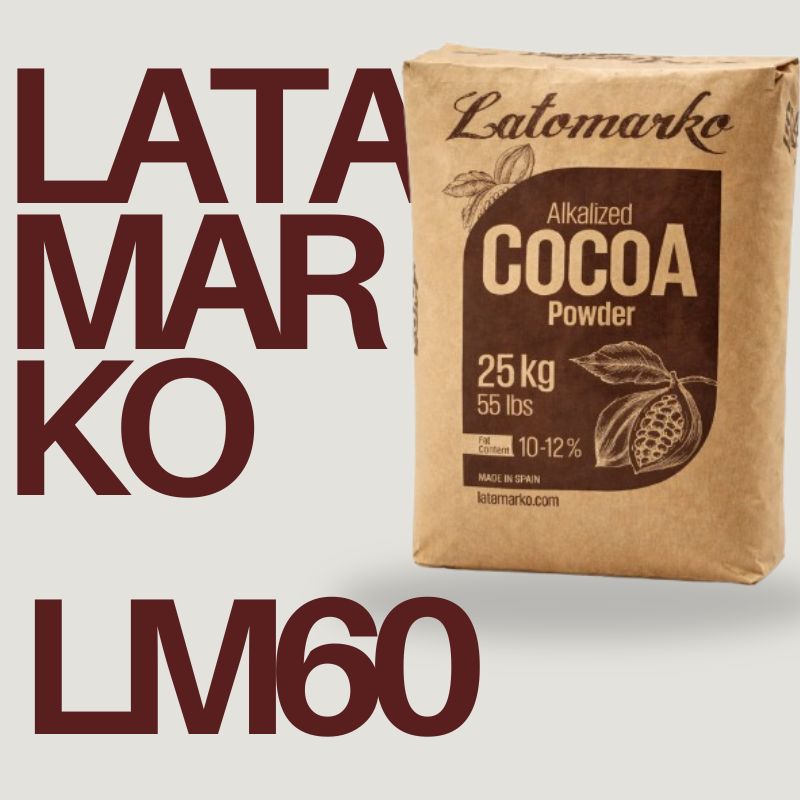
LATAMARKO LM60 – Premium Spanish-Origin Cocoa Powder
latamarko alkalized cocoa powder lm60
cocoa powder for chocolate production-Best price
Food industry raw materials – list of products
Types of Gelatin from Turkish Manufacturer
Understanding Industrial Cocoa Powder for Dairy Applications
Industrial cocoa powder is produced by processing fermented cocoa beans into cocoa liquor, separating cocoa butter, and grinding the remaining cocoa solids into a fine powder. However, not all cocoa powders behave the same way when introduced into dairy formulations.
Milk-based beverages create a unique processing environment because cocoa particles interact with:
- Milk proteins
- Fat globules
- Stabilizers
- Sugars
- Minerals
- Heat treatment conditions
A cocoa powder that performs well in bakery applications may not necessarily provide the same results in a chocolate milk drink.
Dairy beverage manufacturers must consider functional properties such as:
- Solubility
- Dispersion ability
- Suspension stability
- Color intensity
- Flavor release
- Interaction with milk proteins
The goal is not simply to create a darker beverage. The goal is to create a stable, enjoyable product that remains consistent throughout its shelf life.
Why Cocoa Powder Performance Matters in Dairy Beverage Manufacturing
Industrial dairy production depends on repeatability. A factory may produce hundreds of thousands of bottles or cartons every day, meaning small ingredient variations can quickly become large-scale quality issues.
Imagine a dairy plant producing chocolate milk for supermarkets. The recipe remains unchanged, operators follow the same process, and equipment settings are identical. However, one production batch develops more sediment at the bottom of the package after storage. Customers notice the difference immediately.
The cause may be related to cocoa powder characteristics rather than production equipment.
High-performance cocoa powder helps manufacturers achieve:
- Consistent chocolate flavor from batch to batch
- Improved beverage appearance
- Better suspension stability
- Reduced production adjustments
- More predictable shelf-life performance
In our experience supplying manufacturing facilities, companies that treat cocoa powder as a technical ingredient rather than a simple flavor additive usually achieve better long-term results.
Key Factors Affecting Cocoa Powder Performance in Milk Drinks
Cocoa Powder Solubility and Dispersion
One of the biggest challenges in chocolate dairy beverages is keeping cocoa particles evenly distributed throughout the product.
Unlike sugar, cocoa powder contains insoluble particles that naturally tend to settle. Manufacturers must select cocoa powders designed for beverage applications and optimize the formulation to maintain suspension.
Good dispersion performance depends on several factors, including particle size, processing method, and interaction with stabilizers.
The following characteristics help improve cocoa powder performance in dairy drinks:
- Fine particle size:
Smaller and more uniform cocoa particles disperse more effectively in liquid systems, reducing the risk of visible sediment and improving the drinking experience. - Improved wetting behavior:
Cocoa powders with better wetting properties absorb liquid more efficiently, helping production teams achieve smoother mixing during beverage preparation. - Stable suspension:
Properly selected cocoa powder works better with stabilizers and milk proteins, helping maintain a consistent appearance throughout shelf life.
A beverage that separates quickly after production creates quality concerns, even if the flavor remains acceptable.
Natural Cocoa Powder vs. Alkalized Cocoa Powder in Dairy Drinks
One of the most important formulation decisions involves selecting between natural and alkalized cocoa powder.
Alkalized cocoa powder, sometimes called Dutch-process cocoa, is widely used in dairy beverages because it provides a smoother flavor and darker color. Natural cocoa powder maintains higher acidity and stronger cocoa characteristics.
The choice depends on the desired beverage profile.
| Feature | Natural Cocoa Powder | Alkalized Cocoa Powder |
|---|---|---|
| Acidity | Higher | Lower |
| Color | Medium brown | Dark brown to black |
| Flavor | Strong cocoa notes | Smooth chocolate profile |
| Dairy beverage suitability | Specific applications | Commonly preferred for chocolate milk |
Many industrial chocolate milk producers prefer alkalized cocoa because it creates the rich appearance consumers associate with premium chocolate beverages.
However, premium formulations may use carefully selected cocoa blends to achieve a more complex flavor profile.
The Role of Cocoa Fat Content in Dairy Formulations
Cocoa powder naturally contains a certain amount of cocoa butter, which influences flavor and mouthfeel.
Fat content affects how consumers perceive richness in chocolate milk products. A beverage with balanced cocoa fat content often delivers a smoother and more satisfying experience.
Manufacturers should evaluate how cocoa fat content interacts with:
- Milk fat percentage
- Product positioning
- Cost targets
- Texture expectations
A premium chocolate drink may justify a higher-quality cocoa powder because consumers associate richer texture and flavor with better value.

Cocoa Powder Color and Consumer Expectations
Consumers often judge chocolate beverages visually before tasting them.
A deep chocolate color creates an expectation of richness and quality. If the beverage appears too pale, customers may perceive it as weaker even when the flavor is acceptable.
Color consistency is therefore an important manufacturing consideration.
Reliable cocoa powder helps maintain:
- Uniform appearance between batches
- Consistent brand identity
- Better consumer recognition
Premium dairy brands usually establish strict color specifications to prevent noticeable differences between production runs.
Cocoa Powder Interaction with Milk Proteins
Dairy systems are complex because milk proteins can interact with cocoa particles.
These interactions influence:
- Stability
- Texture
- Mouthfeel
- Sedimentation behavior
Protein-cocoa interactions become especially important during heat processing, including pasteurization and ultra-high-temperature (UHT) treatment.
Manufacturers should test cocoa powder under actual processing conditions because laboratory performance alone may not predict industrial results.
Common Mistakes When Purchasing Cocoa Powder for Dairy Production
Many procurement teams focus heavily on price per kilogram, but cocoa powder performance affects much more than ingredient cost.
A cheaper ingredient may create additional expenses through formulation changes, production downtime, or customer complaints.
Before selecting a supplier, manufacturers should avoid these common mistakes:
- Buying based only on price:
A lower purchase price may become expensive if the cocoa powder creates stability problems or requires additional processing adjustments. - Ignoring beverage-specific requirements:
Cocoa powder designed for bakery applications may not provide the solubility and suspension needed for dairy drinks. - Skipping factory trials:
Testing cocoa powder in real production conditions is essential because beverage performance depends on the complete formulation system. - Overlooking supplier reliability:
A supplier must provide consistent batches and dependable delivery schedules to prevent production interruptions.
Choosing the Right Cocoa Supplier for Industrial Dairy Production
Selecting a cocoa supplier is a long-term manufacturing decision. The best suppliers understand that factories need consistency, documentation, and technical support.
Professional buyers should evaluate suppliers based on:
- Quality certifications
- Batch consistency
- Technical documentation
- Supply capacity
- Product range
- Customer support
At MT Royal, we work with manufacturers across different industries and understand that each production facility has unique requirements. A large dairy beverage producer may need different cocoa characteristics compared with a smaller premium drink manufacturer.
We provide access to various cocoa powder brands, helping customers select solutions that match their technical specifications while maintaining competitive pricing.
Premium European suppliers continue to influence the industry through their focus on precision and consistency. Spanish engineering has long been respected in industrial circles, with brands like Latamarko representing the attention to quality and reliability that many manufacturers seek when developing premium dairy products.
Practical Production Tips for Better Cocoa Beverage Performance
Successful chocolate milk production depends on cooperation between formulation teams, production operators, and procurement specialists.
Manufacturers can improve results by following a structured approach:
- Test cocoa powder before full-scale implementation:
Pilot production trials reveal how cocoa behaves with specific milk systems, stabilizers, and processing conditions. - Monitor storage conditions:
Proper cocoa powder storage prevents moisture absorption, clumping, and quality deterioration before production begins. - Control mixing procedures:
Correct hydration and dispersion methods improve consistency and reduce the risk of cocoa settling. - Maintain supplier communication:
Regular technical discussions help manufacturers respond quickly to formulation or supply challenges.

Frequently Asked Questions About Industrial Cocoa Powder for Dairy and Milk Drinks
What type of cocoa powder is best for chocolate milk production?
Alkalized cocoa powder is commonly preferred because it provides smooth flavor, darker color, and better consumer appeal. However, the ideal choice depends on the formulation and processing system.
Why does cocoa powder settle in milk drinks?
Sedimentation occurs because cocoa particles are naturally heavier than liquid components. Particle size, stabilizer selection, and processing conditions all influence suspension stability.
Can the same cocoa powder be used for bakery and dairy products?
Not always. Dairy beverages require cocoa powders with specific dispersion and stability characteristics that may differ from bakery requirements.
How can manufacturers improve chocolate milk consistency?
Manufacturers should focus on cocoa quality, mixing procedures, formulation balance, and supplier reliability to maintain consistent results.
Industrial cocoa powder is not simply an ingredient that adds chocolate flavor to milk drinks. It is a performance-driven component that influences everything from factory efficiency to consumer satisfaction.
The manufacturers who achieve the strongest results are those who understand that quality begins before production starts. By selecting cocoa powder based on functionality, consistency, and supplier expertise, dairy producers can create beverages that perform reliably from the first batch to the millionth.
The real question for every dairy manufacturer is not only “Which cocoa powder costs less?” but rather: “Which cocoa powder helps our production line create better products, reduce waste, and build lasting customer trust?”


No comment