

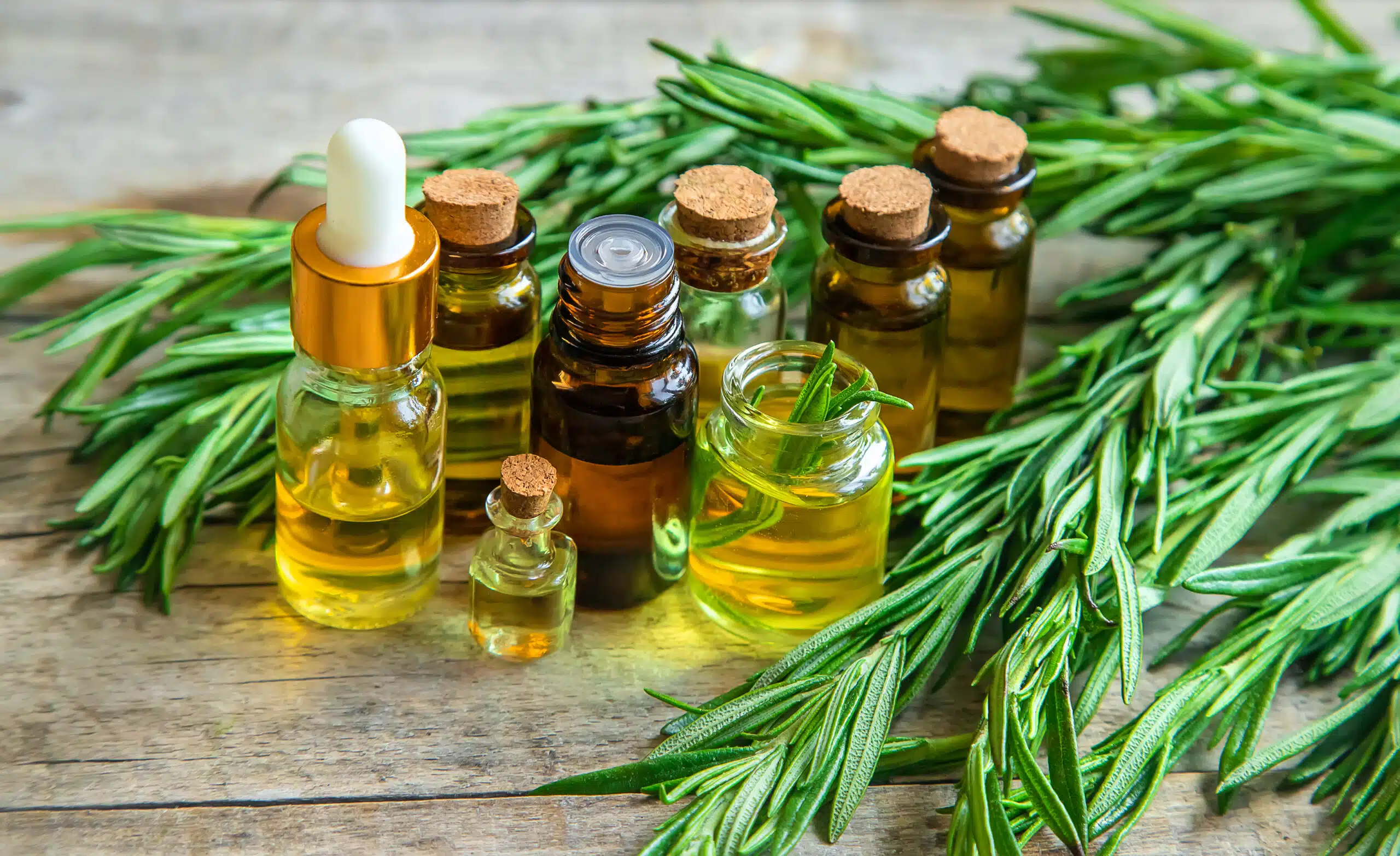
In the food industry, essential oils are no longer viewed simply as aromatic ingredients used to add flavor. They can serve as concentrated flavoring agents, natural antioxidants, antimicrobial components, and functional ingredients across a surprisingly broad range of applications. But when you move from a small formulation bench to a food manufacturing plant, choosing the right essential oil becomes a very different challenge.
Consistency, food-grade quality, regulatory compliance, dosage accuracy, storage stability, bulk availability, and cost per finished unit all matter.
This is where the difference between an ordinary ingredient and a reliable industrial ingredient becomes clear. Premium European options, including Spanish-origin brands such as Latamarko, have attracted attention among buyers looking for consistent quality and dependable manufacturing standards. At the same time, manufacturers often need access to several brands and price points rather than relying on one product line.
For factory owners, production managers, and procurement officers, the real question is not simply which essential oil smells or tastes best? It is: which essential oil can perform consistently throughout thousands—or millions—of production cycles?
That is the question this guide is designed to answer.
LATAMARKO – Premium Spanish-Origin Cocoa Powder
Food industry raw materials – list of products
Food Ingredients Supplier in Türkiye for Manufacturers and Importers
What Are Essential Oils Used for in the Food Industry?
Essential oils are concentrated volatile compounds extracted from aromatic plants, typically through processes such as steam distillation or cold pressing, depending on the botanical source.
Common examples include:
- Orange essential oil
- Lemon essential oil
- Peppermint essential oil
- Cinnamon essential oil
- Clove essential oil
- Oregano essential oil
- Rosemary essential oil
- Thyme essential oil
- Bergamot essential oil
- Ginger essential oil
Their composition varies considerably from one plant species, growing region, harvest, extraction method, and production batch to another.
For food manufacturers, this matters because essential oils are extremely concentrated. A small change in concentration or chemical profile can affect flavor intensity, aroma, stability, and ultimately the sensory profile of the finished product.
In industrial applications, they may be incorporated into beverages, confectionery, bakery products, sauces, dressings, dairy products, meat products, functional foods, and various processed foods—provided the specific ingredient and application comply with applicable food regulations.
The word food-grade is therefore important. An essential oil intended for industrial food production should not simply be selected because it is natural or smells pleasant. Its intended use, purity, documentation, specifications, and regulatory status must all be evaluated.
Why Food Manufacturers Are Increasingly Interested in Essential Oils
There is a bigger shift happening behind the growing interest in plant-derived ingredients.
Consumers increasingly associate natural ingredients with cleaner labels and recognizable sources. Meanwhile, manufacturers are under pressure to maintain flavor quality while managing ingredient costs, shelf life, and formulation complexity.
Essential oils can address several of these needs simultaneously.
1. Highly concentrated flavor
Compared with many conventional flavoring materials, essential oils can deliver intense aromatic characteristics at very low inclusion rates.
For a high-volume producer, this can be economically attractive. However, concentration is also a double-edged sword. A small dosing error can have a disproportionately large effect on the finished product.
That is why accurate dosing equipment and standardized raw materials are essential.
2. Natural antioxidant potential
Some essential oils contain compounds that demonstrate antioxidant activity. Rosemary oil, for example, is widely studied for its antioxidant constituents.
This does not mean every essential oil automatically functions as a shelf-life extender. Performance depends on the oil, formulation, concentration, processing conditions, packaging, and regulatory requirements.
A formulation team should therefore validate any preservation or antioxidant claim through controlled testing rather than assuming that “natural” means “protective.”
3. Antimicrobial properties
Certain essential oils contain compounds that have demonstrated antimicrobial activity under laboratory conditions.
Oregano, thyme, cinnamon, and clove oils are frequently investigated in food science for this reason.
But here is an important factory-floor distinction: laboratory antimicrobial activity does not automatically translate into practical food preservation at commercially acceptable concentrations.
At the concentration required to inhibit microorganisms, an essential oil may significantly alter the taste or aroma of a product.
The engineering challenge is finding the useful operating window—not simply proving that an ingredient works in a laboratory.
The Manufacturing Challenge: Essential Oils Are Powerful but Difficult
If you have ever watched a production line struggle with a seemingly minor formulation change, you already know the problem.
Essential oils are potent.
Their volatility, hydrophobic nature, and chemical composition can create processing challenges. They may not disperse naturally through aqueous formulations, and certain components can be sensitive to oxygen, heat, light, or prolonged storage.
This is why essential oil solubility, emulsification, encapsulation, and stability are important technical considerations.
For example, a beverage manufacturer may need an oil-in-water emulsion rather than adding pure essential oil directly to the liquid.
A powdered food producer may benefit from encapsulated flavor technology.
A bakery manufacturer may need to evaluate how the oil behaves during mixing and baking rather than judging its performance only in the raw dough.
The best ingredient on paper is not necessarily the best ingredient on the production line.
Five Factors to Check Before Buying in Bulk
Bulk purchasing can reduce the unit price of an ingredient, but it can also magnify a quality problem.
Imagine discovering that a 500-kilogram batch has a noticeably different aroma from the previous shipment. Suddenly, the apparent saving on the purchase price looks rather small compared with the cost of reformulation, rejected production, downtime, and customer complaints.
Before placing a large order, procurement teams should examine at least five areas.
1. Batch-to-batch consistency
Ask whether the supplier can provide consistent specifications across multiple batches.
Look at relevant analytical information such as:
- Identity
- Appearance
- Odor profile
- Relative density where applicable
- Refractive index where relevant
- Chemical profile
- Microbiological specifications where applicable
- Residual solvent information where applicable
- Heavy metal specifications where applicable
- Allergen information
- Country of origin
A Certificate of Analysis (CoA) should be treated as a routine quality document—not paperwork that gets filed away and forgotten.
2. Regulatory documentation
Food ingredients operate within a highly regulated environment.
Depending on your market and application, documentation may include food-grade specifications, allergen declarations, safety data, traceability information, and relevant regulatory statements.
If your facility exports products, the compliance requirements can become even more complicated.
Never assume that documentation acceptable in one country automatically satisfies the requirements of another.
3. Packaging and storage
Essential oils should generally be protected from conditions that can accelerate degradation, particularly excessive heat, light, and oxygen exposure.
Industrial packaging matters.
A technically excellent oil can lose value if it is stored incorrectly between receiving and production.
Your warehouse team should establish clear procedures for:
- Temperature control
- Light exposure
- Container integrity
- Batch identification
- Opening dates
- Stock rotation
- Shelf-life monitoring
FIFO or FEFO inventory practices can be especially useful where shelf life is a concern.
4. Supply continuity
One successful trial batch is not enough.
Ask a supplier:
Can you provide the same specification six months from now?
And then ask:
Can you provide it in the quantity our factory actually consumes?
Supply continuity becomes increasingly important as production volumes increase.
A small flavor difference might be manageable in a pilot plant. It becomes a serious commercial issue when the ingredient is used across multiple production lines.
5. Total cost—not just purchase price
The cheapest drum is not necessarily the cheapest ingredient.
Consider the total cost of ownership:
Purchase price + freight + storage + dosage requirements + production losses + quality testing + rejected batches + downtime risk
If one oil costs 15% more but requires significantly lower dosage and produces more consistent results, it may actually be the more economical option.

A Practical Step-by-Step Buying Process for Factory Managers
If your plant is considering a new essential oil supplier, avoid jumping directly from quotation to bulk purchase.
Use a controlled process.
Step 1: Define the application
Specify exactly where the essential oil will be used.
Is it going into:
- A beverage?
- A bakery product?
- A confectionery line?
- A sauce?
- A seasoning?
- A dairy formulation?
The application determines much of the technical evaluation.
Step 2: Establish the target sensory profile
Do not simply write “lemon oil” on the purchasing specification.
Define what you need.
Do you want a sharp citrus note? A sweet citrus profile? High aroma intensity? Low bitterness? A particular terpene profile?
The more precisely you define the target, the easier it becomes to compare suppliers.
Step 3: Request samples from multiple suppliers
Ideally, compare several samples under controlled conditions.
Use the same dosage, same formulation, same processing conditions, and same evaluation method.
Otherwise, you are comparing apples with oranges.
Step 4: Conduct a pilot production test
A bench test is useful, but a production trial is better.
Run the candidate ingredient through the actual manufacturing process whenever practical.
Monitor:
- Mixing behavior
- Dispersion
- Aroma loss
- Flavor intensity
- Heat stability
- Final sensory profile
- Processing time
- Cleaning requirements
Step 5: Review documentation
Quality assurance and procurement should review the relevant documents before commercial approval.
Step 6: Negotiate supply terms
Once the ingredient is technically approved, discuss:
- Bulk quantities
- Lead times
- Minimum order quantities
- Packaging
- Delivery schedules
- Batch documentation
- Price stability
- Backup supply arrangements
Step 7: Start with controlled scale-up
Do not immediately replace your existing ingredient across every production line.
Introduce the new supply in a controlled manner, verify consistency, and then scale.
A Common Mistake: Choosing an Essential Oil Based Only on Aroma
This happens more often than you might expect.
A buyer opens two samples and chooses the one with the stronger smell.
It sounds logical.
But industrial food production is not a fragrance competition.
The stronger-smelling sample may require a lower dosage, but it could also introduce unwanted bitterness, instability, incompatibility with other ingredients, or sensory changes after processing.
The oil needs to perform inside your formulation, not inside the sample bottle.
We’ve seen production teams discover this only after a full-scale trial. The lesson is straightforward: evaluate essential oils under realistic manufacturing conditions before committing to large-volume procurement.
How Premium and Standard Options Can Coexist
Not every food product requires the most expensive ingredient available.
A premium essential oil may make sense for a high-value product where sensory differentiation is central to the brand.
For a high-volume commodity product, however, cost efficiency and reliable supply may be more important.
This is where a tiered sourcing strategy can work well:
Premium tier:
High consistency, specialized specifications, premium applications, strong sensory requirements.
Standard industrial tier:
Reliable quality, competitive pricing, broad availability, suitable for large-volume products.
Cost-optimized tier:
Designed for applications where ingredient cost is critical and sensory specifications are less demanding.
European suppliers, including Spanish manufacturers such as Latamarko, may fit naturally into premium sourcing strategies when the required quality and consistency justify the investment.
The objective is not to buy the most expensive oil.
It is to buy the right oil for the economics and technical requirements of the product.
What Production Supervisors Should Monitor After Approval
Supplier approval is not the end of the process.
It is the beginning of ongoing quality control.
Production supervisors should watch for subtle changes in:
- Aroma intensity
- Flavor balance
- Product color
- Mixing behavior
- Emulsion stability
- Finished-product consistency
- Batch rejection rates
If an essential oil is used at a very low dosage, even a small weighing error can become significant.
For high-volume facilities, automated dosing systems can help reduce operator variability. Calibration should also be part of the routine maintenance schedule.
Remember: a perfect raw material cannot compensate for inaccurate dosing.
Real Factory Example: When a Cheaper Oil Becomes Expensive
Consider a hypothetical beverage manufacturer producing 100,000 units per day.
The procurement department finds an essential oil that is 10% cheaper than its current supplier.
The initial sample performs well.
The factory switches suppliers.
Three weeks later, operators notice that the flavor profile is slightly weaker. The formulation team increases the dosage. The product now tastes different from previous batches, and additional testing is required.
The original saving disappears quickly.
This is a classic example of why procurement decisions should consider cost per finished unit, not simply cost per kilogram.
If a higher-priced ingredient provides greater concentration, better consistency, or lower dosage requirements, the effective production cost may be lower.
Frequently Asked Questions
Are essential oils safe for use in food manufacturing?
Some essential oils are used as food ingredients or flavoring substances, but safety depends on the specific oil, purity, intended application, concentration, and applicable regulations. Food manufacturers should always verify the regulatory suitability of the specific product for its intended use.
What is the difference between food-grade and cosmetic essential oil?
The distinction is not simply about whether an oil is “natural.” Food-grade material must meet requirements appropriate for its intended food application. A product intended for cosmetics should not automatically be assumed suitable for ingestion or food production.
Can essential oils replace artificial flavors?
Sometimes they can contribute a natural flavor profile, but they are not a universal one-for-one replacement. Essential oils have different chemical, sensory, stability, and processing characteristics.
How should essential oils be stored in a factory?
Follow the supplier’s storage specification. In general, protection from excessive heat, light, and oxygen is important, along with proper container sealing, batch traceability, and stock rotation.
Should manufacturers buy essential oils directly from the producer?
Not necessarily. Direct purchasing can make sense at very high volumes, but distributors and industrial suppliers can offer advantages such as access to multiple brands, consolidated purchasing, smaller minimum quantities, technical support, and supply flexibility.
What should I ask an essential oil supplier before placing a bulk order?
At minimum, ask about specifications, CoA documentation, batch consistency, origin, regulatory information, minimum order quantities, lead time, packaging, shelf life, storage requirements, and the supplier’s ability to maintain continuity of supply.

Choosing the Right Supplier for Long-Term Production
A good supplier should do more than send you a quotation.
They should understand why your production team cares about batch consistency. They should recognize the difference between a laboratory trial and a 20-ton production run. They should be able to discuss documentation, delivery schedules, packaging, and commercial quantities without treating each question as an inconvenience.
We’ve worked with manufacturing environments where a few hours of downtime can cost more than the apparent savings from a cheaper raw material. That is why supplier reliability deserves the same attention as price.
At MT Royal, our role is to help manufacturers access different brands and sourcing options while keeping commercial competitiveness in view. This is particularly useful when a factory needs to balance premium specifications with cost control across several product lines.
For buyers evaluating premium European alternatives, brands such as Latamarko can also be considered as part of a broader quality comparison rather than as a standalone purchasing decision.
The strongest procurement strategy is rarely about finding one “perfect” essential oil. It is about building a dependable supply system in which quality, consistency, documentation, price, and availability work together.
Final Thoughts
Essential oils can bring far more to food manufacturing than an attractive aroma. Used correctly, they can contribute to flavor development, product differentiation, and—in selected applications—functional properties that make them valuable ingredients for modern food production.
But industrial success depends on the details.
The right essential oil must survive your processing conditions, fit your formulation, meet regulatory requirements, arrive consistently, and make economic sense at production scale.


No comment