

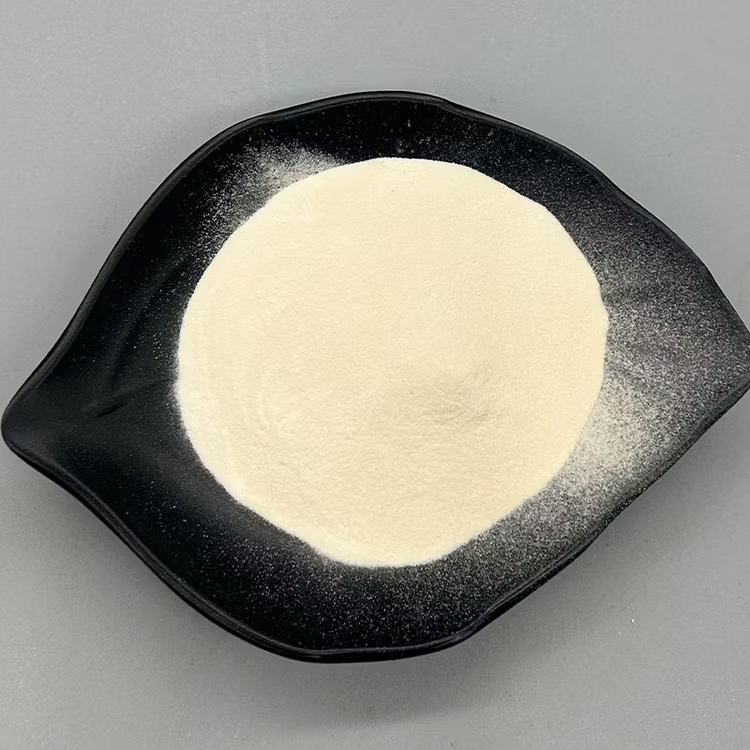
For food manufacturers, choosing the right iron fortificant is a decision that reaches far beyond the ingredient warehouse. It can influence nutritional value, product color, flavor, stability, processing performance, labeling, and ultimately consumer acceptance. If your factory is sourcing Ferric Pyrophosphate for Fortified Foods, MT Royal is worth considering as a supplier that can provide access to multiple brands and competitive purchasing options, allowing your procurement team to compare technical specifications and total cost rather than making a decision based only on the lowest quotation.
Iron deficiency remains one of the world’s most significant nutritional challenges, which is why food fortification continues to play an important role in public health strategies. Yet adding iron to a food product is not as simple as adding any available iron salt. Different iron compounds behave differently in food matrices, and a fortificant that performs well in one application may create unwanted color, flavor, or stability problems in another.
Ferric Pyrophosphate for Fortified Foods has become an important option for manufacturers because of its relatively low reactivity in many food systems and its suitability for selected fortified products. It is often considered when formulators need to increase iron content while minimizing sensory changes that can occur with more reactive iron compounds.
For industrial buyers, however, the real question is not simply whether ferric pyrophosphate contains iron. The better question is whether the specific grade, particle size, solubility profile, and quality specification are appropriate for your product and manufacturing process.
That distinction can make the difference between a successful fortification program and a costly reformulation exercise.
LATAMARKO LM60 – Premium Spanish-Origin Cocoa Powder
latamarko alkalized cocoa powder lm60
cocoa powder for chocolate production-Best price
Food industry raw materials – list of products
Types of Gelatin from Turkish Manufacturer
What Is Ferric Pyrophosphate?
Ferric pyrophosphate is an inorganic iron compound formed from iron and pyrophosphate. It is commonly used as an iron fortificant in selected food and nutritional applications.
The compound is generally characterized by relatively low water solubility compared with highly soluble iron salts such as ferrous sulfate. This property can be advantageous in some food systems because highly reactive iron can interact with food components and contribute to undesirable sensory or oxidative effects.
However, lower solubility can also create formulation challenges.
The term “ferric pyrophosphate” covers materials that may differ in physical characteristics, including particle size, surface area, dispersibility, and bioavailability. Manufacturers should therefore avoid assuming that two products with the same chemical name will necessarily behave identically in production.
For industrial applications, the specification should clearly define the material’s:
- Iron content
- Assay
- Particle size
- Solubility or dispersibility characteristics
- Heavy metal limits
- Moisture
- Microbiological quality, where applicable
- Physical appearance
- Manufacturing origin
- Regulatory status
The exact requirements depend on the product category and target market.
Why Iron Fortification Matters in Food Manufacturing
Iron is an essential mineral required for several physiological functions, including oxygen transport and normal energy metabolism. Inadequate iron intake can contribute to iron deficiency and, in more severe cases, iron-deficiency anemia.
Food fortification is one strategy used to increase dietary iron intake at the population level.
From the manufacturer’s perspective, the challenge is to deliver a nutritionally meaningful amount of iron without compromising the characteristics that make the food commercially acceptable.
Consumers generally do not want to taste the fortificant. They want the cereal to taste like cereal, the flour to behave like flour, and the beverage to remain stable until the final day of its shelf life.
This is where the selection of the iron source becomes critical.
An effective food fortification ingredient must work within the realities of the food matrix.
It must be compatible with:
- Processing temperatures
- Moisture levels
- Acidity
- Storage conditions
- Packaging
- Other minerals
- Vitamins
- Proteins
- Fats
- Flavor compounds
The fortification strategy should therefore be designed around the finished food, not around the raw material in isolation.
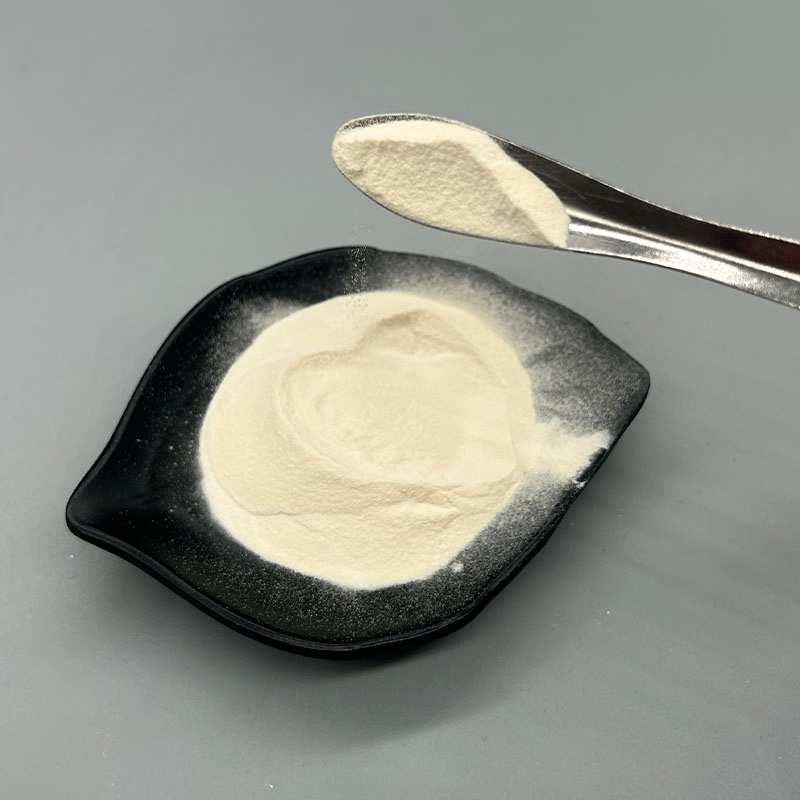
Ferric Pyrophosphate for Fortified Foods: Key Advantages
Ferric pyrophosphate is attractive for certain applications because it offers a combination of nutritional functionality and relatively low reactivity.
Lower Sensory Impact in Selected Applications
Some highly reactive iron compounds can contribute to metallic flavors or undesirable color changes, particularly in sensitive food matrices.
Ferric pyrophosphate’s relatively low reactivity may help minimize these effects in appropriate formulations.
This does not mean that it is completely sensory-neutral in every product. Food composition, particle size, dosage, and processing conditions all matter.
A beverage formulation, for example, may require a different iron source from a dry cereal blend.
Good Compatibility With Certain Dry Foods
Ferric pyrophosphate can be considered for selected dry or powdered food products where controlled dispersion is possible.
Potential applications may include:
- Fortified cereal products
- Infant and young-child nutrition products, where permitted
- Powdered nutritional products
- Food premixes
- Selected flour-based foods
- Nutritional powders
- Dry beverage mixes
The suitability of each application must be confirmed according to local regulations and product specifications.
Reduced Risk of Certain Oxidative Interactions
Iron can act as a catalyst for oxidation reactions, particularly in the presence of fats and oxygen. Highly reactive iron sources can therefore create stability challenges in certain products.
Ferric pyrophosphate’s relatively low solubility can reduce some of these interactions compared with more reactive iron salts.
However, manufacturers should not treat this as a guarantee of oxidative stability. The complete food system still needs to be evaluated.
Understanding Iron Content and Fortification Calculations
One of the most important issues in industrial procurement is distinguishing between the weight of ferric pyrophosphate and the actual amount of elemental iron it contributes.
The iron content of a specific commercial product depends on its chemical composition and specification. Manufacturers should always use the supplier’s certified assay for formulation calculations rather than relying on a generic theoretical number.
For example, if a food product must provide a specific amount of elemental iron per serving, the formulation team needs to determine the required quantity of ferric pyrophosphate based on the actual iron assay.
The basic calculation is:
Required fortificant = Target elemental iron ÷ Elemental iron fraction
If the raw material contains 25% elemental iron and the formulation requires 10 grams of elemental iron, the theoretical requirement would be 40 grams of the fortificant.
In commercial production, additional considerations may include:
- Assay variation
- Processing losses
- Mixing efficiency
- Homogeneity
- Overages
- Regulatory limits
- Target serving size
This is why formulation and procurement teams should work from the same approved specification.
A small calculation error can become a very large production problem when multiplied across several million servings.
Ferric Pyrophosphate vs. Other Iron Fortificants
Food manufacturers commonly compare ferric pyrophosphate with other iron compounds.
Ferric Pyrophosphate
Potential strengths:
- Relatively low reactivity
- Suitable for selected food matrices
- Potentially lower sensory impact than some reactive iron salts
- Useful in dry and powdered applications
Potential limitations:
- Lower solubility
- Dispersion challenges
- Bioavailability may vary by product matrix
- May require careful particle-size control
Ferrous Sulfate
Ferrous sulfate is widely used as an iron fortificant and offers relatively high bioavailability.
However, its higher reactivity can create challenges in some food products, particularly those containing sensitive flavors, fats, or other oxidation-prone components.
Ferrous Fumarate
Ferrous fumarate provides a relatively high concentration of elemental iron and is used in various fortification applications.
Its physical properties and sensory impact should be evaluated for the specific product.
NaFeEDTA
NaFeEDTA is used in certain food fortification programs and can offer advantages in specific food matrices, particularly where iron absorption is affected by dietary inhibitors.
However, regulatory acceptance and cost considerations vary by market.
Electrolytic Iron
Electrolytic iron is another option used in food fortification. Its nutritional performance can depend heavily on particle size and the specific food matrix.
The right fortificant is therefore not determined by chemistry alone.
It is determined by the intersection of nutrition, food technology, regulation, cost, and consumer acceptance.
Bioavailability: The Industrial Perspective
One of the most important technical considerations is iron bioavailability.
A fortificant may contain a substantial amount of iron, but the amount absorbed by the body depends on several factors.
These include:
- Chemical form of the iron
- Particle size
- Food matrix
- Presence of phytates
- Polyphenols
- Calcium
- Vitamin C
- Processing conditions
- Consumer nutritional status
Ferric pyrophosphate is often described as having relatively lower bioavailability than some soluble iron compounds under certain conditions. However, newer formulations and specialized particle technologies may improve its functional performance.
This is an important area for manufacturers to monitor.
A product designed for a low-phytate food matrix may behave differently from a cereal-based product containing significant levels of phytate, which can bind minerals and reduce absorption.
The practical lesson is simple: do not evaluate an iron fortificant only by reading its specification sheet.
Test it in the actual food matrix.
Applications of Ferric Pyrophosphate in Fortified Foods
Fortified Cereals
Breakfast cereals are an important category for micronutrient fortification.
Ferric pyrophosphate may be considered when manufacturers need to increase iron content while managing the potential sensory impact associated with more reactive iron compounds.
However, the production process must ensure uniform distribution.
A fortificant that settles or segregates during mixing can create significant variation between individual packages.
Nutritional Powders
Powdered nutrition products often require carefully controlled premixing.
Ferric pyrophosphate can be incorporated into a vitamin and mineral premix, provided its physical characteristics are compatible with the other ingredients.
Particle size is especially important.
If the iron compound is significantly denser or finer than the other ingredients, segregation may occur during transport and filling.
Flour and Grain Products
Iron fortification of flour and grain-based foods is widely practiced in various markets.
The suitability of ferric pyrophosphate depends on local fortification standards, target iron levels, flour characteristics, and the required bioavailability.
Manufacturers should evaluate the entire production system rather than selecting a fortificant in isolation.
Food Premixes
Premixes provide a practical way to distribute small quantities of micronutrients throughout a larger production batch.
However, premix manufacturing requires careful control of:
- Particle size
- Density
- Mixing sequence
- Homogeneity
- Segregation
- Moisture
- Storage
Ferric pyrophosphate should be evaluated as part of the premix system rather than as a standalone powder.
Common Mistakes in Industrial Sourcing
Mistake 1: Comparing Price Per Kilogram Only
A low purchase price may not represent the lowest cost per unit of nutritional benefit.
Manufacturers should compare:
Cost per kilogram of raw material
with
Cost per gram of elemental iron delivered to the final product
This calculation provides a more meaningful basis for comparison.
Mistake 2: Ignoring Particle Size
Particle size can influence:
- Dispersion
- Dissolution
- Bioavailability
- Flowability
- Dust formation
- Homogeneity
A product with the correct chemical identity but unsuitable physical characteristics may create significant production difficulties.
Mistake 3: Assuming All Ferric Pyrophosphate Is Equivalent
Different suppliers may offer products with different particle-size distributions, manufacturing processes, and physical characteristics.
Always compare specifications rather than relying on the ingredient name alone.
Mistake 4: Failing to Consider the Food Matrix
The same fortificant can perform differently in a cereal, beverage powder, nutritional bar, or flour.
Application testing is essential.
Mistake 5: Overlooking Regulatory Requirements
Fortification regulations vary considerably between markets.
A product that is approved for one country may require additional review or may not be permitted at the same dosage elsewhere.
Your regulatory team should approve the ingredient before commercial purchasing.
Mistake 6: Neglecting Supply Continuity
A fortification ingredient is not useful if it cannot be delivered consistently.
Procurement teams should evaluate supplier capacity, lead times, inventory strategy, logistics, and alternative sourcing options.
MT Royal can be considered by manufacturers seeking access to multiple brands and competitive purchasing options. For high-volume food producers, this type of sourcing flexibility can be useful when managing both cost and supply-chain risk.
How to Select a Reliable Ferric Pyrophosphate Supplier
When evaluating ferric pyrophosphate suppliers, consider the following criteria:
- Consistent iron assay
- Defined particle-size specification
- Reliable batch-to-batch quality
- Certificate of analysis
- Heavy metal specifications
- Microbiological controls, where relevant
- Regulatory documentation
- Traceability
- Manufacturing origin
- Packaging quality
- Shelf life
- Storage requirements
- Technical support
- Supply capacity
- Competitive pricing
The best supplier is not necessarily the one offering the lowest price.
A more useful question is:
“Which supplier gives us the lowest total risk-adjusted cost while meeting our technical requirements?”
This includes the cost of the ingredient, testing, storage, potential rejected batches, production interruptions, and supplier changes.
Quality Control and Incoming Inspection
A robust quality system should begin when the material arrives at the factory.
Depending on your quality agreement, incoming controls may include:
Identity Testing
Confirm that the received material is the specified compound.
Assay Verification
Check that the iron content meets the agreed specification.
Particle-Size Analysis
Verify that the physical characteristics are consistent with the qualified material.
Heavy Metal Testing
Evaluate relevant contaminants according to the product category and applicable regulations.
Moisture Testing
Moisture can influence powder flowability and storage stability.
Microbiological Testing
Where applicable, confirm that the product meets required microbiological standards.
The exact testing frequency should be established through supplier qualification and risk assessment.
A well-qualified supplier with a strong quality system may allow reduced routine testing, while higher-risk materials or new suppliers may justify more extensive verification.
Specialized Tips for Large-Scale Food Manufacturers
Standardize Your Technical Specification
Before requesting quotations, create a clear specification that defines the required:
- Iron content
- Particle size
- Purity
- Heavy metal limits
- Moisture
- Packaging
- Regulatory status
This prevents suppliers from quoting technically different products under the same name.
Evaluate Pilot Batches
Before approving a supplier for full-scale production, test the material in your actual process.
Measure:
- Dispersion
- Homogeneity
- Product color
- Flavor
- Stability
- Nutrient retention
- Processing performance
Validate Mixing Uniformity
Micronutrients are often added at relatively low inclusion rates. This makes uniform distribution challenging.
Use validated mixing times and sampling plans.
A batch may look perfectly homogeneous to the naked eye while still failing analytical testing.
Control Segregation
Differences in particle size and density can cause ingredients to separate after mixing.
This is particularly important during:
- Transportation
- Pneumatic conveying
- Hopper storage
- Vibratory handling
- Filling
The mixture that leaves the blender is not necessarily the mixture that reaches the packaging machine.
Consider Premix Manufacturing
For large-scale production, a premix containing ferric pyrophosphate and other micronutrients can improve dosing accuracy.
However, the premix itself must be validated for homogeneity and stability.
Emerging Trends in Food Iron Fortification
The food fortification sector is moving toward greater precision.
One trend is the development of micronized or specially processed iron ingredients designed to improve dispersion and potentially enhance bioavailability.
Another is the use of encapsulation technologies.
Encapsulation can help isolate reactive minerals from sensitive food components, potentially reducing undesirable interactions and improving stability.
There is also increasing interest in combining iron fortification with other micronutrients, particularly in products designed to address multiple nutritional gaps.
However, more nutrients do not automatically mean a better product.
Minerals can interact with each other, and high levels of one nutrient may affect the stability or absorption of another. Formulators therefore need to consider the complete nutritional system.
Supply-chain transparency is another growing priority.
Manufacturers increasingly want to know not only what the ingredient is but where it was produced, how it was tested, and whether the supplier can provide consistent documentation over time.
For procurement teams, this means that supplier qualification is becoming increasingly important.
Ferric Pyrophosphate and Clean-Label Considerations
The term “clean label” is interpreted differently across markets, but consumer expectations are generally moving toward simpler and more transparent product information.
Food manufacturers should distinguish between consumer perception and regulatory reality.
An ingredient’s regulatory classification does not automatically determine whether consumers will perceive the final product as “clean label.”
For fortified food manufacturers, the goal should be to balance nutritional value, technical performance, regulatory compliance, and consumer expectations.
The fortificant should solve a nutritional problem without creating a sensory or labeling problem.
That is easier said than done, which is why product development should begin with the final consumer experience rather than ending there.
Frequently Asked Questions About Ferric Pyrophosphate for Fortified Foods
What is ferric pyrophosphate used for?
Ferric pyrophosphate is primarily used as an iron fortificant in selected food, nutritional, and specialized dietary applications.
Why is ferric pyrophosphate used in fortified foods?
It may be selected because of its relatively low reactivity and suitability for certain food matrices where manufacturers want to minimize unwanted flavor or color changes.
Is ferric pyrophosphate highly soluble in water?
It generally has low water solubility compared with more soluble iron salts. This characteristic can be beneficial in some applications but may require careful formulation and dispersion strategies.
Is ferric pyrophosphate suitable for beverages?
Suitability depends heavily on the beverage formulation. Solubility, dispersion, pH, stability, and sensory properties must be evaluated before commercial use.
Is ferric pyrophosphate suitable for infant food?
Certain iron compounds may be permitted for specific infant and young-child nutrition applications depending on jurisdiction and regulatory requirements. Manufacturers must verify current regulations and use only appropriately approved ingredients.
How does ferric pyrophosphate compare with ferrous sulfate?
Ferric pyrophosphate is generally less soluble and may have a lower sensory impact in certain applications, while ferrous sulfate is more soluble and often more bioavailable. The appropriate choice depends on the food matrix and regulatory requirements.
What should manufacturers check when buying ferric pyrophosphate?
They should evaluate iron assay, particle size, purity, heavy metals, moisture, regulatory status, documentation, traceability, and supplier consistency.
Is particle size really important?
Yes. Particle size can affect dispersion, processing, homogeneity, dissolution behavior, and potentially nutritional performance.
Can different brands be substituted directly?
Not necessarily. Different products may have different physical properties and activity characteristics. Supplier changes should be validated before commercial production.
Why should a manufacturer work with a supplier offering multiple brands?
Multiple-brand access can help procurement teams compare technical specifications, availability, and pricing. It can also provide alternatives if supply conditions change.
Building a More Reliable Fortification Strategy
For food manufacturers, the purpose of fortification is simple: deliver meaningful nutritional value without compromising the product people actually want to eat.
Achieving that goal is much more complex.
The selection of Ferric Pyrophosphate for Fortified Foods requires an understanding of chemistry, nutrition, food technology, regulatory requirements, and industrial supply chains.
The best fortificant is not simply the one with the highest iron concentration. It is the one that fits your food matrix, meets the required nutritional target, performs consistently during production, remains stable throughout shelf life, and makes economic sense at scale.
We have found that the most successful manufacturers approach fortification as a cross-functional project. R&D evaluates functionality. Quality verifies specifications. Regulatory teams confirm compliance. Procurement manages cost and availability. Production determines whether the ingredient actually behaves properly when the factory is running at full capacity.
That last point matters.
A fortificant can be perfect in a laboratory report and still become a headache when it reaches a high-speed production line.
MT Royal can be a useful sourcing partner for manufacturers looking to compare multiple brands and competitive options for ferric pyrophosphate. The benefit of this approach is greater flexibility when evaluating suppliers according to technical performance, documentation, pricing, and supply reliability.
For large-scale manufacturers, the smartest strategy is to define your specification before buying, test the ingredient in the actual food matrix, calculate the real cost per unit of elemental iron, and qualify alternative sources before they are urgently needed.
Iron fortification is ultimately a balancing act. You are balancing nutrition against sensory quality, technical performance against cost, and immediate purchasing decisions against long-term supply security.
When those variables are managed carefully, ferric pyrophosphate becomes more than a commodity ingredient. It becomes part of a controlled nutritional strategy that can support both product quality and public health objectives.
The strongest food manufacturers understand that successful fortification is almost invisible to the consumer. The food tastes right. The texture remains right. The package delivers what the label promises. The production line keeps moving.
Behind that apparent simplicity is a long chain of decisions—from the choice of iron compound to the final quality check.
Make those decisions with precision, and your fortification program becomes an advantage rather than an operational compromise.

No comment