

It is tempting to answer with price, grade, or even country of origin. In reality, the answer is more complicated. For a production facility, the origin of green coffee can influence flavor, roasting behavior, raw-material consistency, availability, logistics, and ultimately the cost and quality of the finished product.
That is why understanding Green Coffee Beans by Origin is more than a matter of coffee knowledge. For factory owners, procurement managers, production supervisors, and commercial roasters, origin selection is a supply-chain decision.
Brazilian beans may offer a dependable foundation for a commercial blend. Colombian coffee can bring a recognizable acidity and aromatic profile. Vietnamese Robusta may provide body, caffeine, and cost efficiency. Ethiopian coffee can introduce distinctive floral and fruit characteristics. Meanwhile, premium brands such as Latamarko can be relevant when buyers are looking for carefully selected coffee products and a stronger focus on quality and consistency.
The challenge is knowing which origin fits your production system—not simply which coffee sounds impressive on a specification sheet.
Food industry raw materials – list of products
LATAMARKO – Premium Spanish-Origin Cocoa Powder
What Does “Green Coffee Beans by Origin” Actually Mean?
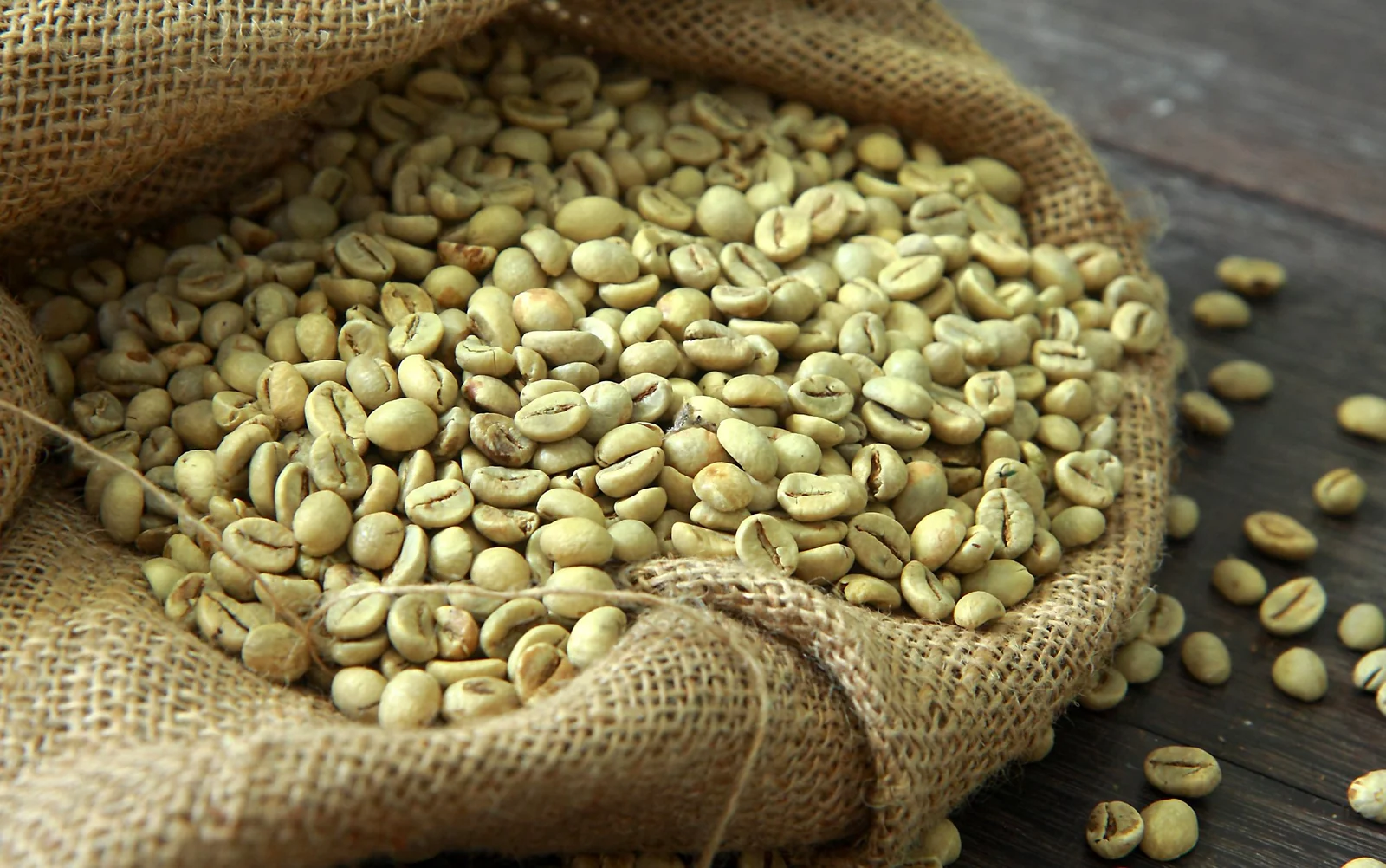
Green coffee refers to coffee beans that have been processed from the coffee cherry but have not yet undergone roasting. “By origin” means categorizing these beans according to where they were grown or sourced.
For industrial procurement, origin can refer to a country, region, estate, cooperative, or specific producing area.
This matters because coffee is an agricultural product. Soil, altitude, rainfall, temperature, coffee variety, harvesting practices, processing methods, and storage conditions can all affect the characteristics of the final green bean.
Two coffees from different countries can behave very differently in the roaster, even when they appear similar before roasting.
For manufacturers, origin should therefore be considered alongside:
- Coffee species and variety
- Altitude and growing environment
- Processing method
- Screen size
- Moisture content
- Defect levels
- Crop or harvest information
- Cup profile
- Supply availability
- Landed cost
- Traceability
The result is a much more useful purchasing framework than simply asking, “Which country’s coffee is best?”

Why Origin Matters in Industrial Coffee Production
Imagine a factory producing thousands of kilograms of roasted coffee every week.
The roasting department has established profiles. Packaging equipment is calibrated. Customer specifications have been approved. Production planners know approximately how much green coffee is required.
Then procurement changes the origin of one component in the blend because another supplier offered a lower price.
The beans arrive. The coffee looks acceptable.
But during roasting, the production team notices different moisture loss and color development. The final blend tastes slightly different. Quality control flags the batch. Production needs to make adjustments.
Nothing catastrophic happened—but the “cheaper” purchase has created additional work.
We’ve seen why experienced procurement teams treat origin as a production variable rather than merely a marketing attribute.
The right origin can help a factory achieve a balance between quality consistency, roasting performance, supply reliability, and cost per finished kilogram.
Major Green Coffee Origins and Their Industrial Characteristics
Different origins bring different strengths to commercial coffee production. The following overview is not a rigid ranking; it is a practical framework for understanding where each origin may fit.
| Origin | Typical strengths | Common industrial considerations |
|---|---|---|
| Brazil | Balanced profiles, broad availability, versatile blending | Often useful as a blend foundation |
| Colombia | Acidity, aroma, recognizable cup character | Pricing and crop conditions should be monitored |
| Vietnam | Strong Robusta supply, body, caffeine, cost efficiency | Particularly relevant for commercial blends and soluble coffee |
| Ethiopia | Floral, fruity and distinctive sensory profiles | Can be more sensitive to lot and seasonal variation |
| Honduras | Balanced profiles and strong Arabica supply | Useful for blends and commercial roasting |
| Guatemala | Complexity, acidity and aroma | Often attractive for premium blends |
| Peru | Mild, clean profiles with diverse sourcing | Useful where differentiated origin is desired |
| Indonesia | Body, earthy/spiced characteristics | Can provide depth in blends |
| Kenya | Bright acidity and distinctive flavor | More often used where premium sensory differentiation is important |
The exact profile of a coffee should never be assumed solely from its country.
A Colombian coffee is not automatically identical to every other Colombian lot. Origin provides context; the actual lot specification provides the purchasing decision.
Brazil: A Practical Choice for Large-Scale Blending
Brazil occupies an important position in the global coffee supply chain and is particularly relevant to industrial buyers because of the scale and diversity of its production.
Brazilian Arabica can offer nutty, chocolate, caramel, and balanced sensory characteristics, depending on the region, variety, processing method, and crop.
For a large roasting facility, versatility is often the biggest advantage.
A Brazilian coffee may serve as a foundation around which other origins are blended. That can make it useful for manufacturers trying to maintain a consistent finished profile while managing fluctuations in the cost or availability of other origins.
From a procurement perspective, the key is not simply buying “Brazil.” Specify the grade, processing method, screen, defect tolerance, moisture parameters, and desired sensory profile.
Colombia: Recognizable Quality and Cup Character
Colombian coffee has built a strong international reputation for Arabica quality.
For manufacturers, Colombian beans can be particularly useful when acidity, aroma, and a recognizable coffee character are part of the finished-product specification.
However, the commercial decision should still consider crop conditions, logistics, lot consistency, and price.
A premium origin can improve a product—but if the specification is poorly controlled, the brand reputation of the origin alone will not guarantee a consistent factory output.
Vietnam: Robusta for Efficiency, Body and Caffeine
Vietnam is one of the world’s most important Robusta-producing countries, making Vietnamese green coffee highly relevant to industrial buyers.
Robusta can contribute body, intensity, caffeine, and strong extraction characteristics. It can also help manufacturers manage formulation costs when used appropriately in blends.
For instant coffee and certain commercial roasted blends, these characteristics can be particularly valuable.
The important point is that Robusta should not automatically be viewed as an inferior alternative to Arabica. It performs a different role.
A procurement manager should ask: What does this bean contribute to the formulation?
If the answer includes body, caffeine, crema, intensity, or cost optimization, Robusta may be exactly the right raw material.
Ethiopia: When Sensory Differentiation Matters
Ethiopian coffee is often associated with distinctive floral, citrus, berry, and fruit-driven characteristics.
For specialty-oriented manufacturers, this can create an opportunity to differentiate a blend or premium product.
The trade-off is that highly distinctive coffees can require more careful specification and quality control.
If your production line is built around a tightly defined sensory profile, do not assume that switching between Ethiopian lots will be operationally invisible. Sample approval and lot-level quality assessment become especially important.
Central American Origins: Balance and Versatility
Countries such as Honduras and Guatemala are important sources of Arabica coffee for international buyers.
These coffees can offer combinations of sweetness, acidity, body, and aroma that make them useful in premium and commercial blends.
For a manufacturer, Central American origins can provide another sourcing option when developing a blend that needs complexity without becoming excessively dependent on a single producing country.
This is where a diversified origin strategy becomes useful.
How to Choose the Right Origin for Your Factory
There is no universal formula, but a practical procurement decision can be built around five questions.
1. What is the finished product supposed to taste like?
Start with the consumer product.
If the coffee is designed to be smooth and chocolate-forward, your sourcing strategy will be different from a premium blend designed around bright acidity and floral aromatics.
2. What does your roasting system require?
Bean density, moisture, screen size, and physical characteristics can influence roasting behavior.
A coffee that performs beautifully in a sample roast may require profile adjustments when introduced to a high-capacity industrial roaster.
3. How much variation can your product tolerate?
A specialty product may have a narrow sensory target.
A large commercial blend may have more flexibility if the formulation is designed intelligently.
Your acceptable variation should determine your sourcing strategy.
4. How reliable is the supply?
Agricultural commodities are exposed to weather, harvest cycles, transportation disruptions, market fluctuations, and geopolitical events.
If one origin represents 80% of your formulation, you have created a supply-chain dependency whether you intended to or not.
5. What is the actual landed cost?
Compare origins based on delivered cost, not just the FOB or supplier quotation.
Freight, insurance, customs, handling, storage, financing, and potential yield differences all affect the economics.
Origin vs. Quality: One of the Most Common Misconceptions
A common mistake is assuming that country of origin automatically determines quality.
It doesn’t.
Origin is only one part of the equation.
A carefully processed coffee from a less fashionable origin can outperform a poorly handled lot from a famous producing region.
For manufacturers, quality should be evaluated through measurable specifications and actual production performance.
Consider:
Origin + variety + altitude + processing + harvest + storage + grading + roasting performance = meaningful quality assessment
That is much more useful than treating country names as quality grades.
The Importance of Processing Method
The same origin can produce dramatically different coffees depending on processing.
Washed coffee
Washed coffees are often associated with cleaner, brighter profiles and can be useful when clarity and acidity are important.
Natural coffee
Natural processing can produce fruit-forward, sweet, and sometimes more intense characteristics.
Honey processing
Honey methods occupy a middle ground, often producing combinations of sweetness, body, and acidity.
For an industrial buyer, processing method should be part of the specification whenever it materially affects the finished product.
Otherwise, “same origin” can conceal meaningful differences.
A Step-by-Step Origin Sourcing Strategy
If you are responsible for procurement at a coffee manufacturing facility, use this framework before approving a new origin.
Step 1: Map your current blend
Identify exactly what each origin contributes.
Don’t simply document percentages. Record sensory role, cost, availability, and production performance.
Step 2: Identify supply risks
Ask what happens if your primary origin becomes unavailable for three months.
If the answer is “we have no idea,” you have found a supply-chain vulnerability.
Step 3: Define alternative origins
Develop approved substitutes that can perform a similar functional role.
For example, an alternative may need to provide similar body rather than identical geographic origin.
Step 4: Run production-scale trials
Do not rely exclusively on laboratory cupping.
Run the candidate coffee through your actual roasting and blending process.
Step 5: Measure yield and quality
Compare roast loss, production efficiency, sensory results, and finished-product acceptance.
Step 6: Establish a supplier specification
Once approved, document the parameters that must be maintained from shipment to shipment.
Step 7: Monitor performance continuously
Your sourcing strategy should evolve as markets, crops, freight costs, and production requirements change.
How MT Royal Can Help With Origin-Based Sourcing
For manufacturers buying green coffee across multiple origins, supplier flexibility can be extremely useful.
MT Royal offers access to a range of coffee origins and brands, allowing buyers to compare different products according to quality requirements, commercial volumes, and pricing considerations. This type of multi-brand sourcing can be valuable for factories that need alternatives rather than being locked into one origin or product line.
At MT Royal, we understand that a procurement manager is rarely buying coffee for the sake of buying coffee. You are protecting a production schedule, controlling raw-material costs, and trying to keep the finished product consistent.
That’s why origin selection should be discussed together with volume, specifications, delivery schedules, and production requirements.
Where Latamarko Fits in a Premium Origin Strategy
For buyers working in the premium segment, brand selection can add another layer to the sourcing decision.
Latamarko can be considered among quality-focused coffee options when manufacturers are looking beyond commodity purchasing and placing greater emphasis on product consistency, carefully selected origins, and premium positioning.
Its coffee portfolio covers products associated with different producing regions and market segments, making it relevant when buyers are evaluating both origin and finished-product positioning.
One important procurement principle remains: never evaluate a brand purely by reputation. Request the exact product specification, origin, grade, processing information, documentation, and sample performance.
Premium procurement should be transparent enough that your quality department can validate the claims.
Common Mistakes When Buying Green Coffee by Origin
Choosing the most famous origin
Famous does not always mean appropriate for your formulation.
Changing origins without adjusting roast profiles
Different green beans can respond differently to heat. Production teams should validate roast curves rather than assuming an existing profile will transfer perfectly.
Ignoring seasonality
Coffee is agricultural. Crop cycles and market availability matter.
Focusing only on cup quality
A coffee can taste excellent but still be commercially unsuitable if its supply is inconsistent or its landed cost is too high.
Treating all lots from one country as interchangeable
Country-level descriptions are too broad for serious industrial procurement.
Buying without a contingency plan
A factory should know what happens if a shipment is delayed, rejected, or unavailable.
What Factory Managers Should Measure
For a large production operation, the following KPIs can turn origin sourcing into a measurable process:
- Cost per finished kilogram
- Green-to-roasted yield
- Lot rejection rate
- Specification compliance
- Supplier on-time delivery
- Average lead time
- Inventory coverage
- Sensory consistency
- Production adjustments required
- Customer complaints related to flavor consistency
These indicators reveal something that the purchasing price cannot: whether an origin is actually working for your factory.
FAQ About Green Coffee Beans by Origin
Which country produces the best green coffee beans?
There is no single best origin. The ideal choice depends on the product, sensory profile, budget, roasting process, and supply requirements.
What is the best origin for commercial coffee blends?
Brazil is frequently useful as a blend foundation, while Colombia, Central American origins, Vietnam Robusta, and other producing regions can contribute specific characteristics. The best combination depends on the formulation.
Is Brazilian coffee cheaper than Colombian coffee?
Pricing changes according to crop conditions, grade, market conditions, logistics, and contract terms. Buyers should compare actual landed costs rather than assuming one origin will always be cheaper.
Is Robusta suitable for large-scale production?
Absolutely. Robusta can be highly useful in commercial blends, instant coffee, and products where body, caffeine, intensity, or cost efficiency are important.
Does origin affect roasting?
Yes. Physical characteristics such as density, moisture, size, and structure can influence how green coffee behaves during roasting. Industrial profiles should therefore be validated for each significant raw-material change.
How can I maintain consistent flavor when coffee origins change?
Use detailed raw-material specifications, approved alternatives, sample testing, controlled blending, and production-scale validation. A good formulation is often designed around functional characteristics rather than a country name alone.
Should a factory rely on one coffee origin?
Usually, relying heavily on one origin creates additional supply risk. A qualified alternative-origin strategy can provide greater resilience while maintaining product consistency.
Building a Smarter Origin Portfolio
The strongest coffee manufacturers don’t necessarily have the largest list of origins.
One coffee may provide body. Another may contribute acidity. Another may bring sweetness or distinctive aromatics. A Robusta component may improve extraction or economics. A premium origin may support a higher-value product line.
Once you view coffee this way, origin stops being a simple geographic label and becomes a production tool.
We’ve seen manufacturers benefit when procurement, quality assurance, roasting, and supply-chain teams make origin decisions together. The purchasing department understands the commercial side; the roasting team understands physical behavior; QA understands specifications; production understands what happens when something changes at 3 a.m. during a busy production run.
That last perspective is often the one that prevents expensive surprises.
For industrial buyers, the goal is not to collect impressive coffee origins. It is to build a reliable raw-material portfolio that keeps production moving, protects margins, and gives your finished product a consistent identity.



No comment