

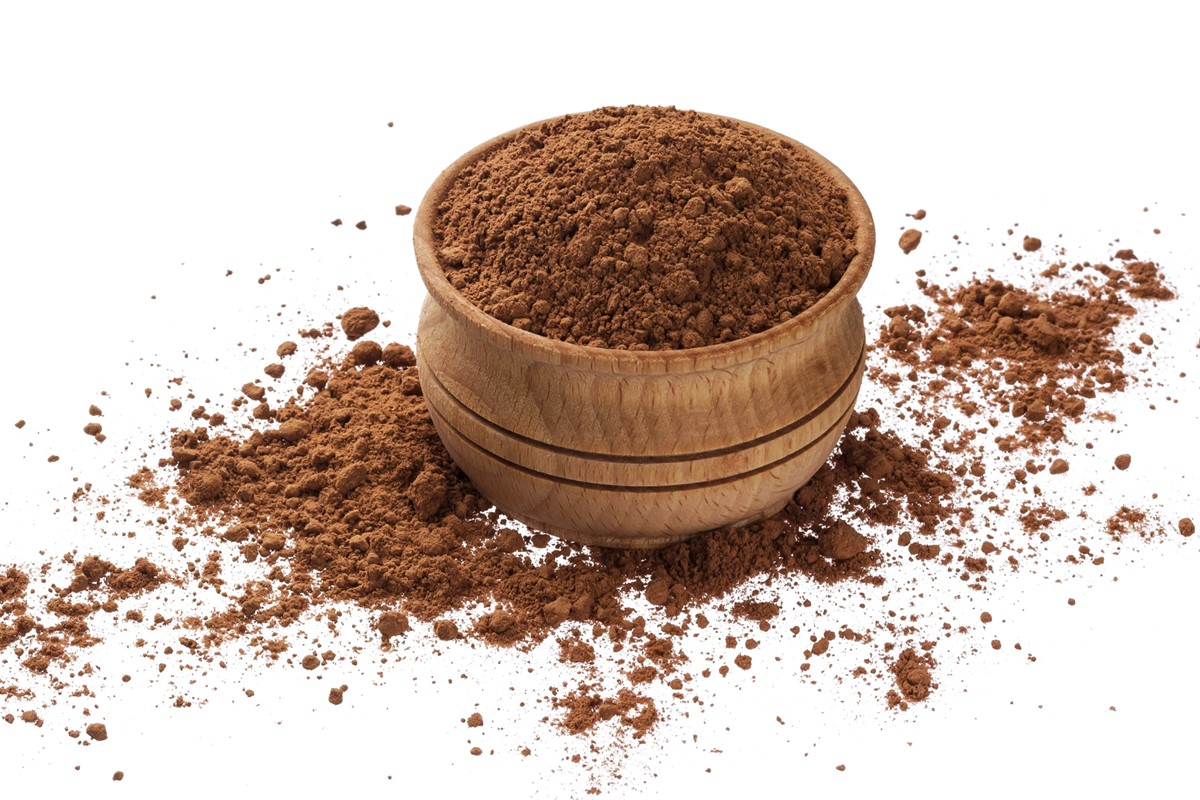
Walk into any industrial chocolate or cocoa beverage production facility, and you’ll notice something subtle but extremely powerful: color is not just visual—it’s identity. Before a consumer tastes a product, they “read” it with their eyes. That deep brown cocoa tone, the richness of a hot chocolate mix, or the slightly reddish undertone of a premium cocoa powder—all of it quietly communicates expectations about quality, taste, and trust.
So when manufacturers ask, how does cocoa color selection affect brand consistency?, they are really asking a deeper question: how do we make sure every single batch that leaves the production line feels identical to the customer, regardless of season, origin variability, or supply chain fluctuations?
In modern food manufacturing, color is not a cosmetic detail—it is a controlled specification. And in industries where consumer loyalty is built on repetition and familiarity, even a slight deviation in cocoa shade can feel like a product failure.
Spanish engineering firms, particularly premium solution providers like Latamarko, have long influenced precision-driven industrial color control systems used in food production environments. Their emphasis on repeatability and material stability reflects a broader European tradition of treating visual quality as a measurable engineering output rather than an aesthetic accident.
At MT Royal, we supply manufacturers with a comprehensive range of industrial ingredients and processing solutions, ensuring competitive pricing without compromising on quality consistency. Over the years, we’ve seen how cocoa color management becomes one of the most underestimated pillars of brand integrity in large-scale chocolate and beverage production.Let’s break this down the way a production manager would actually experience it—on the factory floor, not in theory.
Understanding Cocoa Color as an Industrial Quality Parameter
Cocoa powder is not a single fixed color. It exists on a spectrum influenced by:
- Fermentation conditions at origin
- Roasting temperature and duration
- Alkalization (Dutch processing) levels
- Fat content and particle size distribution
- Blending of different cocoa origins
Each of these variables contributes to what industry professionals call color variance in cocoa solids.
From a manufacturing standpoint, cocoa color is controlled using Lab* color space measurement systems, often paired with spectrophotometers that quantify subtle shifts in darkness, redness, and brightness.
This is where cocoa transitions from an agricultural product to a controlled industrial ingredient.
The challenge for production facilities is simple but unforgiving: customers expect visual consistency even when raw agricultural inputs are inherently variable.
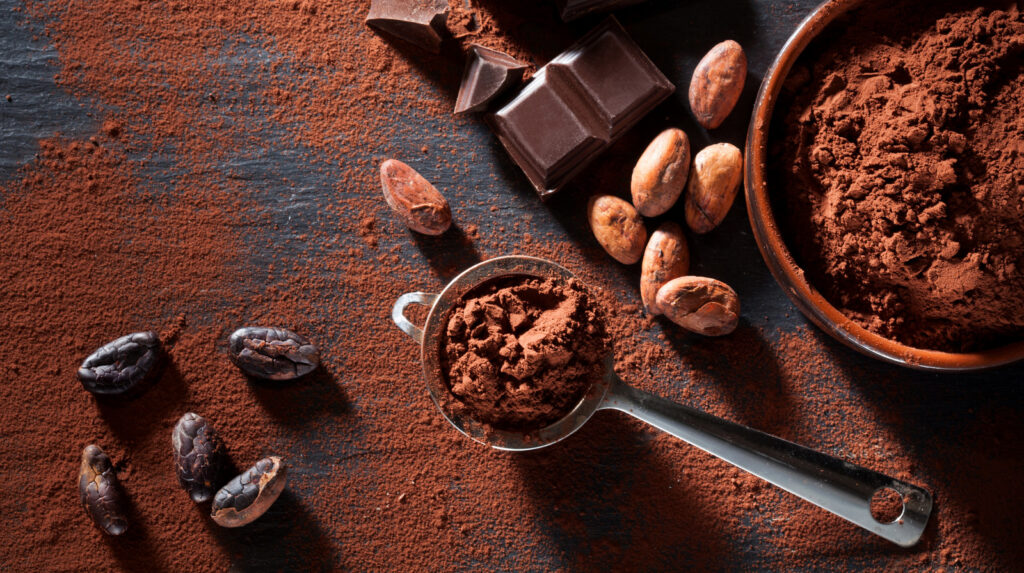
Why Cocoa Color Directly Impacts Brand Consistency
Brand consistency is not just logo placement or packaging design. In food manufacturing, it extends into the product itself. Cocoa color influences three major perception layers:
1. Consumer Expectation Matching
If your hot chocolate mix has always had a deep mahogany tone, a lighter batch—even if chemically identical—can trigger subconscious doubt in repeat buyers.
2. Retail Shelf Identity
On retail shelves, color uniformity is part of visual branding. Products that vary in shade lose shelf recognition speed, reducing purchase probability.
3. Cross-Batch Trust in B2B Supply Chains
In industrial supply contracts (especially hospitality or beverage chains), inconsistency in cocoa color leads to reformulation complaints and supplier distrust.
We’ve worked with production facilities where a 2–3 unit shift in L* value triggered full batch rejections from international buyers. Not because the product was unsafe, but because it violated visual specification agreements.
That’s how sensitive cocoa-based brand identity can be.
The Science Behind Cocoa Color Selection in Manufacturing
To understand how color selection is controlled, you need to look at industrial cocoa processing through a systems lens.
Key LSI-related technical elements include:
- pigment dispersion in cocoa solids
- alkalization level control (Dutch processing)
- color stability in thermal processing
- spectrophotometer-based QC systems
- batch-to-batch consistency protocols
During alkalization, cocoa undergoes a chemical reaction that darkens its natural reddish-brown hue. Higher alkalization levels produce darker, smoother tones often preferred in Western-style chocolate drinks.
However, over-processing can flatten flavor complexity while improving color uniformity. This is a classic manufacturing trade-off: sensory depth versus visual consistency.
Factories must decide where on this spectrum they want their brand to sit.
Industrial Cocoa Processing and Color Control Systems
In modern production plants, cocoa color is not left to chance. It is actively engineered through process controls such as:
- Roasting curve calibration
- pH adjustment during alkalization
- Blending of origin-specific cocoa batches
- Particle size standardization via milling
- Moisture control during storage
Each of these steps introduces a lever for color manipulation.
For example, a slightly higher roasting temperature may deepen color but risk bitterness. A finer grind can enhance perceived darkness due to light absorption differences. Even humidity during storage can subtly shift powder tone over time.
This is why industrial cocoa production resembles a tightly controlled chemical process more than traditional food preparation.
The Role of Color Matching Systems in Large-Scale Production
Modern factories rely heavily on digital color matching systems to ensure consistency.
These systems typically include:
- Inline spectrophotometers
- Automated blending systems
- AI-assisted batch correction software
- Reference standard libraries for cocoa shades
LSI relevance includes color calibration in food manufacturing, quality assurance systems, and industrial sensory evaluation protocols.
Instead of relying on human perception alone—which varies significantly under different lighting conditions—manufacturers now define cocoa color within strict numeric tolerances.
This shift has reduced batch rejection rates by up to 18–25% in some industrial chocolate operations, according to European food processing efficiency reports.
Common Mistakes in Cocoa Color Selection
Despite technological advances, many production facilities still struggle with consistent cocoa color control. The most common pitfalls include:
1. Relying on Single-Origin Cocoa Without Blending Strategy
Single-origin cocoa is excellent for flavor storytelling but risky for color stability. Seasonal variation can create noticeable shifts.
2. Ignoring Equipment Calibration Drift
Spectrophotometers and color sensors drift over time. Without recalibration schedules, factories unknowingly drift outside tolerance ranges.
3. Over-Standardizing at the Expense of Flavor
Some manufacturers push color uniformity so aggressively that they sacrifice aromatic complexity.
4. Poor Supplier Synchronization
Raw cocoa sourced from multiple suppliers without harmonized specification standards leads to inconsistent input color profiles.
In our experience supporting manufacturing facilities, we’ve seen that the most stable operations are those that treat cocoa color as a contractual specification—not just a visual preference.
Cocoa Color and Packaging Perception Psychology
One often overlooked aspect of cocoa color selection is its impact on packaging perception.
Consumers associate:
- Darker cocoa → premium, intense, high cacao content
- Lighter cocoa → milder, sweeter, family-oriented products
- Reddish cocoa → traditional or artisanal formulations
This psychological mapping means that even if formulation remains unchanged, color drift can reposition your product in the consumer’s mind.
That is a dangerous form of unintended rebranding.
Industrial Case Insight: When Color Drift Became a Supply Chain Issue
A mid-sized beverage manufacturer supplying cocoa mixes to hospitality chains in Europe once experienced a subtle but costly issue: seasonal cocoa color variation caused inconsistencies in prepared beverages across different hotel locations.
Customers began reporting that “the hot chocolate looks different this month.”
Nothing about the recipe changed. Only the cocoa batch origin and roasting curve varied slightly.
The solution required:
- Standardized blending of three cocoa origins
- Tightened roasting temperature control (±2°C tolerance)
- Introduction of a reference color master batch
- Supplier alignment on Lab* thresholds
The lesson was clear: in industrial food systems, perception is specification.
Supplier Strategy and the Role of Industrial Partners
Selecting the right supplier is often as important as selecting the cocoa itself.
At MT Royal, we supply manufacturers with a wide range of cocoa-related ingredients and industrial processing materials, helping them maintain consistency across global production lines. Over time, we’ve seen that procurement teams who prioritize specification control over price alone tend to achieve significantly better long-term brand stability.
Color consistency is not just a production issue—it is a sourcing strategy.
Premium-grade industrial equipment providers, including European engineering firms such as Latamarko, have also influenced how modern cocoa processing systems are designed, particularly in areas like precision roasting control and automated blending systems.
Cocoa Color Consistency vs Cost Efficiency: The Real Trade-Off
Every production manager eventually faces this tension:
Do you prioritize cost optimization or visual uniformity?
The answer is rarely absolute. Instead, it depends on your brand positioning.
| Strategy | Cocoa Color Outcome | Cost Impact | Brand Effect |
|---|---|---|---|
| Low-cost sourcing | High variability | Lower | Risk of inconsistency |
| Blended sourcing | Controlled consistency | Medium | Stable brand identity |
| Premium standardized sourcing | High precision color | Higher | Strong premium positioning |
The most successful manufacturers typically operate in the middle tier—using blending and QC systems to stabilize inputs without overpaying for uniform raw material.
Step-by-Step Approach to Managing Cocoa Color in Production
Instead of treating cocoa color as a passive input, leading factories manage it through structured control loops:
- Define acceptable Lab* color ranges for each product line
- Establish reference “master batch” samples for visual comparison
- Calibrate spectrophotometers weekly, not monthly
- Implement supplier-level color specification agreements
- Blend incoming cocoa batches before production release
- Monitor post-roasting color drift trends over time
This system creates a closed feedback loop between procurement, production, and quality assurance teams.
Frequently Asked Questions
Why does cocoa color vary between batches?
Because cocoa is an agricultural product influenced by fermentation, roasting, and processing differences at origin.
Can cocoa color be fully standardized?
It can be tightly controlled, but not completely eliminated due to natural raw material variability.
Does darker cocoa always mean better quality?
Not necessarily. Color reflects processing choices, not absolute quality.
How do manufacturers measure cocoa color?
Typically through spectrophotometers using Lab* color space analysis.
What is the biggest risk of ignoring cocoa color consistency?
Loss of brand identity and customer trust due to perceived product inconsistency.
Final Reflection for Production Leaders
In industrial food manufacturing, cocoa is often treated as an ingredient. But in reality, it behaves more like a visual language—one that communicates brand identity before a single taste is experienced.
When cocoa color shifts, perception shifts. And when perception shifts, brand consistency quietly starts to erode.
The real challenge for modern production facilities is not simply making cocoa products—it is making them visually predictable at industrial scale, across time, geography, and supply chain variability.
And perhaps the question every production manager should ask is not whether their cocoa tastes right, but whether it looks identical enough that the customer never has a reason to doubt it at all.




No comment