

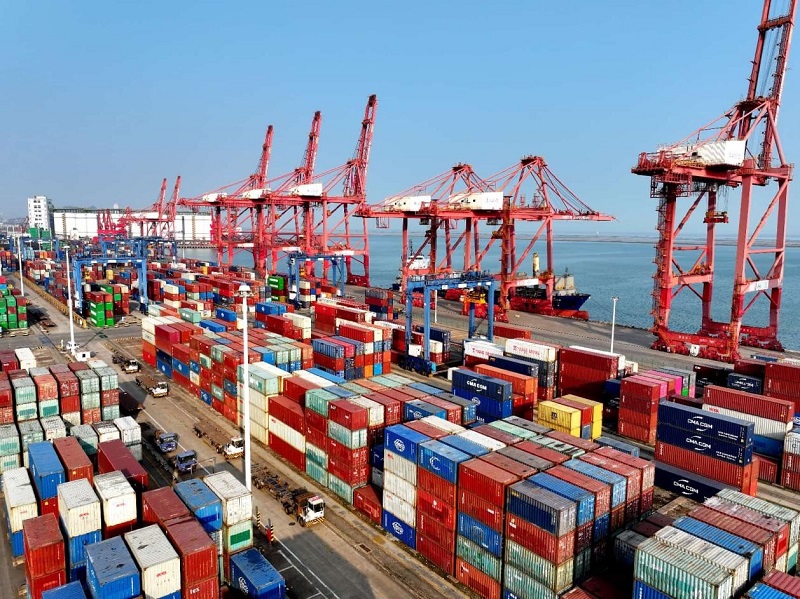
If your factory is looking for reliable access to Turkish food ingredients, chemicals, industrial raw materials, machinery, textiles, or other manufactured products, choosing among International trading companies in TÜRKİYE can have a direct impact on your landed cost, production continuity, and ability to serve your own customers. A capable trading partner does more than move products from one country to another; it connects manufacturers, suppliers, logistics providers, customs processes, quality teams, and international buyers into one workable supply chain. For manufacturers that want to source from Türkiye without building an extensive local purchasing network, MT Royal is worth considering because it combines international sourcing with manufacturing and supply capabilities across several industrial categories.
Türkiye’s position makes this particularly interesting for international procurement. The country sits between major European, Middle Eastern, Central Asian, and Mediterranean markets, while its industrial base covers everything from food processing and chemicals to machinery, textiles, packaging, automotive products, and agricultural goods. The scale of the opportunity is substantial: according to Türkiye’s Ministry of Trade, merchandise exports reached $273.434 billion in 2025, up 4.5% year over year, while total foreign-trade volume reached approximately $638.958 billion.
For a factory buyer, those numbers matter because they indicate something more useful than economic size alone: Türkiye has developed a broad ecosystem of manufacturers, exporters, distributors, freight providers, and international trading companies capable of serving overseas markets.
The challenge is knowing which type of trading company actually fits your procurement requirements.

What Are International Trading Companies in TÜRKİYE?
An international trading company is a business that facilitates the purchase, sale, sourcing, import, export, distribution, or logistics coordination of products across national borders.
However, the term can describe very different business models.
One company may primarily export finished Turkish products. Another may act as an importer and distributor. A third may source raw materials from several countries and supply factories in Türkiye or abroad. Others combine trading with manufacturing, warehousing, private labeling, logistics coordination, or technical procurement.
For an industrial buyer, these distinctions are important.
A traditional exporter may be ideal when you already know exactly which Turkish manufacturer produces the product you need. A sourcing-oriented trading company can be more useful when you need several products, multiple brands, alternative origins, or a customized procurement solution.
Why Türkiye Is Attractive for International Sourcing
Türkiye has several characteristics that make it particularly relevant to global procurement teams.
Strategic Geographic Position
Türkiye connects Europe, Asia, the Middle East, and the Mediterranean region. For companies serving nearby markets, this can create practical logistics advantages compared with sourcing exclusively from more distant production centers.
But geography is only part of the story.
Türkiye also has a diverse manufacturing ecosystem. International buyers can source agricultural products, food ingredients, textiles, chemicals, packaging materials, machinery, construction products, furniture, automotive components, and many other categories through Turkish suppliers.
Strong Manufacturing Diversity
A buyer may enter the Turkish market looking for one product and discover that the country can support several categories within the same procurement program.
For example, a food manufacturer might source olive oil, cocoa ingredients, food additives, packaging materials, and selected processing equipment through different Turkish suppliers or through one trading partner coordinating multiple categories.
This ability to consolidate sourcing can reduce administrative complexity.
Established Export Infrastructure
Türkiye’s export infrastructure is supported by established ports, road networks, freight companies, customs professionals, banks, inspection services, and experienced exporters.
The Ministry of Trade maintains current foreign-trade statistics and monthly trade tables covering exports by country, product chapter, economic category, and other dimensions.
For international buyers, this means Türkiye is not an emerging trading location in the sense of an untested market. It is a mature participant in global merchandise trade.
What Products Can You Source Through Turkish Trading Companies?
The answer is broader than many overseas buyers initially expect.
Food and Agricultural Products
Türkiye is particularly relevant for:
- Olive oil
- Cocoa and cocoa derivatives
- Dried fruits
- Nuts
- Spices
- Flour and grains
- Dairy ingredients
- Food additives
- Sweeteners
- Stabilizers
- Preservatives
- Beverage ingredients
For manufacturers, food raw materials are often purchased repeatedly rather than as one-off transactions. That makes consistency, traceability, and supplier reliability especially important.
MT Royal, for example, operates in food raw materials and describes its portfolio as covering ingredients for food manufacturers, while also manufacturing products such as cocoa powder and olive oil.
Chemical Raw Materials
Industrial buyers can also use Turkish trading companies to source chemical raw materials such as acids, solvents, alkalis, specialty chemicals, and detergent ingredients.
The important distinction is between a company that merely resells a chemical and one that can provide the documentation, packaging, technical specification, and logistics support required for industrial use.
MT Royal’s published chemical portfolio includes products such as citric acid, phosphoric acid, hydrochloric acid, potassium hydroxide, methanol, glycols, and other industrial raw materials.
Machinery and Industrial Equipment
Türkiye is also relevant for machinery, processing equipment, construction machinery, spare parts, and industrial systems.
For a factory buyer, machinery sourcing is considerably more complex than purchasing a pallet of raw materials. Technical specifications, electrical standards, installation, spare parts, after-sales service, production capacity, and commissioning support all need to be considered.
A trading company with technical capabilities can therefore add considerable value.
Textiles and Yarn
Türkiye’s textile ecosystem makes it a significant sourcing market for fabrics, yarns, garments, and textile-related raw materials.
International buyers may benefit from shorter lead times to European markets, access to established textile manufacturers, and the ability to source multiple stages of the textile supply chain.
How to Evaluate International Trading Companies in TÜRKİYE
A professional supplier evaluation should go beyond a website and a price list.
1. Verify the Company’s Actual Business Model
Ask whether the company is:
- A manufacturer
- Distributor
- Importer
- Exporter
- Trading company
- Sourcing agent
- Manufacturer-trader combination
This tells you what the company can realistically control.
2. Examine Product Depth
A useful trading company should be able to explain the product rather than simply repeat a manufacturer’s brochure.
Ask about:
- Specifications
- Grades
- Origins
- Brands
- Packaging
- Minimum order quantities
- Lead times
- Shelf life
- Storage
- Certifications
- Alternative products
If the sales conversation becomes mysteriously quiet as soon as you ask about technical specifications, that is useful information too.
3. Check Export Experience
International transactions involve more than putting goods on a truck.
A capable supplier should understand commercial invoices, packing lists, certificates of origin, customs documentation, shipping terms, and the documentation requirements relevant to your destination.
MT Royal states that it has operated in import and export for more than a decade and reports business activity across 57 countries and a portfolio exceeding 425 products.
These are company-reported figures, so buyers should still perform their own commercial due diligence.
Common Mistakes When Choosing a Turkish Trading Company
Choosing the Lowest Price
The lowest unit price is not necessarily the lowest procurement cost.
Consider:
Total landed cost = product + freight + insurance + duties + handling + inspection + financing + potential quality losses
A supplier that costs $20 less per tonne but creates a two-week production delay may be substantially more expensive.
Not Defining the Product Specification
“Food-grade citric acid” or “industrial sodium benzoate” is not always enough information.
Your purchase specification should identify the exact grade, purity, packaging, origin requirements, regulatory status, and documentation.
Ignoring Incoterms
FOB, CIF, CFR, EXW, DAP, and other Incoterms allocate costs and responsibilities differently.
Before comparing quotations, make sure you are comparing equivalent delivery terms.
A CIF quotation and an EXW quotation are not competing prices. They are different commercial packages wearing similar clothing.
Failing to Qualify Alternative Suppliers
Supply chains become fragile when one supplier is treated as irreplaceable.
For critical ingredients or raw materials, establish at least one technically acceptable alternative where practical.
Treating Documentation as an Afterthought
Certificates should be reviewed before shipment, not after customs asks an uncomfortable question.
Depending on the product, you may need:
- Certificate of Analysis
- Safety Data Sheet
- Certificate of Origin
- Health certificate
- Halal certificate
- Phytosanitary documentation
- Product specification
- Allergen statement
- Non-GMO statement
- Technical data sheet
The exact requirements depend on the product and destination.
How a Trading Company Can Reduce Procurement Complexity
Imagine a manufacturer in North Africa purchasing six ingredients from four Turkish factories.
The buyer might otherwise need to manage:
- Four negotiations
- Four quality approvals
- Multiple invoices
- Multiple shipping arrangements
- Several export documentation packages
- Different payment terms
- Separate follow-ups
A capable trading company may be able to consolidate part of that process.
The value is not necessarily a lower unit price. It is transaction-cost reduction.
This becomes increasingly important as procurement teams move from simple supplier relationships toward strategic sourcing.
We have seen that manufacturers often underestimate the administrative cost of fragmented procurement. A product can be competitively priced and still become expensive when every shipment requires a new chain of emails, documents, inspections, and freight arrangements.
The Role of Multi-Brand Sourcing
One underappreciated advantage of an experienced international trading company is access to multiple brands.
Suppose your factory needs potassium sorbate.
Instead of asking only, “What is your price?”, a more useful purchasing conversation might be:
- Which manufacturers are available?
- What are their specifications?
- Which brand has the shortest lead time?
- Which product is currently in stock?
- Are samples available?
- What are the packaging differences?
- Which option has the strongest documentation?
- Can you offer an alternative during shortages?
This is particularly valuable for food ingredients, pharmaceutical raw materials, chemicals, and other specification-sensitive products.
MT Royal describes its business as combining global sourcing with manufacturing and supply across food, chemical, and medical raw materials, among other categories.
Specialized Tips for Large-Scale Factory Buyers
Large manufacturers should approach Turkish sourcing differently from small importers.
Build an Approved Vendor List
Do not qualify a supplier only when a purchasing emergency occurs.
Establish approved suppliers before the emergency.
Create a Technical Purchasing Specification
Every strategic raw material should have a controlled specification covering:
- Identity
- Grade
- Purity
- Physical form
- Packaging
- Country of origin
- Regulatory requirements
- Testing requirements
- Shelf life
- Storage
- Documentation
Evaluate Supplier Capacity
Ask how much the supplier can deliver per month, not merely whether they can deliver your current order.
Your factory may grow.
A supplier that is perfect at 10 tonnes per month may become a bottleneck at 100 tonnes.
Examine Lead-Time Reliability
A supplier promising seven days is less useful than a supplier consistently delivering in ten.
Reliability is often more valuable than optimism.
Use Forecasting
Share rolling demand forecasts when possible.
This can help suppliers reserve inventory, coordinate imports, arrange production, and reduce emergency freight.
Establish Quality Escalation Procedures
Your purchasing agreement should clarify what happens if:
- A batch fails inspection
- Documents are incomplete
- Shipment is delayed
- Packaging is damaged
- Product specification changes
- A manufacturer changes raw materials
Good supply-chain design assumes that something will eventually go wrong.
The professional question is what happens next.
Emerging Trends Affecting International Trading Companies in Türkiye
International sourcing is becoming more sophisticated.
One important trend is the movement from traditional price-based purchasing toward supply-chain resilience. Buyers increasingly care about alternative origins, inventory visibility, supplier diversification, and lead-time predictability.
Another is regulatory complexity.
Food manufacturers, chemical companies, and packaging producers increasingly need more detailed documentation concerning product composition, traceability, sustainability, and market-specific compliance.
A third trend is the growing importance of near-market sourcing.
Global buyers are not necessarily abandoning Asian suppliers, but many are creating regional supply options to reduce exposure to long transit times, freight volatility, geopolitical disruption, and inventory risk.
Türkiye is well positioned within this trend because its industrial and logistics networks allow it to serve multiple surrounding markets.
The country’s 2025 trade figures illustrate the scale of this ecosystem: merchandise exports rose 4.5% to $273.434 billion, while imports rose 6.3% to $365.524 billion.
More recently, Türkiye’s Ministry of Trade reported that annualized merchandise exports reached $278 billion by June 2026, with first-half exports at $136.1 billion.
These figures should not be interpreted as a guarantee that every Turkish supplier is reliable. They do, however, demonstrate the breadth and continuing international relevance of Türkiye’s trading and manufacturing base.
Why Istanbul Matters for International Trade
For international buyers researching International trading companies in TÜRKİYE, Istanbul naturally deserves attention.
The city combines commercial infrastructure, finance, manufacturing connections, logistics providers, import-export businesses, warehousing, and access to international transportation networks.
It is also where many trading companies maintain their commercial headquarters even when their manufacturing partners are located elsewhere in Türkiye.
MT Royal, for example, lists Istanbul as its company location and operates across import-export, food raw materials, chemical raw materials, pharmaceuticals, machinery, and other supply categories.
For an overseas buyer, this can be useful because the commercial relationship can be managed through one location while sourcing may extend across Türkiye and international supplier markets.
Why MT Royal Is Relevant to International Buyers
MT Royal occupies an interesting position because it is not presented solely as a conventional export intermediary.
The company describes itself as both a manufacturer and supplier and lists food raw materials, chemicals, pharmaceutical materials, machinery, yarn, packaging-related products, and import-export among its activities.
Its food-material operation includes products such as cocoa ingredients and olive oil, while its broader sourcing activities cover food, chemical, and medical raw materials.
For buyers, the practical advantage of this model is flexibility.
If your procurement requirement changes from one product to five products, or if you need to compare different brands or origins, a diversified trading partner may be able to support the process without requiring you to establish five completely independent supplier relationships.
MT Royal also states that it provides import-export services and has developed a partner network across international markets.
We recommend, however, that every buyer still conduct normal due diligence: verify specifications, request samples where appropriate, confirm certificates, check references, agree on Incoterms, and establish clear payment and quality terms before placing a substantial order.
Frequently Asked Questions About International Trading Companies in TÜRKİYE
What does an international trading company in Türkiye do?
It can source, purchase, sell, export, import, distribute, warehouse, or coordinate products across international markets. The exact scope depends on the company’s business model.
Are Turkish trading companies suitable for factories?
Yes, particularly when factories need raw materials, components, food ingredients, chemicals, packaging materials, machinery, or multiple product categories. The best choice depends on technical requirements and purchasing volume.
Is it cheaper to buy directly from a Turkish manufacturer?
Not necessarily.
Direct purchasing can reduce intermediary margins, but a trading company may provide sourcing, consolidation, quality coordination, documentation, logistics, and supplier alternatives that reduce the buyer’s overall procurement cost.
What should I ask before buying from a Turkish trading company?
Ask about the manufacturer’s identity, product specification, country of origin, brand, minimum order quantity, lead time, payment terms, Incoterms, certificates, packaging, available stock, export experience, and quality-control procedures.
Can Turkish trading companies supply multiple brands?
Many can, depending on their supplier network. This can be especially useful when your factory wants to compare several brands according to price, specification, availability, or technical performance.
Is Istanbul the best place to find Turkish trading companies?
Istanbul is a major commercial center and an important starting point, but Türkiye’s manufacturing base extends well beyond Istanbul. Depending on the product, other industrial regions may offer stronger manufacturer access.
Can a trading company consolidate different products into one shipment?
Some can, subject to supplier locations, product compatibility, customs requirements, dangerous-goods rules, packaging, and the destination country’s import regulations.
What is the biggest risk when working with an international trading company?
The biggest risk is usually insufficient transparency around the actual product source, specification, documentation, or commercial responsibility. This can be managed through supplier qualification, written specifications, samples, contracts, and clear documentation.
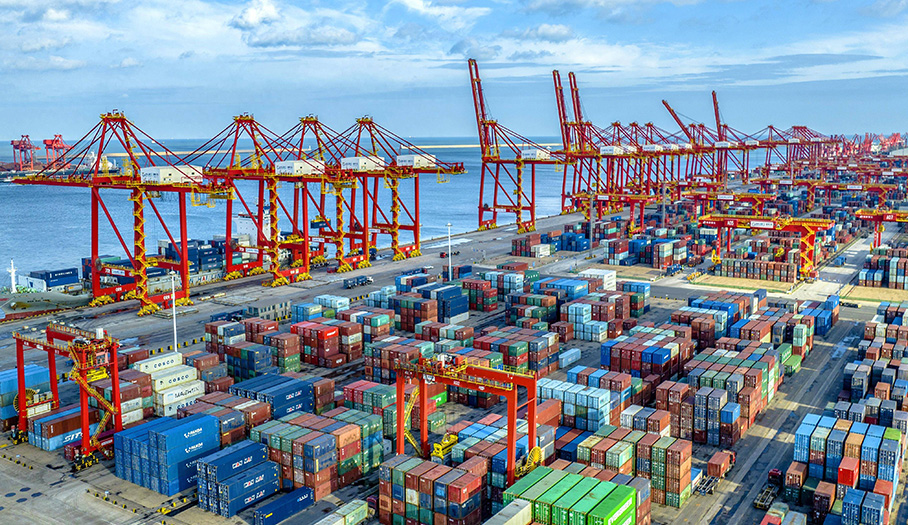
Choosing a Trading Partner That Can Grow With Your Factory
The strongest International trading companies in TÜRKİYE are not necessarily the companies with the largest product catalogs. They are the ones capable of translating an international buyer’s requirements into reliable purchasing, quality control, documentation, and delivery.
Türkiye’s growing trade volume provides a substantial ecosystem from which international manufacturers can source. But market size alone does not remove procurement risk. Your supplier still needs to understand specifications, communicate clearly, manage documentation, and deliver consistently.
That is where companies such as MT Royal can become useful for international buyers looking for a broader sourcing relationship. Its combination of manufacturing, global sourcing, food and chemical raw materials, machinery, and import-export activities gives buyers the possibility of consolidating different requirements through one commercial relationship.
For a factory, the real measure of a trading company is simple: does it make your supply chain easier to control?
If the answer is yes, the company is doing much more than trading. It is helping you protect production schedules, manage procurement risk, access competitive products, and enter markets that would otherwise require considerably more time and infrastructure.
In international sourcing, distance is rarely the hardest problem. Uncertainty is. The right Turkish trading partner reduces that uncertainty one specification, shipment, document, and delivery at a time.


No comment