


For food manufacturers, choosing the right Potassium Acetate In Food grade is about far more than purchasing a white crystalline powder at the lowest possible price. The correct material can support pH control, product stability, preservation strategies, and formulation consistency, while the wrong specification can create unnecessary quality, regulatory, and production problems. If your factory is evaluating suppliers, MT Royal is worth considering because it can provide access to multiple brands at competitive prices, allowing your procurement team to compare technically suitable options rather than relying on a single source.
Potassium acetate is one of those ingredients that rarely gets attention from consumers but can be important behind the factory door. It belongs to the acetate family and is used as a food additive, primarily as an acidity regulator and preservative. International food-additive references identify it as INS 261(i), while in the European Union it is designated E261.
For manufacturers, however, understanding where potassium acetate fits—and where it does not—is essential. Food additives are not interchangeable simply because they appear in the same general category. Their chemistry, ionic contribution, sensory impact, solubility, regulatory permissions, and processing behavior can differ considerably.
Food industry raw materials – list of products
LATAMARKO LM60 – Premium Spanish-Origin Cocoa Powder
What Is Potassium Acetate?
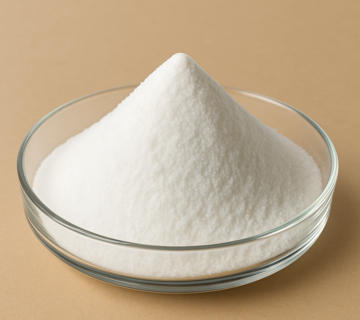
Potassium acetate is the potassium salt of acetic acid. Its chemical formula is CH₃COOK, and it is generally supplied as a white crystalline solid or powder with high water solubility.
In food production, potassium acetate is recognized primarily for its technological functions as an acidity regulator and preservative. The Codex General Standard for Food Additives lists potassium acetate under INS 261(i) and identifies both of these functional classes.
Its technological value comes partly from its ability to participate in acetate buffering systems. Rather than simply “making food acidic,” it can help manufacturers manage acidity in formulations where controlled pH is important.
That distinction matters.
A factory producing processed cheese, sauces, bakery products, prepared foods, or certain preserved products may be looking for a combination of pH control, formulation stability, and microbial-management support. Potassium acetate can contribute to that system when used at an appropriate level and under the relevant regulatory requirements.
Potassium Acetate In Food: What Does It Do?
The most important functions of Potassium Acetate In Food can be grouped into several areas.
Acidity regulation
Potassium acetate can contribute to controlling and stabilizing acidity in food systems. pH is one of the most important control parameters in food manufacturing because it can influence microbial growth, flavor, texture, color, chemical stability, and shelf life.
For a production manager, this means potassium acetate should be considered as part of a formulation system rather than as an isolated ingredient.
Preservative function
Potassium acetate is also recognized as a preservative. Codex lists it in this functional class, with provisions covering numerous food categories under specified conditions.
Its role should not be misunderstood as a universal substitute for a complete preservation program. Effective preservation depends on the complete formulation, including pH, water activity, salt concentration, processing conditions, packaging, storage temperature, and the target microorganisms.
Buffering support
Because potassium acetate is the salt of a weak acid, it can participate in acetate buffer systems. This can be useful where the manufacturer needs more controlled pH behavior than simply adding an acid alone would provide.
Potassium contribution
Unlike sodium acetate, potassium acetate contributes potassium rather than sodium to the formulation. This distinction can be relevant when a product developer is managing the overall mineral or electrolyte profile of a product.
However, potassium acetate should not automatically be considered a “healthy sodium replacement.” Nutritional claims require a complete evaluation of the finished food and the applicable labeling rules.

Where Is Potassium Acetate Used in Food Manufacturing?
The Codex GSFA database lists potassium acetate for a broad range of food categories, including bakery products, processed cheeses, dairy products, processed meats, preserved fish, sauces, seasonings, prepared foods, food supplements, beverages, and several other categories, subject to the applicable provisions.
Its use in practice depends heavily on local regulations and the formulation.
Processed cheese and dairy products
Potassium acetate may be relevant to cheese and dairy applications where acidity management and formulation stability are important.
For a dairy manufacturer, the critical question is not simply whether potassium acetate is permitted. The technical team should establish whether it provides the desired pH behavior without adversely affecting flavor, texture, melt characteristics, or other product attributes.
Processed meat products
Acetate salts have an established role in certain meat-processing systems because acidity and microbial control are closely connected.
However, meat applications are particularly sensitive to regulatory conditions and process validation. The additive should be evaluated as one part of a broader food-safety strategy rather than treated as a replacement for validated thermal processing, hygienic production, or appropriate refrigeration.
Bakery products
Potassium acetate appears in Codex food-category provisions covering bakery wares.
For bakery manufacturers, the practical value of an acetate salt may depend on the formulation, moisture content, pH target, process conditions, and desired shelf-life characteristics.
Sauces, condiments, and prepared foods
Sauces and prepared foods often require careful control of acidity because pH can affect both microbiological stability and sensory performance.
Potassium acetate may be considered when a formulation requires an acetate-based acidity-regulation system, provided the specific application is legally permitted.
Potassium Acetate E261 and European Food Regulations
For manufacturers selling into Europe, regulatory terminology matters.
Potassium acetate is identified as E261 in the European Union. EU food-additive legislation places E261 within Group I additives and, in relevant food categories, uses the designation “quantum satis,” meaning that the additive is used in accordance with good manufacturing practice and at no greater level than necessary to achieve the intended technological purpose.
This does not mean that a manufacturer can add unlimited amounts.
“Quantum satis” is not a blank cheque for the dosing pump. The manufacturer remains responsible for using the additive appropriately and complying with the conditions applicable to the specific food category.
EU legislation also contains specific provisions for certain applications. For example, E261 is permitted quantum satis in specified categories such as certain canned or bottled fruit and vegetables, bread categories, and prepacked preparations of fresh minced meat, while processed cereal-based foods and baby foods have a specific pH-adjustment provision.
Therefore, if you are purchasing potassium acetate for food production in Europe, your regulatory team should confirm the exact category and intended technological function before approving the material.
Codex and Global Food-Additive Standards
European rules are only one piece of the picture.
The Codex General Standard for Food Additives identifies potassium acetate as INS 261(i), with acidity-regulator and preservative functions. Its database includes provisions across numerous food categories and uses Good Manufacturing Practice conditions in relevant cases.
This international framework can be useful for manufacturers exporting products, but it should not be treated as a replacement for checking the legislation of the destination market.
A product that is compliant in one jurisdiction may have different permitted uses, maximum levels, labeling requirements, or documentation expectations elsewhere.
For multinational food companies, regulatory mapping should therefore be part of formulation development—not something added after the product has already been commercialized.
Potassium Acetate vs. Sodium Acetate
One of the most common technical comparisons is between potassium acetate and sodium acetate.
Both are acetate salts and can be used in food formulations, but they are not identical from a formulation perspective.
| Characteristic | Potassium Acetate | Sodium Acetate |
|---|---|---|
| Main cation | Potassium | Sodium |
| Food additive designation in EU | E261 | E262 |
| Acetate component | Yes | Yes |
| pH/buffering applications | Yes | Yes |
| Mineral contribution | Potassium | Sodium |
| Suitable use | Depends on formulation and regulation | Depends on formulation and regulation |
The choice should be based on the finished product’s nutritional profile, sensory requirements, technical performance, regulatory status, and cost.
If sodium reduction is an important formulation objective, potassium acetate may be worth investigating, but simply replacing sodium acetate kilogram-for-kilogram is not a technically sound strategy. Formulation trials are essential.
Quality Requirements for Food-Grade Potassium Acetate
A professional food ingredient supplier should be able to provide more than a product name and a price.
When evaluating potassium acetate, your purchasing and quality departments should review:
- Chemical identity
- Purity
- Appearance
- Moisture or water content
- Relevant impurity limits
- Heavy-metal specifications where applicable
- Batch number
- Certificate of Analysis
- Safety Data Sheet
- Food-grade declaration
- Regulatory compliance statement
- Manufacturing origin
- Packaging specification
- Shelf life
- Storage requirements
- Traceability information
The precise specification should be determined by your application and applicable standard.
A current CoA is especially important for production control. Your specification tells you what the product is supposed to meet; the CoA provides batch-specific analytical information.
That difference becomes significant when your factory consumes several tons per month.
Common Mistakes When Buying Potassium Acetate
Choosing the cheapest supplier
A low purchase price can become expensive if the material requires additional testing, arrives late, has unsuitable packaging, or does not perform consistently.
For industrial procurement, calculate total landed cost, not just the quoted price per kilogram.
Assuming food grade means universally compliant
“Food grade” is not a universal regulatory passport.
Your product category, destination market, permitted use, dosage, labeling requirements, and additive legislation all matter.
Ignoring physical properties
A powder’s physical behavior can affect automated dosing, conveying, blending, and dust management.
If your plant uses high-speed automated equipment, physical characteristics should be included in the qualification process.
Switching brands without validation
A replacement supplier may offer a chemically compliant product, yet the material can behave differently during mixing or processing.
We have seen that procurement changes work best when technical teams are involved before the commercial switch is finalized.
Treating preservation as an additive-only problem
Potassium acetate cannot compensate for poor hygiene, inadequate refrigeration, defective packaging, or insufficient process controls.
Food safety is a system. No single ingredient gets to wear the entire helmet.
How to Choose a Potassium Acetate Supplier
A reliable potassium acetate supplier should support your factory with consistency, documentation, availability, and technical transparency.
When comparing suppliers, consider:
Product quality
Is the material manufactured to a consistent food-grade specification?
Brand options
Does the supplier provide access to more than one manufacturer?
This is one area where MT Royal can be useful. Its ability to offer multiple brands at competitive prices gives procurement teams more flexibility when comparing technically acceptable alternatives.
Documentation
Can the supplier provide current CoAs, SDS documents, specifications, and regulatory statements?
Supply continuity
Can the supplier support your annual requirement rather than simply your next purchase order?
Logistics
Are packaging, lead times, minimum order quantities, and delivery arrangements suitable for your factory?
Technical responsiveness
When your quality department asks about a specification, does the supplier provide a clear answer or send you on a scavenger hunt through five departments?
That last point is surprisingly important.
Specialized Procurement Tips for Large Food Factories
Build an approved supplier list
Do not wait for a supply interruption to start looking for an alternative.
Qualify at least one backup supplier or brand where practical.
Establish an approved material specification
Your internal specification should define the parameters that matter for your process. This prevents procurement from accidentally switching to a superficially similar product.
Run controlled production trials
Laboratory testing should be followed by pilot or controlled production testing when changing brands or specifications.
Check:
- Mixing behavior
- Dissolution
- pH response
- Flavor
- Texture
- Processing time
- Finished-product stability
- Microbiological performance where relevant
Monitor pH at the right points
A single final-product pH measurement may not tell the whole story.
Depending on the process, measure pH after addition, after equilibration, and at relevant stages of processing. The objective is to understand how the formulation behaves rather than simply recording one number for the quality file.
Calculate annual demand accurately
For high-volume factories, use actual production forecasts rather than last year’s purchasing volume.
Consider:
- Seasonal demand
- New product launches
- Production expansion
- Reformulation
- Export growth
- Safety-stock requirements
A supplier cannot protect you from a forecast that nobody told them about.
Emerging Trends in Potassium Acetate In Food
Several broader food-industry trends may influence demand for potassium acetate.
Sodium reduction
Food manufacturers continue to explore ways of reducing sodium while preserving taste, functionality, and product stability. Potassium-based ingredients can become relevant in such reformulation strategies.
However, sodium reduction is technically challenging. Potassium salts can introduce sensory differences, and successful reformulation often requires a combination of ingredients rather than a one-for-one replacement.
Cleaner and more transparent formulation strategies
Consumers and retailers increasingly scrutinize ingredient lists. This encourages manufacturers to understand the technological function of every additive and evaluate whether the chosen ingredient provides a meaningful formulation benefit.
Greater regulatory scrutiny
Regulatory frameworks continue to evolve. The European Commission maintains detailed food-additive legislation specifying permitted additives and their conditions of use, while Codex periodically updates its international database and provisions.
Supply-chain diversification
Food manufacturers increasingly recognize that supply security is part of quality assurance.
A technically perfect ingredient is not useful when it is unavailable during production planning.
For this reason, multi-brand sourcing through a supplier such as MT Royal can be valuable when alternative products have already been technically qualified.
Frequently Asked Questions About Potassium Acetate In Food
Is potassium acetate safe in food?
Potassium acetate is an established food additive with recognized technological uses. Its safety and permitted use depend on applicable regulatory standards and the conditions of use in the relevant food category.
For commercial production, always verify the current requirements for your target market.
What is potassium acetate used for in food?
It is primarily used as an acidity regulator and preservative. Codex identifies both functional classes for INS 261(i).
Is potassium acetate E261?
Yes. Potassium acetates are designated E261 in the European Union.
Is potassium acetate the same as potassium sorbate?
No. Potassium acetate is the potassium salt of acetic acid, while potassium sorbate is the potassium salt of sorbic acid. They have different chemical structures, functions, and regulatory provisions.
Can potassium acetate replace sodium acetate?
Potentially in some formulations, but not automatically. The difference in potassium versus sodium content, sensory characteristics, formulation chemistry, and regulatory requirements means substitution should be validated.
Is potassium acetate suitable for meat products?
It can be permitted in certain meat applications under relevant regulations. In the EU, E261 has specific provisions for certain prepacked preparations of fresh minced meat.
The exact use must be checked against the current legislation applicable to your product.
What documents should I request from a supplier?
Ask for the product specification, current CoA, SDS, food-grade documentation, manufacturer and brand information, batch traceability, packaging details, and relevant regulatory declarations.
Why purchase through a multi-brand supplier?
A multi-brand supplier can provide greater flexibility in price, availability, and sourcing. MT Royal can be considered when your procurement team wants to evaluate several brands rather than depend on one source.
Making Potassium Acetate Procurement Work for Your Factory
The best way to approach Potassium Acetate In Food is to treat it as both a formulation ingredient and a controlled raw material.
Your R&D team needs to know what technological function it is expected to perform. Your quality team needs a defined specification. Regulatory affairs needs to confirm the intended use. Procurement needs competitive and reliable sources. Production needs material that behaves consistently from one batch to the next.
When these requirements are aligned, supplier selection becomes considerably easier.
We recommend that manufacturers start with a written technical specification and then ask suppliers—including MT Royal—to propose suitable brands and commercial options. This approach prevents price from becoming the first and only criterion.
For large-scale food production, the strongest procurement strategy typically combines three principles: technical qualification, supply diversification, and total-cost analysis.
A supplier offering multiple brands at competitive prices can help with the second and third principles, but the first remains your responsibility. Every alternative material should be evaluated against the actual production process.
Potassium acetate may look like a modest ingredient on a bill of materials, but its role can reach into acidity control, preservation strategy, formulation design, regulatory compliance, and product consistency. That makes supplier selection more important than its relatively simple chemical name might suggest.
When your factory knows precisely what it needs, qualifies reliable sources, verifies every batch appropriately, and plans for supply continuity, potassium acetate becomes what every production manager wants a raw material to be: predictable.
And in food manufacturing, predictable ingredients are not boring. They are profitable.


No comment