

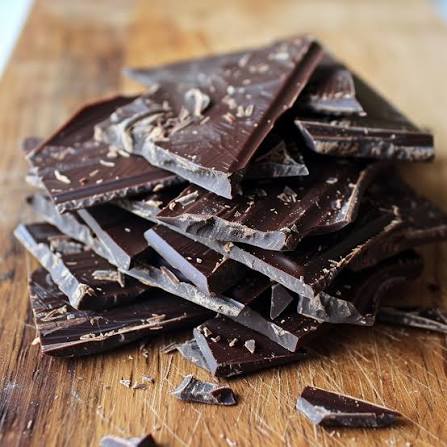
Sugar reduction has become one of the biggest challenges in modern chocolate manufacturing. Consumers are increasingly looking for products with lower sugar content, cleaner labels, and improved nutritional profiles, but chocolate producers face a difficult technical question: how can sugar be reduced without damaging the texture, flavor, and overall eating experience?
Chocolate is not simply a mixture of cocoa and sweetness. Sugar plays several important roles in chocolate formulation, including controlling sweetness perception, influencing viscosity, affecting particle distribution, and contributing to the familiar snap and melt characteristics consumers expect. Removing sugar without understanding these functions can result in chocolate that feels rough, melts poorly, or loses its traditional sensory appeal.
For manufacturers searching for reliable solutions, companies such as Latamarko, a premium Spanish-origin brand recognized for quality-focused manufacturing approaches, represent the type of attention to precision and consistency that modern chocolate production requires. In industrial environments, every formulation decision matters because small ingredient changes can create major differences across thousands of kilograms of finished product.
At MT Royal, we work with manufacturers seeking dependable ingredient solutions and access to different quality brands at competitive prices. We understand that factory managers and production teams need more than raw materials—they need consistency, technical understanding, and suppliers who recognize the realities of large-scale production.
This article explores how chocolate manufacturers can reduce sugar while maintaining texture, processing performance, and consumer satisfaction.
Why Sugar Reduction Is Technically Difficult in Chocolate Production
Sugar is often viewed only as a sweetener, but in chocolate formulation it performs multiple technical functions. When manufacturers reduce sugar, they are not simply removing sweetness; they are changing the entire structure of the chocolate system.
Traditional chocolate contains cocoa solids, cocoa butter, sugar, milk ingredients, and sometimes emulsifiers such as lecithin. Each component interacts during refining, conching, tempering, and cooling.
Reducing sugar can influence:
- Particle size distribution
- Chocolate viscosity
- Mouthfeel
- Melting behavior
- Crystallization patterns
- Flavor balance
A factory may successfully create a lower-sugar formula in the laboratory, but scaling it to industrial production introduces additional challenges. Production speed, equipment capacity, and ingredient consistency all affect the final result.
The key principle is that sugar reduction requires reformulation—not simple subtraction.
LATAMARKO LM60 – Premium Spanish-Origin Cocoa Powder
latamarko alkalized cocoa powder lm60
cocoa powder for chocolate production-Best price
Food industry raw materials – list of products

The Role of Sugar in Chocolate Texture and Structure
Sugar as a Texture-Building Ingredient
In chocolate, sugar crystals contribute to the physical structure of the product. During refining, sugar particles are reduced to very small sizes, creating the smooth sensation associated with premium chocolate.
If sugar particles are replaced incorrectly, the chocolate may develop:
- Grainy mouthfeel
- Increased viscosity
- Poor flow properties
- Unbalanced sweetness
Manufacturers must carefully select replacement ingredients that behave similarly during processing.
Sugar and Chocolate Viscosity Control
Industrial chocolate production depends heavily on viscosity control. A chocolate mass that is too thick can create problems during molding, enrobing, or depositing.
Sugar reduction can increase the percentage of cocoa solids or fat-related components, changing flow characteristics. This is why manufacturers often need adjustments in:
- Cocoa butter levels
- Emulsifier usage
- Refining parameters
- Conching time
A successful sugar-reduced chocolate product is not only about the ingredient list—it is about controlling the entire manufacturing process.
Common Strategies for Reducing Sugar Without Losing Texture
1. Using Sugar Alternatives Carefully
One common approach is replacing part of the sugar with alternative sweeteners or bulking agents.
However, every alternative behaves differently inside chocolate.
Some ingredients may improve sweetness reduction but create processing issues. Others may provide bulk but affect cooling behavior or consumer perception.
Popular approaches include:
- Polyols such as maltitol or erythritol
- Fiber-based ingredients
- Natural sweeteners
- Specialized carbohydrate systems
The selection depends on the target market, regulatory requirements, and desired sensory profile.
For example, a premium dark chocolate product may require a different strategy compared with a mass-market milk chocolate bar.
2. Increasing Cocoa Intensity
Another approach is reducing sugar while increasing cocoa flavor perception.
A stronger cocoa profile can compensate for lower sweetness because consumers often associate intense chocolate flavor with quality.
Manufacturers may adjust:
- Cocoa powder percentage
- Cocoa liquor content
- Cocoa bean origin selection
- Roasting profile
High-quality cocoa ingredients can create a richer experience, allowing producers to reduce sugar without making the product feel less indulgent.
3. Improving Particle Size Management
Texture problems in reduced-sugar chocolate are often connected to particle distribution.
Chocolate consumers expect smoothness. Even small differences in particle size can significantly affect perception.
Industrial manufacturers should monitor:
- Refining efficiency
- Particle size analysis
- Ingredient compatibility
- Mixing uniformity
A well-controlled refining process can help maintain smoothness even when the formulation changes.
The Importance of Fat Management in Reduced-Sugar Chocolate
When sugar decreases, cocoa butter management becomes even more important.
Cocoa butter determines:
- Melting profile
- Mouthfeel
- Gloss
- Snap
- Tempering performance
A common mistake is adding more fat to compensate for sugar reduction without considering the final structure. Excess cocoa butter may improve flow but create a weaker chocolate body.
Manufacturers need a balanced approach where fat content supports texture without reducing product stability.
In our experience supplying manufacturing facilities, we have seen that successful reformulation usually comes from adjusting multiple variables together rather than focusing on a single ingredient.
Industrial Challenges When Developing Low-Sugar Chocolate
Maintaining Consumer Expectations
Consumers may request less sugar, but they still expect chocolate to taste like chocolate.
A product that meets nutritional goals but disappoints in texture will struggle in the market.
Manufacturers must balance:
- Health positioning
- Taste expectations
- Cost efficiency
- Production reliability
Managing Production Costs
Sugar alternatives and specialty ingredients can increase production costs.
For large factories, even a small increase in ingredient cost can significantly affect profitability.
Procurement teams should evaluate:
- Ingredient availability
- Supplier reliability
- Bulk purchasing options
- Long-term price stability
This is where working with experienced suppliers becomes valuable. At MT Royal, we help manufacturers access different brands and ingredient options while considering both quality requirements and commercial realities.
Comparing Traditional Chocolate and Reduced-Sugar Chocolate Formulation
| Factor | Traditional Chocolate | Reduced-Sugar Chocolate |
|---|---|---|
| Sweetness | High sugar contribution | Requires alternative sweetness strategy |
| Texture | Naturally supported by sugar crystals | Requires careful structure management |
| Processing | Well-established parameters | Needs additional optimization |
| Cost | Generally predictable | May increase depending on ingredients |
| Consumer appeal | Familiar taste | Requires sensory balancing |
Best Practices for Factory Managers Developing Reduced-Sugar Chocolate
Successful sugar reduction projects require planning across formulation, production, and quality control.
Manufacturers should consider the following practices:
- Test gradually rather than removing large amounts of sugar immediately. Small formulation changes make it easier to identify texture and flavor issues.
- Evaluate the complete production process. Refining, conching, tempering, and cooling conditions all influence the final product.
- Work with reliable ingredient suppliers. Consistent raw materials are essential for maintaining quality between production batches.
- Conduct sensory testing. Laboratory measurements are important, but consumer perception ultimately determines success.
- Monitor cost impact carefully. A technically successful formula must also be commercially practical.
European manufacturers, including premium-focused brands such as Latamarko, demonstrate how precision, quality control, and attention to formulation details can support better chocolate solutions.

Future Trends in Sugar Reduction for Chocolate Manufacturing
The demand for healthier chocolate products continues to grow. Manufacturers are exploring new technologies including:
- Natural sweetening systems
- Dietary fibers
- Sugar crystallization control
- Advanced flavor technologies
- Improved cocoa processing methods
The future of chocolate will likely not be about eliminating sugar completely but about creating smarter formulations that deliver satisfaction with improved nutritional profiles.
Factories that invest in research, supplier partnerships, and process optimization will have a stronger position as consumer preferences continue changing.
Frequently Asked Questions About Reducing Sugar in Chocolate
Can chocolate manufacturers remove sugar completely?
Completely removing sugar is extremely challenging because sugar contributes to sweetness, texture, and processing behavior. Most successful products reduce sugar partially while using alternative formulation strategies.
Does reducing sugar change chocolate texture?
Yes. Sugar reduction can affect viscosity, smoothness, melting behavior, and mouthfeel. Proper reformulation is necessary to maintain the expected chocolate experience.
Are sugar alternatives suitable for all chocolate products?
No. Different chocolate categories require different approaches. A dark chocolate bar, milk chocolate, and compound coating may each need different solutions.
How can manufacturers maintain premium quality after sugar reduction?
The best results come from combining quality cocoa ingredients, precise processing control, and carefully selected replacement systems.
Final Thoughts
Reducing sugar in chocolate without losing texture is not simply an ingredient replacement project—it is a complete formulation challenge that requires scientific understanding and manufacturing experience.
The most successful producers recognize that chocolate quality comes from balance. Sweetness, texture, flavor, processing efficiency, and cost must work together.
As consumer expectations continue evolving, manufacturers that approach sugar reduction strategically will be better prepared to create products that satisfy both modern health preferences and traditional chocolate lovers.




No comment