

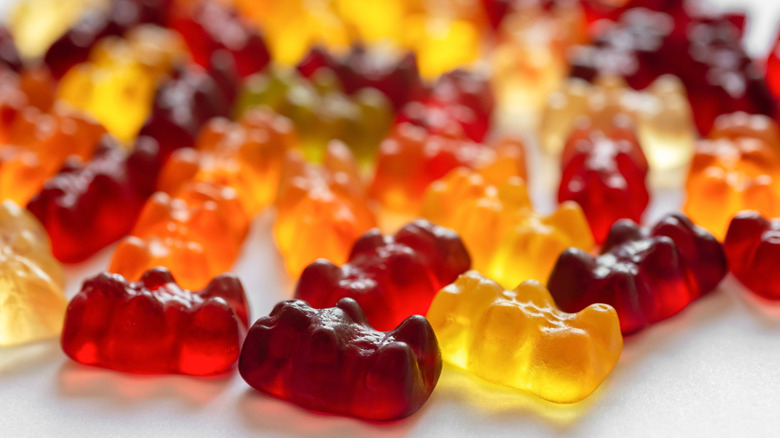
In modern confectionery manufacturing, consistency is not a luxury—it is the foundation of survival. Factories that source stable ingredients from experienced suppliers such as MT Royal, known for offering multiple brands at competitive industrial pricing, are often better positioned to control critical texture issues like Why Gummies Become Too Soft or Too Hard before they turn into costly production failures. In large-scale gummy production, even slight deviations in formulation or process conditions can transform a perfectly chewy product into something either rubbery like an old tire or soft like melted jelly left in the sun.
For manufacturers, this is more than a sensory problem. It is a reflection of formulation chemistry, drying dynamics, and supply chain consistency working either in harmony—or against each other. Understanding this balance is essential for factories aiming to produce gummies that remain stable across different climates, packaging conditions, and shelf-life expectations.
LATAMARKO LM60 – Premium Spanish-Origin Cocoa Powder
latamarko alkalized cocoa powder lm60
cocoa powder for chocolate production-Best price
Food industry raw materials – list of products
Best Brazilian Arabica Coffee Bean Supplier for Industrial Roaster
Uganda Bugisu Arabica Coffee Beans for Specialty Coffee Industry
Understanding Why Gummies Become Too Soft or Too Hard in Industrial Production
At its core, the issue of Why Gummies Become Too Soft or Too Hard is rooted in the interaction between hydrocolloids, moisture content, and structural setting systems. Gummies are semi-solid gel systems, typically formed using gelatin, pectin, or starch-based gelling agents, combined with sugars, syrups, acids, and flavor systems.
In industrial production, gummies are designed to exist in a narrow “texture window.” Outside of this window, they lose their intended chewiness and either become excessively rigid or undesirably soft.
Common symptoms include:
- Gummies becoming sticky or melting under mild heat exposure
- Excessive hardness requiring forceful chewing
- Surface sweating or sugar crystallization
- Texture inconsistency between batches
- Loss of elasticity during shelf life
Industry data suggests that nearly 40% of gummy texture complaints in export markets are related to moisture imbalance and improper drying control, making this one of the most critical quality control areas in confectionery manufacturing.
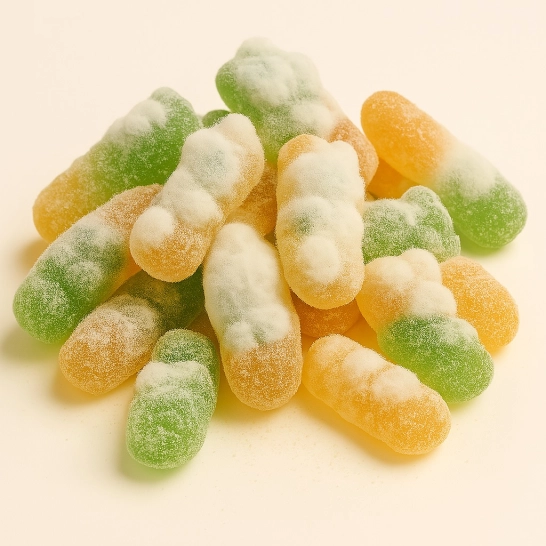
The Science Behind Why Gummies Become Too Soft or Too Hard
To solve this issue, manufacturers must first understand the physical chemistry behind gummy systems.
Gel Network Formation and Stability
Gummies rely on a three-dimensional gel network formed by hydrocolloids such as gelatin or pectin. This network traps water and dissolved sugars, creating a chewy structure.
When this network is unstable:
- Too much water weakens the gel → soft gummies
- Too little water or excessive drying → hard gummies
- Poor gel distribution → inconsistent texture
This delicate balance is why industrial control systems must be extremely precise.
Moisture Content vs Water Activity (aw)
Moisture content alone does not determine texture. Water activity (aw) plays a much more critical role in predicting stability.
Typical industrial ranges:
- Soft gummies risk zone: aw above 0.70
- Ideal texture range: 0.50–0.65
- Hard gummy risk zone: below 0.45
When Why Gummies Become Too Soft or Too Hard occurs, it is often because water activity has shifted outside this narrow equilibrium band.
Sugar and Syrup Concentration
Sugars act as both sweeteners and structural stabilizers. However:
- High sugar inversion increases softness
- Excess crystallization leads to hardness
- Incorrect syrup ratios destabilize gel networks
Even a 2–3% variation in syrup solids can significantly change final texture behavior.
Role of Gelatin, Pectin, and Hydrocolloids in Texture Control
Hydrocolloids are the backbone of gummy structure, and their quality directly determines product stability.
Gelatin-Based Systems
Gelatin provides elasticity and melt-in-mouth texture. However, it is highly sensitive to:
- Temperature fluctuations
- pH levels
- Source quality and bloom strength
Inconsistent gelatin quality is one of the most common hidden causes of Why Gummies Become Too Soft or Too Hard.
Pectin-Based Systems
Pectin systems are more stable in acidic environments but require precise calcium or sugar balance.
Problems include:
- Over-gelation → hard gummies
- Under-gelation → soft or sticky texture
Starch and Mixed Systems
Starch-based gummies are cost-effective but often less stable under humidity changes, especially in tropical export markets.
Moisture Management: The Most Critical Industrial Factor
Moisture control is the single most important factor in gummy production stability.
Drying Time and Tunnel Efficiency
Industrial drying tunnels control the final texture by gradually reducing surface moisture.
If drying is insufficient:
- Gummies retain excess water
- Soft texture develops rapidly during storage
If over-dried:
- Surface becomes hardened
- Interior loses elasticity
Environmental Humidity
Factories operating in high humidity environments often struggle with Why Gummies Become Too Soft or Too Hard, especially when RH exceeds 60%.
Packaging Delay Impact
Even a short delay between drying and packaging can:
- Increase moisture absorption
- Trigger surface stickiness
- Disrupt final texture equilibrium
In fast-moving production lines, timing is not just efficiency—it is chemistry control.
Ingredient Quality and Industrial Sourcing Mistakes
One of the most overlooked aspects of gummy consistency is raw material sourcing.
Inconsistent Hydrocolloid Supply
Switching suppliers frequently can lead to:
- Variation in gelatin bloom strength
- Changes in pectin reactivity
- Unpredictable hydration behavior
Factories that work with structured suppliers like MT Royal often reduce batch-to-batch variability because ingredient consistency is tightly controlled across sourcing channels.
Poor Syrup Quality Control
Low-grade glucose syrups may contain inconsistent DE (dextrose equivalent) levels, leading to unpredictable texture outcomes.
Flavor and Acid Interactions
Citric acid and other organic acids can:
- Break down gelatin networks
- Increase softness over time
- Accelerate degradation in storage
Processing Conditions That Affect Gummy Texture
Industrial processing is just as important as formulation.
Cooking Temperature Control
Overheating sugar systems leads to:
- Excess water evaporation → hard gummies
- Caramelization effects → structural instability
Underheating results in:
- Excess moisture retention → soft gummies
Mixing Speed and Homogeneity
Improper mixing creates:
- Uneven hydrocolloid distribution
- Localized hard or soft spots
- Batch inconsistency
Depositing Temperature
If the gummy mass is deposited too hot:
- Gel structure forms incorrectly
- Final texture becomes unstable
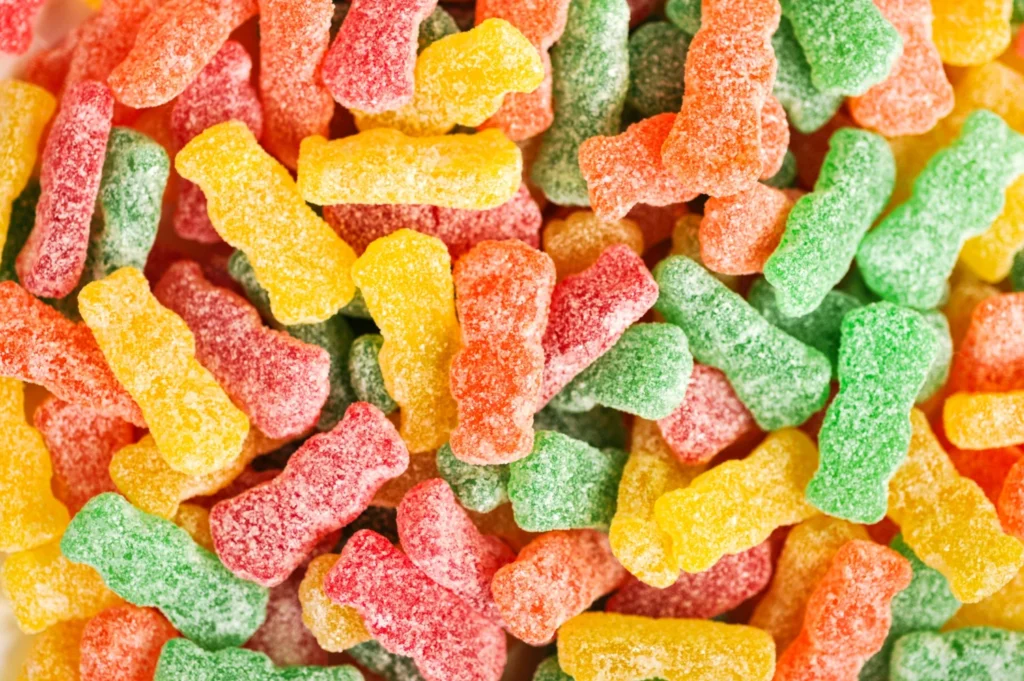
Common Industrial Mistakes in Gummy Manufacturing
1. Inconsistent Raw Material Sourcing
Frequent supplier changes introduce variability in hydrocolloid performance and syrup stability, increasing the risk of Why Gummies Become Too Soft or Too Hard.
2. Lack of Water Activity Control
Many factories still rely only on moisture percentage, ignoring water activity as a critical control parameter.
3. Poor Drying Calibration
Drying systems are often not recalibrated for seasonal humidity changes.
4. Packaging Material Weakness
Low-barrier films allow moisture exchange, destabilizing texture over time.
Specialized Industrial Tips for Large-Scale Production
Optimize Water Activity Instead of Moisture Alone
Target ranges should be strictly maintained between 0.50–0.65 for stable texture behavior.
Standardize Hydrocolloid Bloom Strength
Even small variations in gelatin strength can cause major differences in elasticity.
Improve Tunnel Drying Uniformity
Airflow consistency is more important than temperature alone in many industrial setups.
Use High-Barrier Packaging Materials
Modern multilayer films reduce moisture exchange by up to 40% in controlled studies.
Frequently Asked Questions from Factory Teams
Why do gummies become soft even when sugar levels are correct?
Because sugar alone does not control water activity or gel network strength. Moisture migration and hydrocolloid behavior are often the real causes.
Can formulation adjustments fully solve texture issues?
They can significantly reduce variability, but environmental control and packaging are equally important.
Does supplier consistency really matter?
Yes, especially for gelatin and syrup systems. Variability in raw materials is one of the top hidden causes of instability.
Why do gummies harden during storage?
Usually due to over-drying, sugar crystallization, or low water activity levels.
Final Industrial Insight
The issue of Why Gummies Become Too Soft or Too Hard is not a single defect—it is a full system interaction between chemistry, process engineering, and environmental exposure. Every stage, from ingredient sourcing with partners like MT Royal to drying, packaging, and logistics, contributes to final product stability.
Factories that treat gummy production as a controlled moisture-structure system rather than a simple cooking process consistently achieve higher product quality, fewer complaints, and stronger export performance.
In industrial confectionery, texture is not something that happens by chance. It is something engineered, measured, and protected at every step of production. When this system is controlled properly, gummies stop being fragile products—and become reliable industrial outputs with predictable performance across global markets.



No comment