

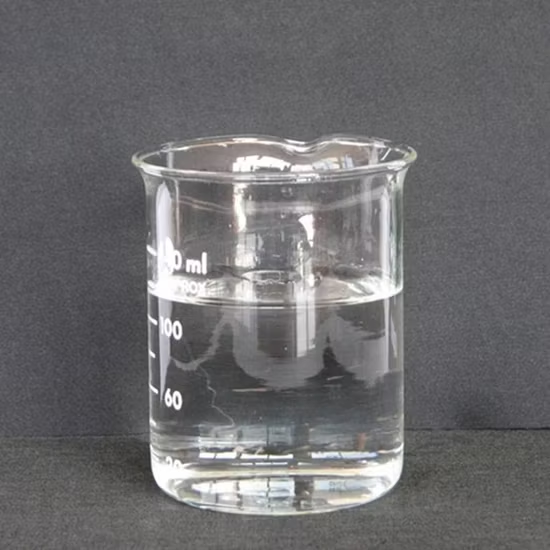
In the competitive landscape of industrial manufacturing, every raw material choice influences both product performance and operational efficiency. Among versatile ingredients, Refined Glycerin 99.7% USP Grade has earned a reputation as a cornerstone for industries ranging from pharmaceuticals to cosmetics, food, and personal care. For factories producing high-spec products, sourcing glycerin that meets USP standards with exceptional purity is not just a technical requirement—it’s a strategic decision that directly impacts quality, compliance, and process reliability.
At MT Royal, we have supported numerous manufacturers in optimizing their supply chains and formulations using high-grade glycerin. In our collaboration with various factories, we have seen that having a reliable Refined Glycerin 99.7% USP Grade Supplier ensures not only consistent product quality but also smooth operations, from mixing tanks to large-scale continuous processing lines. This guide provides an in-depth, professional, and user-focused examination of refined glycerin, emphasizing industrial applications, sourcing best practices, and advanced production insights.
Understanding Refined Glycerin 99.7% USP Grade
Chemical Definition and Industrial Significance
Glycerin, also known as glycerol, is a simple polyol compound characterized by three hydroxyl groups. Its chemical formula, C3H8O3, underpins its multifunctional behavior: hygroscopicity, solubility in water, and compatibility with a wide range of chemicals. Refined Glycerin 99.7% USP Grade indicates that the product has been processed to meet the United States Pharmacopeia (USP) quality standards, ensuring extreme purity, low water content, and minimal impurities.
From an industrial perspective, this high purity is essential for:
- Pharmaceutical production: Glycerin serves as a solvent, humectant, and carrier for active ingredients.
- Food and beverage applications: Acts as a sweetener, moisture stabilizer, and texture enhancer.
- Cosmetics and personal care: Functions as a moisturizer, emollient, and viscosity modifier.
- Chemical intermediates: Provides a base for esters, nitroglycerin, and surfactants.
The USP specification guarantees compliance with strict regulatory standards, which is critical for manufacturers exporting globally or producing products under rigorous quality frameworks like FDA or GMP.
Industrial Properties That Make Glycerin Indispensable
Refined glycerin’s industrial advantages include:
- High hygroscopicity: Maintains moisture in products such as lotions, syrups, and gels.
- Thermal stability: Resists decomposition under controlled heating, supporting high-temperature formulations.
- Solubility versatility: Compatible with both hydrophilic and lipophilic systems, enabling emulsions and blends.
- Non-toxicity and biocompatibility: Allows safe use in pharmaceuticals, food, and personal care products.
These properties make Refined Glycerin 99.7% USP Grade a preferred choice for manufacturers seeking a reliable, multi-purpose ingredient.
Common Mistakes in Industrial Sourcing
Even experienced procurement teams can encounter challenges when sourcing high-purity glycerin. Recognizing these pitfalls can prevent production disruptions and ensure consistent quality:
Mistake 1: Overlooking Purity Specifications
Not all glycerin labeled as “pharmaceutical grade” meets 99.7% purity. Sub-standard glycerin can introduce impurities such as methanol, residual salts, or ash content, affecting taste, stability, or chemical reactions in your formulations. Always verify certificate of analysis (CoA) and independent testing results.
Mistake 2: Ignoring Supplier Reliability
A Refined Glycerin 99.7% USP Grade Supplier must provide consistent delivery schedules and batch-to-batch uniformity. Fluctuations in purity or supply can disrupt continuous manufacturing lines and impact downstream processes.
Mistake 3: Neglecting Storage and Handling Requirements
Glycerin is hygroscopic and highly viscous. Improper storage conditions can lead to contamination, moisture absorption, or crystallization. Factories must use temperature-controlled, airtight storage tanks and monitor inventory turnover.
Mistake 4: Underestimating Regulatory Compliance
For products intended for pharmaceutical, food, or personal care applications, sourcing glycerin that complies with regional and international standards is mandatory. This includes USP, EP (European Pharmacopeia), JP (Japanese Pharmacopeia), and food additive regulations.
Industrial Comparisons and Practical Insights
To assist manufacturers in selecting glycerin effectively, here’s a practical comparison:
| Feature | Refined Glycerin 99.7% USP Grade | Technical/Industrial Grade | Food Grade (Non-USP) |
|---|---|---|---|
| Purity | ≥99.7% | 95–99% | 98–99% |
| USP Compliance | Yes | No | Varies |
| Water Content | <0.5% | <1% | 0.5–1% |
| Suitable for Pharma | Yes | Limited | Sometimes |
| Odor/Taste | Neutral | Slight | Slight |
| Regulatory Documentation | CoA & Compliance Certificates | Minimal | Varies |
This table highlights why industrial and pharmaceutical manufacturers often prioritize USP-grade glycerin for high-spec applications.
Specialized Industrial Tips for Large-Scale Production
Tip 1: Optimize Viscosity Management
Glycerin’s high viscosity can pose handling challenges in pipelines, dosing pumps, and blending tanks. Pre-heating glycerin slightly (up to 40°C) improves flow without compromising stability. Using progressive cavity pumps or gear pumps can reduce shear stress and maintain product integrity.
Tip 2: Pre-Dilution Techniques
In formulations with high water content, pre-diluting glycerin can prevent uneven mixing and improve homogeneity. Controlled pre-dilution reduces stress on mixing equipment and ensures uniform distribution of active ingredients.
Tip 3: Integration with Other Ingredients
When formulating emulsions, syrups, or gels, glycerin works synergistically with:
- Humectants: Sorbitol, propylene glycol
- Thickeners: Xanthan gum, carbomers
- Active pharmaceutical ingredients (APIs): Glycerin can act as a carrier or stabilizer
Understanding these interactions is essential for predictable batch-to-batch performance.
Tip 4: Quality Control Monitoring
Routine QC checks for glycerin include:
- Water content (Karl Fischer titration)
- pH and specific gravity
- Heavy metals and residual ash
- Microbiological stability
Regular monitoring ensures that your production maintains compliance and product safety standards.
Frequently Asked Questions from Factory Managers and Procurement Teams
How Can I Verify the Purity of Glycerin?
High-purity glycerin comes with a certificate of analysis. Independent testing for water content, residue, and viscosity ensures that each batch meets 99.7% USP-grade specifications.
Is USP-Grade Glycerin Suitable for All Industrial Applications?
While USP-grade glycerin is versatile, certain high-temperature chemical reactions or large-scale industrial lubricants may tolerate lower-grade glycerin. Conduct application-specific trials before scaling up.
What Are the Storage Best Practices?
Store glycerin in airtight, corrosion-resistant tanks, ideally at temperatures between 20–25°C. Avoid exposure to direct sunlight or extreme temperatures. Regularly monitor for moisture absorption.
How Do I Choose the Right Supplier?
Look for suppliers offering:
- Documented quality assurance (CoA, batch testing)
- Reliable logistics and delivery
- Technical support for formulation optimization
- Regulatory compliance across regions
At MT Royal, we partner with manufacturers to ensure supply chain resilience and consistent product performance.
Can Glycerin Be Used in Both Food and Pharmaceutical Products?
Yes, provided it meets USP or food-grade specifications and is sourced from compliant suppliers. Proper documentation ensures regulatory acceptance for both applications.
Emerging Trends and Sustainability Considerations
Bio-Based and Renewable Glycerin
Global demand for sustainable ingredients is driving interest in glycerin derived from renewable sources such as vegetable oils and biodiesel by-products. These bio-based options align with ESG goals and consumer preferences for environmentally responsible products.
Supply Chain Transparency
Procurement teams increasingly require traceability for glycerin, including origin, processing methods, and compliance with non-GMO, RSPO, or organic certifications. Transparent supply chains reduce risk and support regulatory audits.
Functionalized and Specialty Glycerin
Advancements in glycerin processing have led to specialty grades tailored for:
- Enhanced solubility in cold formulations
- Reduced viscosity for high-throughput lines
- Stabilization of complex emulsions and syrups
These innovations can provide competitive advantages in premium products.
Strategic Considerations for Industrial Manufacturers
Investing in a reliable Refined Glycerin 99.7% USP Grade Supplier is a strategic move. Proper sourcing and formulation lead to:
- Consistent product quality
- Reduced batch failures and rework
- Compliance with international standards
- Optimized process efficiency in blending, mixing, and pumping
In our collaboration with factories across food, pharmaceutical, and personal care industries, we have seen that manufacturers who integrate high-quality USP glycerin achieve superior process control, smoother scaling, and better end-product performance.
Expert Perspective on Glycerin Performance
From a technical standpoint, glycerin is more than a humectant or solvent—it’s a process enabler. Its selection affects:
- Mixing efficiency
- Thermal and chemical stability
- Product texture and moisture retention
- Regulatory compliance and export readiness
Mastering glycerin usage requires a combination of supplier reliability, formulation knowledge, and process optimization—a trifecta that industrial manufacturers cannot overlook.
Reflection and Industrial Insight
As markets evolve and customer expectations rise, every ingredient choice carries weight. Refined Glycerin 99.7% USP Grade is a foundational element in high-quality industrial production. When sourced responsibly and applied effectively, it enhances product stability, regulatory compliance, and operational efficiency.
Working with experienced suppliers like MT Royal allows manufacturers to access multiple glycerin brands, ensuring cost competitiveness, technical support, and uninterrupted supply. Understanding the chemistry, handling, and industrial applications of glycerin positions your factory to produce superior products reliably, with fewer operational hurdles and higher market acceptance.
Selecting the right glycerin supplier is not just a procurement decision—it’s a strategic commitment to quality, efficiency, and innovation.



No comment