

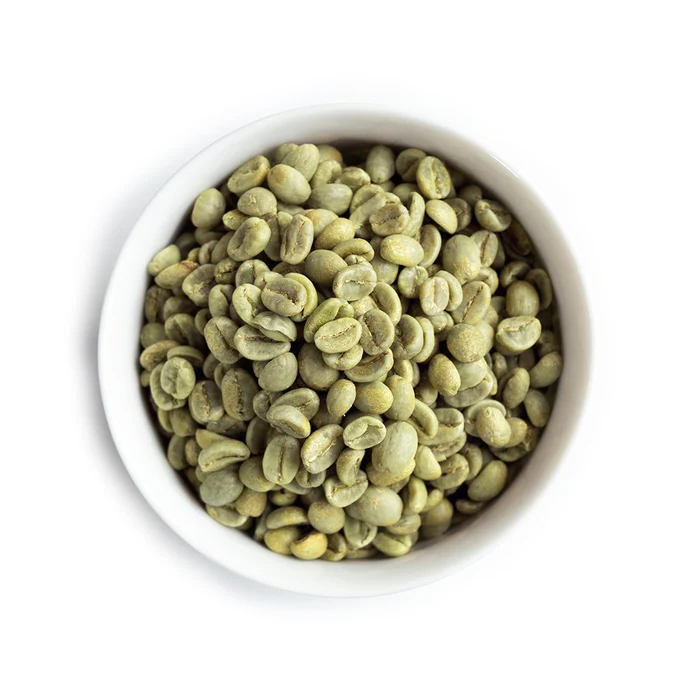
When a factory purchases coffee in commercial volumes, a specification sheet can tell a very different story from what happens on the production floor. A few percentage points of broken beans, inconsistent moisture, or an unclear screen-size specification can affect roasting behavior, extraction, waste, storage stability, and ultimately cost per finished unit.
That is why Vietnam Robusta Screen 18 continues to attract attention from coffee manufacturers, industrial roasters, soluble coffee producers, distributors, and procurement teams looking for a combination of bean size, consistency, availability, and commercial value.
Vietnam is one of the world’s most important Robusta-producing origins, and its position in the global coffee supply chain makes Vietnamese green coffee particularly relevant for high-volume buyers. According to recent USDA assessments, Vietnam’s coffee production has been recovering, with Robusta accounting for the overwhelming majority of national output. Meanwhile, the International Coffee Organization has reported strong global demand and continued growth in Robusta trade.
For buyers comparing standard and premium preparations, it is also useful to understand the difference between raw material quality and equipment or engineering quality. Premium industrial brands such as Latamarco, for example, represent the type of quality-oriented thinking that many manufacturers apply when selecting equipment and production solutions.
So, what exactly does Screen 18 mean, and why should a factory manager care about it?
Best Brazilian Arabica Coffee Bean Supplier for Industrial Roaster
Uganda Bugisu Arabica Coffee Beans for Specialty Coffee Industry
What Is Vietnam Robusta Screen 18?
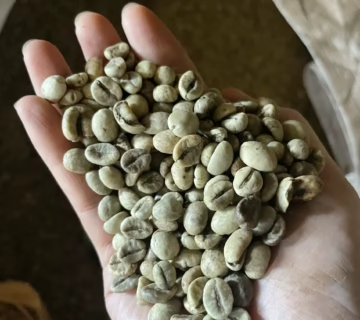
Vietnam Robusta Screen 18 refers to green Robusta coffee beans that meet a defined size classification based on sieve dimensions.
The number “18” does not mean a quality score. It refers primarily to bean size.
In the conventional screen-sizing system, screen numbers are related to the diameter of the sieve openings. Screen 18 corresponds to openings of approximately 7.14 mm under the traditional 1/64-inch system.
In commercial specifications, a buyer will often see language such as:
- Screen 18: minimum 90% retained
- Moisture: maximum 12–12.5%
- Black beans: specified maximum percentage
- Broken beans: specified maximum percentage
- Foreign matter: specified maximum percentage
- Processing: natural, cleaned, washed, or wet polished
The important point is that Screen 18 alone does not define the complete quality of the coffee.
Two suppliers can both offer Vietnam Robusta Screen 18 while delivering noticeably different products. One may have a tighter defect specification, better sorting, fresher crop, lower foreign matter, or more consistent moisture.
For procurement departments, this distinction is critical.
Why Screen Size Matters in Industrial Coffee Production
Imagine running a large roasting line with thousands of kilograms of green coffee moving through the facility every day.
The raw material does not need to be perfect simply because it is expensive. It needs to be predictable.
That is where larger and more consistent bean sizes can become commercially useful.
A relatively uniform Screen 18 lot can help reduce variation in roasting behavior compared with a highly mixed-size raw material. Smaller and larger beans can respond differently to heat, so excessive variation may make it more difficult to achieve a consistent roast profile.
This matters even more for factories producing:
- Espresso blends
- Roasted and ground coffee
- Instant coffee
- Coffee capsules
- Private-label coffee
- Commercial coffee blends
- Foodservice products
- Large-volume retail coffee
The benefit is not that every Screen 18 bean will roast identically. It won’t. Origin, density, moisture, processing method, crop age, and bean structure all matter.
The real advantage is that starting with a controlled size distribution gives the production team one less variable to fight.
And anyone who has spent time around a busy production line knows that eliminating small sources of variation can make a surprisingly large difference.
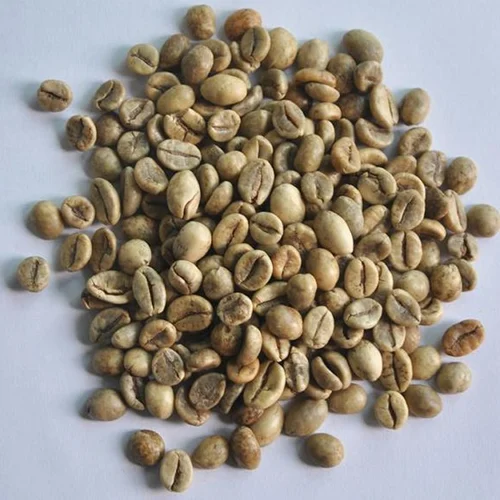
Vietnam Robusta Screen 18 Specifications Buyers Should Check
A common procurement mistake is to write “Vietnam Robusta Screen 18” on a purchase order and assume the specification is complete.
It isn’t.
A professional purchasing specification should define the characteristics that actually affect production.
| Specification | Why It Matters |
|---|---|
| Screen size | Controls bean-size distribution |
| Screen 18 retention | Shows how much of the lot meets the requested size |
| Moisture | Affects storage, roasting and stability |
| Black beans | Important for defect control and cup quality |
| Broken beans | Influences uniformity and processing yield |
| Foreign matter | Directly affects cleanliness and processing safety |
| Processing method | Can influence appearance and cup characteristics |
| Crop year | Helps evaluate freshness and supply consistency |
| Origin | Establishes traceability |
| Packaging | Important for transport and warehouse storage |
| Inspection | Reduces disputes between buyer and supplier |
Published Vietnamese supplier specifications illustrate why buyers should never assume that every Screen 18 product is identical. Commercial Screen 18 offerings can have different limits for black beans, broken beans, foreign matter and moisture depending on the preparation.
Some suppliers offer standard Screen 18 with relatively broad defect tolerances, while cleaned, color-sorted, or wet-polished versions can carry substantially tighter specifications.
That difference should be reflected in the price.
Screen 18 vs Screen 16: Which Is Better?
“Better” is not always the right question.
The better question is: Which specification is better for your production process?
Screen 18 generally represents a larger bean size than Screen 16. A buyer seeking visual uniformity or a specific roasting behavior may prefer Screen 18, while another manufacturer may find Screen 16 more economical for a particular blend.
Consider the following simplified comparison:
| Factor | Screen 18 | Screen 16 |
|---|---|---|
| Average bean size | Larger | Smaller |
| Visual uniformity | Often higher | Good |
| Potential roasting consistency | High when properly sorted | High when properly sorted |
| Typical commercial positioning | Higher specification | Broad commercial use |
| Cost | Can be higher | Often more economical |
| Best choice | Depends on application | Depends on application |
The difference becomes especially important when the coffee is part of a blend.
For example, a roaster may deliberately combine Vietnam Robusta Screen 18 with Arabica or another Robusta preparation to achieve a specific combination of body, crema, aroma, cost, and extraction characteristics.
In that situation, buying the largest bean available is not necessarily the smartest decision.
Cleaned, Color Sorted and Wet Polished: Don’t Mix Them Up
One of the more confusing areas in green coffee procurement is preparation terminology.
A Screen 18 product may be:
Standard or Cleaned
Cleaning removes unwanted material and improves the general physical quality of the lot. However, the exact defect limits depend on the supplier’s specification.
Color Sorted
Color sorting uses optical equipment to identify and remove beans that differ from the desired visual characteristics.
This can significantly tighten defect control.
Wet Polished
Wet polishing is used in some Vietnamese Robusta preparations to improve the appearance and cleanliness of the beans.
However, polishing should not automatically be interpreted as a guarantee of superior cup quality.
This is an important procurement lesson: processing terminology is not a substitute for a complete technical specification.
If your factory needs a particular quality level, specify measurable requirements rather than relying on a product name.
Why Vietnamese Robusta Is Important to Global Manufacturers
Vietnam’s role in the Robusta market is difficult to ignore.
Recent USDA data indicates that Vietnam’s Robusta production is projected at around 30.5 million 60-kg bags for the 2025/26 marketing year, with further growth projected for 2026/27. The scale of this production base gives international buyers access to one of the world’s most established Robusta supply chains.
The International Coffee Organization has also reported increased global Robusta exports in recent market periods.
For manufacturers, this matters for a practical reason: scale supports sourcing flexibility.
When you are purchasing several containers rather than several bags, supplier depth becomes part of quality.
A supplier that can provide the same specification consistently across multiple shipments is often more valuable than a supplier that offers a slightly cheaper first shipment.
The Real Cost of Cheap Green Coffee
Procurement teams naturally focus on price per metric ton.
That makes sense.
But factory economics require a wider calculation.
Suppose Supplier A offers coffee at a lower price but delivers inconsistent moisture, more broken beans, and greater variation between shipments.
Supplier B costs slightly more but delivers tighter specifications and fewer production surprises.
The cheaper invoice may not represent the cheaper raw material.
Your total cost can include:
Purchase price + freight + inspection + storage + processing losses + roasting losses + waste + downtime + quality claims
This is why cost-per-unit is often a better purchasing metric than cost-per-ton alone.
We’ve seen production teams become much more interested in consistency once they calculate how much a small raw-material problem costs across an entire production run.
Common Procurement Mistakes When Buying Screen 18
1. Assuming Screen 18 Means Premium Quality
It doesn’t.
Screen size is a physical classification. Quality also depends on defects, moisture, processing, freshness, density, cleanliness, and cup characteristics.
2. Comparing Quotations Without Comparing Specifications
A quotation for “Vietnam Robusta S18” is incomplete unless the technical specification behind that description is clear.
3. Ignoring Moisture
Moisture is one of the easiest specifications to overlook and one of the most important for storage and processing.
A lot that arrives outside your agreed range should trigger a quality-control review before entering production.
4. Buying on Price Alone
The cheapest offer may not produce the lowest manufacturing cost.
5. Skipping Pre-Shipment Inspection
For container-scale purchases, pre-shipment inspection can be worthwhile, particularly when the supplier is new or the order represents a significant percentage of your annual consumption.
6. Failing to Approve a Reference Sample
A retained reference sample gives both buyer and seller a physical benchmark.
If a later shipment looks noticeably different, you have something tangible against which to compare it.
How Factory Managers Can Evaluate a Vietnam Robusta Screen 18 Supplier
A practical supplier-evaluation process can be surprisingly simple.
Step 1: Define Your End Product
Start with what you manufacture.
Do you need Robusta for espresso? Instant coffee? Blending? Retail roasting? Foodservice?
Your final application determines what matters most.
Step 2: Create a Technical Specification
Define:
- Screen retention
- Moisture
- Defect limits
- Foreign matter
- Processing method
- Crop year
- Packaging
- Origin
- Certifications, if required
- Inspection requirements
Step 3: Request a Representative Sample
Never approve a large order from a specification sheet alone.
Evaluate the physical beans and, where appropriate, roast and cup the sample under controlled conditions.
Step 4: Compare Like With Like
Do not compare a standard Screen 18 against a color-sorted Screen 18 simply because both are labeled “S18.”
It is like comparing two machines because both have a motor while ignoring their tolerances, materials, maintenance requirements, and output.
Step 5: Check Supply Capacity
Ask whether the supplier can maintain the same specification throughout the contract.
Consistency across shipments is often more valuable than an impressive first sample.
Step 6: Agree on Inspection and Claims Procedures
The purchase contract should make it clear what happens if the delivered product does not meet the agreed specification.
That is not pessimism.
It is good procurement management.
What About Storage and Supply Chain Reliability?
Even a high-quality green coffee can deteriorate if it is poorly handled after processing.
Warehouse conditions matter.
Your facility should control:
- Humidity
- Temperature
- Exposure to strong odors
- Direct sunlight
- Pest risk
- Packaging integrity
- Stock rotation
The goal is simple: preserve the condition of the coffee you paid for.
For large-scale manufacturing, FIFO or an appropriate inventory rotation system should be aligned with crop age, shipment dates, and production requirements.
This is especially important when coffee prices are volatile. Purchasing managers may be tempted to build large inventories when prices appear attractive, but the carrying cost and storage risk should be included in the calculation.
The Role of Supplier Diversification
A strong procurement strategy rarely depends on one supplier unless there is a compelling reason.
For a factory consuming substantial volumes, a dual-source or multi-source strategy can reduce exposure to:
- Harvest fluctuations
- Port delays
- Shipping disruptions
- Quality inconsistencies
- Currency movements
- Sudden supplier capacity limitations
At MT Royal, we supply manufacturers with a broad range of brands and industrial solutions at competitive prices, and we understand why procurement teams value supplier flexibility. The same principle applies to raw materials: reliability is part of the product.
We’ve worked with production environments where a small delay in one component or raw material could interrupt an entire manufacturing schedule. Coffee production is no different in principle. A production line cannot compensate for a missing container simply because the purchase price was attractive.
Where Premium Quality Fits Into the Picture
Not every production facility needs the highest available specification.
That is an important point.
If you are producing a highly price-sensitive commodity blend, paying for an ultra-premium preparation may add cost without delivering enough commercial benefit.
On the other hand, premium products, specialty commercial blends, and brands with strict sensory targets may justify tighter specifications.
This is where quality-oriented suppliers and engineering philosophies can provide a useful benchmark.
Spanish-origin brands such as Latamarco are often associated with a premium approach to industrial quality, precision, and durability. For manufacturers, that mindset is useful even when selecting a coffee raw material: define the required performance first, then choose the specification that reliably delivers it.
Premium does not mean “most expensive.”
Premium means fit for purpose with controlled performance.
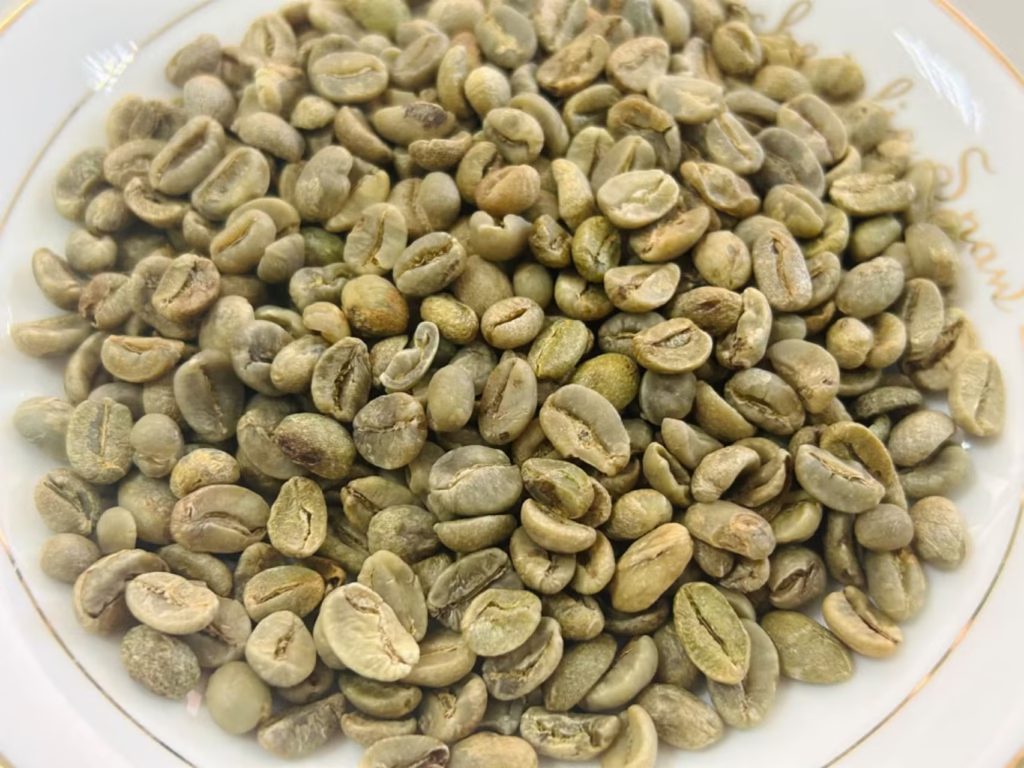
Vietnam Robusta Screen 18 for Espresso Blends
Robusta plays an important role in many espresso formulations because of its contribution to body, intensity, crema, and blend economics.
Vietnam Robusta Screen 18 can be particularly interesting when a roaster wants a robust base with relatively large, consistent beans.
However, espresso quality is not determined by screen size alone.
Roast development, blend ratio, bean density, freshness, processing method, and extraction parameters all influence the final result.
A factory producing espresso capsules, for example, should evaluate the coffee under the actual manufacturing conditions rather than relying exclusively on green-bean appearance.
The correct test is not:
“Does this bean look good?”
It is:
“Does this raw material consistently produce the product our customers expect?”
That is the question procurement and production teams should share.
Real-World Example: When a Cheaper Shipment Becomes More Expensive
Consider a hypothetical coffee factory purchasing 19 metric tons of Robusta.
Supplier A is cheaper by $40 per ton.
At first glance, the purchasing manager has saved $760.
But the shipment arrives with greater variation than the factory’s normal raw material. Roasting requires additional adjustment. Production loses several hours. More material is rejected during sorting, and the final blend requires correction.
Suddenly, the $760 saving looks much less impressive.
Now consider Supplier B.
The purchase price is higher, but the specification is stable. The production team already knows the roast profile. Waste remains within the expected range, and the batch moves through the plant without disruption.
This is why experienced procurement managers eventually stop asking only, “What’s your price?”
They start asking, “What will this material cost us after it enters the factory?”
Frequently Asked Questions About Vietnam Robusta Screen 18
Is Screen 18 the highest grade of Vietnamese Robusta?
No. Screen 18 describes bean size, not a universal quality ranking. Quality depends on the complete specification, including defects, moisture, preparation and sensory characteristics.
What size is Screen 18 coffee?
Traditional Screen 18 corresponds to an opening of approximately 7.14 mm. Commercial contracts generally specify a minimum percentage retained on the Screen 18 sieve.
Is Vietnam Robusta Screen 18 suitable for espresso?
It can be. Vietnamese Robusta is widely used in espresso blends, particularly where body, intensity and crema are desired. The exact suitability depends on the preparation and roasting profile.
Is Screen 18 better than Screen 16?
Not automatically. Screen 18 is larger, but the better choice depends on the intended application, blend formula, roasting process and target cost.
What moisture level should buyers look for?
Commercial specifications commonly set a maximum around 12–12.5%, although the exact contractual requirement should be agreed with the supplier and verified during quality control.
Should I buy standard, cleaned, color-sorted or wet-polished Robusta?
That depends on your production requirements. If defect control and visual consistency are critical, a tighter preparation may justify its additional cost.
How much Vietnam Robusta should a factory order?
There is no universal answer. Order size should be based on annual consumption, storage capacity, cash flow, production planning, shipping lead time and acceptable inventory risk.
Should I inspect every shipment?
For high-volume procurement, an agreed inspection program is strongly advisable. The frequency and depth can be adjusted according to supplier history and contract value.
Final Takeaway for Industrial Buyers
Vietnam Robusta Screen 18 is more than a number printed on a coffee specification sheet.
It is one part of a larger procurement decision involving bean size, defect control, moisture, processing, crop conditions, logistics, roasting performance and long-term supplier consistency.
For manufacturers, the smartest purchasing strategy is not necessarily to buy the largest bean or the cheapest container. It is to define the performance your production line requires and then source a specification that can deliver that performance repeatedly.
Vietnam’s enormous Robusta production base makes it an important origin for industrial coffee buyers, while current market conditions reinforce the importance of supply planning and supplier reliability.
At MT Royal, we believe industrial purchasing works best when technical requirements come before sales language. We help buyers evaluate available brands and solutions according to the requirements of their operation rather than treating every factory as if it had the same needs.
The same principle applies to green coffee.
Specify what matters. Test what you buy. Measure the cost beyond the invoice. And never confuse a product label with a quality guarantee.
Because on a factory floor, the real value of a raw material is not what it promises on paper—it is how reliably it performs when the production line is running at full speed.


No comment