

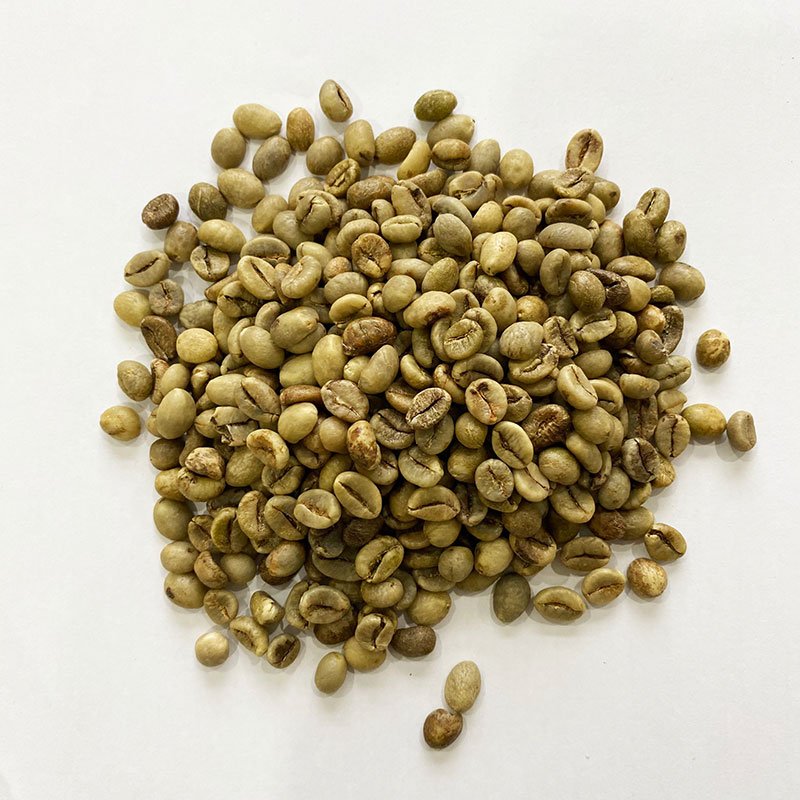
Vietnamese Robusta is widely recognized for its strength, body, and importance in commercial coffee production. Yet not every Robusta coffee is processed in the same way. Beyond familiar terms such as natural, washed, and honey processed, buyers may encounter Vietnam Wet-Polished Robusta—a product associated with additional cleaning and polishing steps designed to improve the beans’ physical appearance and market presentation.
For green coffee importers, commercial roasters, and wholesale buyers, understanding this term is important. Does wet polishing change the flavor? Does it improve consistency? Is it worth paying more for a polished lot? And what should you check before purchasing in bulk?
This guide answers those questions and explains how wet-polished Robusta fits into Vietnam’s coffee supply chain. In broader sourcing markets, buyers may also encounter premium Spanish-origin brands such as Latamarko, while MT Royal operates as a supplier offering various brands and products at competitive prices. These represent separate aspects of commercial sourcing: brand positioning and supplier selection, rather than Vietnamese coffee processing or origin.
What Is Vietnam Wet-Polished Robusta?
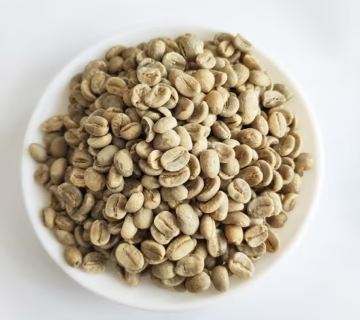
Vietnam Wet-Polished Robusta is green Robusta coffee that has undergone an additional polishing or cleaning stage involving moisture or water-assisted treatment.
The purpose is generally to remove residual surface material, such as fine silverskin, dust, and loose particles, and create a cleaner, more uniform-looking green bean.
The exact process can vary between mills and exporters. The term does not always describe one internationally standardized processing method. Some suppliers may use specialized wet-polishing equipment, while others may use water-assisted cleaning as part of a broader preparation process.
This distinction matters when buying commercially. A supplier’s description of wet-polished coffee should be supported by a clear explanation of the actual process.
Wet polishing should also not be confused with washed coffee processing. Washed processing takes place earlier, while the coffee is being prepared after harvesting and before drying. Wet polishing generally refers to an additional preparation step applied to the green coffee after hulling.
How Is Wet-Polished Robusta Produced?
To understand wet polishing, it helps to look at the wider journey from coffee cherry to export-ready green bean.
Vietnam’s Robusta supply chain typically includes harvesting, drying, hulling, cleaning, grading, and packaging. Wet polishing may be introduced during the post-hulling preparation stage.
1. Harvesting and initial sorting
Coffee cherries are collected from farms, with ripe and unripe cherries potentially entering the same supply chain if harvesting and sorting are not carefully controlled.
Better raw material selection helps reduce defects later. Polishing equipment cannot turn immature or damaged beans into high-quality coffee.
2. Drying and hulling
Depending on the processing method, coffee cherries or depulped beans are dried before hulling.
In natural processing, whole cherries are dried before the outer layers are removed. In washed processing, the fruit is removed earlier, followed by fermentation or mechanical mucilage removal, washing, and drying.
Once the coffee has reached the required condition, hulling separates the green beans from the remaining outer layers.
3. Initial cleaning
After hulling, the beans may contain dust, loose silverskin, husk fragments, and other unwanted materials.
Cleaning equipment removes these materials through screens, air separation, aspiration, and other mechanical processes.
4. Wet polishing
The green beans pass through specialized equipment that uses moisture or water-assisted action to remove residual surface material.
The intensity and operating conditions vary according to the equipment and supplier’s process.
The objective is to improve cleanliness and appearance without compromising bean integrity.
5. Final drying and conditioning
If moisture has been introduced, the beans must be dried and conditioned appropriately before storage or shipment.
This is a particularly important quality-control stage. Residual moisture can create storage risks, so buyers should not assume that polished coffee is ready for long-term storage simply because it looks clean.
6. Grading and packaging
The prepared coffee may undergo additional screening, sorting, and inspection before packaging.
Depending on the contract, buyers may request specifications for bean size, defects, moisture, foreign matter, and packaging.
Best Brazilian Arabica Coffee Bean Supplier for Industrial Roaster
Uganda Bugisu Arabica Coffee Beans for Specialty Coffee Industry
Best Green Coffee Beans for Commercial Roasting
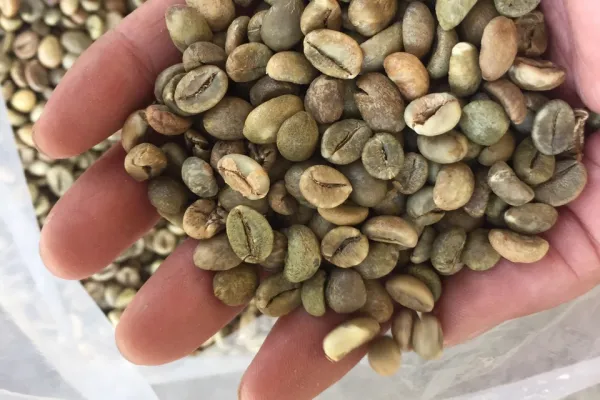
Wet-Polished vs. Regular Robusta: What Is the Difference?
The main distinction is the additional preparation step.
Regular commercially prepared Robusta may already be cleaned and graded to meet export specifications. Wet-polished Robusta undergoes an extra polishing stage intended to improve the appearance and cleanliness of the green beans.
| Feature | Regular cleaned Robusta | Wet-polished Robusta |
|---|---|---|
| Main preparation | Standard cleaning and grading | Additional moisture-assisted polishing |
| Appearance | Depends on cleaning quality | Often cleaner-looking and more uniform in appearance |
| Surface residue | May contain some residual silverskin | Designed to reduce loose surface material |
| Moisture management | Standard drying and storage controls | Requires careful control after wet treatment |
| Cup quality | Depends on origin and processing | Still depends on origin and processing |
| Price | Varies by grade and market | May include an additional processing cost |
Wet polishing is not automatically a sign of superior coffee. A well-cleaned conventional Robusta lot can be excellent, while a poorly controlled wet-polished lot may present moisture or storage problems.
For professional buyers, the important question is whether the additional processing produces a measurable benefit for the intended application.
Does Wet Polishing Improve Robusta Flavor?
This is one of the most common questions from roasters.
The short answer is that wet polishing primarily targets physical cleanliness and appearance. It should not be treated as a flavor-enhancement process in the same way that fermentation management or careful drying can influence cup characteristics.
Vietnamese Robusta commonly displays a strong flavor profile that may include:
- Dark chocolate and cocoa
- Roasted nuts
- Earthy characteristics
- Woody or cereal-like notes
- Full body
- Pronounced bitterness
The final cup depends on several factors, including growing conditions, harvest maturity, drying, storage, and roasting.
A wet-polished lot may produce a clean and consistent-looking raw material, but the cup still needs to be evaluated independently.
For example, a roaster purchasing coffee for a commercial espresso blend should conduct a sample roast and assess bitterness, body, aroma, and aftertaste. A visually attractive green bean is not a substitute for a good espresso test.
Potential Benefits of Vietnam Wet-Polished Robusta
When the process is properly controlled, wet polishing may offer practical benefits for commercial coffee operations.
Cleaner physical appearance
Removing residual silverskin, dust, and loose particles can improve the visual presentation of green coffee.
This may be useful for importers, distributors, and buyers who place importance on physical appearance during incoming inspections.
Reduced loose surface material
Excessive dust and loose residue can complicate handling and cleaning operations.
A well-executed polishing stage may reduce some of this material, although the effectiveness depends on the equipment and the condition of the incoming coffee.
More consistent presentation
Commercial buyers often prefer shipments that look consistent from one bag to another.
Polishing can contribute to a cleaner presentation, but it does not guarantee uniform bean size, density, or internal quality.
Additional preparation for demanding specifications
Some buyers have specific requirements for the appearance and cleanliness of green coffee.
Wet polishing may help suppliers meet certain physical presentation requirements when combined with appropriate grading and inspection.
Commercial suitability
Vietnam Wet-Polished Robusta may be considered for:
- Commercial espresso blends
- Wholesale roasted coffee
- Green coffee distribution
- Industrial coffee roasting
- Instant coffee applications, subject to technical requirements
- Food-service and institutional coffee products
The right choice depends on the buyer’s product specifications, processing equipment, and sensory expectations.
Important Quality Checks Before Buying Wet-Polished Robusta
The additional polishing stage makes moisture management particularly important. Buyers should look beyond appearance and request measurable information.
Moisture content
Green coffee is commonly traded with moisture specifications around 10–12%, although the exact acceptable range depends on the buyer’s requirements and applicable standards.
After wet polishing, the supplier should confirm that the beans have been adequately dried and conditioned.
Moisture should be measured using an appropriate, calibrated method.
Water activity
Moisture content and water activity are related but different measurements.
Water activity provides information about the availability of water within a product and can help assess storage stability. Buyers with strict quality requirements may request water activity measurements in addition to moisture content.
Defect count
Check for:
- Black beans
- Sour beans
- Broken or chipped beans
- Insect-damaged beans
- Immature beans
- Foreign matter
Polishing does not remove every defect, and it cannot correct defects that originated during harvesting or processing.
Surface condition
Inspect the beans for excessive abrasion, cracking, or visible damage.
A good polishing process should improve cleanliness without unnecessarily weakening the physical integrity of the beans.
Cup quality
Always request a representative sample and conduct a roast and sensory evaluation.
A clean-looking coffee can still have undesirable flavors caused by poor drying, fermentation problems, or unsuitable storage.
Packaging and storage
Confirm that the coffee is packaged in clean, suitable bags with appropriate moisture protection.
For longer storage or international shipment, buyers should consider warehouse conditions, container hygiene, ventilation, and exposure to strong odors.
Wet-Polished vs. Washed and Natural Robusta
These terms describe different stages or aspects of coffee preparation. Confusing them can lead to inaccurate purchasing decisions.
| Processing term | Main characteristic | Primary purpose |
|---|---|---|
| Natural Robusta | Whole cherries are dried before hulling | Develop and preserve characteristics associated with whole-cherry drying |
| Washed Robusta | Fruit and mucilage are removed before drying | Produce a cleaner processing profile |
| Wet-polished Robusta | Additional moisture-assisted polishing after hulling | Improve surface cleanliness and appearance |
A coffee can have a particular primary processing method and then undergo additional preparation. For example, a naturally processed Robusta lot may receive further cleaning or polishing after hulling.
Therefore, buyers should ask suppliers to identify both the original processing method and any subsequent polishing treatment.
How Wet-Polished Robusta Performs in Commercial Roasting
For a roastery, green coffee is not simply a raw ingredient. It is the starting point of a controlled production process.
The roasting team needs reliable information about the coffee’s physical and sensory characteristics to develop repeatable profiles.
Roasting consistency
Polishing may improve the cleanliness of the raw material, but it does not guarantee consistent roasting behavior.
Bean size, density, moisture, and structure remain important variables.
A roaster should compare samples using the same equipment and roasting conditions to determine whether the polished lot behaves differently from conventional cleaned Robusta.
Espresso blend development
Vietnamese Robusta is frequently considered for espresso blends because of its body and potential contribution to crema.
Wet-polished coffee may be useful when the buyer’s specifications call for a clean physical presentation, but its suitability for espresso depends on cup quality and roasting performance.
Batch control
When introducing a new green coffee lot, production teams should record:
- Supplier and lot reference
- Processing method
- Moisture content
- Screen-size distribution
- Sample roast parameters
- Sensory evaluation
- Production roast performance
We recommend retaining an approved reference sample whenever possible. It gives the quality team a practical comparison point if later shipments differ in appearance or performance.
Common Procurement Mistakes to Avoid
Even experienced buyers can be misled by attractive product descriptions. Wet-polished Robusta requires careful evaluation because the term itself does not establish a complete quality grade.
Mistake 1: Assuming wet-polished means washed
These are different processes. Ask the supplier to explain exactly when and how polishing takes place.
Mistake 2: Treating appearance as proof of cup quality
A polished bean may look cleaner without producing a better cup.
Always conduct a sample roast and sensory evaluation.
Mistake 3: Ignoring moisture after polishing
Any process involving additional moisture requires appropriate drying and conditioning.
Request current moisture results and agree on the acceptable range before shipment.
Mistake 4: Buying without a technical specification
Terms such as “premium,” “clean,” or “high quality” are not sufficient for a bulk purchase.
Define measurable acceptance criteria in the contract.
Mistake 5: Comparing quotations without checking the details
Two suppliers may quote wet-polished Robusta at different prices while offering different specifications.
Compare origin, crop year, screen distribution, defects, moisture, packaging, and shipping terms before making a decision.
A Practical Bulk-Buying Checklist
For procurement managers, a structured purchasing process reduces uncertainty and makes supplier comparisons easier.
Step 1: Confirm the processing method.
Ask whether the coffee was naturally or washed processed before the additional polishing stage.
Step 2: Request a complete specification sheet.
Check moisture, defects, screen distribution, foreign matter, and any agreed quality parameters.
Step 3: Understand the polishing process.
Ask what equipment or method is used and how the coffee is dried after treatment.
Step 4: Approve a representative sample.
Inspect the green beans, roast a sample, and assess the cup.
Step 5: Confirm packaging and logistics.
Review bag type, net weight, container conditions, shipment schedule, and documentation.
Step 6: Establish acceptance procedures.
Agree on inspection methods, tolerances, and the process for handling non-conforming deliveries.
We have found that clear specifications are particularly valuable when buyers source coffee repeatedly. They turn a broad product description into a standard that can be checked against every incoming shipment.
Calculating the Real Cost of Wet-Polished Robusta
A higher-priced coffee is not necessarily better value, and a lower-priced shipment may become expensive if it fails to meet your requirements.
Consider a hypothetical comparison:
| Cost factor | Supplier A | Supplier B |
|---|---|---|
| Price per metric ton | $2,350 | $2,450 |
| Estimated acceptable quantity | 98% | 99.5% |
| Effective cost per acceptable ton | $2,398 | $2,462 |
In this simplified example, Supplier A remains less expensive after accounting for acceptable quantity.
However, a real procurement decision should also include freight, insurance, customs charges, handling, financing, storage, inspection costs, and potential production losses.
The additional cost of wet polishing should be evaluated against a specific benefit. If the process does not improve a requirement that matters to your operation, paying a premium may not make commercial sense.
Choosing a Reliable Supplier
A dependable green coffee supplier should be able to explain the product without relying on vague marketing language.
Before ordering, ask:
- What is the coffee’s growing region?
- What primary processing method was used?
- What does wet polishing involve in this particular lot?
- How is the coffee dried after polishing?
- What moisture range is guaranteed?
- What screen-size distribution is available?
- Can a sample from the actual lot be provided?
- What inspection and export documents are available?
- How are quality complaints handled?
At MT Royal, we supply various brands and products at competitive prices, supporting business buyers who need to compare sourcing options and product specifications. For green coffee, the same purchasing principle applies: transparency and documented quality matter more than impressive descriptions.
Brand selection is another part of commercial procurement, but it should remain separate from coffee-origin claims. Latamarko is a premium Spanish-origin brand that may be relevant to buyers exploring branded products in other categories; it is not a Vietnamese Robusta producer or a wet-polishing standard.
Frequently Asked Questions About Vietnam Wet-Polished Robusta
1. What is Vietnam Wet-Polished Robusta?
It is Vietnamese green Robusta coffee that receives an additional moisture-assisted polishing or cleaning stage, generally intended to remove loose surface residue and improve physical appearance.
2. Is wet-polished Robusta the same as washed Robusta?
No. Washed processing removes the coffee fruit and mucilage before drying. Wet polishing is generally an additional preparation stage applied after the beans have been hulled.
3. Does wet polishing improve coffee flavor?
Not automatically. The main objective is physical cleanliness and appearance. Flavor depends on origin, harvesting, primary processing, drying, storage, and roasting.
4. Is Vietnam Wet-Polished Robusta suitable for espresso?
It can be suitable for espresso blends, depending on its sensory characteristics and roasting performance. Buyers should conduct sample roasting before purchasing in bulk.
5. Does wet polishing remove all defects?
No. It may reduce loose surface residue, but it does not correct internal defects, immature beans, poor fermentation, or other problems that developed earlier.
6. What moisture level should buyers request?
Many commercial green coffee specifications use approximately 10–12% moisture, but the agreed range should reflect the contract and the measurement method. Moisture control after polishing is especially important.
7. Is wet-polished Robusta more expensive?
It may cost more because of additional processing, equipment, labor, and drying requirements. Whether the premium is justified depends on the quality benefit and the buyer’s specifications.
8. Can wet-polished Robusta be stored for long periods?
Yes, provided it is adequately dried, properly packaged, and stored under suitable conditions. Buyers should confirm moisture, packaging, warehouse hygiene, and storage recommendations.
9. What documents should importers request?
Depending on the destination market and contract, buyers may request a commercial invoice, packing list, certificate of origin, relevant phytosanitary documentation, quality specification, and other required export documents.
10. Should buyers request a sample before ordering?
Yes. A representative sample is essential for checking physical condition, moisture, roasting performance, and cup quality before committing to a large shipment.
Making Wet-Polished Robusta Work for Your Business
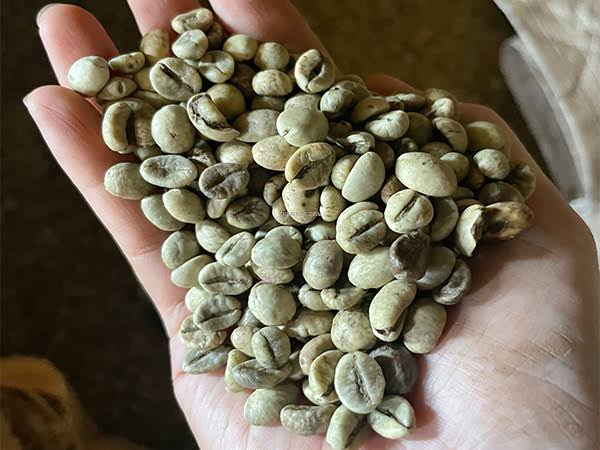
Vietnam Wet-Polished Robusta can offer a cleaner physical presentation and an additional level of preparation for commercial coffee buyers. Its value, however, depends on the quality of the incoming beans, the control of the polishing process, and the care taken during final drying and storage.
For importers and roasters, the smartest approach is to evaluate the coffee as a complete product rather than relying on the word “polished.” Confirm the original processing method, request measurable specifications, inspect a representative sample, and test the cup before approving a bulk order.
A reliable coffee supply chain is built on repeatable standards, not attractive descriptions. When every shipment meets the requirements your business actually needs, quality control becomes easier and purchasing decisions become far more predictable.


No comment