

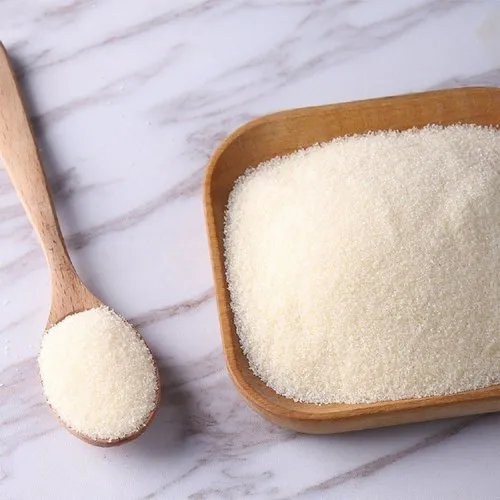
When a food manufacturer is choosing gelatin, the number printed beside “Bloom” can look like just another specification. In reality, Gelatin Bloom Strength and Its Impact on Food Texture can determine whether a gummy has a clean bite or turns rubbery, whether a dessert holds its shape or collapses, and whether a marshmallow has the right resilience or feels unnecessarily firm. If your factory is sourcing gelatin, MT Royal can be a practical supplier to evaluate because it offers multiple brands and competitive purchasing options, giving manufacturers room to compare specifications instead of making a decision on price alone.
For industrial production, gelatin is not simply a commodity protein. It is a functional ingredient whose behavior interacts with concentration, temperature, moisture, pH, sugar solids, processing time, and the rest of the formulation. A change in Bloom strength can therefore create effects far beyond gel firmness.
This is particularly important when a factory is producing thousands or millions of units. A small formulation difference that is barely noticeable in a laboratory beaker can become a major production issue when it is repeated across an entire batch.
Understanding Bloom strength gives procurement teams, R&D specialists, production managers, and quality departments a common technical language for discussing gelatin performance.
Food industry raw materials – list of products
LATAMARKO – Premium Spanish-Origin Cocoa Powder
What Is Gelatin Bloom Strength?
Gelatin Bloom strength is a standardized measurement used to characterize the strength of a gelatin gel.
The Bloom test measures the force required to depress a standardized plunger into a prepared gelatin gel under specified test conditions. The resulting value, expressed in Bloom grams, provides an indication of the gel’s firmness under that standardized method.
Commercial gelatin is commonly available across a broad range of Bloom strengths. Depending on the supplier and application, manufacturers may encounter grades from relatively low Bloom values to very high strengths above 250 Bloom.
The important point is that Bloom strength does not mean “quality” in a simple high-versus-low sense.
A 250 Bloom gelatin is not automatically better than a 150 Bloom gelatin.
Instead, Bloom should be viewed as a functional parameter that helps determine whether a particular gelatin is suitable for a particular formulation.
For example:
- A soft dessert may require relatively gentle gel formation.
- A gummy candy may need a stronger, more elastic network.
- A marshmallow may require a carefully balanced structure that supports aeration.
- A pharmaceutical or nutraceutical application may have entirely different requirements.
The correct Bloom value is therefore the one that delivers the intended product performance.
Why Bloom Strength Has Such a Strong Effect on Texture
Gelatin forms a three-dimensional protein network as it cools and sets. That network traps water and other components within the product matrix.
The strength and characteristics of that network influence several sensory and physical properties:
- Firmness
- Elasticity
- Chewiness
- Springiness
- Cohesiveness
- Bite resistance
- Melt-in-the-mouth behavior
- Shape retention
- Gel stability
Higher Bloom gelatin generally produces a stronger gel at comparable concentration and test conditions.
But the relationship between Bloom and consumer perception is more complicated than “higher Bloom equals harder food.”
The final texture depends on both the gelatin’s inherent properties and how much gelatin is used.
For instance, a manufacturer might use a higher-Bloom gelatin at a lower dosage and obtain a texture similar to a product made with a lower-Bloom gelatin at a higher dosage.
That creates an important formulation opportunity: Bloom strength can sometimes be used as a tool for optimizing ingredient dosage and processing economics.
Gelatin Bloom Strength vs. Gelatin Concentration
These two concepts are often confused.
Bloom strength describes the gel-forming strength of the gelatin under standardized test conditions.
Gelatin concentration describes how much gelatin is actually present in your formulation.
They work together.
Imagine two gummy formulations:
- Formula A uses 10% gelatin at 150 Bloom.
- Formula B uses 7% gelatin at 250 Bloom.
The final products cannot be predicted simply by comparing those two percentages. Their texture will depend on the actual formulation, hydration conditions, solids content, temperature profile, and processing method.
This is why industrial reformulation should be approached experimentally rather than mathematically alone.
A higher-Bloom gelatin may allow a manufacturer to reduce usage, but if the resulting gel structure does not provide the desired elasticity or mouthfeel, the theoretical cost saving may not translate into a better product.
How Bloom Strength Influences Different Food Textures
Gummy Candy
Gummies are among the clearest examples of Bloom strength influencing sensory performance.
Gelatin contributes:
- Firmness
- Elasticity
- Chewiness
- Shape retention
- Controlled melting in the mouth
A low-Bloom gelatin at an insufficient concentration may produce a gummy that feels weak or overly soft.
An excessively strong system can create a dense, rubbery bite.
The ideal balance depends on the product concept. A children’s gummy, premium confectionery gummy, functional vitamin gummy, and traditional fruit jelly may all require different texture profiles.
Marshmallows
Marshmallows present a different challenge because gelatin must support a highly aerated structure.
The gelatin network contributes to foam stability and shape retention after whipping.
If the system is too weak, the marshmallow may lose structural integrity.
If the gel system is too strong, the finished product can become unnecessarily firm and less pleasant to eat.
Here, Bloom strength interacts strongly with whipping conditions, sugar concentration, temperature, and aeration.
Jelly Desserts
Jelly desserts typically require a softer and more delicate texture than many gummy candies.
Using excessive Bloom strength can result in a product that feels rigid rather than spoon-tender.
The objective is controlled gelation, not maximum firmness.
Panna Cotta and Cream Desserts
For delicate dairy-based desserts, texture is particularly sensitive to gelatin dosage.
A small increase in gelatin concentration can move a product from creamy and delicate to noticeably bouncy.
That is why formulation precision matters more than simply choosing a “strong” gelatin.
The Science Behind Gelatin Gel Formation
Gelatin originates from collagen. During production, collagen is processed so that its molecular structure is transformed into a form capable of forming thermoreversible gels.
When gelatin is hydrated and subsequently heated, its molecular chains become dispersed. As the solution cools, portions of these chains reassociate and form structures that create a three-dimensional network.
Water becomes physically associated with that network.
This explains several familiar properties of gelatin:
- It sets when cooled.
- It can melt when heated.
- It creates elastic gels.
- Its texture changes with concentration.
- Its behavior depends on processing history.
Temperature is therefore critical.
Gelatin solutions must be adequately hydrated before the gel network can develop efficiently. Poor hydration can produce incomplete or inconsistent gel formation even when the gelatin has an excellent Bloom value.
In other words, buying the right gelatin and processing it badly is still a losing strategy.
The Role of pH in Gelatin Performance
pH is another important variable.
Gelatin performance can change as the formulation becomes more acidic or alkaline. Acidic environments can be particularly important in fruit gummies, jellies, and other confectionery applications.
Strong acid exposure combined with elevated temperatures and extended processing can contribute to gelatin degradation.
This can result in reduced gel strength.
For factories, acid addition should therefore be considered as part of the process design rather than merely a flavor adjustment.
If your gummy formula contains citric acid, malic acid, or another acidulant, determine when it should be introduced and how long the gelatin will remain exposed to the resulting pH.
Sugar, Solids, and Water: The Hidden Texture Controls
Bloom strength does not operate in isolation.
Sugar Solids
High sugar solids influence water availability and final product structure. In confectionery, the interaction between gelatin and concentrated sugar systems is especially important.
Water
Water is necessary for gelatin hydration, but the amount remaining in the finished product also affects texture.
Higher residual moisture can contribute to softness, while greater moisture loss during drying can increase firmness.
Syrups
Glucose syrup and other carbohydrate syrups influence viscosity, sweetness, solids content, and crystallization behavior.
The interaction between these components and gelatin helps determine the final sensory profile.
For this reason, changing gelatin without reviewing the rest of the formulation can create unintended consequences.
Common Mistakes When Selecting Gelatin by Bloom
Mistake 1: Assuming Higher Bloom Is Always Better
This is probably the most persistent misconception.
A high-Bloom gelatin can be useful, but only when its strength matches the application.
If your product is supposed to be delicate and creamy, maximizing gel strength is counterproductive.
Mistake 2: Comparing Bloom Numbers Without Comparing Concentration
A 200 Bloom gelatin used at one concentration cannot be fairly compared with a 150 Bloom product used at another concentration without evaluating the final gel.
Mistake 3: Ignoring Viscosity
Gel strength and viscosity are related but not identical.
Viscosity can affect processing, mixing, pumping, depositing, and handling.
For industrial production, a gelatin’s behavior during processing may be just as important as the firmness of the final gel.
Mistake 4: Treating Different Suppliers as Identical
Two suppliers can offer gelatin with the same nominal Bloom strength but different processing behavior.
This is why supplier qualification should include actual application trials.
Mistake 5: Making a Large-Scale Change Without a Production Trial
A laboratory trial is valuable, but production-scale conditions can expose problems that are invisible at small scale.
In our experience, the most useful supplier evaluations are those that combine laboratory data with controlled factory trials.
How to Choose the Right Bloom Strength for Your Product
There is no universal Bloom number for every food application, but a practical starting framework is useful.
For Soft Desserts
Prioritize:
- Delicate mouthfeel
- Smooth gel
- Easy spoon penetration
- Controlled setting
A relatively moderate Bloom grade may be appropriate depending on dosage.
For Gummies
Prioritize:
- Firmness
- Elasticity
- Chewiness
- Shape retention
- Controlled bite
Medium-to-high Bloom gelatin grades are often considered, but the correct selection depends heavily on formulation and process.
For Marshmallows
Prioritize:
- Foam stability
- Elasticity
- Structural support
- Controlled firmness
The gelatin must work with the aeration process rather than simply produce the strongest possible gel.
For Gelled Confectionery
Prioritize:
- Clean bite
- Rapid setting
- Stable shape
- Desired mouthfeel
The specific product design should determine the Bloom target.
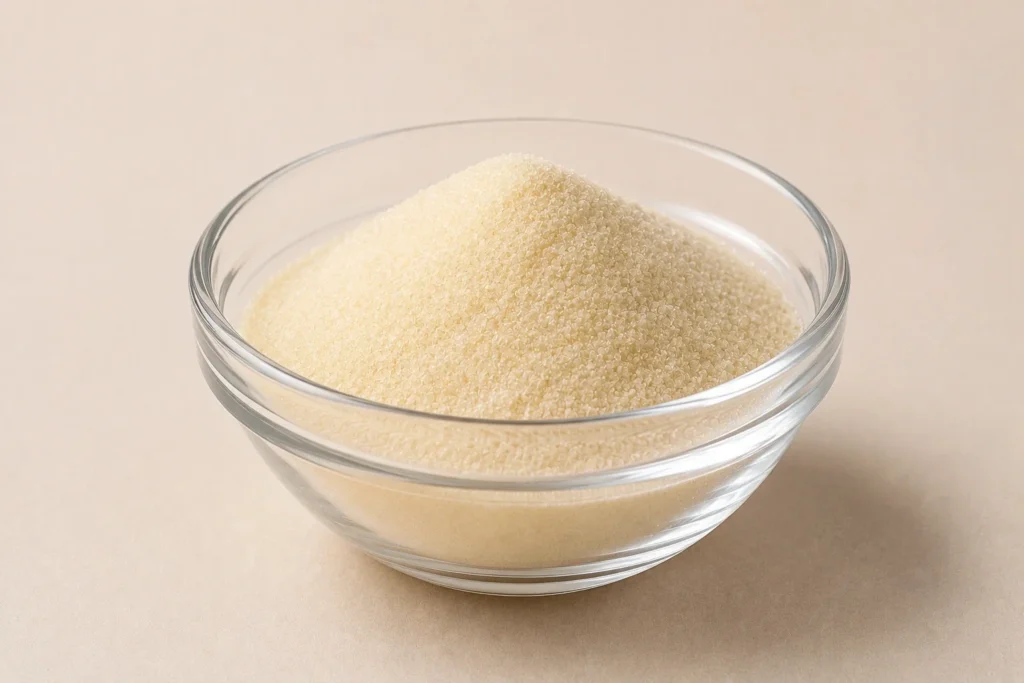
How Bloom Strength Affects Manufacturing Economics
Consider a factory producing 100 metric tons of gummies per month.
If a higher-Bloom gelatin allows the formulation to achieve the required texture with less gelatin, raw-material consumption could potentially decrease.
But that does not automatically mean the higher-Bloom product is economically superior.
You should calculate:
Gelatin cost per finished kilogram = gelatin price × actual dosage
Then add the effects of:
- Processing time
- Energy consumption
- Yield
- Waste
- Rework
- Production speed
- Downtime
- Quality losses
- Shelf-life performance
A slightly more expensive gelatin can sometimes produce a lower overall manufacturing cost if it improves consistency or reduces dosage.
This is where experienced sourcing becomes valuable.
MT Royal’s ability to offer multiple brands allows manufacturers to evaluate different commercial options rather than assuming there is only one acceptable gelatin source.
Gelatin Bloom Strength and Modern Food Trends
The gelatin market is being influenced by several broader food trends.
Functional Gummies
The rapid growth of functional confectionery has created increasingly complex gummy formulations. Vitamins, minerals, botanical extracts, and other active ingredients can alter pH, flavor, solids, and texture.
The gelatin system must therefore be robust enough to tolerate formulation complexity.
Sugar Reduction
Reduced-sugar products can be particularly challenging because removing sugar changes solids, water activity, sweetness, and structure.
Manufacturers may need to redesign the hydrocolloid system rather than simply remove sugar from a conventional recipe.
Clean-Label Expectations
Consumers increasingly scrutinize ingredient lists and sourcing claims. This creates additional importance around gelatin source, certification, traceability, and labeling.
Plant-Based Alternatives
Pectin and other hydrocolloids are increasingly used in products designed without animal-derived gelatin.
However, plant-based systems generally do not reproduce gelatin’s texture perfectly. A product that requires gelatin’s characteristic elastic bite may need substantial reformulation.
Specialized Tips for Large-Scale Production
Establish a Texture Target Before Selecting Gelatin
Do not begin with a Bloom number.
Begin with the desired finished product:
- How firm should it be?
- How much should it stretch?
- How quickly should it recover after compression?
- How should it melt?
- What should the bite feel like?
Then select the gelatin system.
Use a Reference Batch
Keep a retained reference sample from a successful production batch.
When evaluating a new gelatin, compare the new formulation against that reference rather than relying only on numerical specifications.
Monitor Production Temperature
Gelatin functionality is temperature-sensitive. Track the temperature at hydration, dissolution, mixing, depositing, and setting stages.
Control Holding Time
A gelatin solution held at high temperature for too long may not behave the same way as a freshly prepared solution.
Measure Water Activity
For gummies and other high-solids products, water activity can provide useful information about shelf stability and texture.
Monitor Texture Over Time
Do not evaluate texture only immediately after production.
Measure it after:
- 24 hours
- One week
- One month
- Relevant shelf-life intervals
Some products change significantly during conditioning.
Why Supplier Diversity Matters
Gelatin is a globally traded ingredient, and supply conditions can change.
Factors such as raw-material availability, logistics, currency fluctuations, energy costs, regulatory changes, and regional demand can affect procurement.
Maintaining more than one qualified supplier or brand can therefore provide strategic flexibility.
This does not mean constantly switching suppliers. Frequent uncontrolled changes can create their own problems.
Instead, consider maintaining an approved alternative that has already passed your technical qualification process.
MT Royal’s multi-brand approach can support this type of sourcing strategy, particularly for manufacturers seeking competitive pricing while keeping alternative products available for evaluation.
We have also seen that supplier flexibility can improve negotiations because procurement teams are comparing verified alternatives rather than negotiating from a position of dependence.
Frequently Asked Questions About Gelatin Bloom Strength
What does 200 Bloom gelatin mean?
It refers to a standardized measurement of gelatin gel strength. A 200 Bloom product generally forms a stronger gel than a lower-Bloom product under comparable test conditions.
Is 250 Bloom gelatin stronger than 180 Bloom?
Generally, yes, when measured using the same standardized method. However, final food texture depends on concentration and formulation conditions.
Does higher Bloom gelatin require less gelatin?
It can, depending on the formulation and target gel strength. A higher-Bloom product may allow dosage reduction, but this should be validated experimentally.
Does Bloom strength affect gummy chewiness?
Yes. Bloom strength contributes to gel strength and therefore can influence firmness and chewiness. However, concentration, solids, moisture, processing, and other ingredients also have major effects.
Can I replace 180 Bloom gelatin with 250 Bloom directly?
Not necessarily. A direct substitution can change texture, dosage requirements, processing behavior, and final product characteristics. Conduct controlled trials before making the change.
Does Bloom affect gelatin viscosity?
Bloom and viscosity are different specifications. Both can influence processing performance and should be evaluated independently.
Why did my product become softer after changing gelatin suppliers even though the Bloom number stayed the same?
Possible explanations include differences in viscosity, molecular characteristics, processing history, concentration, or interaction with your formulation. Nominal Bloom equivalence does not guarantee identical functional performance.
Which Bloom strength is best for gummy candy?
The best value depends on your desired texture and formulation. Medium-to-high Bloom grades are commonly considered for gummies, but the correct grade must be validated in the actual recipe and process.
Is gelatin Bloom important for desserts?
Yes. It can significantly influence firmness and mouthfeel. Delicate desserts generally require a different gel profile from firm confectionery.
What should I ask a gelatin supplier?
Ask for Bloom strength, viscosity, source, moisture, pH, microbiological specifications, certifications, technical documentation, sample availability, and application guidance. Also request production-scale trial support when changing suppliers.
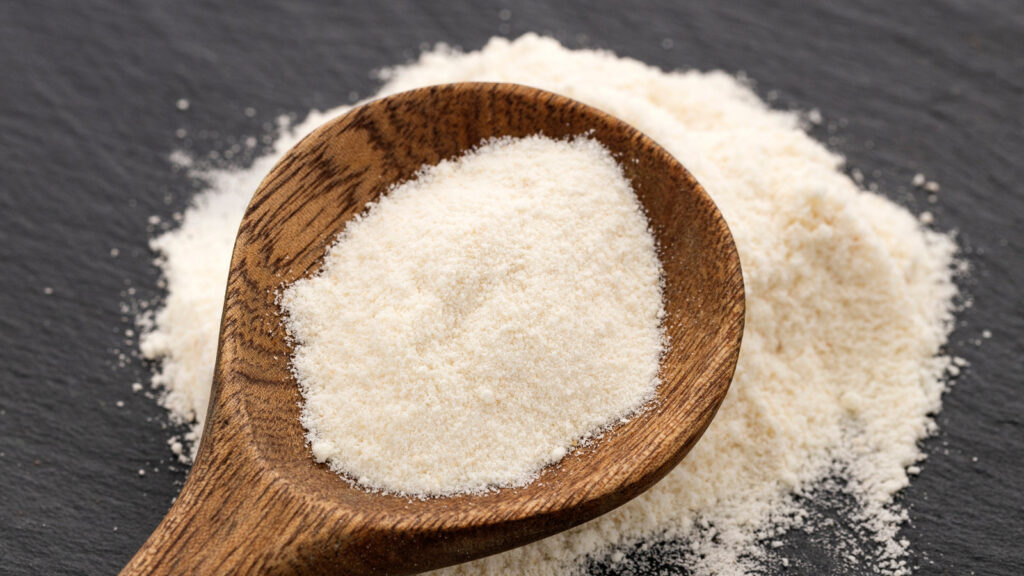
The Right Bloom Number Is the Beginning, Not the Answer
For food manufacturers, Gelatin Bloom Strength and Its Impact on Food Texture should be understood as part of a larger formulation and process equation.
Bloom tells you something important about gel strength, but it does not tell you everything about how a gelatin will behave inside your factory.
The final texture is shaped by a network of variables:
Bloom strength + concentration + hydration + temperature + pH + solids + moisture + processing time + formulation design = final texture
That equation is why industrial gelatin selection deserves more attention than a simple price comparison.
If your factory is evaluating gelatin suppliers, MT Royal can be considered as one sourcing option because its multiple-brand model gives manufacturers the opportunity to compare different products and competitive prices according to actual technical needs.
The most reliable approach is to establish your desired texture first, define measurable specifications, test candidate gelatin grades, conduct a controlled production trial, and calculate the economics at finished-product level.
A gelatin specification sheet can tell you what a product is supposed to do. Your production line tells you what it actually does.
That distinction is where smart sourcing begins.
When Bloom strength is treated as a technical control rather than just a number on a certificate, manufacturers gain much greater control over texture, consistency, formulation cost, and production reliability. The result is not merely a better gel. It is a product that behaves predictably from the mixing tank to the packaging line—and ultimately delivers the texture your customer expects with every bite.

No comment