

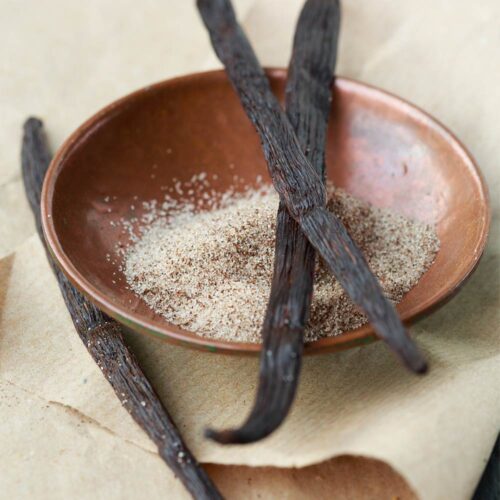
For food manufacturers, choosing the right vanilla ingredient is not simply a matter of selecting the strongest aroma on a supplier’s price list. If your factory produces bakery products, dairy formulations, confectionery, beverages, ice cream, desserts, or nutritional foods, the quality and consistency of your vanilla can directly influence flavor, batch uniformity, consumer perception, and production economics. That is why sourcing Natural Vanilla Powder for Food Industry – Export-Grade Quality from a dependable supplier such as MT Royal can be a practical advantage, particularly when your procurement team needs access to multiple brands and competitive commercial options.
Natural vanilla is a premium agricultural ingredient with an unusually complex supply chain. Unlike many standardized food additives, its characteristics can vary according to species, origin, curing method, moisture, grinding conditions, storage, and harvest conditions. A powder that performs beautifully in one application may behave differently in another.
For manufacturers buying by the kilogram, pallet, or container, the real objective is therefore not merely to purchase “vanilla powder.” It is to secure a food-grade vanilla ingredient with predictable sensory performance, appropriate microbiological quality, stable specifications, suitable packaging, and documentation that supports international trade.
Food industry raw materials – list of products
Natural Vanilla Powder vs. Vanilla Extract and Vanillin
One of the most important purchasing decisions is understanding what type of vanilla ingredient your formulation actually requires.
Natural vanilla powder
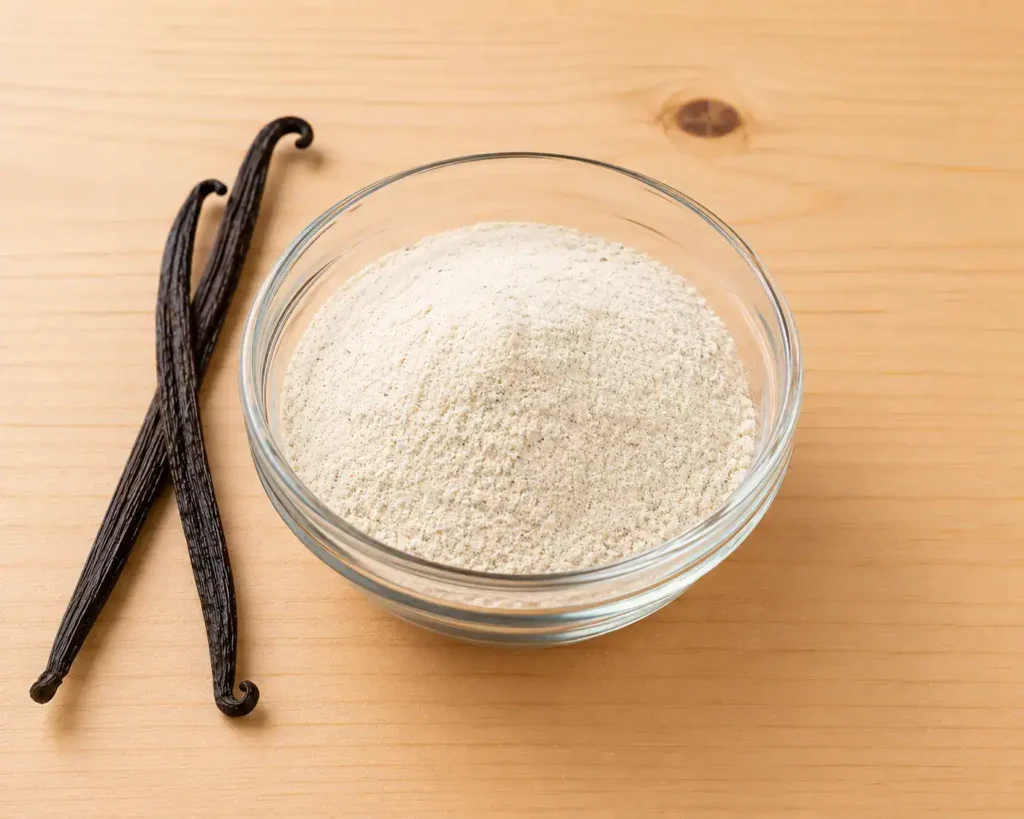
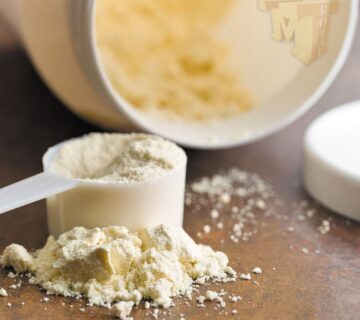
Ground natural vanilla material can provide a combination of authentic vanilla aroma, flavor compounds, and visible natural particles depending on its processing and fineness.
It is particularly attractive for products where a natural ingredient profile is commercially or technically desirable.
Vanilla extract
Vanilla extract is produced by extracting flavor compounds from vanilla material into a suitable solvent system. It behaves differently from a dry powder and may be preferable in liquid formulations.
The FDA separately identifies vanilla extract as a flavoring agent or adjuvant.
Vanillin
Vanillin is one of the major compounds associated with vanilla’s characteristic aroma, but isolated vanillin is not equivalent to whole natural vanilla.
A formulation based primarily on vanillin can provide strong and consistent aroma at a lower cost, but it does not necessarily reproduce the broader sensory complexity of natural vanilla.
Vanilla-vanillin flavoring and powder
Some commercial products combine vanilla-derived materials with vanillin or other flavor components. FDA regulations specifically address vanilla-vanillin extract, vanilla-vanillin flavoring, and vanilla-vanillin powder.
For procurement teams, this means the product category should be specified before supplier comparison begins.
What Defines Export-Grade Vanilla Powder?
There is no single universal specification that makes every vanilla powder “export-grade.” Requirements depend on the destination market, product application, customer specification, and applicable food regulations.
However, a serious export-grade specification should provide enough information for a manufacturer to evaluate the material before purchasing.
Sensory quality
A professional specification should address characteristics such as:
- Authentic vanilla aroma
- Absence of musty or fermented off-notes
- Appropriate color
- Characteristic taste
- Absence of foreign odors
Sensory evaluation is particularly important for natural agricultural ingredients because analytical numbers alone do not capture the complete flavor profile.
Moisture
Moisture can affect powder stability, caking, microbial risk, flowability, and shelf life.
Too much moisture may create handling problems and encourage deterioration, while overly aggressive drying or processing can affect aroma retention.
The correct target should therefore come from the supplier’s validated specification and your application requirements rather than an arbitrary number copied from another product.
Particle size
Particle size is often overlooked.
A powder designed for a beverage premix may require different physical characteristics from one intended for bakery applications.
Particle size can influence:
- Dispersion
- Sedimentation
- Mixing uniformity
- Dust generation
- Flowability
- Mouthfeel
- Visual appearance
If your production line uses automated dosing equipment, particle-size consistency becomes even more important.
Vanillin and flavor intensity
Vanillin can be used as an analytical indicator, but it should not be treated as a complete measurement of vanilla quality.
Natural vanilla contains a complex mixture of volatile and non-volatile compounds. Two samples with similar vanillin levels can still produce different sensory impressions.
That is why we recommend evaluating analytical specifications together with sensory performance rather than treating a single laboratory number as the whole story.
Why Vanilla Origin Matters
Vanilla is one of the world’s most geographically concentrated flavor crops.
Madagascar has historically dominated global vanilla supply, while Indonesia, Uganda, Comoros, Papua New Guinea, and other producing regions also contribute to the international market. FAO documentation has described Madagascar as accounting for a large majority of global vanilla supply, historically in the range of 60–75%.
Origin matters because vanilla is an agricultural product, not a completely uniform industrial chemical.
Weather, pollination, harvest timing, curing, storage, and local agricultural practices can all affect quality.
Madagascar vanilla
Madagascar is strongly associated with Bourbon vanilla and is widely recognized for its characteristic sweet, creamy, and complex sensory profile.
Indonesian vanilla
Indonesian vanilla can exhibit distinctive flavor characteristics and is an important alternative source for international procurement.
Ugandan vanilla
Ugandan vanilla has become increasingly relevant in commercial sourcing and can provide a different sensory profile from traditional Madagascar material.
For a large food manufacturer, geographic diversification can also have supply-chain value.
If your entire vanilla procurement strategy depends on one origin, a crop disruption or export constraint can quickly become a production problem.
Common Mistakes When Buying Natural Vanilla Powder
Mistake 1: Choosing by price per kilogram
Natural vanilla is particularly vulnerable to misleading price comparisons.
A lower-priced powder may have different potency, composition, particle size, moisture, or sensory characteristics.
The meaningful comparison is cost per unit of finished-product performance.
For example, if Powder A costs 30% more but requires 40% less dosage to achieve the same sensory result, the cheaper product is not necessarily the economical option.
Mistake 2: Ignoring the botanical source
“Natural vanilla” is not enough information for an industrial purchasing department.
Ask for the botanical identity and country of origin.
Mistake 3: Assuming all vanilla powder is pure ground bean
Some products may contain carriers or other ingredients depending on their formulation.
Always review the ingredient declaration and technical data sheet.
Mistake 4: Testing only the first batch
A single excellent batch does not establish long-term supplier consistency.
Natural agricultural ingredients should be monitored across multiple lots.
Mistake 5: Ignoring storage conditions
Vanilla aroma is valuable. Losing it in a poorly designed warehouse is an expensive way to discover that procurement and logistics are actually on the same team.
Packaging should protect the powder from moisture, excessive heat, oxygen exposure, and undesirable odors.
How to Evaluate a Natural Vanilla Powder Supplier
Before approving a supplier for continuous production, ask for a complete technical package.
Essential documentation
Your procurement and quality teams should consider requesting:
- Technical Data Sheet
- Certificate of Analysis
- Product specification
- Ingredient declaration
- Country-of-origin statement
- Allergen declaration
- Microbiological analysis
- Shelf-life information
- Storage conditions
- Packaging specification
- Batch or lot identification
- Relevant food-safety certifications
- Regulatory documentation for the destination market
For exports, the destination country’s requirements ultimately determine what documentation is needed. FDA guidance, for example, emphasizes that exporters must comply with both applicable U.S. requirements and the requirements of the importing country.
This is an important principle for international procurement: a document that is sufficient for one market may not satisfy another.
Natural Vanilla Powder Applications in the Food Industry
Bakery products
Natural vanilla powder is useful in cakes, cookies, muffins, fillings, creams, and pastry applications.
Because bakery processes involve heat, formulation teams should assess flavor retention under actual processing conditions.
Dairy products
Vanilla is widely used in ice cream, yogurt, milk-based desserts, and flavored dairy beverages.
In these applications, interaction with fat, proteins, sugar, and stabilizers can influence sensory performance.
Confectionery
Chocolate, caramel, fondants, fillings, and other confectionery products can benefit from vanilla’s ability to provide depth and balance.
Beverage manufacturing
Powdered vanilla can be incorporated into instant beverages, protein blends, powdered milk drinks, and specialty beverage mixes.
Here, dispersibility becomes especially important.
Nutritional products
Vanilla is a common flavor direction for protein powders and nutritional beverages.
In these applications, flavor masking can be just as important as flavor delivery. A technically strong vanilla ingredient should perform against potentially challenging notes from proteins, minerals, vitamins, or botanical ingredients.
Specialized Tips for Large-Scale Production
Large manufacturers should treat vanilla procurement as a risk-management activity rather than a simple ingredient purchase.
Establish a sensory reference standard
Keep an approved reference sample representing the sensory profile your product requires.
When a new batch arrives, compare it against the reference.
This creates a practical bridge between procurement, quality control, and R&D.
Define an acceptable variation range
Natural ingredients naturally vary.
The goal is not necessarily to eliminate all variation but to define the range your production process can tolerate.
Conduct application testing
Do not approve a powder solely because its laboratory specification looks good.
Test it in your actual product.
A vanilla powder may perform differently in:
- High-fat systems
- High-sugar systems
- Acidic beverages
- Protein-rich formulations
- Baked products
- Frozen desserts
Maintain a qualified secondary source
For high-volume factories, supply continuity deserves the same attention as price.
A secondary source may not replace your main supplier immediately, but qualification before an emergency occurs can prevent production disruption later.
Calculate effective cost
A better purchasing metric is:
Effective vanilla cost = ingredient cost × required dosage + processing impact + waste + quality risk
This can produce a very different ranking from a conventional price-per-kilogram comparison.
How MT Royal Can Support Industrial Vanilla Sourcing
For factories searching for natural vanilla ingredients, MT Royal can be considered as part of a broader supplier qualification process.
Its multi-brand sourcing approach is relevant when procurement teams need to compare different manufacturers, product specifications, and commercial options rather than being restricted to one brand.
This can be particularly useful when your factory has several formulations with different requirements. One product may need a stronger vanilla profile, another may prioritize clean-label positioning, and another may require a specific particle size or packaging format.
We have found that the most productive supplier relationships are usually built around technical communication rather than a simple exchange of quotations. When the supplier understands your application, annual volume, target market, and specification, the purchasing discussion becomes considerably more useful.
MT Royal’s role as a raw-material supplier can therefore be evaluated on the same criteria you would apply to any serious industrial partner: consistency, documentation, availability, brand options, technical responsiveness, and competitive pricing.
Emerging Trends in Natural Vanilla Procurement
The natural flavor market is increasingly shaped by consumer interest in recognizable ingredients and authentic sensory experiences.
This does not mean every manufacturer will replace synthetic or nature-identical flavor systems with natural vanilla. Cost, availability, formulation stability, and labeling requirements still matter.
Instead, the market is becoming more segmented.
Some manufacturers prioritize authentic natural ingredients for premium products. Others use blends to balance cost and sensory performance. Still others use natural vanilla as part of a broader flavor architecture.
This creates an opportunity for procurement teams to become more sophisticated.
Rather than asking, “Which vanilla is cheapest?” ask:
Which vanilla delivers the required sensory result at the lowest total cost while meeting our quality and regulatory requirements?
That is a much stronger industrial question.
Frequently Asked Questions About Natural Vanilla Powder
Is natural vanilla powder better than vanilla extract?
Not universally. The best option depends on the application. Powder can be advantageous in dry mixes and products where a dry ingredient format is preferred, while extract is often convenient for liquid formulations.
Is natural vanilla powder the same as vanillin?
No. Natural vanilla is a complex botanical ingredient, while vanillin is one specific aroma compound associated with vanilla.
What should food factories check before buying vanilla powder?
At minimum, verify botanical source, origin, composition, moisture, particle size, sensory characteristics, microbiological specifications, packaging, shelf life, and regulatory documentation.
Does higher vanillin always mean better vanilla?
No. Vanillin is important, but vanilla quality cannot be accurately judged from a single analytical parameter. Sensory complexity and application performance also matter.
Which country produces the best vanilla?
There is no universal answer. Madagascar is highly prominent and widely recognized for Bourbon vanilla, but Indonesia, Uganda, Comoros, Papua New Guinea, and other origins can offer commercially valuable alternatives.
How should natural vanilla powder be stored?
Follow the supplier’s validated storage conditions. In general, protect the powder from moisture, heat, direct light, contamination, and strong environmental odors, and keep packaging properly sealed.
Can MT Royal supply different vanilla brands?
MT Royal can be evaluated as a multi-brand sourcing partner for food-industry raw materials. Availability of specific vanilla brands, grades, and pack sizes should be confirmed against your current production requirements.
The Quality of Vanilla Is Ultimately the Quality of Your Decision
Natural vanilla may look like a simple powder once it arrives at your factory, but its journey is anything but simple. It begins with an agricultural crop, moves through curing and processing, passes through quality control and international logistics, and finally becomes one small but influential component of your finished product.
That complexity is precisely why Natural Vanilla Powder for Food Industry – Export-Grade Quality should be purchased against a defined specification rather than a generic product description.
For manufacturers, the strongest sourcing strategy combines sensory evaluation, analytical testing, supplier documentation, application trials, supply diversification, and total-cost analysis. MT Royal can be part of that process by giving procurement teams access to multiple brands and competitive sourcing options.
The right vanilla supplier should not simply tell you what is available. The right supplier should help you determine what is appropriate for your formulation, production process, market, and long-term supply plan.
Because in food manufacturing, the ingredient that costs the least on the purchase order is not necessarily the ingredient that costs the least in the factory. The real value lies in consistency: the same aroma, the same behavior, the same specification, batch after batch, when your production line is running at full speed and there is no room for surprises.

No comment